
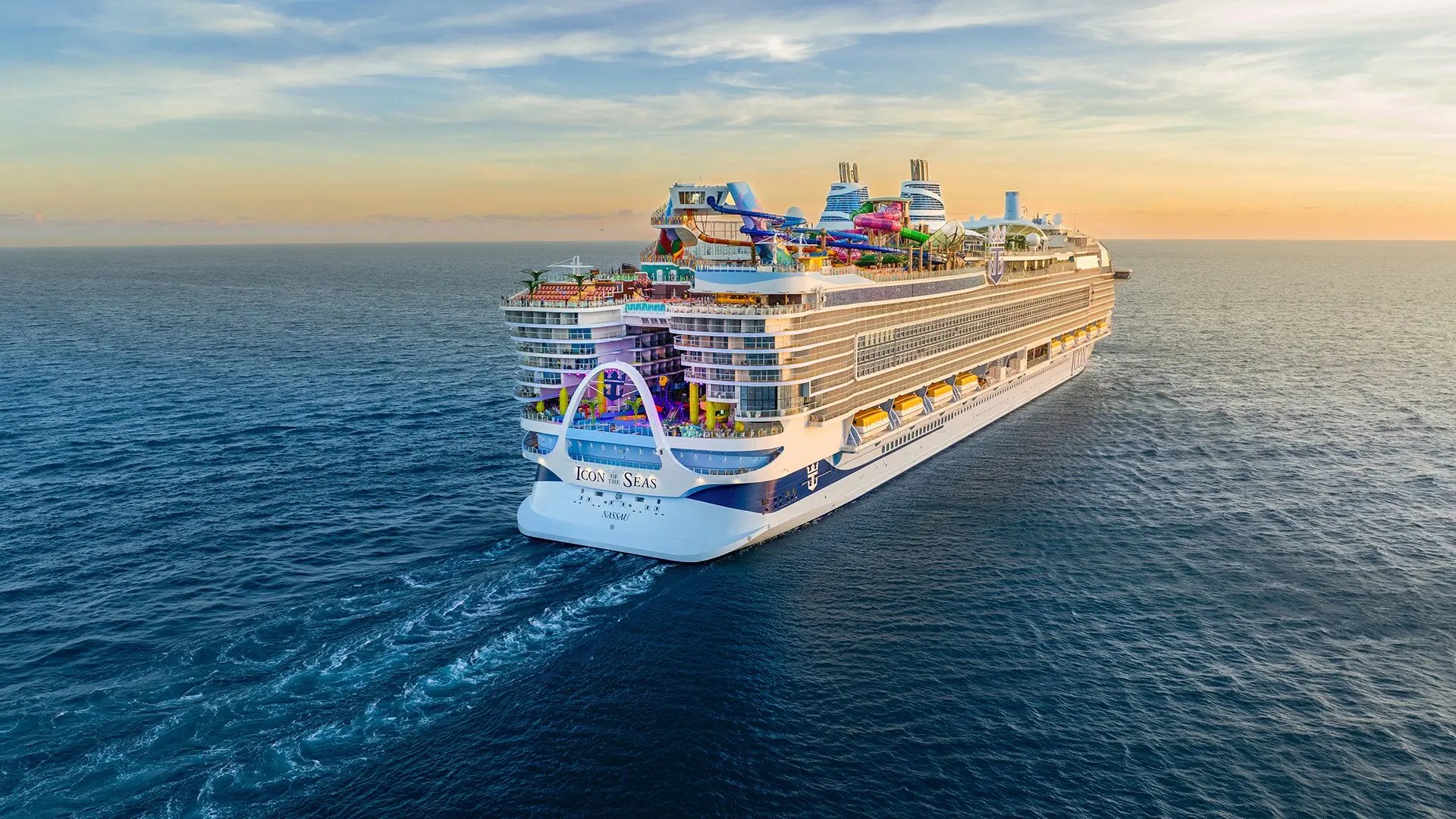
Cruise ships are complex environments where passenger safety, crew coordination and operational efficiency depend on reliable access to real-time information. With multiple decks, restricted areas and thousands of people moving throughout the vessel, knowing where people and equipment are located can be essential to day-to-day operations and emergency response.
Real-Time Location Systems (RTLS) help cruise operators improve visibility by locating tagged people and assets inside the ship. From child tracking and crew safety to emergency mustering and equipment management, indoor positioning technology can support a wide range of onboard operations.
For cruise operators evaluating the best RTLS provider for cruise ships, Pole Star offers indoor positioning technology designed to deliver real-time location data, interactive maps and operational visibility. Its NAO® Suite supports use cases ranging from passenger location services to emergency personnel monitoring.
Why do cruise ships need RTLS?
A cruise ship functions like a small, highly complex city. Passengers and crew move between cabins, restaurants, entertainment areas, technical spaces and restricted zones. Traditional tracking methods may provide limited visibility or require manual checks, particularly when personnel or equipment need to be located quickly.
An RTLS provides location information that can help teams make better-informed decisions. Depending on the application and deployment, it can support passenger services, improve crew coordination, monitor emergency situations and help operators manage onboard resources.
The main benefits include:
- Improved passenger safety: location services can help authorised staff locate children wearing compatible tracking devices.
- Better crew visibility: authorised teams can identify personnel locations in designated operational areas.
- More efficient emergency response: real-time location information can support personnel accounting and evacuation monitoring.
- Improved asset management: operators can locate selected equipment and reduce time spent searching for it.
- More informed decisions: location data can help teams understand activity across different areas of the vessel.
Key RTLS use cases for cruise ships
RTLS technology can support several operational requirements on board. The appropriate configuration depends on the ship’s layout, existing infrastructure, safety procedures and the people or assets that need to be located.
| Use case | How RTLS helps |
|---|---|
| Child tracking | Helps authorised personnel locate children wearing compatible BLE wristbands across covered areas. |
| Crew safety | Provides location visibility for tagged personnel in designated operational zones. |
| Emergency mustering | Supports personnel accounting and helps teams monitor evacuation progress. |
| Asset tracking | Helps locate tagged equipment and monitor its distribution. |
| Operational coordination | Provides location information through maps and supervision interfaces. |
| Performance monitoring | Makes location data available for analysing selected operational KPIs. |
RTLS does not replace onboard safety procedures, access-control systems or emergency protocols. It provides additional location information that can help authorised teams carry out their responsibilities.
How does Pole Star’s RTLS solution work on a cruise ship?
Pole Star’s NAO® Suite combines indoor positioning technology, location data processing and visualisation tools to support real-time location applications.
Depending on the deployment, compatible Bluetooth Low Energy (BLE) infrastructure can detect signals from tags, wristbands or badges. The positioning system processes the available information and makes location data accessible through supervision interfaces and digital maps.
A typical deployment may include:
- BLE wristbands, badges or asset tags to identify the people or equipment being tracked.
- Compatible onboard infrastructure to detect device signals across covered areas.
- Indoor positioning software to calculate and process location information.
- Digital maps and supervision tools to display locations and support operational monitoring.
- Interfaces and integrations to make relevant location information available to authorised applications.
Real-world examples of RTLS on cruise ships
Royal Caribbean: real-time child tracking
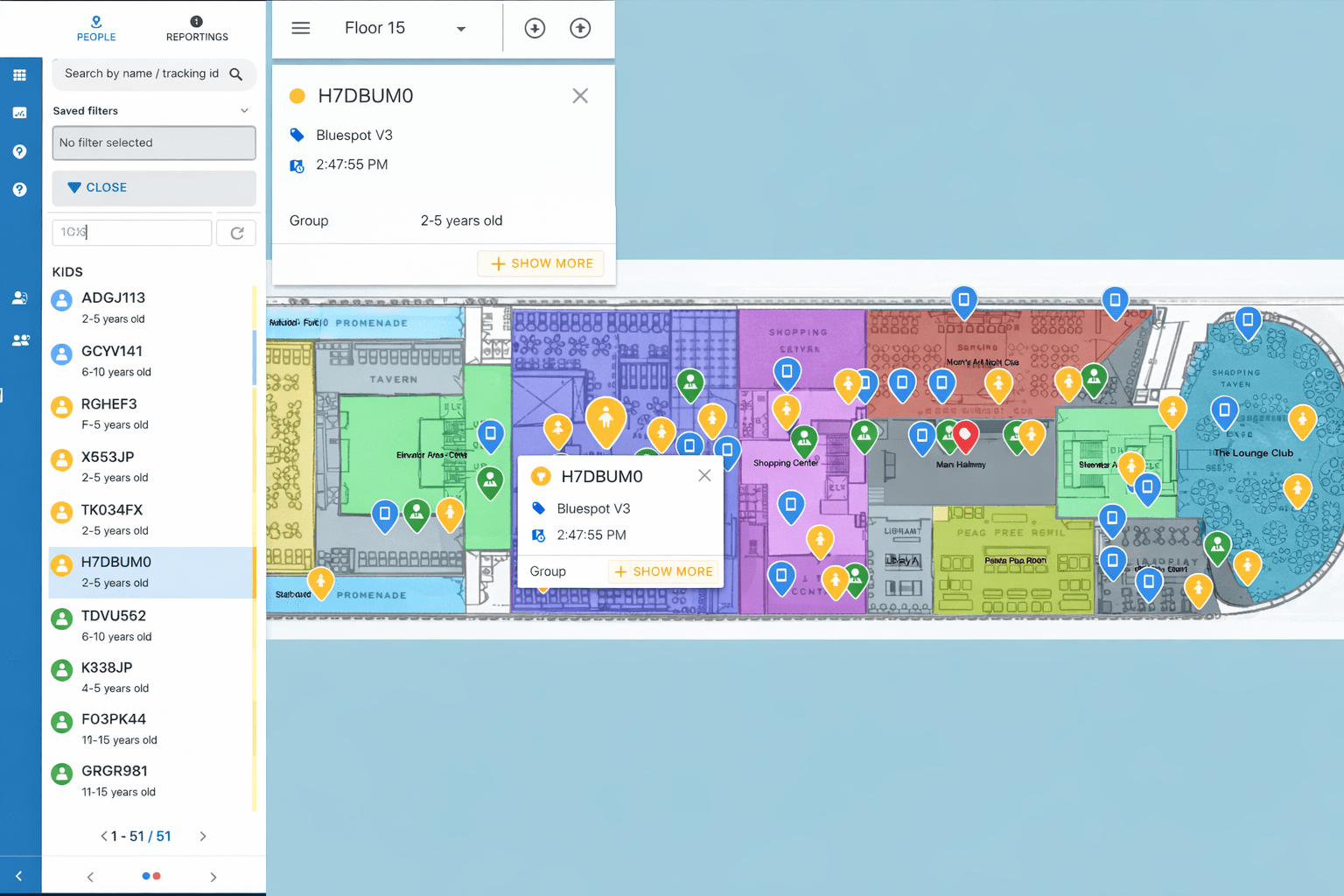
Pole Star’s Royal Caribbean deployment demonstrates how indoor positioning can support child location services on large cruise ships.
The solution uses BLE wristbands and onboard BLE-enabled Cisco access points to provide location information across covered passenger areas. Location data can be displayed on digital maps, helping authorised staff locate a child when necessary.
The deployment described by Pole Star includes support for up to 2,000 BLE wristbands per cruise, more than 4,000 BLE-enabled Cisco access points and vessels with up to 20 decks. The system is deployed on premises.
This example illustrates how RTLS can support passenger services in a multi-deck environment, where reliable location information and appropriate access permissions are important.
Carnival Maritime: CO₂ emergency mustering
Emergency mustering is another important application of RTLS on cruise ships. In areas protected by CO₂ fire-suppression systems, knowing whether personnel have evacuated can be a critical part of emergency management.
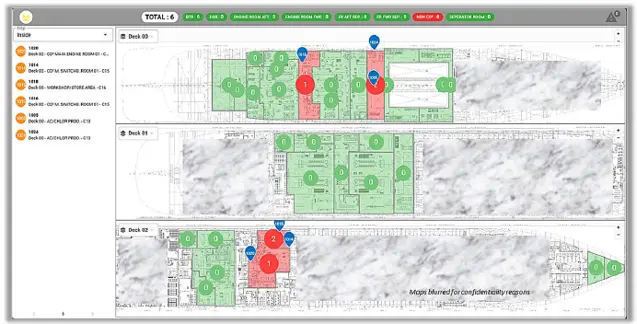
Pole Star’s Carnival Maritime case study describes a deployment across 11 ships, covering 38 engine rooms and CO₂-protected zones, with 153 emergency badges. The solution uses existing Cisco BLE infrastructure and an on-premises architecture.
Location information supports personnel accounting, evacuation monitoring and visibility into whether designated zones have been cleared. It can also help emergency teams identify the location of personnel wearing compatible badges.
RTLS supports emergency teams by providing additional location information. It does not replace the vessel’s approved evacuation procedures, muster processes or safety systems.
Which KPIs can cruise operators monitor with RTLS?
A successful RTLS deployment should be evaluated against measurable operational objectives. The most relevant indicators depend on the use case and the baseline data available before implementation.
| KPI | What it helps assess |
|---|---|
| Child location response time | How quickly authorised staff can identify a child’s reported location. |
| Personnel accounting time | How long it takes to establish personnel status during a mustering process. |
| Evacuation status visibility | Whether teams can identify the status of designated zones using available location data. |
| Alert response time | How quickly staff respond to relevant location-based alerts. |
| Asset search time | Time required to locate selected onboard equipment. |
| Asset availability | Visibility into the location and distribution of tracked equipment. |
| Location coverage | The proportion of operational areas meeting the deployment’s coverage requirements. |
| System availability | The availability of the RTLS components required for the intended operation. |
How to choose the best RTLS provider for cruise ships
Choosing an RTLS provider requires more than comparing positioning technologies. Cruise operators need a solution that fits the vessel’s operational requirements and can support the intended use cases reliably.
Several criteria should be assessed before deployment:
- Coverage across multiple decks: the system must be evaluated against the vessel’s layout, including passenger areas, technical spaces and restricted zones.
- Compatibility with existing infrastructure: reusing suitable BLE infrastructure may reduce the need for additional hardware, subject to a technical assessment.
- Operational resilience: the architecture should match onboard connectivity requirements and the consequences of any service interruption.
- Visualisation and usability: teams need clear maps and interfaces that make location information actionable.
- Integration capabilities: location data may need to be shared with existing applications or operational systems.
- Security and access permissions: sensitive location information should only be available to authorised users.
- Scalability: the solution should accommodate the required number of devices, users and covered areas.
- Measurable outcomes: the deployment should be assessed against predefined operational KPIs.
A proof of concept or pilot can help validate coverage, positioning performance, integration requirements and usability before a wider rollout.
Why choose Pole Star for cruise ship RTLS?
Pole Star provides indoor positioning technology for complex environments where real-time location information supports operational processes. Its NAO® Suite can be configured for cruise ship applications such as child tracking, emergency mustering and asset visibility.
The company’s cruise ship references demonstrate deployments using BLE technology, existing onboard infrastructure and on-premises architectures. Its location tools provide maps and supervision capabilities to help authorised teams interpret location information and support operational decisions.
For cruise operators, the right deployment starts with a clear definition of the problem: which people or assets need to be located, where coverage is required, who needs access to the data and what outcomes must be measured.
Pole Star’s approach is to align the positioning solution with these operational requirements rather than treating indoor location as a standalone technology.
Conclusion
Real-Time Location Systems can help cruise operators improve visibility across complex, multi-deck environments. From locating children and supporting crew safety to monitoring emergency mustering and finding equipment, RTLS provides location information that can support important onboard operations.
When assessing the best RTLS provider for cruise ships, operators should consider coverage, infrastructure compatibility, onboard architecture, integrations, security and measurable operational results.
With its NAO® Suite and experience in cruise ship deployments, Pole Star offers indoor positioning capabilities designed to support these requirements. A technical assessment and a clearly defined pilot can help determine how an RTLS solution fits the vessel’s layout and operational priorities.
Frequently asked questions
What is an RTLS for cruise ships?
A Real-Time Location System (RTLS) uses positioning technology, tags and compatible infrastructure to locate people or assets in real time. On cruise ships, it can support child tracking, crew safety, emergency mustering and asset management.
What is the best RTLS provider for cruise ships?
The right provider depends on the vessel’s layout, coverage requirements, existing infrastructure, integration needs and operational objectives. Pole Star provides indoor positioning solutions through its NAO Suite, with cruise ship applications including child tracking and emergency mustering.
How does child tracking work on a cruise ship?
Children wear compatible tracking wristbands that communicate with onboard positioning infrastructure. The system processes location information and displays it on digital maps, enabling authorised personnel to locate a child within covered areas.
Can an RTLS operate on a cruise ship without an internet connection?
Depending on the architecture, an on-premises RTLS can process and display location information within the ship’s local environment without relying on an external internet connection for every operation. Connectivity and resilience requirements should be validated during the technical assessment.
What is CO₂ emergency mustering on a cruise ship?
CO₂ emergency mustering involves accounting for personnel and monitoring evacuation in areas protected by carbon dioxide fire-suppression systems. RTLS can provide additional location information to help authorised teams assess personnel status and identify whether designated zones have been cleared.
Can cruise ship RTLS reuse existing BLE infrastructure?
Existing Bluetooth Low Energy infrastructure may be reusable if it is compatible with the positioning solution and meets the required coverage and performance levels. A site assessment is necessary to confirm suitability.
Which people and assets can be tracked onboard?
Depending on the deployment, RTLS can locate children wearing wristbands, crew members carrying badges and selected equipment fitted with compatible tags. Tracking scope, access permissions and data retention should be defined for each use case.
How can cruise operators measure RTLS ROI?
Operators can assess indicators such as location response time, personnel accounting time, asset search time, equipment availability and system availability. Comparing these indicators against a pre-deployment baseline helps evaluate operational benefits.