
Real-time location intelligence for senior living & aged care

Senior living and aged care providers need real-time visibility of caregivers, residents and critical equipment across complex care environments. Pole Star delivers scalable indoor positioning and RTLS solutions for mobile staff duress, wireless nurse call and resident wandering prevention, while leveraging existing Wi-Fi and BLE infrastructure.

Trusted by senior living providers worldwide

Rauland logo
Apollo care logo
Definition

What is RTLS for senior living & aged care?

Canonical definition

RTLS (Real-Time Location System) for senior living and aged care is the use of indoor positioning technology to locate caregivers, residents and critical equipment in real time across residential care facilities. By leveraging existing Wi-Fi infrastructure and BLE technology, RTLS enables mobile staff duress, wireless nurse call, resident wandering detection and asset tracking, improving resident safety, caregiver response times and day-to-day operational efficiency.
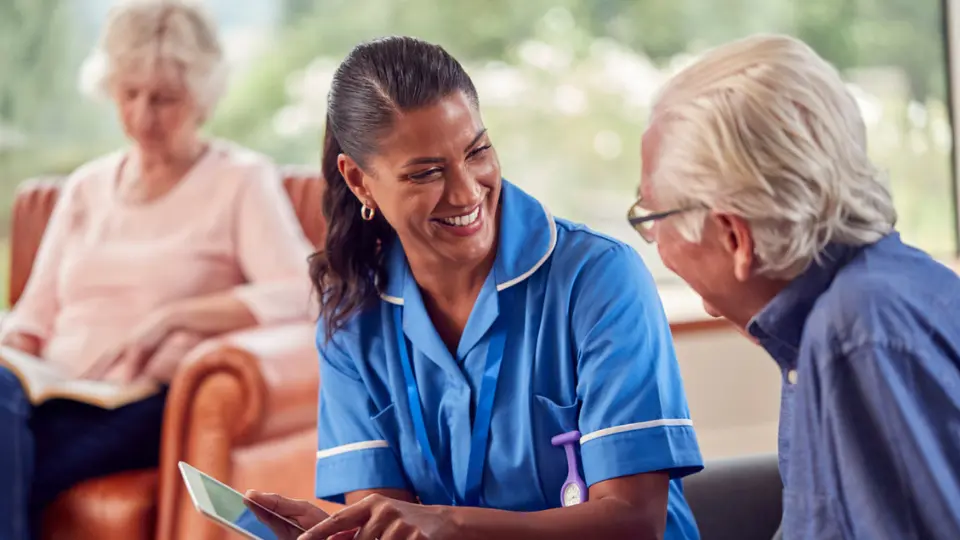
Senior living facility indoor positioning
What

Indoor positioning for residential care

Pole Star provides indoor positioning and RTLS solutions for senior living and aged care facilities. The platform enables mobile staff duress, wireless nurse call, resident monitoring and medical asset tracking on a single location platform.

Who

Caregivers and senior living operators

Designed for retirement communities, assisted living facilities, nursing homes and aged care providers, supporting caregivers, operations teams, security personnel and facility managers across single or multi-site campuses.

Why

Protect residents and caregivers

Care staff need rapid assistance during emergencies, residents may wander into unsafe areas, and valuable medical equipment must remain immediately available. RTLS delivers real-time visibility to improve resident safety, reduce response times and streamline daily care operations.

How

BLE-powered indoor location platform

Pole Star combines BLE indoor positioning, smartphone localization, wireless nurse call and real-time supervision through NAO® Track, NAO® Mobile and existing Wi-Fi infrastructure, allowing senior living providers to deploy scalable RTLS without heavy dedicated hardware.

Industry context

Why real-time location became essential in senior living & aged care

Senior living communities and aged care facilities have evolved into complex care environments where caregivers, residents and critical equipment move continuously throughout buildings. Delivering safe, responsive care now depends on having accurate, real-time visibility across the entire facility.

Care teams are constantly on the move between resident rooms, common areas and clinical spaces, while residents require different levels of supervision depending on their health and cognitive condition. Locating caregivers, wheelchairs, medical devices or responding to an emergency without knowing the precise indoor location wastes valuable time and can directly affect resident safety. Mobile staff duress, wireless nurse call and asset tracking have therefore become essential operational capabilities rather than optional technologies.

Modern indoor positioning transforms the existing BLE and Wi-Fi infrastructure into a real-time location platform capable of locating caregivers, residents and medical assets with room-level accuracy. The result is faster emergency response, improved caregiver coordination and better protection for residents - including support for wandering detection and geofencing.
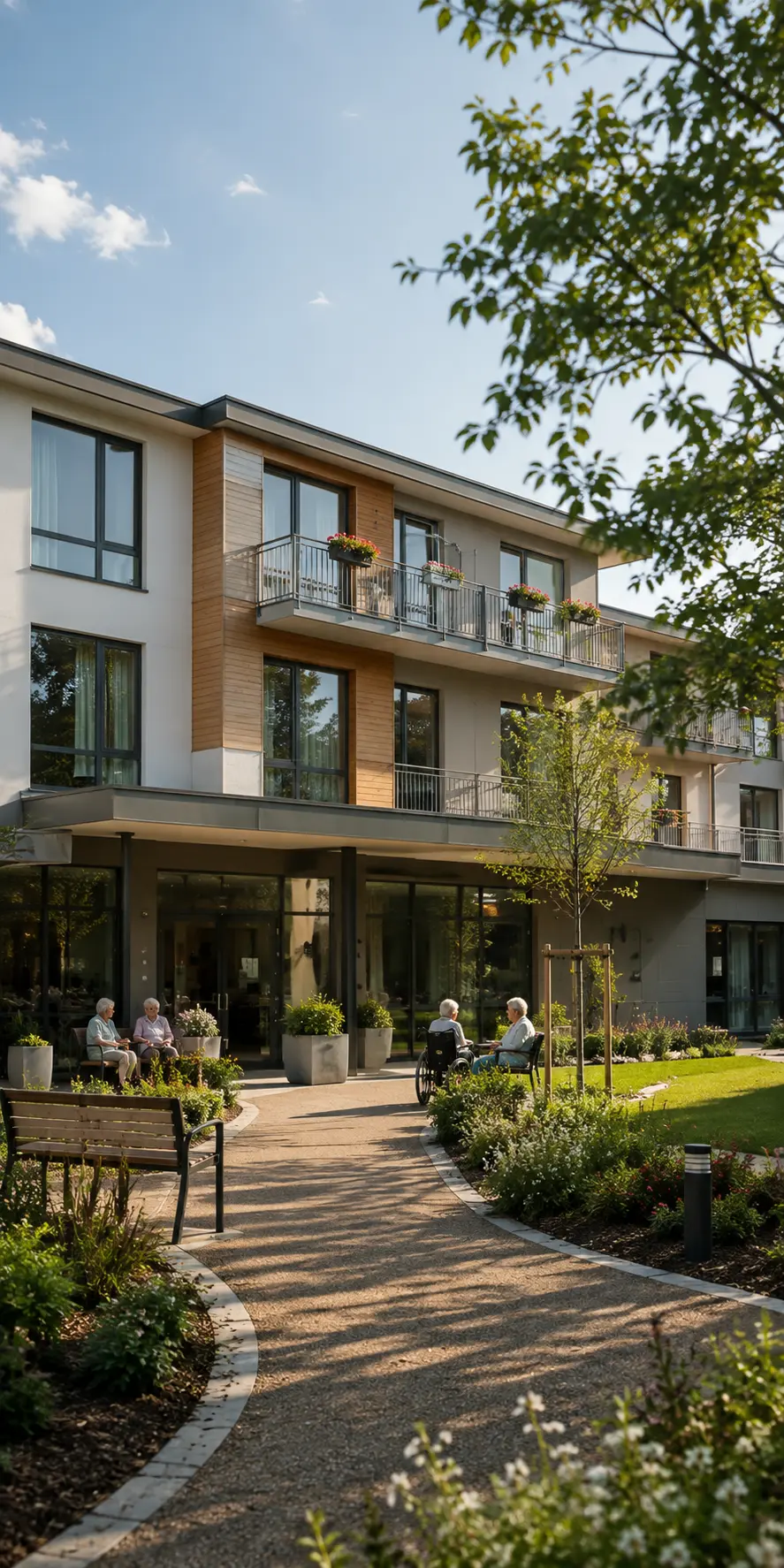
Senior living facility with indoor positioning
Main challenges

The operational realities senior living providers face every day

Senior living and aged care facilities must protect residents while supporting caregivers working in dynamic, multi-building environments. These are the daily operational challenges that make real-time indoor location a critical part of modern resident care.

01

Caregivers who need immediate assistance

Problem

Care staff frequently work alone while moving throughout residential units, care areas and service corridors.

Why it happens

Incidents such as aggression, falls or medical emergencies can occur anywhere inside the facility.

Consequence

Without precise indoor location, emergency response is slower and caregiver safety is compromised.

02

Resident wandering and elopement risks

Problem

Residents living with dementia or cognitive impairment may unintentionally leave safe areas.

Why it happens

Traditional supervision cannot continuously monitor resident movement across the facility.

Consequence

Care teams react after an incident instead of preventing it through real-time location and geofencing.

03

Wireless nurse calls without location context

Problem

Assistance requests are received, but caregivers don't always know exactly where help is needed.

Why it happens

Conventional nurse call systems often lack accurate indoor positioning.

Consequence

Longer response times and unnecessary delays in resident care.

04

Medical equipment that's difficult to locate

Problem

Wheelchairs, beds, pumps and mobile medical devices constantly move throughout the facility.

Why it happens

Equipment is shared between residents and departments without continuous tracking.

Consequence

Caregivers waste valuable time searching instead of delivering care.

05

Limited visibility across multiple buildings

Problem

Large senior living campuses often span several buildings and care units.

Why it happens

Each area operates independently with different workflows and infrastructure.

Consequence

Operations teams lack a unified real-time view of residents, caregivers and equipment.

06

Staff coordination during emergencies

Problem

Managers need to identify the closest available caregiver immediately.

Why it happens

Staff locations continuously change throughout the day.

Consequence

Emergency interventions take longer than necessary.

07

Scalable resident safety across multiple sites

Problem

Operators often manage networks of retirement communities or aged care facilities.

Why it happens

Each location has different layouts, Wi-Fi coverage and operational constraints.

Consequence

Maintaining consistent resident safety standards becomes difficult without a unified RTLS platform.

08

Disconnected safety technologies

Problem

Staff duress, nurse call, wandering detection and asset tracking frequently operate as independent systems.

Why it happens

Solutions are deployed separately over time with limited interoperability.

Consequence

Care teams lack a single operational view and workflows become more complex instead of simpler.

Mobile staff duress

Instant caregiver alert - anywhere in the facility

Care staff work alone in resident rooms, corridors and isolated spaces throughout the day. When an incident occurs - a fall, an aggressive patient, a medical emergency - every second before help arrives matters. Mobile staff duress gives every caregiver a precise, geolocated panic button on the smartphone they already carry.

Traditional fixed nurse call systems cover corridors and common areas - but caregivers moving between rooms have no way to raise an alert with their precise location. Mobile duress solves exactly that gap.

1
NAO® Mobile runs on the caregiver's smartphone

No dedicated badge or wearable required. The NAO® Mobile SDK runs as a background service on the caregiver's professional smartphone, continuously computing their indoor position via the facility's existing BLE infrastructure.

2
Caregiver triggers a duress alert

A single tap on the app - or an automatic motion-based trigger - sends an immediate duress alert. The alert is tagged with the caregiver's exact indoor position: room number, floor and zone.

3
Alert dispatched with precise location

The alert reaches the supervision desk and designated responders instantly, showing exactly where the caregiver is on the indoor map - no radio back-and-forth, no searching room by room.

4
Response coordinated and logged

Responders are dispatched to the exact location. The alert, response time and resolution are automatically logged for audit, compliance and continuous improvement.
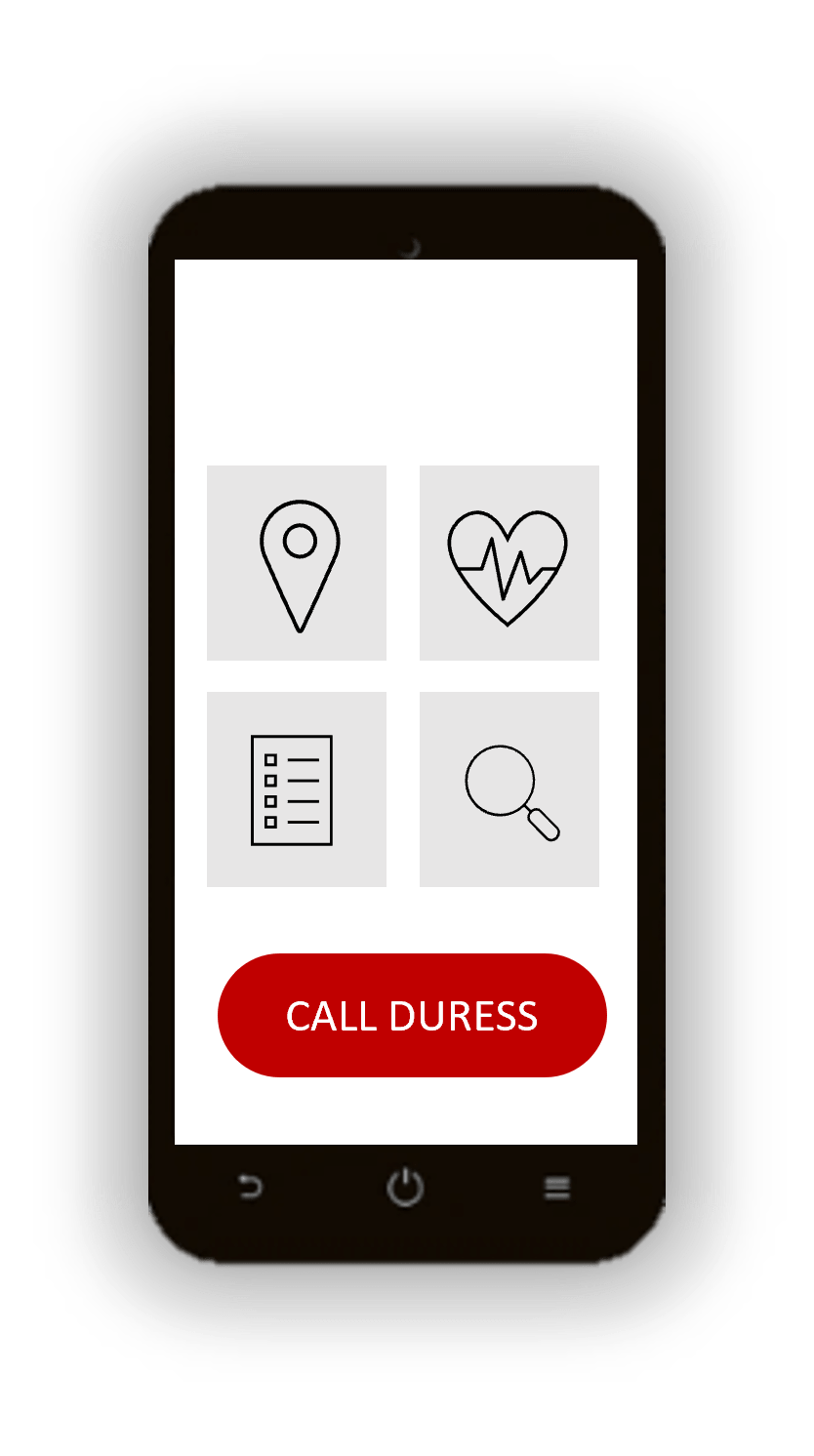
Caregiver using mobile duress in a senior care facility
Geolocated panic buttonOne tap sends the alert with the caregiver's room-level location - no GPS, no manual input.
Man-down and immobility detectionAutomatic alert triggered if a caregiver stops moving unexpectedly - even if they cannot press a button.
Live supervision dashboardThe NAO® Track dashboard shows every caregiver's position and active alerts in real time, on an accurate indoor map of the facility.
No dedicated hardwareNAO® Mobile runs on existing professional smartphones - no badge, no lanyard tag and no new device procurement.
Automatic incident loggingEvery alert, response time and resolution is recorded automatically - ready for audit, compliance reporting and team debriefs.
Built on existing BLE infrastructureThe solution runs on the Wi-Fi access points already installed in the facility - no parallel network, no dedicated beacons required for basic coverage.
NAO® Mobile SDK NAO® Track supervision Existing BLE / Wi-Fi infra Room-level accuracy
Operational outcome

By giving every caregiver a geolocated panic button on their smartphone, Pole Star eliminates the blind spot between fixed nurse call stations - cutting response times, improving caregiver safety and providing facilities with a complete, automatic record of every incident.

Wireless nurse call

Resident call - located, routed and responded to in real time

Traditional nurse call systems tell you that a resident needs help. Wireless nurse call tells you exactly where they are - and routes the request to the nearest available caregiver automatically, without wiring a single new cable.

Pole Star's wireless nurse call replaces or extends fixed panel systems using the facility's existing BLE and Wi-Fi infrastructure. Residents carry a BLE badge or wristband; caregivers carry their smartphone. No new wiring, no dedicated hardware for staff, no infrastructure investment beyond what is already installed.

How it works
1
Resident presses their BLE badge or wristband

The resident's BLE device emits a call signal captured by the nearest access points. Their room-level position is confirmed automatically at the moment the call is raised.

2
Call routed to the nearest available caregiver

NAO® Track identifies the closest caregiver based on their live indoor position and pushes the alert to their smartphone via NAO® Mobile - with the resident's name, room and status.

3
Caregiver acknowledges and responds

The assigned caregiver confirms on their smartphone. The supervision dashboard updates in real time, showing the call status, responder identity and time to acknowledgement.

4
Call closed and automatically logged

Once resolved, the call is closed and all data - resident, caregiver, response time, duration - is stored automatically for compliance, audit and quality improvement.
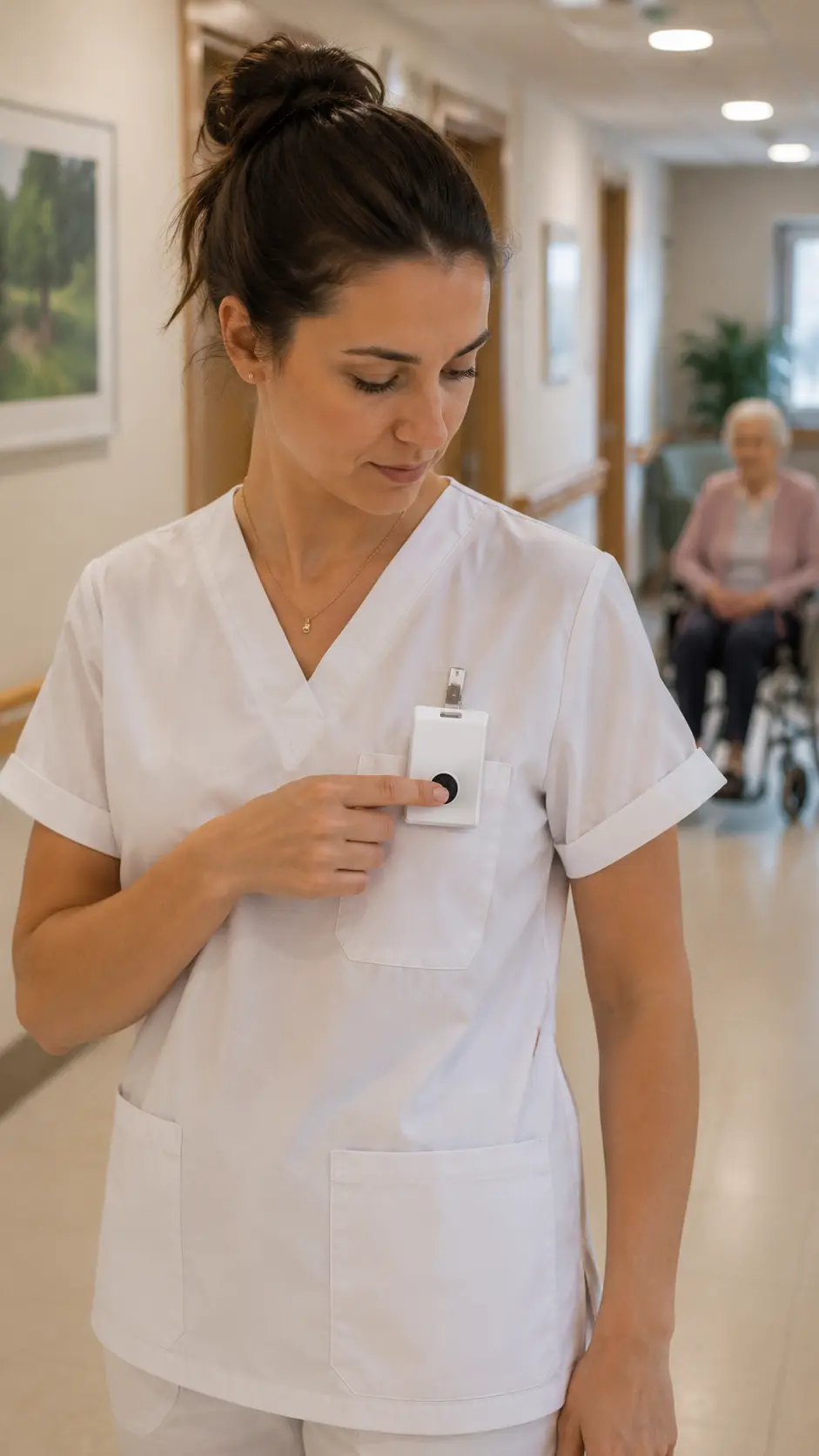
Fixed nurse call Wireless nurse call
Alerts room number only - no caregiver location
Routes to nearest caregiver with live indoor position
Requires wiring throughout the facility
Runs on existing BLE / Wi-Fi - no new cabling
No data on response times or trends
Automatic log of every call, responder and resolution time
Wireless nurse call in a senior care facility
Key capabilities
Room-level resident locationEvery call is automatically tagged with the resident's indoor position - no ambiguity about which room or which zone needs attention.
Smart proximity routingCalls are routed to the nearest available caregiver based on live indoor position - not just shift assignment or a fixed zone list.
Live call dashboardThe NAO® Track dashboard shows all open calls, assigned caregivers and response progress on an accurate indoor map of every floor.
Caregiver smartphone integrationAlerts are pushed to caregivers via NAO® Mobile on their existing smartphones - no pager, no dedicated handset, no additional device.
Response time analyticsEvery call generates a performance record - resident, caregiver, acknowledgement time, resolution time - ready for audit and continuous improvement.
No new wiring requiredThe system runs on BLE badges and the facility's existing Wi-Fi access points - making deployment fast and non-disruptive for residents and staff.
BLE badge or wristband - resident NAO® Mobile - caregiver smartphone NAO® Track - supervision dashboard Existing BLE / Wi-Fi infra
Operational outcome

By routing every resident call to the nearest available caregiver with their precise location, Pole Star reduces response times, eliminates the ambiguity of fixed panel systems and gives facility managers an automatic, data-driven record of care quality - all without a single new cable in the walls.

Anti-wandering & resident location

Know where every resident is - and be alerted before they leave

For residents living with dementia or cognitive impairment, wandering into restricted areas or exiting the facility undetected is one of the most serious safety risks in aged care. Pole Star provides continuous indoor geolocation for residents and triggers automatic alerts the moment they approach or cross a defined boundary - giving staff time to intervene before an incident occurs.

Every second matters when a resident at risk approaches an exit. The solution detects the approach - not just the crossing - giving caregivers advance warning to intervene calmly, without alarming the resident or other occupants.

How it works
1
Resident wears a lightweight BLE tag or wristband

A discreet BLE badge or wristband continuously emits a signal read by the facility's existing access points. The resident's indoor position is computed in real time and displayed on the NAO® Track indoor map.

2
Geofence zones defined for each resident's profile

Safe zones, alert perimeters and restricted areas are configured per resident or per care unit - reflecting their individual care plan, level of independence and risk assessment.

3
Alert triggered on approach or zone crossing

When a resident enters an alert perimeter or crosses a restricted boundary, an immediate geolocated alert is sent to the nearest caregiver's smartphone and to the supervision dashboard - with the resident's name and current position.

4
Caregiver intervenes - event logged automatically

The assigned caregiver responds and closes the alert on their smartphone. Every event - time, location, responder and outcome - is stored for care review, family reporting and compliance.
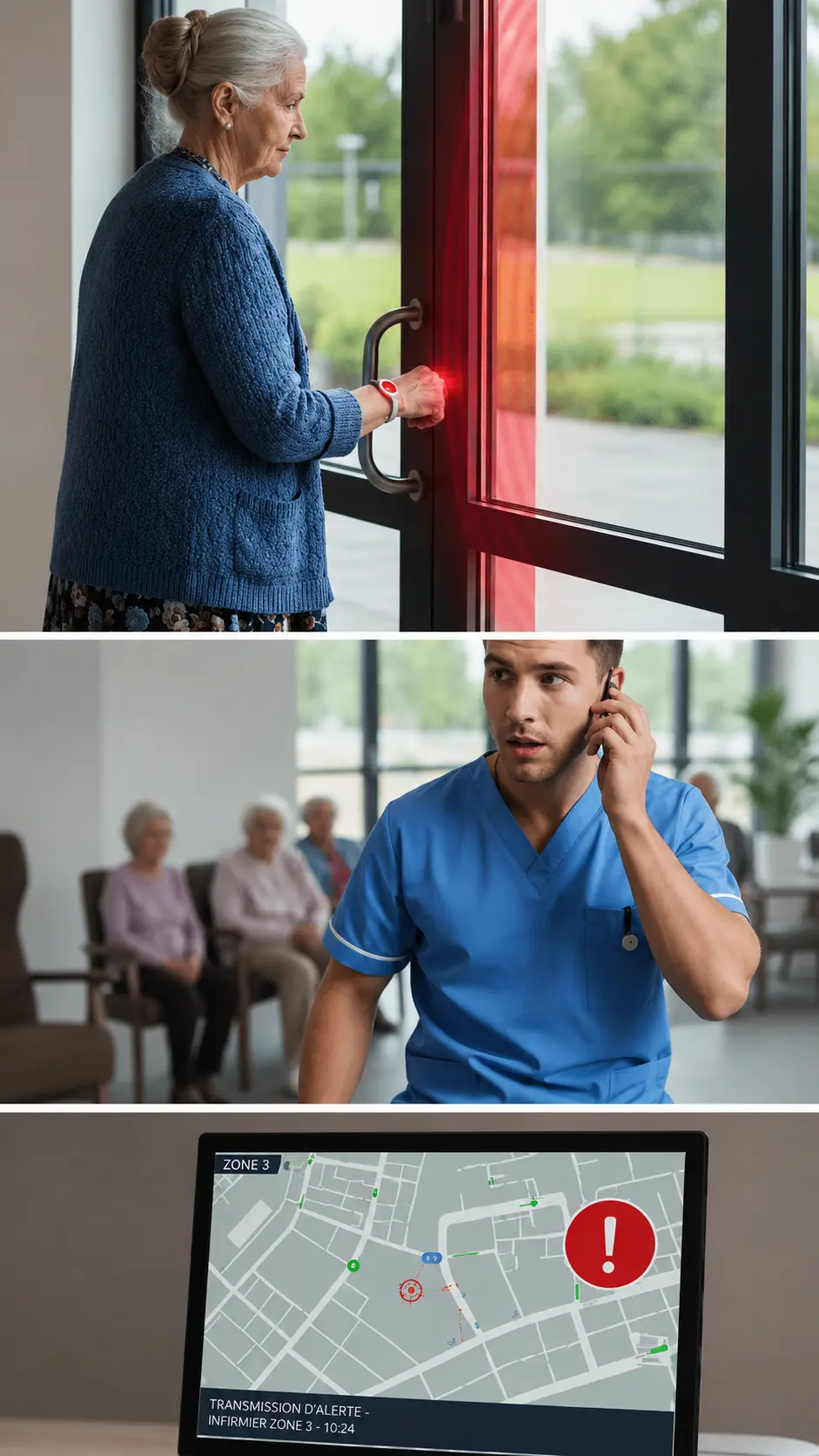
Safe zoneResident can move freely - common areas, their room, garden. No alert triggered.
Alert perimeterResident approaching a boundary. Caregiver notified in advance to intervene calmly before crossing.
Restricted zone / exitBoundary crossed. Immediate geolocated alert sent to caregiver and supervision desk.
Resident geolocation and wandering detection in a care facility
Key capabilities
Continuous resident geolocationEvery tagged resident is located in real time on an accurate indoor map - room level, all floors, all areas of the facility.
Pre-crossing alert on approachThe system alerts staff when a resident enters the warning perimeter - not just after crossing - allowing calm, discreet intervention before an exit.
Per-resident zone configurationZones and alert thresholds are set individually per resident, reflecting their care plan and level of independence - not a one-size-fits-all perimeter.
Live supervision across all residentsThe NAO® Track dashboard shows every tagged resident's position simultaneously - enabling proactive supervision without requiring constant physical rounds.
Complete wandering event logEvery alert - time, location, zone crossed, caregiver response, resolution - is automatically recorded for care review, family communication and regulatory compliance.
Discreet and non-intrusiveLightweight BLE tag or wristband preserves resident dignity and autonomy - no visible alarm system, no locked doors, no restraint.
BLE tag or wristband - resident NAO® Track - geofence & supervision NAO® Mobile - caregiver alert Existing BLE / Wi-Fi infra
Operational outcome

By tracking every at-risk resident continuously and alerting staff before a zone is crossed - not after - Pole Star prevents wandering incidents rather than responding to them. Caregivers can intervene calmly and discreetly, residents retain their autonomy and dignity, and every event is automatically documented for care teams and families.

Medical asset tracking

Find any piece of equipment - instantly

Caregivers spend significant time each shift searching for shared equipment - wheelchairs, lifts, oxygen concentrators, monitoring devices. Every minute spent searching is a minute away from residents. BLE tags on critical assets give every team member a live map of where everything is.
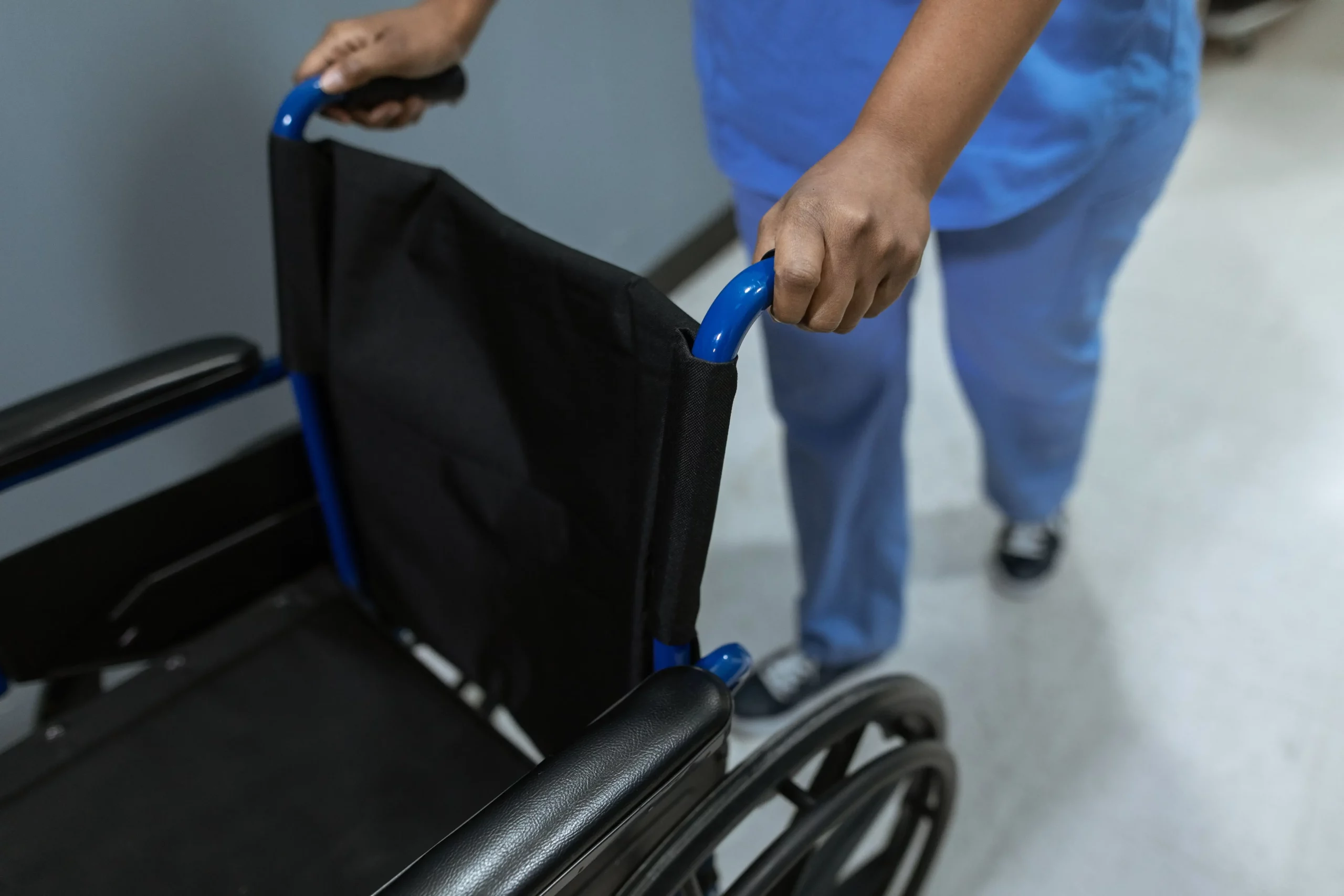
Medical asset tracking in a senior care facility
Wheelchairs & mobility aidsLocated on-demand across floors, corridors and common areas - no more checking every room.
Patient lifts & hoistsHigh-value shared equipment tracked by wing or zone so teams can plan care activities without delays.
Monitoring & clinical devicesBlood pressure monitors, pulse oximeters and other shared devices always found at a glance.
Oxygen concentrators & cylindersCritical respiratory equipment located immediately - essential in emergency or routine care scenarios.
Defibrillators (AED)Instant AED location in a cardiac emergency - every second saved directly impacts outcomes.
Medication & supply trolleysTrolley position tracked by floor and wing to support drug rounds and reduce misplacement.

A single BLE tag per asset, read by the facility's existing infrastructure. No dedicated readers, no manual inventory - just a live map accessible to every caregiver, at any time, on any floor. The same NAO® Track platform that monitors staff and residents handles all asset categories on one unified view.

How workflows transform

Everyday workflows transformed by real-time location

Before

The caregiver activates an alarm, but responders have no precise indoor location and must search the facility before providing assistance.

With Pole Star

The caregiver triggers a smartphone or badge alert. Pole Star instantly shares their room-level location with nearby responders using mobile staff duress.

Outcome

Faster emergency response, improved caregiver safety and greater confidence for staff working alone.

Before

Care teams receive the request but must determine the resident's exact location before responding.

With Pole Star

Pole Star automatically associates the assistance request with the resident's real-time indoor location, routing it to the nearest available caregiver immediately.

Outcome

Shorter response times and better resident care without dedicated wired infrastructure.

Before

Caregivers notice the absence during routine supervision and begin searching the building.

With Pole Star

Pole Star detects the resident crossing a virtual safety zone and immediately sends a geolocated alert to caregivers — with the resident's name and current position on the indoor map.

Outcome

Earlier intervention, improved resident protection and reduced wandering incidents.

Before

Staff search multiple rooms and storage areas because equipment locations are unknown or outdated.

With Pole Star

The caregiver opens Pole Star's live map, locates the nearest available wheelchair and retrieves it immediately using real-time asset tracking.

Outcome

Less time spent searching, improved equipment utilization and faster resident care.

Use cases

How senior living providers use real-time indoor location

Everyday scenarios where indoor positioning improves resident safety, caregiver protection and operational efficiency across senior living and aged care facilities.
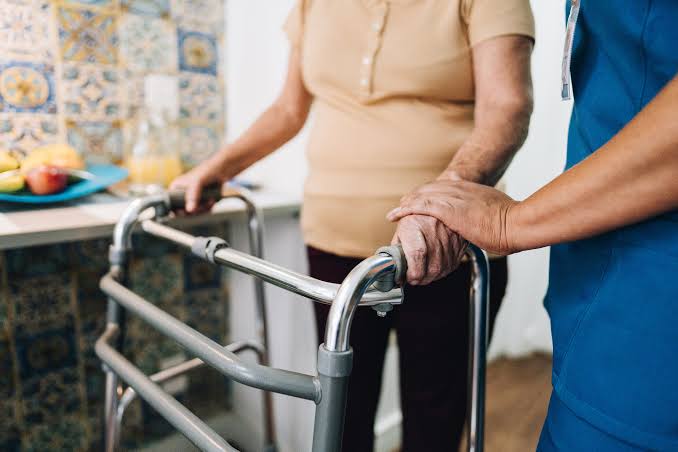
Senior care facility with indoor positioning

How caregivers trigger mobile staff duress alerts

Trigger

A caregiver encounters an emergency while working alone.

Response

A smartphone or badge instantly shares the caregiver's room-level location.

Benefit

Faster interventions and improved caregiver safety.

How wireless nurse call improves resident assistance

Trigger

A resident requests assistance.

Response

The request is automatically associated with the resident's precise indoor location and routed to the nearest caregiver.

Benefit

Reduced response times and better resident care.

How facilities prevent resident wandering

Trigger

A resident approaches a restricted area or exit.

Response

Geofencing generates an alert before the resident crosses the boundary.

Benefit

Greater resident safety while preserving freedom of movement.

How caregivers locate wheelchairs instantly

Trigger

A wheelchair or mobility aid is urgently needed.

Response

Live indoor maps display the nearest available asset in real time.

Benefit

Less time searching and faster resident care.

How managers supervise multiple care facilities

Trigger

Operations teams need visibility across several sites.

Response

NAO® Viewer centralizes alerts, assets and caregiver activity across all locations.

Benefit

Consistent operations across the entire care network.

How care teams locate medical equipment

Trigger

A pump, AED or clinical device is needed immediately.

Response

BLE tracking displays its real-time location on the indoor map.

Benefit

Improved equipment utilization and fewer unnecessary purchases.

How smartphone location replaces dedicated hardware

Trigger

Facilities want to modernize staff safety without new devices.

Response

Pole Star uses smartphones already carried by caregivers via NAO® Mobile.

Benefit

Lower deployment costs and faster rollout.

How existing Wi-Fi becomes a real-time location platform

Trigger

A provider wants RTLS without replacing its infrastructure.

Response

Pole Star leverages BLE-enabled Cisco, Aruba or Fortinet access points.

Benefit

Scalable deployment with minimal infrastructure changes.

Benefits

What senior living providers gain

Real-time indoor location helps senior living and aged care providers protect residents, improve caregiver safety and streamline day-to-day operations across single facilities and multi-site care networks.

01

Faster caregiver response

Emergency alerts include the caregiver's precise indoor location, allowing the closest responder to intervene immediately.

02

Safer residents

Detect wandering events earlier using indoor positioning and geofencing while preserving residents' freedom of movement.

03

Wireless nurse call with location

Assistance requests automatically include the resident's indoor location, helping caregivers prioritize and respond faster.

04

Medical equipment always visible

Instantly locate wheelchairs, beds and shared medical devices with real-time asset tracking.

05

Improved caregiver safety

Protect caregivers working alone with mobile staff duress and room-level indoor positioning.

06

Better resident experience

Deliver faster assistance, safer care and greater peace of mind for residents and their families.

07

Smarter operational decisions

Use real-time location insights to optimize staffing, equipment utilization and daily care workflows.

08

Scalable across multiple care sites

Deploy the same RTLS platform across retirement communities, nursing homes and aged care networks while leveraging existing Wi-Fi and BLE infrastructure.

Customer stories

Proven across senior living & aged care environments
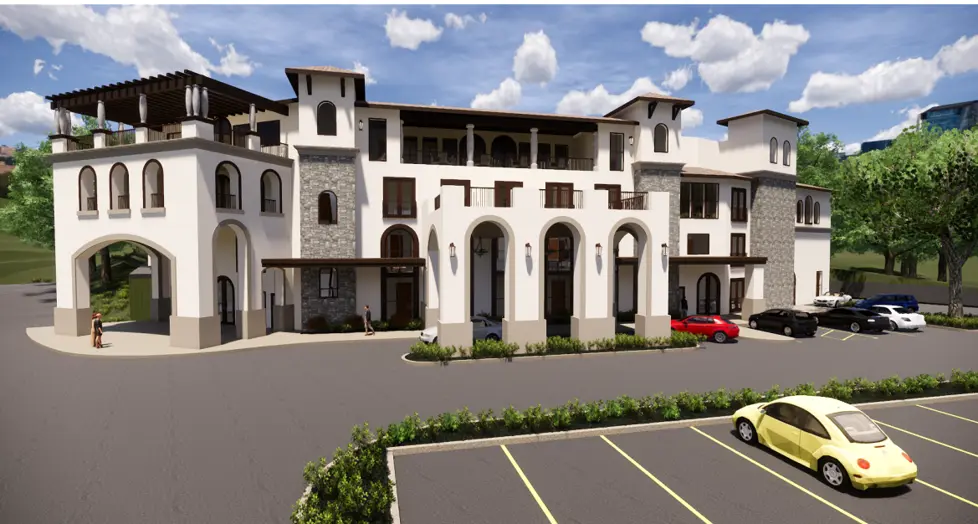
Australia Apollo Care senior living facility

Apollo Care

12Senior living sites
40-100BLE APs / site
100%Smartphone-based
Challenge

Protect caregivers working across multiple senior living facilities while providing reliable wireless nurse call functionality using the existing network infrastructure.

Deployment

Pole Star deployed mobile staff duress, wireless nurse call and real-time indoor positioning using NAO® Mobile, NAO® Track NG and Fortinet Wi-Fi infrastructure enhanced with NAO® BlueSpots.

  • Improved caregiver safety across all facilities
  • Faster emergency response with room-level location
  • Scalable deployment across 12 senior living sites
Read case study
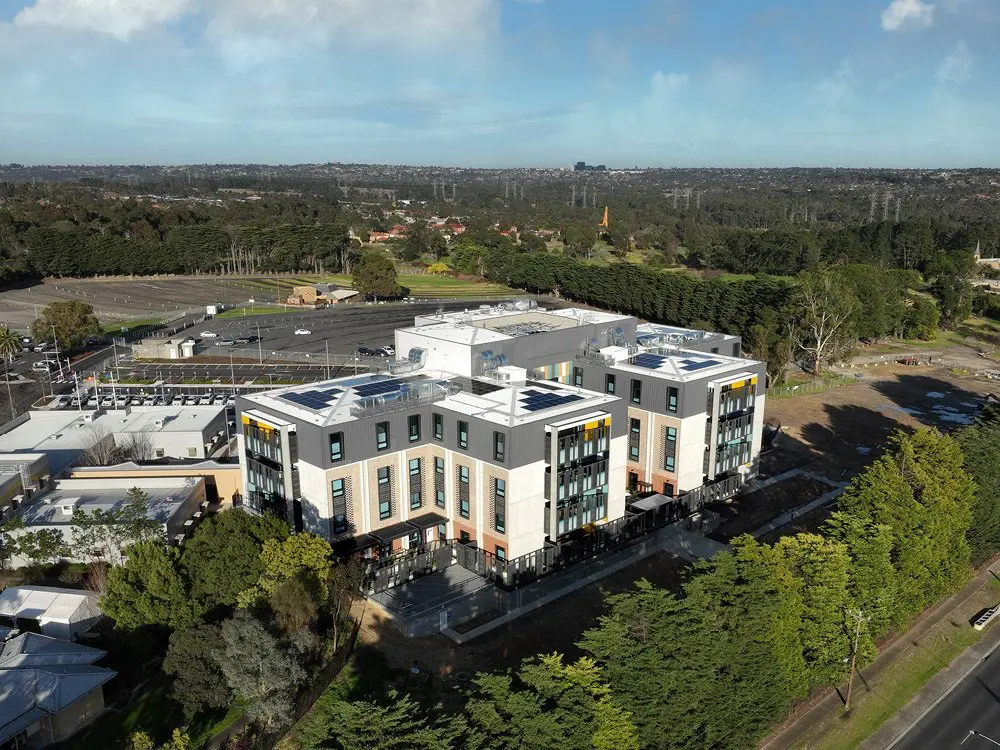
Australia Wantirna Residential Aged Care

Wantirna Residential Aged Care

14,000m² facility
240Cisco BLE APs
150+BlueSpots
Challenge

Improve caregiver safety and resident assistance while avoiding complex dedicated nurse call infrastructure.

Deployment

Pole Star combined mobile staff duress, wireless nurse call and indoor positioning using Cisco Spaces, Cisco Catalyst access points, NAO® Track NG and NAO® Mobile.

  • Reduced emergency response times
  • Continuous visibility of caregiver locations
  • Reliable wireless nurse call without heavy infrastructure
Read case study
Why Pole Star

Why senior living providers choose Pole Star

Pole Star's indoor location platform is designed specifically for the operational realities of senior living and aged care facilities, combining caregiver safety, resident protection and seamless deployment on existing infrastructure.

01

Proven across real senior living environments

Pole Star powers live deployments in senior living facilities such as Apollo Care and Wantirna Residential Aged Care, delivering smartphone-based caregiver safety, wireless nurse call and indoor positioning in operational care environments rather than pilot projects.

Apollo Care · Wantirna Residential Aged Care
02

Built on the infrastructure you already have

Pole Star leverages existing BLE and Wi-Fi infrastructure from vendors including Cisco, Fortinet and HPE Aruba, allowing providers to deploy RTLS without replacing their network.

Cisco · Fortinet · HPE Aruba
03

Designed for multi-building care networks

Whether supporting a single residential aged care facility or an entire senior living network, Pole Star delivers room-level indoor positioning that scales across multiple buildings, floors and sites while maintaining consistent accuracy.

Single facility → Multi-site deployment
04

One platform for resident safety and caregiver protection

Mobile staff duress, wireless nurse call, resident wandering detection and asset tracking all run on the same interoperable platform, integrating with existing care technologies while supporting cloud, on-premise and hybrid deployments.

Mobile staff duress · Wireless nurse call · Asset tracking
FAQ

Senior living & aged care RTLS, answered

Resident safety
How does RTLS improve resident safety in senior living facilities?

RTLS continuously locates residents indoors, allowing caregivers to react more quickly during emergencies, monitor vulnerable residents and improve overall safety while preserving freedom of movement.

Can Pole Star detect resident wandering?

Yes. Pole Star combines indoor positioning with geofencing to detect wandering events and immediately notify caregivers whenever residents enter restricted areas or leave predefined safe zones.

Does Pole Star support dementia and memory care units?

Yes. Indoor positioning helps protect residents living with dementia by providing real-time visibility and automated wandering alerts while preserving resident independence.

Can caregivers locate residents instantly?

Yes. Authorized staff can locate residents in real time throughout the facility, reducing search times and accelerating emergency response.

Caregiver safety
What is mobile staff duress?

Mobile staff duress allows caregivers to trigger emergency alerts directly from their smartphone or badge while automatically sharing their precise indoor location with response teams.

How does Pole Star improve caregiver safety?

Real-time indoor positioning significantly reduces intervention times by allowing responders to immediately locate caregivers experiencing aggression, medical emergencies or other incidents.

Can mobile staff duress work without dedicated hardware?

Yes. Pole Star supports smartphone-based mobile staff duress, reducing deployment costs while leveraging devices already carried by caregivers.

Operations
Can Pole Star track wheelchairs and medical equipment?

Yes. Wheelchairs, beds, infusion pumps and other shared equipment can be tracked in real time, reducing search time and improving utilization.

How does wireless nurse call work?

Wireless nurse call associates every resident assistance request with a precise indoor location, enabling caregivers to prioritize and respond more efficiently.

Can the platform supervise multiple facilities?

Yes. Pole Star supports multi-site deployments, giving operators a unified view across several senior living communities from a single platform.

Technology
Which indoor positioning technology does Pole Star use?

Pole Star primarily relies on Bluetooth Low Energy (BLE) together with existing Wi-Fi infrastructure to deliver accurate room-level indoor positioning.

Can existing Wi-Fi infrastructure be reused?

Yes. Pole Star works with BLE-enabled Cisco, Fortinet and HPE Aruba access points, minimizing deployment costs.

Does Pole Star support cloud and on-premise deployments?

Yes. The platform supports cloud, hybrid and fully on-premise architectures to match each organization's IT requirements.

Deployments
Has Pole Star been deployed in senior living facilities?

Yes. Pole Star has been deployed by organizations including Apollo Care and Wantirna Residential Aged Care for mobile staff duress and wireless nurse call.

Is Pole Star suitable for large aged care providers?

Yes. The platform is designed to scale from a single residence to large multi-site aged care networks while maintaining consistent indoor positioning performance.

Create a safer senior living environment

Protect caregivers, improve resident safety and gain real-time visibility across your facilities with Pole Star's indoor location platform. Discover how mobile staff duress, wireless nurse call and resident wandering detection can transform everyday care operations.

Trusted by Apollo Care and Wantirna Residential Aged Care

Scroll to Top