Every asset, agent and vehicle across your airport, in real time

For airport operators and ground handlers managing baggage carts, tractors, staff and vehicles across terminals, baggage areas and airside zones. Pole Star turns location into operational intelligence - from asset tracking to ground operations analytics.

Trusted by leading airports & operators

ADP - Groupe ADP Atalian
Definition

What is airport RTLS?

Canonical definition

Airport RTLS (Real-Time Location System) is the use of indoor and indoor/outdoor positioning to track assets, vehicles and staff across terminals, baggage areas and airside zones. It uses wireless infrastructure such as BLE tags, BLE-enabled Wi-Fi and professional smartphones to give ground operations teams continuous visibility of baggage carts, tractors and agents, reducing search time and improving turnaround performance.

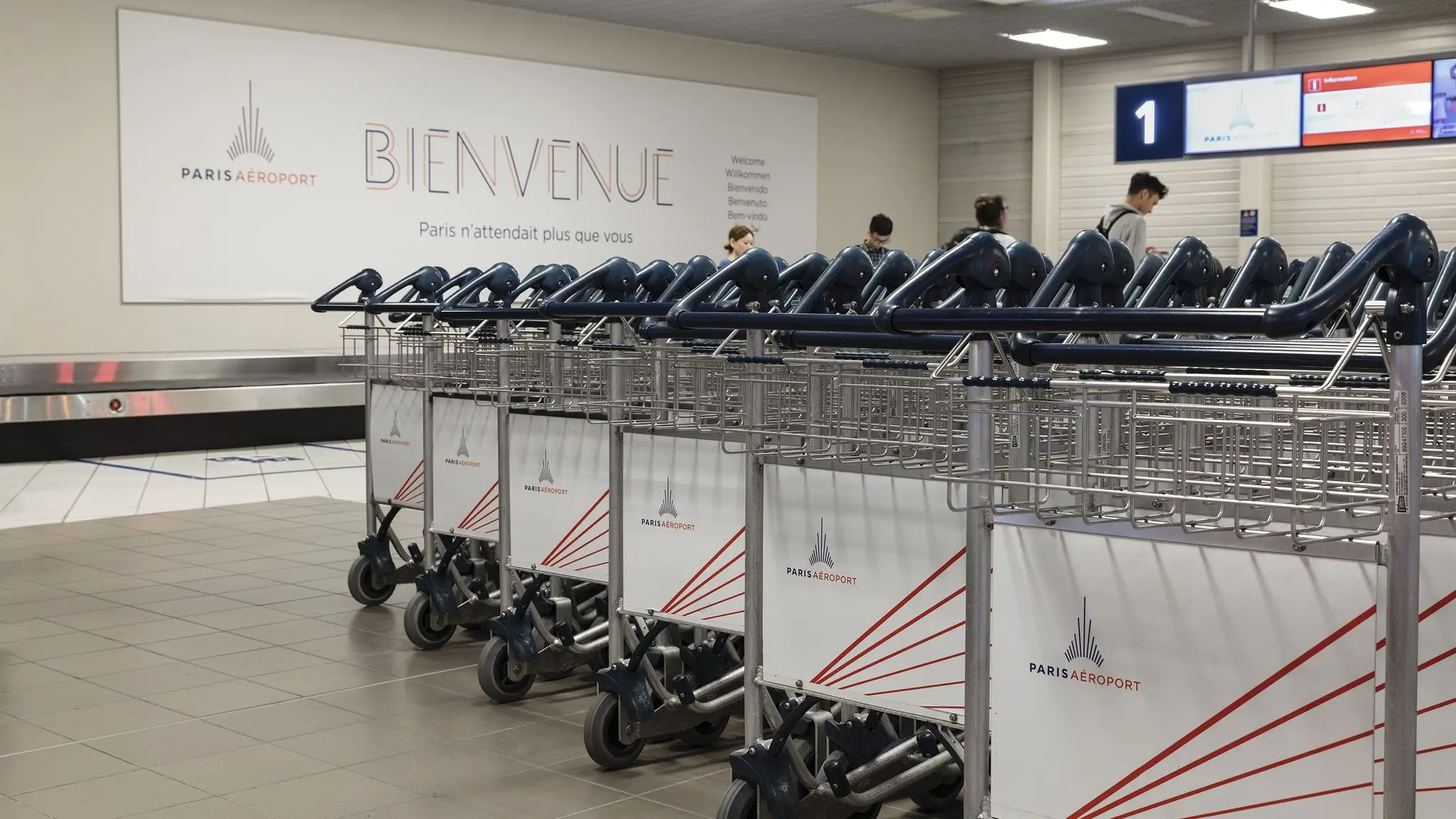
Airport ground operations with baggage carts and staff
What

Indoor and outdoor airport location

Pole Star tracks baggage carts, ground agents, electric baggage tractors and service vehicles in real time, with supervision dashboards and operational analytics.

Who

Operators and ground handlers

Airport operators, ground handling companies, operations and baggage teams, and the supervisors coordinating activity across terminals and airside.

Why now

Scale, traffic and turnaround pressure

Growing terminal complexity, high passenger traffic and constant turnaround pressure expose the limits of manual checks and fragmented reporting.

How

BLE assets plus mobile agents

Pole Star combines BLE tags on assets with existing BLE-enabled Wi-Fi, plus smartphone-based NAO Mobile for agents and vehicles, unified in one indoor/outdoor location layer.

Industry context

Why real-time location became critical in airports

Airports are among the world's most complex operational environments, with thousands of assets, agents and vehicles moving continuously across terminals, baggage halls and airside zones under constant time pressure.

Every day, major hubs manage thousands of baggage carts moving between terminals and passenger areas. Ground handling teams and baggage tractors also operate across indoor sorting facilities and outdoor aprons, making real-time visibility difficult without accurate location data.

The result is lost or misplaced carts, congestion at key operational areas and fragmented coordination across assets and ground teams. GPS cannot provide indoor coverage, while manual processes quickly become outdated.

By leveraging the existing BLE and Wi-Fi infrastructure together with the smartphones already carried by staff, real-time location intelligence delivers a unified view of both indoor and outdoor airport operations.

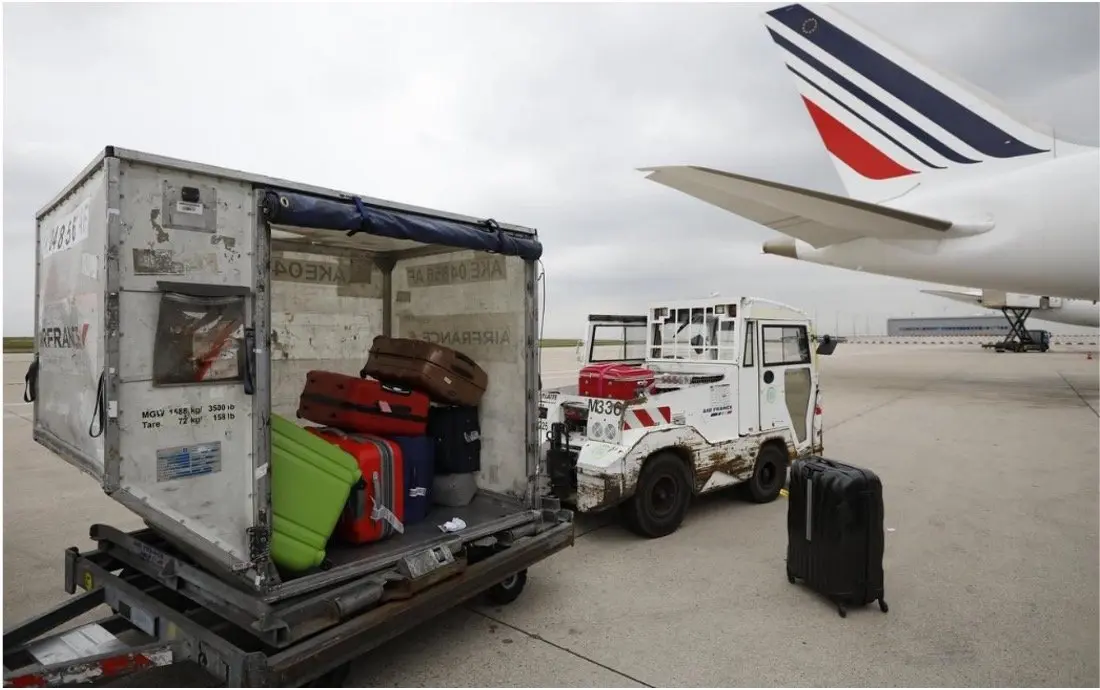
Airport airside operations with ground handling vehicles
Main challenges

The operational realities of running an airport at scale

The recurring friction points across terminals, baggage areas and airside — the ones that drive delays, cost and passenger dissatisfaction before anyone calls them a location problem.

01

Baggage carts never where passengers need them

Problem

Carts pile up in low-demand zones while check-in halls and arrivals run short.

Why it happens

Thousands of carts move across terminals with availability managed reactively, by manual checks and estimation.

Consequence

Passenger dissatisfaction and constant, unplanned redistribution work.

02

Baggage carts lost or stolen

Problem

Carts disappear, sit inactive for long periods or leave the operational perimeter.

Why it happens

There is no real-time visibility over a fleet of thousands of individual units.

Consequence

Replacement cost, a shrinking usable fleet and recurring shortages.

03

Blind spots between indoor and airside zones

Problem

Agents and vehicles move between baggage halls and outdoor aprons without a single view of where they are.

Why it happens

GPS fails indoors and systems are managed in isolated silos.

Consequence

Fragmented coordination and lost time at every zone boundary.

04

Congestion at baggage sorter infeed points

Problem

Saturation builds at sorter infeed areas before teams can react.

Why it happens

There is no live view of agent and vehicle flow toward the infeed.

Consequence

Bottlenecks, baggage transfer delays and knock-on turnaround risk.

05

Mission coordination that relies on manual reporting

Problem

Supervisors assign and track ground handling missions from fragmented information.

Why it happens

Without a unified location view, reallocation depends on radio calls and best guesses.

Consequence

Slow response when flights slip and no data to optimize.

06

Manual inventory checks that drain field teams

Problem

Staff walk zones to count carts and equipment by hand.

Why it happens

There is no automated, zone-based counting across operational areas.

Consequence

Labor cost and data that is already stale by the time it is recorded.

Assets & environments

What Pole Star tracks across the airport

ZONE A - CHECK-IN ZONE B - STORAGE AP AP AP CART LOCATED zone B

Real-time cart geolocation

How a baggage cart is located

1 BLE tag emitsEach baggage cart carries a BLE tag that continuously emits a signal.
2 Wi-Fi access points captureThe airport's existing BLE-enabled Wi-Fi access points pick up the signal across the zone.
3 Position & zone countingPole Star computes the cart's real-time indoor position and counts carts per operational zone.

Assets tracked

BLE for assets, NAO Mobile for agents and vehicles

Baggage carts

BLE

Thousands circulate across terminals - the core of real-time availability and loss prevention.

Baggage tractors

NAO Mobile

Electric tractors tracked via smartphone across baggage areas and airside zones.

Ground agents

NAO Mobile

Located in real time on professional devices for mission coordination and live monitoring.

Ground support equipment

BLE

GSE units tagged and located to reduce search time and improve utilization.

Service vehicles

NAO Mobile

Fleet visibility across indoor and outdoor operational zones without dedicated hardware.

Wheelchairs

BLE

Passenger assistance assets kept available and accountable across the terminal.

Deployment environments

Indoor and airside zones, each with its own constraint

Check-in halls

High passenger density and peak-hour surges that drain cart availability fast.

Arrival & baggage claim

Concentrated demand for carts as passengers collect baggage on arrival.

Baggage sorting areas

Indoor zones where agent and tractor congestion builds at sorter infeed points.

Aprons & airside

Outdoor operational zones where GPS is unreliable and safety constraints are high.

Passenger terminals

Large circulation areas requiring continuous coverage across long distances.

Cart storage & return

Drop-off and return zones where surpluses accumulate and need rebalancing.

Security & exits

Interface points where cart flow must be monitored between controlled areas.

Parking interfaces

Transition zones between terminals and parking where carts frequently drift.

Baggage cart tracking

Real-time location of every baggage cart across the airport

Baggage carts are among the most mobile and most searched-for assets in any airport. Lost time finding carts, uneven fleet distribution and manual stock checks directly impact ground crew efficiency and passenger experience. Pole Star solves this with continuous, real-time BLE tracking across all indoor and outdoor areas.

How it works
1
BLE tag on every cart

Each baggage cart is fitted with a compact BLE tag that continuously broadcasts its identifier at low power - no battery replacement needed for years.

2
Existing Wi-Fi / BLE infrastructure reads signals

The airport's existing BLE or Wi-Fi access points capture tag signals. No dedicated hardware is required - the system rides on the infrastructure already in place.

3
NAO® Track computes and displays live positions

The NAO® Track engine processes BLE signals and publishes each cart's position on a live indoor map, updated continuously and accessible to ground operations teams.

Operational benefits
Instant cart locationGround staff find the nearest available cart in seconds - no more walking entire terminals to locate empty equipment.
Fleet distribution analyticsIdentify systematically under-stocked zones and peak-hour accumulation patterns to rebalance the fleet proactively.
Reduced manual stock checksReplace periodic physical counts with a continuous digital inventory - always up to date, zero manual effort.
Lower cart loss and misplacementGeofencing alerts flag carts leaving authorized zones - reducing loss, theft and long-range misplacement.
Optimized fleet sizeLocation data reveals actual utilization rates and idle patterns, enabling evidence-based fleet right-sizing decisions.
Improved passenger experienceWell-distributed, easily locatable carts reduce friction at arrival and departure - a direct improvement to the terminal experience.
NAO® Viewer

Real-time supervision & operational analytics

Watch how the NAO® Viewer dashboard gives ground operations teams a live, unified view of every baggage cart across the airport - with fleet heatmaps, zone occupancy and alert management in a single interface.

Agent & baggage tractor tracking

Know where every agent and tractor is - indoors and outdoors

On a busy apron, agents move between terminal gates, baggage halls and outdoor tarmac while baggage tractors shuttle continuously between stands and sorting facilities. Losing track of either means slower turnarounds, wasted dispatching time and harder incident management. Pole Star delivers a unified live view across both layers - on the same platform.

NAO® Mobile - agents on smartphone BLE tags - baggage tractors BLE + GNSS - indoor/outdoor continuity NAO® Track - live supervision dashboard
How it works
1
Agents carry their own smartphone

The NAO® Mobile SDK runs on agents' professional smartphones. No dedicated badge or wearable needed - the app delivers continuous indoor positioning as agents move through terminals, gates and baggage halls.

2
BLE tags fitted on baggage tractors

Each tractor carries a compact BLE tag. Signals are captured by the airport's existing BLE or Wi-Fi access points, computing the tractor's position inside terminal zones and across the apron.

3
Indoor/outdoor continuity via BLE + GNSS

As agents and tractors move between indoor and outdoor zones, positioning switches seamlessly between BLE (indoors) and GNSS (apron, tarmac) - delivering a single, uninterrupted track across the full airport footprint.

4
NAO® Track publishes a unified live map

All positions - agents and tractors - are aggregated into a single real-time supervision dashboard, with filtering by zone, team or vehicle type and configurable geofence alerts.

Indoor/outdoor continuity: the transition between BLE indoor and GNSS outdoor is automatic and transparent - no manual switch, no location gap at the terminal door.
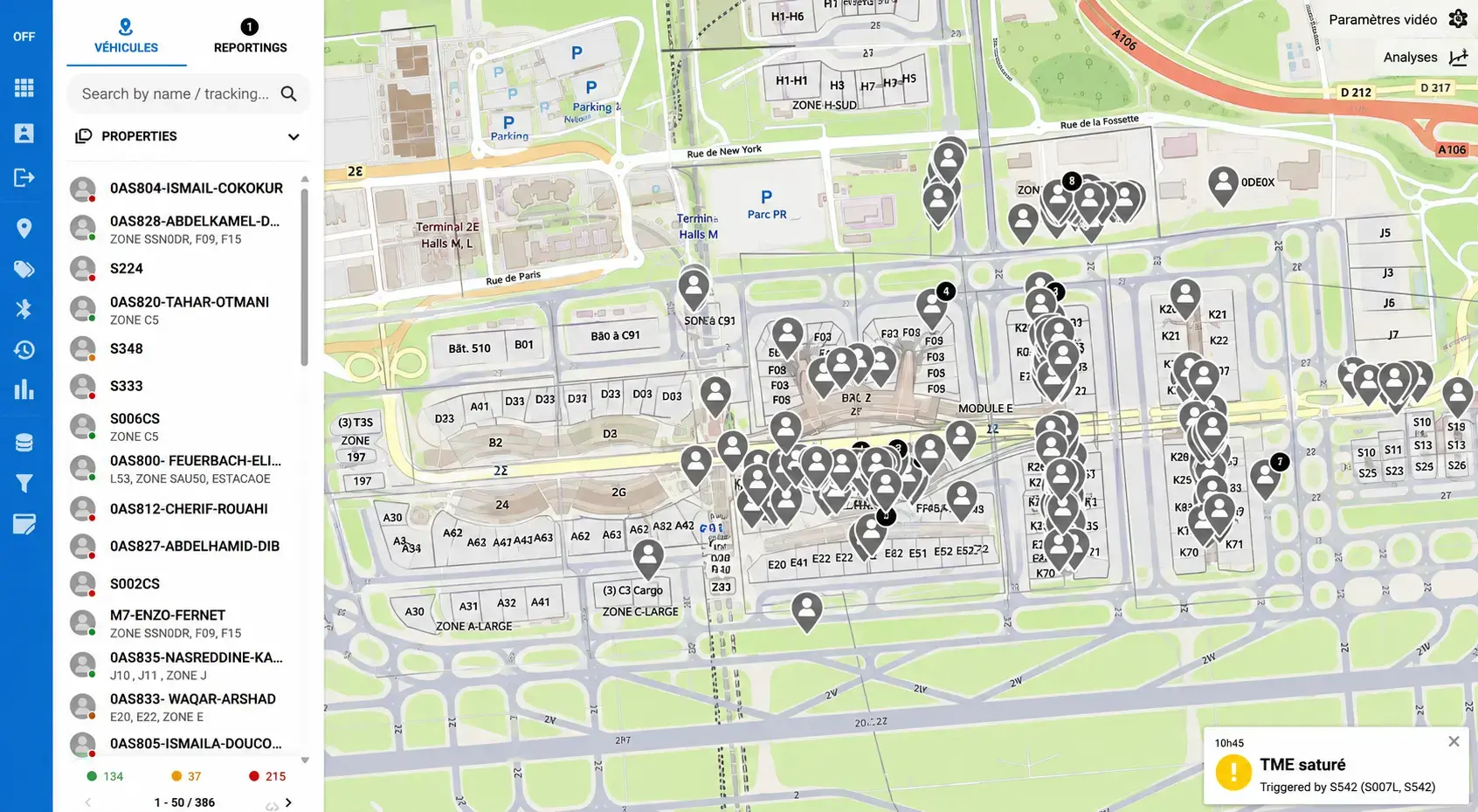
NAO Viewer live supervision dashboard - agent and tractor tracking
Operational benefits
Faster agent dispatchSupervisors see the nearest available agent in real time and dispatch without radio back-and-forth.
Tractor availability at a glanceKnow which tractors are idle, in transit or assigned - reduce waiting time between flights.
Turnaround performance trackingReplay agent and tractor movements per flight to identify delays, bottlenecks and process gaps.
Geofence zone alertsAutomatic alerts when agents or tractors enter or exit restricted apron zones - safety and compliance in one.
Single view across indoor and outdoorOne map, one platform - agents inside the terminal and tractors on the apron tracked together without switching tools.
No additional hardware for agentsNAO® Mobile runs on existing professional smartphones - zero badge procurement or wearable management.
How workflows transform

The same operation, before and after real-time location

Before

She radios around, sends staff to hunt for spare carts and rebalances by hand - reacting only once passengers are already complaining.

With Pole Star

A zone shortage alert fires automatically. She sees where surplus carts sit and dispatches a targeted rebalancing before passengers notice.

Outcome

Carts back where passengers need them, fewer complaints and less wasted movement.

Before

Losses only surface at inventory time, with no way to tell which carts left the perimeter or have sat inactive for days.

With Pole Star

Inactivity and abnormal-movement alerts flag carts leaving zones, while historical patterns reveal loss hotspots.

Outcome

Fewer losses and thefts, and a healthier, better-used fleet.

Before

He coordinates from fragmented radio updates, with limited visibility on who is where across indoor and airside zones.

With Pole Star

He sees every agent and tractor live on one indoor/outdoor view and reassigns missions dynamically as conditions change.

Outcome

Faster turnaround response and smoother coordination under pressure.

Before

Congestion is discovered only once bags back up, and the resulting delays cascade through the operation.

With Pole Star

Continuous movement tracking flags saturation risk early at infeed points, so he adjusts the workflow before the bottleneck forms.

Outcome

Fewer bottlenecks, reduced processing delays and better service level compliance.

Solution mapping

From airport challenge to Pole Star solution

Every operational challenge on this page maps to a specific Pole Star capability - the routing layer between the problems ground teams face and the solutions that address them.

Airport challengePole Star solutionLearn more

01Cart shortages and imbalance across terminals

Solution

Asset tracking

Explore

02Cart loss, theft and zone breaches

Solution

Geofencing

Explore

03Agent and vehicle coordination on the apron

Solution

Workforce location

Explore

04Congestion and turnaround at sorter infeed

Solution

Flow analytics

Explore

05Passenger and reduced-mobility assistance

Solution

Indoor navigation

Explore
Use cases

How airports put real-time location to work

Concrete, day-to-day scenarios where indoor and outdoor location changes the outcome - from check-in halls to the apron.
How airports keep baggage carts available at check-in

Trigger

Cart racks empty out during a morning departure peak.

Response

Zone counting and shortage alerts show where carts are needed.

Benefit

Carts rebalanced before passengers are affected.

How airports reduce baggage cart loss and theft

Trigger

Carts drift out of the perimeter or sit inactive for days.

Response

Inactivity and zone-breach alerts flag at-risk carts.

Benefit

Fewer losses and a larger usable fleet.

How airports count carts by zone automatically

Trigger

Teams waste hours on manual inventory checks.

Response

The system counts carts per operational zone in real time.

Benefit

Live availability data with no manual counting.

How ground handlers coordinate agents and tractors

Trigger

A flight slips and missions must be reassigned fast.

Response

Live indoor/outdoor positions support dynamic mission assignment.

Benefit

Faster reallocation and smoother turnaround.

How airports prevent congestion at baggage sorter infeed

Trigger

Saturation builds at the sorter infeed during peaks.

Response

Movement tracking detects congestion risk early.

Benefit

Bottlenecks avoided and transfer delays reduced.

How airports track assets across indoor and outdoor zones

Trigger

Assets vanish from view when moving between halls and apron.

Response

A unified location layer covers indoor and airside continuously.

Benefit

No blind spots at zone boundaries.

How airports rebalance cart fleets between terminals

Trigger

One terminal runs short while another holds a surplus.

Response

Distribution data guides proactive redistribution workflows.

Benefit

Balanced availability across the whole airport.

How airports build traceability for ground operations

Trigger

There is no objective record of missions and movements.

Response

Every mission and movement is logged automatically.

Benefit

Full traceability and data to improve performance.

Compliance & constraints

Built for airport security and operational constraints

Airport deployments operate under demanding industrial, security and data requirements. Pole Star is designed to fit within these constraints and integrate with the systems airports already run.

Industrial & securitySupported

Industrial, operational and security constraints

Requires

Solutions deployed in a live airport must comply with strict industrial, operational and security rules.

Pole Star response

Deployments are designed and delivered to comply with industrial, operational and security constraints, at scale and without heavy infrastructure changes.

IT integrationSupported

Interoperability with existing airport systems

Requires

New systems must integrate with existing airport IT and operational platforms without disruption.

Pole Star response

The platform is interoperable and integrates with existing airport IT and operational systems, including infrastructure such as Cisco, within a broader partner ecosystem.

Data governanceSupported

Data governance and deployment control

Requires

Tracking assets and staff calls for control over where data lives and how it is processed.

Pole Star response

A hybrid cloud and on-premise architecture lets airports align data governance and residency with their own policies. See how the platform works.

TraceabilitySupported

Operational traceability and audit

Requires

Ground operations need reliable logs for audit, reporting and continuous improvement.

Pole Star response

All missions and movements are automatically recorded, generating operational logs, traceability data and performance analytics.

Benefits

What airport teams gain

Real-time location turns constant movement into operational clarity. The outcomes below are qualitative and drawn from live airport deployments.

01

Carts available where passengers need them

Zone counting and alerts keep the fleet balanced across the terminal.

02

Fewer lost and stolen carts

Inactivity and zone-breach alerts protect the usable fleet.

03

No more manual inventory checks

Automated, zone-based counting replaces walking the floor to count carts.

04

Unified indoor and outdoor visibility

One continuous view across terminals, baggage areas and airside.

05

Faster, data-driven coordination

Supervisors reassign missions live as operations change.

06

Early detection of congestion

Saturation risk at sorter infeed points is flagged before bottlenecks form.

07

Full traceability and analytics

Every mission and movement logged for reporting and continuous improvement.

08

Scales on existing infrastructure

Thousands of assets across terminals, without heavy infrastructure changes.

Customer stories

Proven at Paris Charles de Gaulle

Paris, France Paris Charles de Gaulle airport

Atalian - Paris CDG

8,000-10,000Carts tracked
2,000+BLE Wi-Fi APs
HybridCloud + on-prem
Challenge

Managing thousands of baggage carts at scale - recurring shortages, surpluses, losses and no real-time visibility, all handled reactively.

Deployment

Each cart is tagged with BLE and located through 2,000+ existing BLE-enabled Cisco Wi-Fi access points. Zone-based counting and intelligent alerts run on NAO® Track, NAO® Viewer and NAO® Cloud, integrated via Cisco Spaces, with partners Hub One and Atalian.

  • Substantial reduction in baggage cart losses and theft
  • Improved cart availability in passenger-critical zones
  • Optimized redistribution and time savings for field teams
Read case study
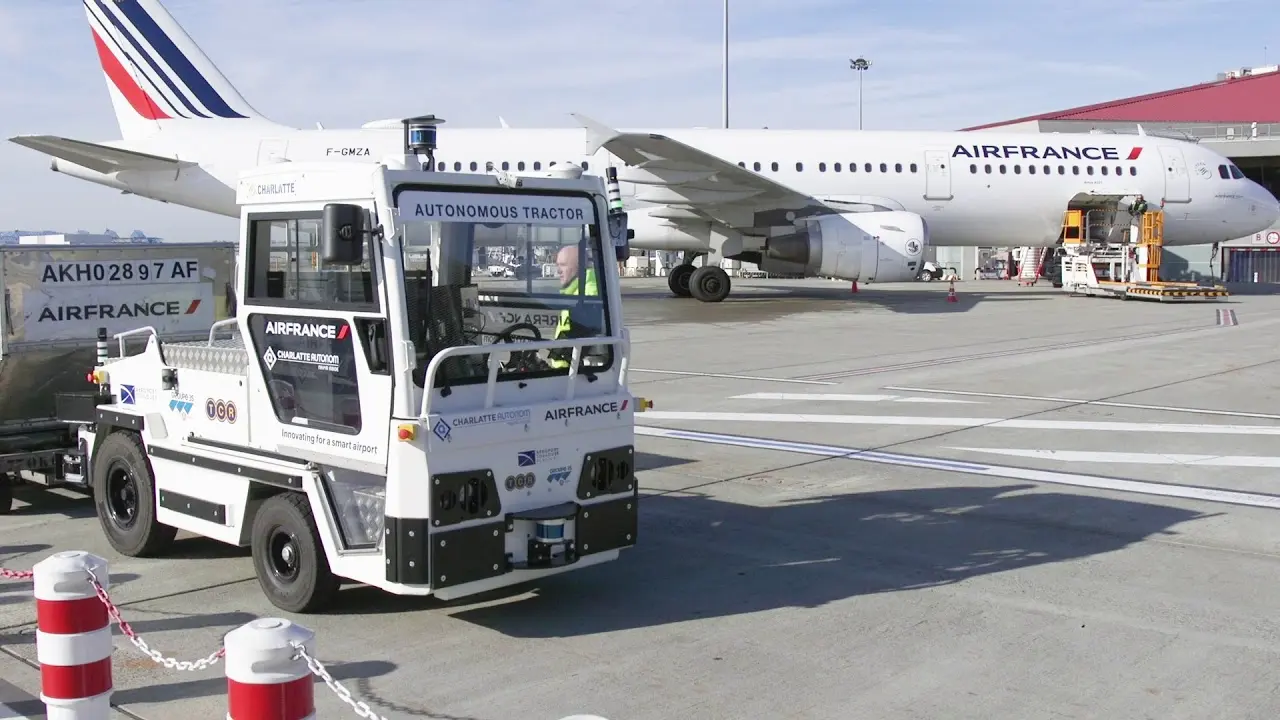
Paris, France Airport apron ground handling at Paris CDG

ONET - Paris CDG

50+Agents & tractors
In + outIndoor & airside
0Dedicated hardware
Challenge

Coordinating ground handling across indoor sorting facilities and outdoor apron zones from fragmented information and manual reporting.

Deployment

50+ agents and electric baggage tractors are geolocated by smartphone using NAO® Mobile - with no dedicated vehicle hardware - across indoor and airside zones, with real-time supervision and mission tracking on NAO® Viewer.

  • Optimized baggage handling workflows and reduced processing delays
  • Improved coordination between agents and vehicles
  • Consolidated indoor and outdoor operational visibility
Read case study
Why Pole Star

Why leading airports choose Pole Star for indoor location

Built for complex airport operations, Pole Star delivers proven indoor location solutions that improve baggage cart availability, ground handling coordination and operational visibility across terminals and airside areas.

01

Proven in major international airports

Pole Star powers large-scale airport deployments including Aéroports de Paris (CDG), supporting thousands of connected baggage carts and ground operations every day in demanding live environments.

Paris Charles de Gaulle
02

Built on existing airport infrastructure

Pole Star leverages existing BLE infrastructure, Wi-Fi networks and smartphones already used by ground staff, reducing deployment costs while avoiding complex infrastructure replacement projects.

BLE · Wi-Fi · Smartphone compatible
03

Designed for complex airport operations

From passenger terminals and baggage halls to airside aprons and service roads, Pole Star delivers seamless indoor and outdoor location across large airport campuses, helping coordinate assets, vehicles and ground teams in real time.

Terminal · Airside · Multi-terminal campus
04

One platform for multiple airport use cases

A single location platform supports asset tracking, baggage cart management, flow analytics, workforce visibility and operational supervision, providing a unified real-time view of airport activities.

Asset tracking · Flow analytics · Operational visibility
FAQ

Airport indoor location, answered

Airport operations
How does Pole Star improve airport operations?

Pole Star provides real-time visibility of airport assets, vehicles and operational teams, helping airports optimize daily operations, reduce delays and improve overall efficiency across terminals and airside areas.

How are baggage carts tracked in real time?

Each baggage cart is equipped with a BLE tag. Pole Star continuously locates every cart on an interactive map, allowing airport teams to quickly identify shortages and redistribute carts where they are needed.

Can Pole Star locate ground handling teams?

Yes. Ground handlers, maintenance technicians and operational staff carrying compatible smartphones or BLE devices can be located in real time, improving coordination and response times.

Which airport assets can Pole Star track?

Pole Star tracks baggage carts, wheelchairs, service vehicles, maintenance equipment, cleaning carts and virtually any mobile asset equipped with BLE tags.

Can Pole Star improve passenger experience?

Yes. Indoor positioning supports passenger wayfinding, reduces baggage cart shortages and helps airport operators deliver smoother journeys throughout the terminal.

Passenger experience
Does Pole Star provide indoor navigation?

Yes. Pole Star offers accurate indoor navigation that guides passengers through terminals, helping them find gates, shops, lounges, baggage claim areas and airport services.

Can Pole Star analyze passenger flows?

Yes. Airports can analyze passenger movement patterns, identify congestion points and optimize terminal layouts, staffing and operational processes.

Can Pole Star operate across multiple terminals?

Yes. The platform provides seamless indoor positioning across multiple terminals, connecting operational teams and assets throughout the airport campus.

How accurate is Pole Star's indoor positioning?

Pole Star delivers room-level or operational-area accuracy depending on infrastructure density, providing reliable positioning for airport operations.

Can Pole Star work indoors and outdoors?

Yes. Pole Star combines indoor positioning with outdoor location services, enabling continuous tracking from passenger terminals to apron and operational areas.

Technology & deployment
What technology does Pole Star use?

Pole Star primarily uses Bluetooth Low Energy (BLE) together with existing Wi-Fi infrastructure to provide accurate indoor positioning without requiring proprietary hardware.

Can Pole Star use existing airport infrastructure?

Yes. Pole Star leverages existing BLE-enabled Wi-Fi access points and wireless infrastructure, significantly reducing deployment costs and implementation time.

Can Pole Star integrate with airport systems?

Yes. Open APIs allow integration with airport operational systems, digital maps, mobile applications and third-party airport technologies.

Can Pole Star scale across large airports?

Yes. Pole Star is designed for large international airports and can scale from a single terminal to multi-terminal airport campuses with thousands of connected assets.

Why do airports choose Pole Star?

Airports choose Pole Star because it leverages existing infrastructure, delivers enterprise-grade indoor positioning and supports multiple use cases including baggage cart tracking, workforce tracking, indoor navigation, flow analytics and operational supervision.

Transform your airport operations with real-time location

Improve baggage cart availability, coordinate ground teams, monitor airport assets and deliver better passenger experiences with a single indoor location platform built for modern airports.

Trusted by Atalian and ONET at Paris Charles de Gaulle

Scroll to Top