
Know how many,
and exactly where.
In real time.
For hospitals, airports, venues and workplaces - live headcount per zone, capacity limits and threshold alerts, powered by geofencing on your existing BLE and Wi-Fi. Aggregated, privacy-first, no cameras.

What is people counting & occupancy?
People counting and occupancy is the real-time measurement of how many people are inside a building or a defined zone at any moment. It compares live headcount against capacity and triggers alerts when thresholds are crossed. Pole Star delivers it through geofencing on your existing BLE and Wi-Fi, using aggregated, anonymized data - no cameras.
It gives a live headcount per zone against capacity, with threshold alerts.
It serves facilities, safety and operations teams in hospitals, transport, venues and workplaces.
Capacity compliance, safety and energy all depend on knowing occupancy in real time.
Pole Star geofences zones, counts presence inside each, and alerts the moment a limit is crossed.
Real-time headcount
Live counts of how many people are in the building and in each zone, updated continuously.
Capacity & thresholds
Set limits per zone and see occupancy against capacity at a glance, live and historical.
Geofenced alerts
Zones are geofences - when a threshold is crossed, the right team is alerted instantly.
The business challenge: you can't manage what you can't count
Most buildings run without knowing how many people are inside at any moment. Capacity is a guess, safety limits are enforced by eye, and space is sized for a peak nobody has measured. When occupancy is invisible, every decision about it is a gamble.
The costs stack up on three fronts: safety and compliance, where overcrowding and evacuation headcount are hard to prove; cost, where heating, cooling and staffing run for space that sits half empty; and experience, where crowding goes unmanaged. Real-time occupancy is the missing input.
The answer isn't more cameras. It's a live, aggregated count per zone - so you can enforce limits, right-size space and drive systems on what's actually happening, right now.

The cost of not measuring - workplace, the most-documented case
What changes when occupancy is a live number
Concrete outcomes facilities, safety and operations teams see with real-time occupancy.
Capacity compliance
Keep every zone within its limit and prove it, automatically.
Safer evacuations
An accurate headcount per zone helps confirm a building is clear.
Right-sized space
See real occupancy and cut space and cost without hurting experience.
Lower energy use
Drive HVAC and lighting from real occupancy instead of fixed schedules.
Instant threshold alerts
Know the moment a zone crosses its limit, not after the fact.
Privacy-safe insight
Aggregated, anonymized counts - no cameras and no individual tracking.
Sound familiar?
What teams say before they can see occupancy in real time.
We honestly don't know how many people are in the building right now.
Without a live number, capacity and safety are guesswork.
We only find out a zone was overcrowded after someone complains.
By the time you hear about it, the risk has already passed.
In an evacuation, we can't confirm everyone is out.
No headcount means no way to prove a zone is clear.
We heat and light whole floors that are barely used.
Fixed schedules waste energy on empty space.
We can't put cameras on people just to count them.
Privacy rules rule out camera-based counting.
Door counters drift and never match reality by end of day.
Simple counters lose accuracy and trust over time.
From presence to a live, actionable count
Wireless infrastructure
BLE / Wi-FiYour existing network senses presence across the building - no cameras, no parallel system.
Positioning engine
Real-timePole Star determines presence in each part of the site, continuously.
Geofenced zones
DefineYou draw zones as geofences - a room, a floor, an area - each with its own capacity.
Live count per zone
AggregatedPresence becomes an anonymized headcount for each zone, against its limit.
Thresholds & alerts
AutomaticWhen a count crosses a threshold, the right team is alerted instantly.
Dashboards & action
OutcomeLive and historical occupancy drives compliance, energy, staffing and space decisions.
A conference room is geofenced with a limit of 12. As people gather, the live count climbs - and the moment it hits 13, facilities get an alert and the room display turns red. No one had to be watching; the zone watched itself.
Draw a zone, set a limit, let it watch itself
Occupancy is built on geofencing: you define zones on your floor plan, Pole Star counts who is inside each one, and the moment a threshold is crossed it fires an alert - all aggregated and anonymized.
Define the zone
Draw a geofence on the floor plan and set its capacity.
Count inside
Pole Star counts presence within the zone, anonymized.
Check the threshold
Live count is compared to the zone's limit continuously.
Alert & act
Cross the limit and the right team is notified instantly.
Everything you need to run occupancy
Built around what facilities and safety teams actually ask for.
Real-time headcount
Live counts for the whole building and each zone, updated continuously.
Always know how many, and where.
Geofenced zones
Draw any zone on your floor plan and set its own capacity limit.
Count exactly what matters.
Threshold alerts
Automatic notifications when a zone reaches or exceeds its limit.
Act before it becomes a problem.
Live occupancy displays
Show a clear at-a-glance status on screens or in your own apps.
Everyone sees capacity instantly.
Historical trends
See how occupancy varies by hour, day and season to plan ahead.
Right-size on real patterns.
Privacy by design
Counts are aggregated and anonymized - no cameras, no individual tracking.
Compliant and trusted.
What teams solve with real-time occupancy
Enforce room & zone capacity
A zone must stay within a set capacity.
Live count is checked against the limit.
An alert fires the moment it's exceeded.
Confirm evacuation headcount
An evacuation is called.
Occupancy per zone is read in real time.
Teams see which zones are clear.
Drive HVAC & lighting
Energy is wasted on empty space.
Occupancy feeds the building systems.
Heating and lighting follow real use.
Manage event crowds
A busy area risks overcrowding.
Live counts flag pressure early.
Staff redirect flow before it builds.
Right-size the workplace
Floors feel under-occupied.
Occupancy trends reveal true usage.
Space is consolidated, cost falls.
Show capacity at the door
Visitors need to know if it's full.
Live occupancy shows on entrance displays.
People self-manage, queues ease.
Where real-time occupancy matters most
The environments where knowing headcount changes safety, cost and experience.

Healthcare
Manage waiting-area capacity, confirm zone headcount and right-size clinical space.
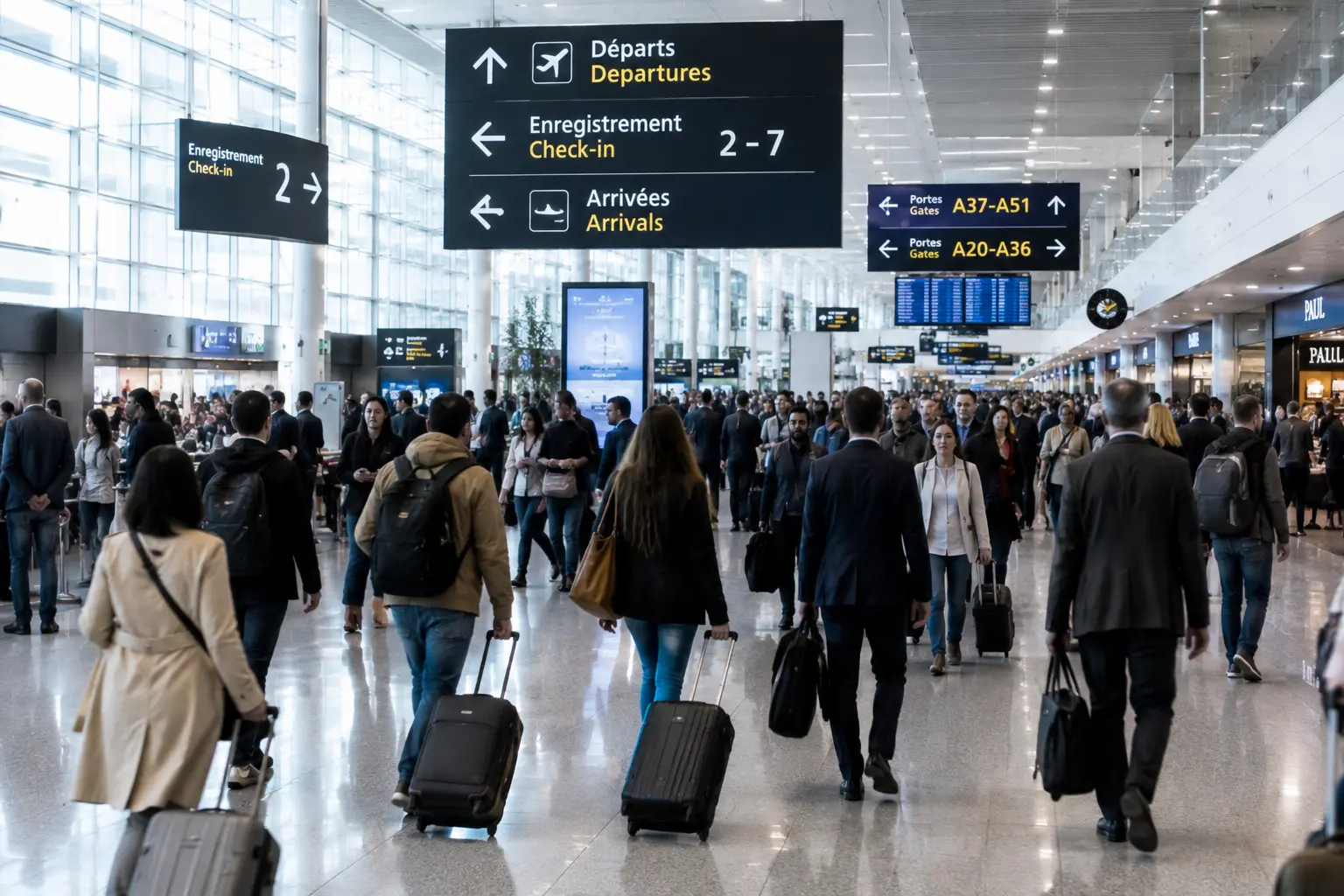
Airports & transport
Track hall and lounge occupancy to manage crowds, staffing and passenger comfort.

Venues & retail
Enforce capacity limits, show live status at the door and manage event crowds.
Occupancy in large, high-traffic sites

Healthcare
Understand presence and headcount across zones of a busy emergency department.
Zone-based occupancy on existing infrastructure, with NAO Track, NAO Viewer and NAO Flow.
- Presence across the department visible on one live map
- Geofenced zones with aggregated, anonymized counts
- A foundation for capacity and flow decisions
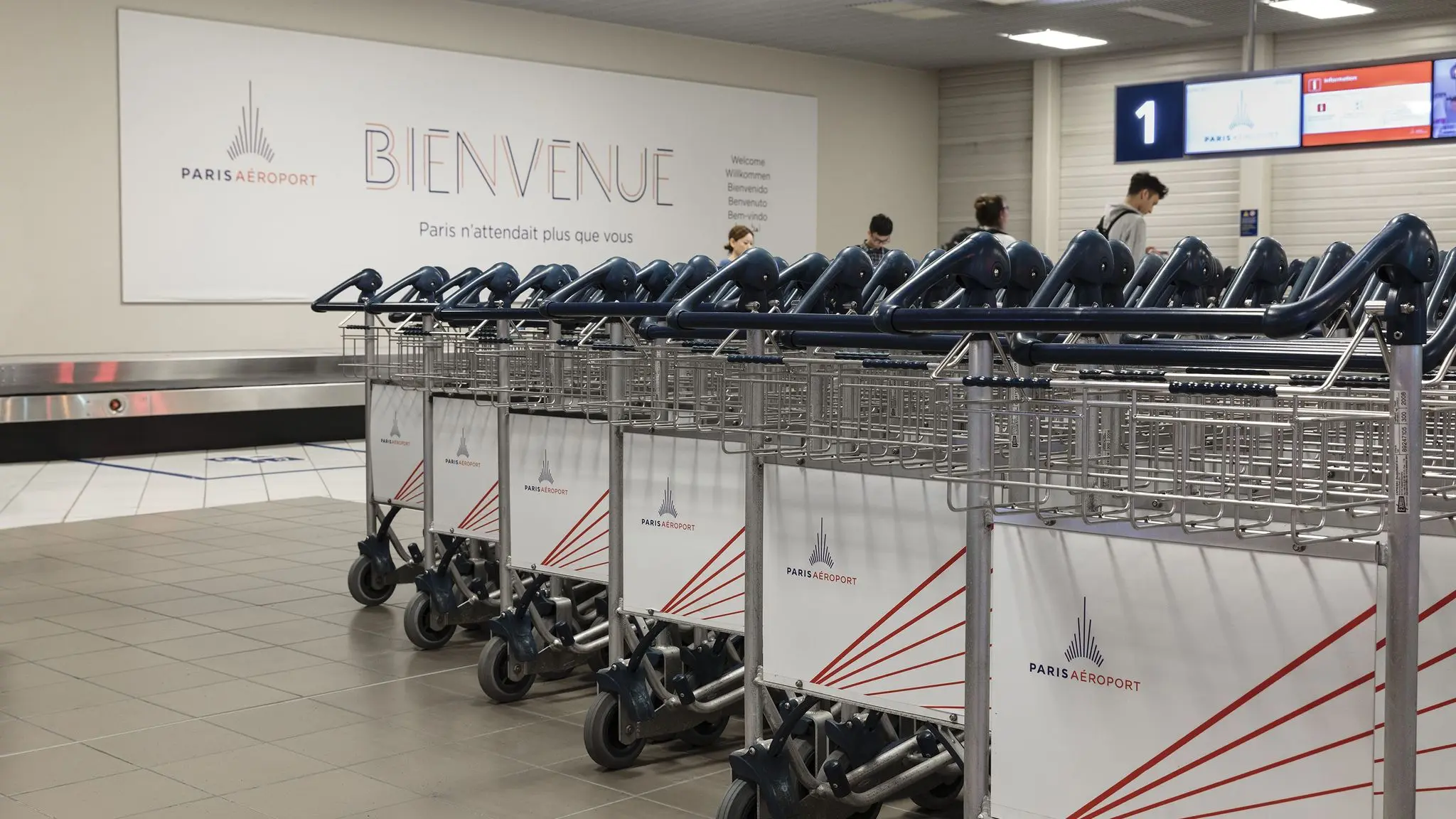
Airports
Gain zone-level visibility across vast, multi-terminal airport spaces.
Zone counting on existing Cisco access points, with NAO Track, NAO Viewer and Cisco Spaces.
- Zone-level presence on 2,000+ BLE-enabled access points
- Coverage across a vast, multi-terminal footprint
- Aggregated data feeding operational decisions
Pole Star vs door counters vs camera analytics
Whole-site, per-zone counts
Count any geofenced zone, not just the front door - the whole building, continuously.
Privacy-first, no cameras
Occupancy from aggregated, anonymized location - no images and no individual tracking.
On the network you own
Runs on existing Cisco and HPE Aruba - no sensors on every door, lower total cost.
People counting & occupancy, answered
What is people counting and occupancy?
It is the real-time measurement of how many people are inside a building or a defined zone at any moment, compared against capacity. Pole Star delivers it through geofencing on existing BLE and Wi-Fi, using aggregated, anonymized data.
How does it count without cameras?
It senses presence through BLE and Wi-Fi and aggregates it into anonymized counts per zone. There are no cameras and no images involved.
How does geofencing fit in?
Each zone is defined as a geofence with its own capacity. Pole Star counts presence inside it and triggers an alert when the threshold is crossed.
How accurate is the count?
Positioning is computed to zone and room level, on the order of 1-5 meters with BLE. Because counts are computed continuously, they don't accumulate the drift that simple door counters do.
Does it work in real time and historically?
Yes. You get a live headcount now, plus historical occupancy to see how it varies by hour, day and season.
Can it count both people and assets?
Yes. The same platform can count tagged assets alongside people, so occupancy and asset presence share one deployment.
Does it run on our existing network?
Yes. It runs on existing BLE-enabled Wi-Fi and Cisco Spaces, as well as HPE Aruba - no cameras and no sensor on every door.
Do we need hardware on each door?
No. Unlike door counters, Pole Star uses your wireless infrastructure to count across whole zones, not just thresholds.
Can we define our own zones and limits?
Yes. You draw zones on your floor plan and set a capacity for each, and can adjust them at any time.
How are alerts delivered?
Threshold alerts can be sent to dashboards, screens and your own systems, so the right team is notified instantly.
Does it scale across sites?
Yes. Occupancy scales from one building to an estate, consolidating counts across locations in one view.
What is the ROI of occupancy monitoring?
Returns come from capacity compliance, energy savings on HVAC and lighting, right-sized space and better staffing. Since space and energy are major costs, the payback is typically quick.
Can it reduce energy costs?
Yes. Driving HVAC and lighting from real occupancy instead of fixed schedules avoids conditioning space that is empty.
Can it help with safety compliance?
Yes. Real-time capacity monitoring and per-zone headcount support capacity limits, crowd management and evacuation.
Can we reuse the system for other use cases?
Yes. The same platform powers flow analytics, asset tracking and safety, so occupancy shares one deployment.
Who benefits most?
Hospitals, airports, stations, venues, retail and workplaces - anywhere capacity, safety and energy depend on knowing occupancy.
Does it identify individuals?
No. Occupancy is computed from aggregated, anonymized data. The goal is a count, not identifying or following anyone.
Are images or video captured?
No. Unlike camera-based counting, Pole Star uses BLE and Wi-Fi signals only, with no images or video.
Is it privacy compliant?
It is designed with privacy in mind, using aggregation and anonymization, and is configured to each organization's data-protection policy.
Can data stay on-premise?
Yes. On-premise deployment keeps the engine and data inside your own infrastructure, which suits sites with strict requirements.
Who can access the occupancy data?
Access is role-based, so administrators control which teams can view dashboards and counts, matching each role's responsibilities.
Know your occupancy in real time
Book a demo and we'll show live headcount, geofenced zones and threshold alerts on your own floor plans.
- Runs on your existing Cisco / Aruba infrastructure
- Per-zone counts and capacity alerts, geofenced
- Aggregated and privacy-first, no cameras
Ready to see occupancy live on your own site? Get in touch and we'll set up a demo.
Book a demo