
One location platform.
Every use case.
Your existing network.

Pole Star's platform turns your existing BLE and Wi-Fi into real-time location - powering asset tracking, worker safety, indoor navigation, flow analytics and geofencing from a single deployment.


Built on ISO 27001 Cisco HPE Aruba
Definition

What is a location intelligence platform?

Canonical definition

A location intelligence platform is the software layer that turns wireless signals into real-time indoor location and analytics. It computes where people and assets are, applies rules and geofences, and feeds that data to any application. Pole Star's platform runs on your existing BLE and Wi-Fi infrastructure and powers every location use case from one deployment.

What

It is one engine for real-time location plus analytics, powering many solutions at once.

Who

It serves operations, safety, facilities and IT teams across healthcare, transport, industry and maritime.

Why now

Point systems create silos and duplicate cost, just as location becomes standard infrastructure.

How

Pole Star computes location on your network and exposes it through open APIs, an SDK and dashboards.

What the platform gives you

Real-time positioning engine

Accurate indoor location for people and assets, computed continuously on your existing infrastructure.

Analytics & flow data

Dashboards and historical data reveal utilization, movement and flow across your whole site.

Open SDK & integrations

APIs and the NAO® Mobile SDK push location into your own apps and existing systems.


The business challenge: location is becoming standard, but silos are not

Indoor location has moved from nice-to-have to core infrastructure. But most organizations arrive at it one project at a time - a tracking system here, a duress system there, a wayfinding app somewhere else - each with its own vendor, its own tags and often its own network.

The result is fragmentation: duplicated hardware, siloed data that never connects, multiple contracts to maintain, and rising cost with every new use case. The location itself is the same problem solved five times.

A platform approach flips that. Compute location once, on the network you already own, and reuse it everywhere - one deployment, one data layer, every use case.

Operations team using location dashboards

Why location intelligence is now core infrastructure

~30%
Annual growth rate of the real-time location systems market through 2034.
Source: Market.us
~30%
Of hospitals worldwide had adopted real-time location by 2024-2025.
Source: Market.us
75%
Of manufacturers expect location systems to be standard in complex plants by 2028.
Source: Market.us
42%
Of the location-systems market is healthcare - the anchor vertical driving adoption.
Source: Mordor Intelligence
Questions buyers ask
Can one platform handle tracking, safety and navigation?
Do we need separate systems for each use case?
Can it run on our existing Cisco or Aruba network?
How do we get location data into our own apps?
Business outcomes

What changes with one platform instead of many systems

Concrete outcomes operations and IT teams see when location runs as a platform.

01

One platform, many use cases

Add tracking, safety, navigation or analytics without a new system each time.

02

Lower total cost of ownership

Reusing existing infrastructure and one deployment avoids duplicated hardware and contracts.

03

One connected data layer

Location data is shared across use cases instead of trapped in separate tools.

04

Faster time to value

New use cases launch on infrastructure that is already in place.

05

Built into your own systems

Open APIs and an SDK put location inside your apps and workflows.

06

Enterprise-ready & secure

Cloud or on-premise deployment with ISO 27001 practices and role-based access.

Common pain points

Sound familiar?

What teams run into when location grows one point solution at a time.

Every new use case means another vendor and another system.

Costs and integration effort multiply with each project.

We've got three location tools and none of them talk to each other.

Siloed data means no single view of the site.

Each supplier wants us to install their own network.

Parallel infrastructure is expensive and hard to maintain.

Our location data is locked inside someone else's dashboard.

Without open access, you can't build it into your own systems.

We can't get sign-off to send location data to the cloud.

Rigid deployment options block projects before they start.

Scaling from one building to the whole estate feels impossible.

Point solutions rarely scale cleanly across sites.

How the platform works

Compute location once, use it everywhere

1

Wireless infrastructure

BLE / Wi-Fi

Your existing Cisco or HPE Aruba network and BLE beacons feed the platform - no parallel system.

2

Positioning engine

Real-time

The NAO engine computes the live position of every tag, badge and phone across your site.

3

Location data layer

One source

Positions, zones, geofences and history live in a single data layer, shared by every use case.

4

Solution modules

Many use cases

Asset tracking, worker safety, indoor navigation, flow analytics and geofencing all draw from the same layer.

5

APIs, SDK & dashboards

Open

Location flows into your own apps, systems and dashboards through open interfaces.

6

Cloud or on-premise

Your choice

Deploy in the cloud or fully on-premise to match your security and data requirements.

In practice

A hospital starts with asset tracking on its Cisco network. Six months later it adds staff duress and patient wayfinding - no new infrastructure, no new vendor, no second data silo. The same location layer simply powers another use case, and the dashboards grow with it.

Platform capabilities

Built to run location at enterprise scale

The capabilities that make one platform work across every use case and site.

Real-time positioning

Continuous, accurate indoor location for tags, badges and phones across the whole site.

One engine for every use case.

Analytics & dashboards

Live and historical views of utilization, flow and movement across spaces.

Turn location into decisions.

Open API & SDK

Push location into your own apps and systems with open interfaces and the NAO Mobile SDK.

No data locked in a black box.

Runs on Cisco & HPE Aruba

Uses existing BLE-enabled Wi-Fi and Cisco Spaces - no dedicated parallel network.

Add location without new infrastructure.

Cloud or on-premise

Deploy where your security and data rules require, with ISO 27001 practices.

Meets strict data requirements.

Scales across sites

Roll out from one building to an entire estate on a single platform.

One deployment, many sites.

Typical use cases

One platform, one project at a time

Start with asset tracking

Trigger

A hospital wants to stop losing mobile equipment.

Action

The platform is deployed on the existing Cisco network.

Result

Live asset location, ready to extend later.

Asset tracking

Add worker safety later

Trigger

The same site now needs staff duress.

Action

Safety is switched on - no new infrastructure.

Result

Located alerts on the platform already running.

Worker safety

Guide visitors in your app

Trigger

Patients keep getting lost on arrival.

Action

Wayfinding is embedded via the NAO Mobile SDK.

Result

Blue-dot routing on the same location layer.

Indoor navigation

Understand how spaces are used

Trigger

Facilities want to optimize space and staffing.

Action

Flow analytics runs on the existing location data.

Result

Evidence for better layout and resourcing.

Flow analytics

Automate zone rules

Trigger

Assets must not leave a defined area.

Action

Geofences trigger alerts on the platform.

Result

Automatic control without extra tooling.

Geofencing

Feed location into your systems

Trigger

Your own apps need real-time location.

Action

Open APIs push position data into them.

Result

Location becomes part of your workflows.

API & SDK
Industry applications

One platform across every environment

The same location layer adapts to the demands of each sector.

Healthcare

Asset tracking, staff safety and patient wayfinding on one platform, across hospitals and networks.
AP-HP · Northwestern
Healthcare
Transport

Transport

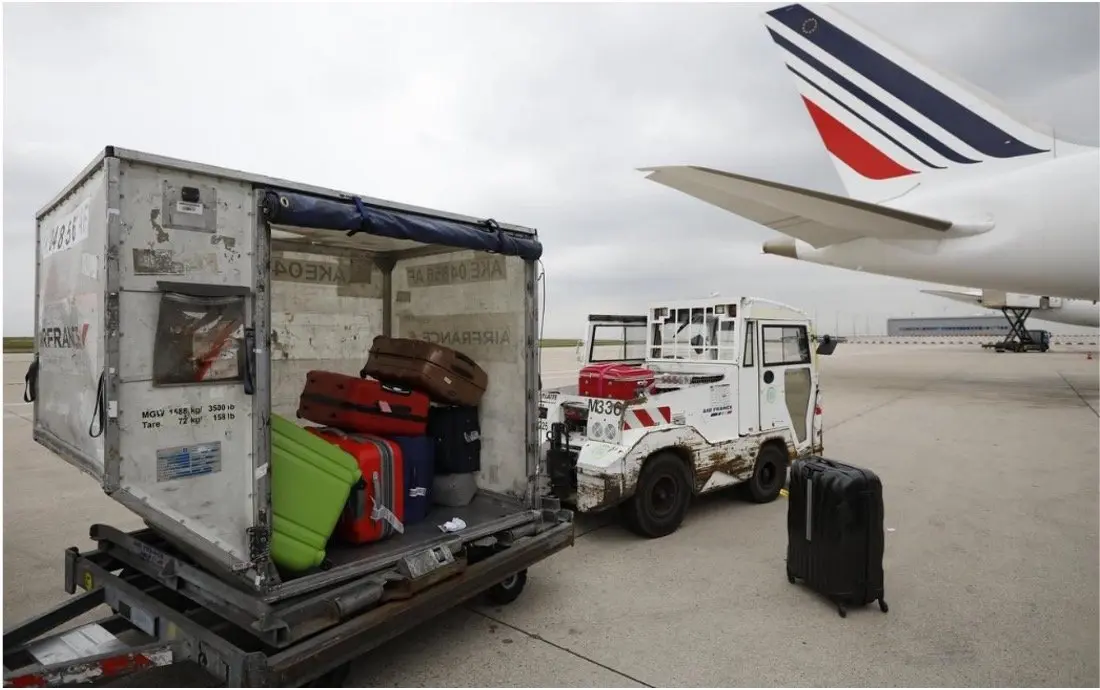
Wayfinding, worker safety and asset location across airports, stations and metro networks.

ADP · Grand Paris Express · SNCF
Transport
Industry

Industry

Lone-worker safety, asset visibility and flow analytics across plants and sites.

Safety · assets · flow
Manufacturing
Also applied in
Customer stories

One platform, proven across sectors

AP-HP Healthcare
Hôpital Saint-Antoine3,000 m²Asset tracking
Challenge

Locate mobile medical equipment across a high-volume emergency department in real time.

Solution

The platform deployed on existing infrastructure for asset tracking, with NAO Track, NAO Viewer and NAO Flow.

Results
  • 100+ mobile assets located in real time on one live map
  • A single location layer, ready to extend to other use cases
  • Equipment found in seconds instead of corridor searches

Read full case study
Grand Paris Express Transport
4 metro linesLTE + BLEWorker safety
Challenge

Provide worker-safety location across underground stations and tunnels where GNSS is unavailable.

Solution

The platform combining LTE and BLE via the NAO Mobile SDK and rugged NAO BlueSpot V4 hardware.

Results
  • Worker-safety location across 4 new metro lines
  • Underground, GNSS-denied coverage on one platform
  • Improved emergency response and escalation efficiency
See the full Railway RTLS page
Why Pole Star

Pole Star vs point solutions vs building in-house

Criterion
Pole Star platform
Point solutions
Build in-house
Use cases covered
All, one platform
One each
Whatever you build
Infrastructure
Existing Cisco / Aruba
Often parallel networks
You integrate it
Data
One shared layer
Siloed per tool
Your responsibility
Openness
Open API & SDK
Often closed
Full, but you build it
Deployment
Cloud or on-premise
Varies
Your infrastructure
Time to value
Proven, fast
Repeated per system
Long & costly
01

One platform for every use case

Tracking, safety, navigation, flow and geofencing all run on a single location layer.

02

On the network you already own

Built on existing Cisco and HPE Aruba - no parallel infrastructure, lower total cost.

03

Open and proven at scale

Open APIs and an SDK, deployed across hospitals, airports and metro networks.

FAQ

The platform, answered

How it works · technical
What is a location intelligence platform?

It is the software layer that turns wireless signals into real-time indoor location and analytics. Pole Star computes where people and assets are, applies rules and geofences, and shares that data with any application - powering many use cases from one deployment.

Can one platform really cover tracking, safety and navigation?

Yes. Asset tracking, worker safety, indoor navigation, flow analytics and geofencing all draw from the same location layer, so you add use cases without a new system each time.

How accurate is the platform?

Pole Star delivers zone and room-level accuracy, on the order of 1-5 meters with BLE, including the correct floor. Accuracy is tuned to each use case and environment.

What technologies does it use?

The platform uses BLE as the primary technology with Wi-Fi for wider coverage, and adds LTE where needed underground. It runs on existing infrastructure rather than a dedicated network.

Does it provide analytics as well as live location?

Yes. Alongside real-time position, the platform provides dashboards and historical data on utilization, movement and flow across your site.

Can we add use cases over time?

Yes. Many customers start with one use case and add others later on the same deployment - no new infrastructure and no second data silo.

Deployment & integration
Does it run on our existing Cisco or HPE Aruba network?

Yes. The platform is built to run on existing BLE-enabled Wi-Fi and Cisco Spaces, as well as HPE Aruba, so you avoid a dedicated parallel network.

Can we deploy on-premise instead of the cloud?

Yes. Pole Star supports both cloud and fully on-premise deployment, so the platform matches your security and data-residency requirements.

How do we get location data into our own apps?

Through open APIs and the NAO Mobile SDK. Location can be pushed into your applications, dashboards and existing systems rather than staying in a closed tool.

How long does deployment take?

Because it reuses existing infrastructure, deployment is efficient and typically measured in weeks per site. Large estates are rolled out site by site.

Does it scale across multiple sites?

Yes. The platform is designed to scale from a single building to an entire estate, keeping one data layer and one set of dashboards across sites.

ROI & business case
Why is a platform cheaper than separate systems?

One deployment on existing infrastructure avoids duplicated hardware, parallel networks and multiple vendor contracts. Each new use case reuses what is already there, so cost per use case falls.

What is the ROI of a location platform?

Returns come from each use case - reduced asset loss, faster safety response, fewer missed appointments, better space utilization - compounded because they share one platform rather than paying for five.

Do we have to commit to all use cases at once?

No. You can start with a single use case and expand when you're ready. The platform is built to grow with you.

How does it compare to building in-house?

Building in-house means developing positioning, data and integrations yourself. Pole Star provides a proven platform with open interfaces, so you get results faster and carry less risk.

Who owns the location data?

You do. With open APIs and on-premise options, your location data remains yours and accessible to your own systems.

Security, compliance & data
Is the platform secure?

Yes. It follows ISO 27001 practices with role-based access control, and can be deployed on-premise for the strictest environments.

Can location data stay inside our infrastructure?

Yes. On-premise deployment keeps the positioning engine and data within your own infrastructure, which suits sites with strict data or connectivity constraints.

How is privacy handled for people-tracking use cases?

Privacy is configurable per use case - for example, surfacing staff location mainly on an alert, or keeping wayfinding on the visitor's own device. Access is role-based and set to your policy.

Does it support audit and compliance needs?

Yes. The platform logs events and locations, providing an audit trail that supports duty-of-care, safety and compliance requirements.

Can it integrate with our existing systems?

Yes. Through open APIs it can interface with systems such as hospital information systems, dashboards and operational tools, so location fits into your existing stack.

Get started

One platform for all your location needs

Book a demo and we'll show how one platform powers tracking, safety, navigation and analytics on your own network.

  • Runs on your existing Cisco / Aruba infrastructure
  • Every use case on one location layer
  • Open API, SDK, cloud or on-premise
Talk to our team

Ready to see the platform on your own site? Get in touch and we'll set up a demo.

Book a demo
Scroll to Top