Passenger safety and emergency response across every deck

For cruise lines and maritime operators running floating cities - thousands of passengers and crew across multiple decks, public areas, children's zones and high-risk technical spaces. Pole Star delivers indoor location for safety and emergency response that works fully on-premise, even disconnected from shore.

Deployed with the world's largest cruise lines

Royal Caribbean
Carnival Cruise Line
Definition

What is cruise ship RTLS?

Canonical definition

Cruise ship RTLS (Real-Time Location System) is the use of indoor positioning to locate passengers, crew and assets across the multiple decks of a cruise ship or vessel. It uses BLE badges and wristbands captured by the ship's existing onboard network, computed on a fully on-premise location engine, to support passenger safety, crew protection, CO2 mustering and emergency response - even with no connection to shore.
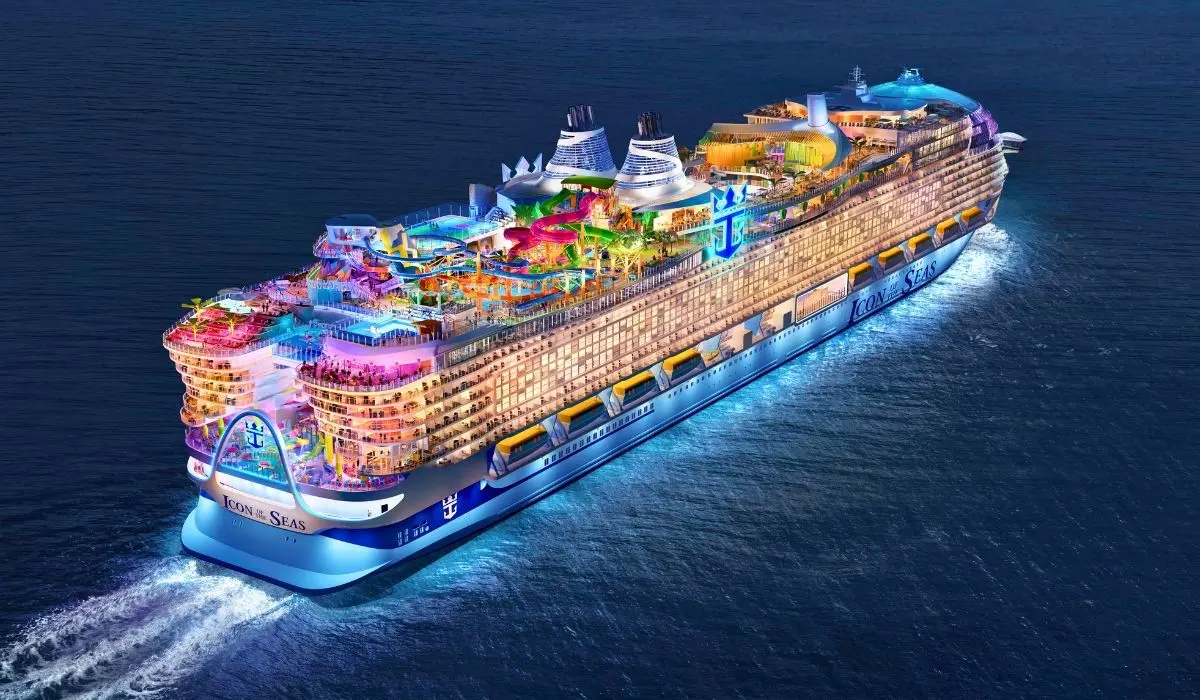
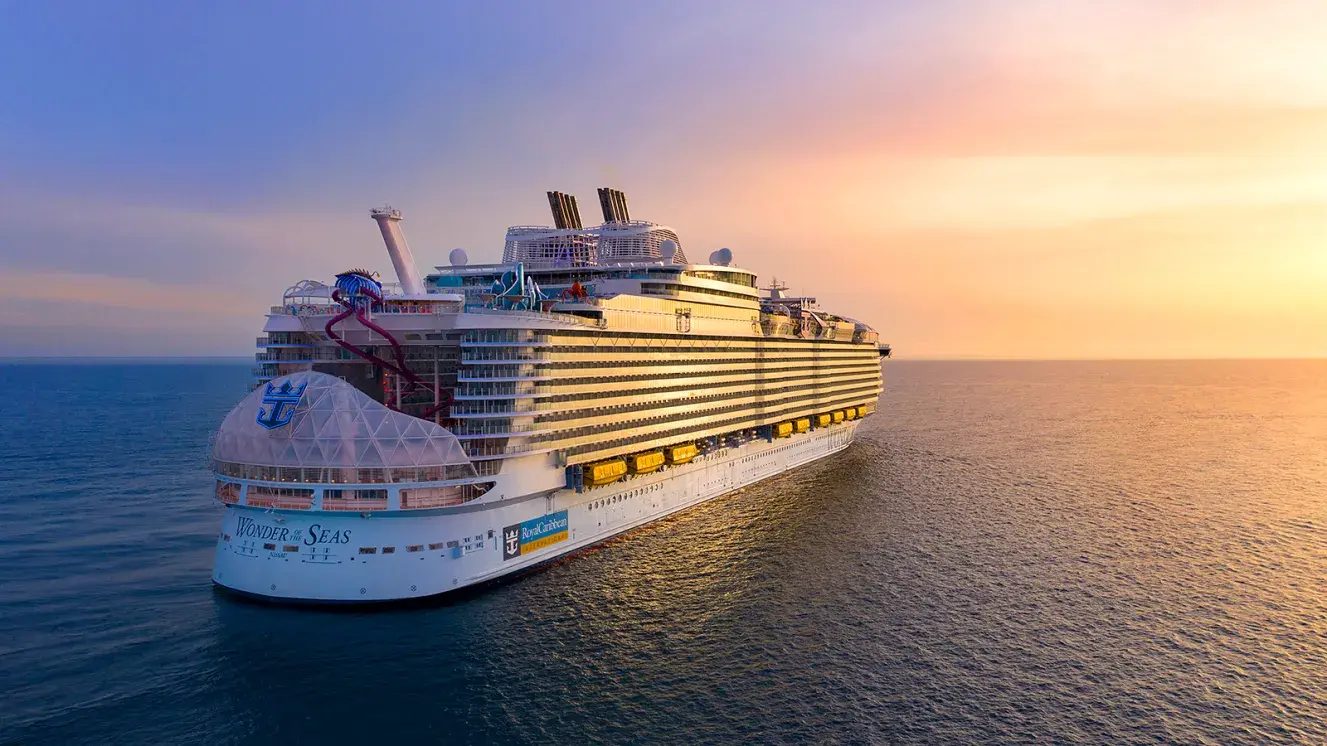
Cruise ship at sea
What

Safety-first shipboard location

Pole Star delivers kids tracking, CO2 mustering, emergency team tracking, medical alerts and asset tracking on multi-deck indoor maps.

Who

Cruise lines and their teams

Cruise lines and maritime operators, safety officers and crew, and the passengers and children aboard large, complex vessels.

Why now

Ever-larger floating cities

Record-size vessels host thousands of people across many decks, with safety-critical technical zones and strict maritime and connectivity constraints.

How

BLE on a fully on-premise engine

BLE badges and wristbands on the existing onboard network, computed by an on-premise NAO® Track engine with real-time dashboards - autonomous, with no external connectivity.

Industry context

Why location is critical aboard modern cruise ships

Public spaces, children's areas and technical zones operate simultaneously, making real-time visibility essential. Whether locating a child, responding to an incident or assisting crew members, accurate indoor positioning supports faster and safer operations.

Safety is especially critical in technical areas. Before a CO₂ fire-suppression system is activated, operators must confirm that everyone has evacuated. Real-time personnel localization and mustering provide the visibility needed to support these procedures.

Because connectivity at sea is limited, location services must operate fully on-premise, delivering reliable, low-latency positioning while protecting passenger privacy and supporting uninterrupted onboard operations.
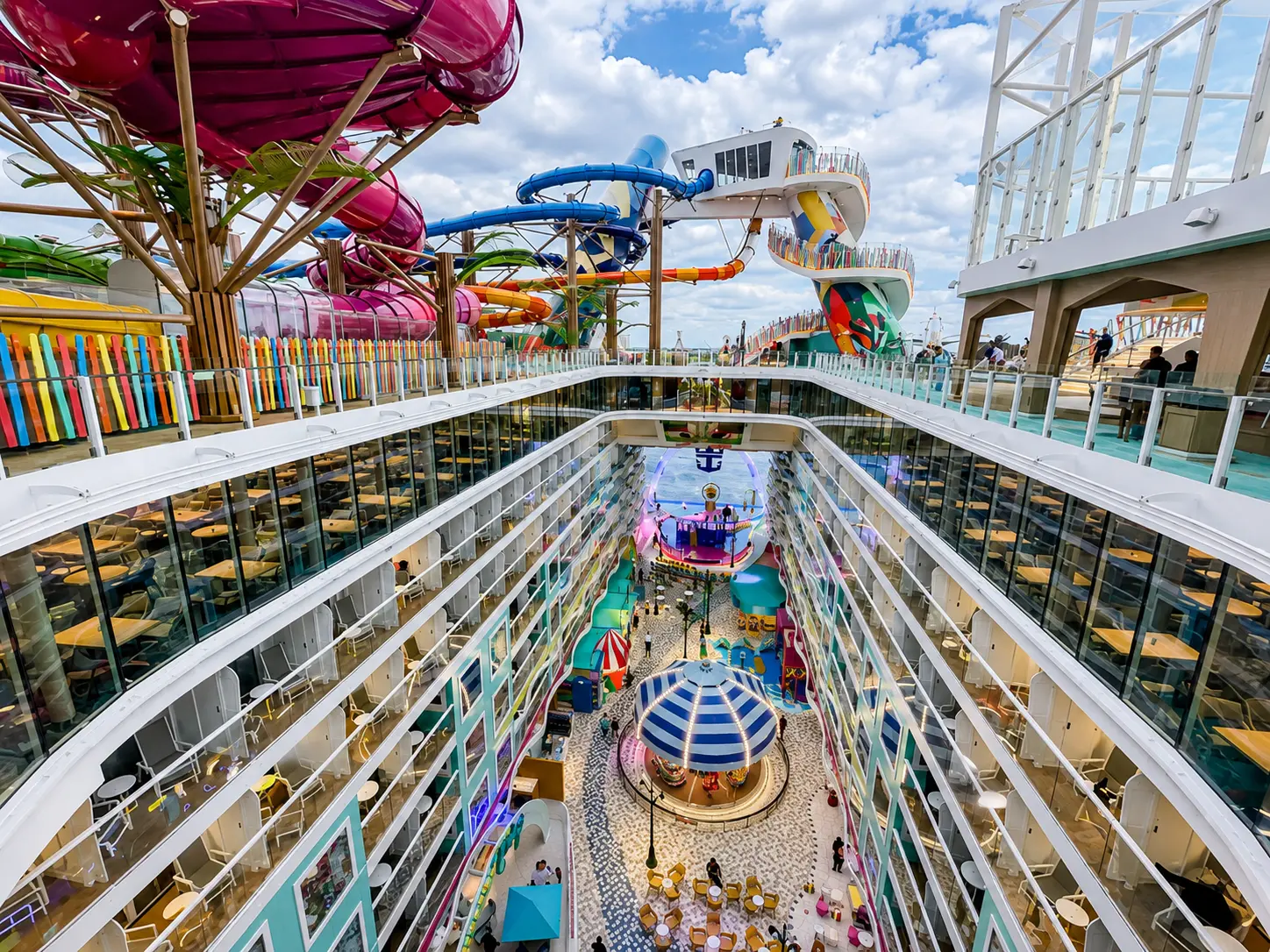
Large modern cruise ship with multiple decks
Main challenges

The safety realities of running a floating city

Cruise ships concentrate passenger safety, crew protection and critical emergency operations into one complex, disconnected environment.
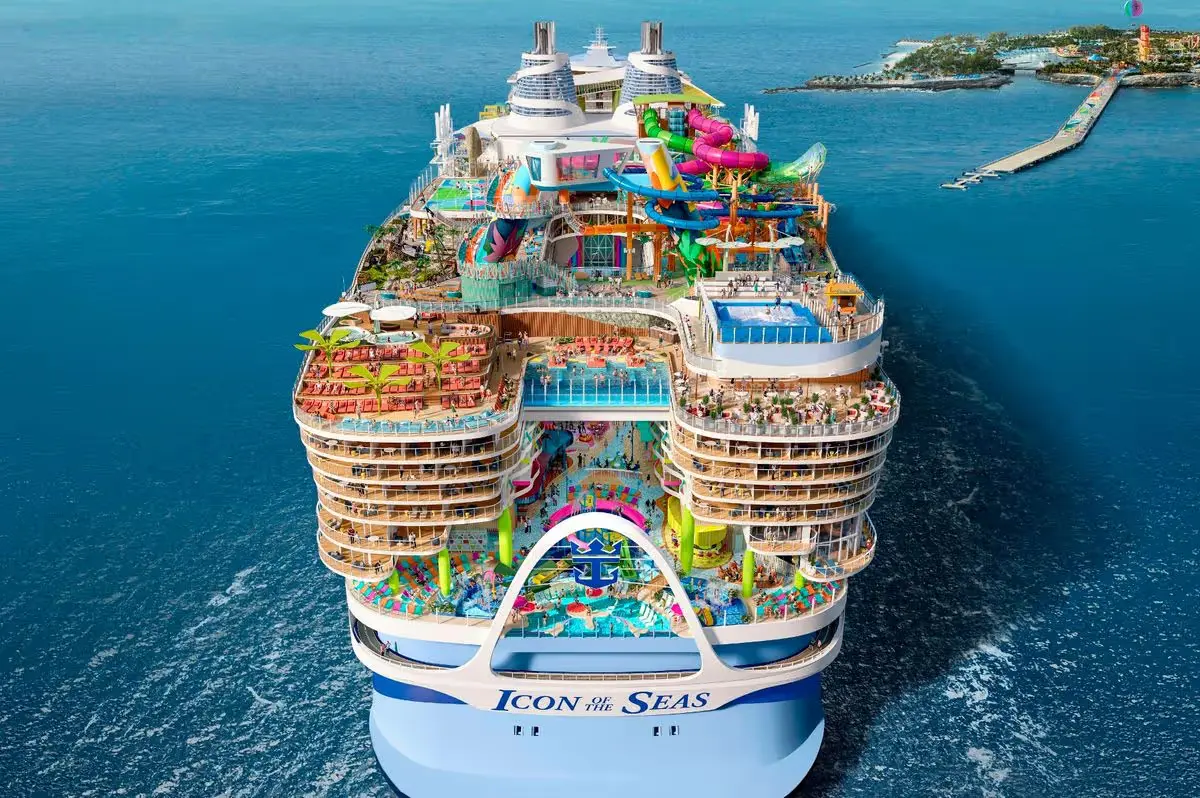
Cruise ship at sea
01

Child safety across a floating city

Problem

Keeping continuous visibility of children across huge, multi-deck ships with dedicated activity zones.

Why it happens

Vessel size, passenger volume and complex layouts exceed what manual supervision can cover.

Consequence

Slower response and gaps in child safety and parental reassurance.

02

Personnel safety in CO2 zones and engine rooms

Problem

Before a CO2 system activates, teams must know exactly who is present and confirm evacuation.

Why it happens

Engine rooms and CO2-protected zones are among the highest-risk areas on board.

Consequence

Without instant headcount, human risk rises during critical safety events.

03

Coordinating emergency teams across decks

Problem

Intervention teams must be located, mobilized and coordinated fast across many decks.

Why it happens

Complex, multi-deck vessels make manual coordination slow and error-prone.

Consequence

Longer reaction times and weaker incident management.

04

Immediate medical assistance in public areas

Problem

Locating a passenger who needs help, or a defibrillator being accessed, without delay.

Why it happens

Public, high-traffic areas span many decks with no precise indoor location.

Consequence

Delayed medical response when every second matters.

05

Safety systems with no link to shore

Problem

Critical safety operations must run reliably even when disconnected from shore.

Why it happens

Vessels operate under strict connectivity constraints across long voyages.

Consequence

Cloud-dependent systems cannot be trusted for onboard safety.

06

Mustering and asset control during dry dock

Problem

Knowing who is on board, off, or at muster points, and controlling valuable assets during drydock.

Why it happens

Dry dock brings many contractors on board and expensive equipment into play.

Consequence

Safety blind spots and asset losses during yard operations.

Who & where

What Pole Star locates across the ship

PUBLIC DECK KIDS ZONE ENGINE / CO2 CO2 MUSTERING present 5 - evac 80% FULLY ON-PREMISE - NO SHORE LINK

Multi-deck & CO2 mustering

One location layer, from public decks to the engine room

BLE badges and wristbands are located on multi-deck maps in real time. In CO2-protected zones, Pole Star delivers instant headcount and evacuation status - all computed on-premise, with no link to shore.

BLE badges & wristbands Cisco / HPE Aruba BLE On-premise NAO Track

People & assets located

Via BLE badges, wristbands and tags

Passengers

BLE

Located for medical alerts, special-needs assistance and a smoother onboard experience.

Children

BLE

Wearable wristbands give parents and staff real-time child location across passenger areas.

Crew

BLE

Badges enable CO2 mustering, instant headcount and safe evacuation in technical zones.

Emergency teams

BLE

Response teams are tracked live and can trigger alerts from their badges.

Safety assets

BLE

Gas bottles and cages are tracked to prevent loss during drydock.

Baggage

BLE

Guest baggage is tracked with status updated automatically by location.

Environments covered

Across every deck

Public areas & decks

High-traffic guest zones spanning many decks, where medical alerts must be located fast.

Kids zones

Dedicated children's activity areas needing continuous, authorized-only visibility.

Engine rooms & CO2 zones

Highest-risk technical areas requiring headcount and verified evacuation.

Technical compartments

Crew-only spaces where precise personnel location supports safety procedures.

Muster points

Assembly zones where on-board, off-vessel and mustering status must be verified.

Medical & AED points

Locations where a defibrillator access or call button triggers an instant alert.

CO₂ Mustering

Real-time personnel monitoring in CO₂-protected zones and engine rooms

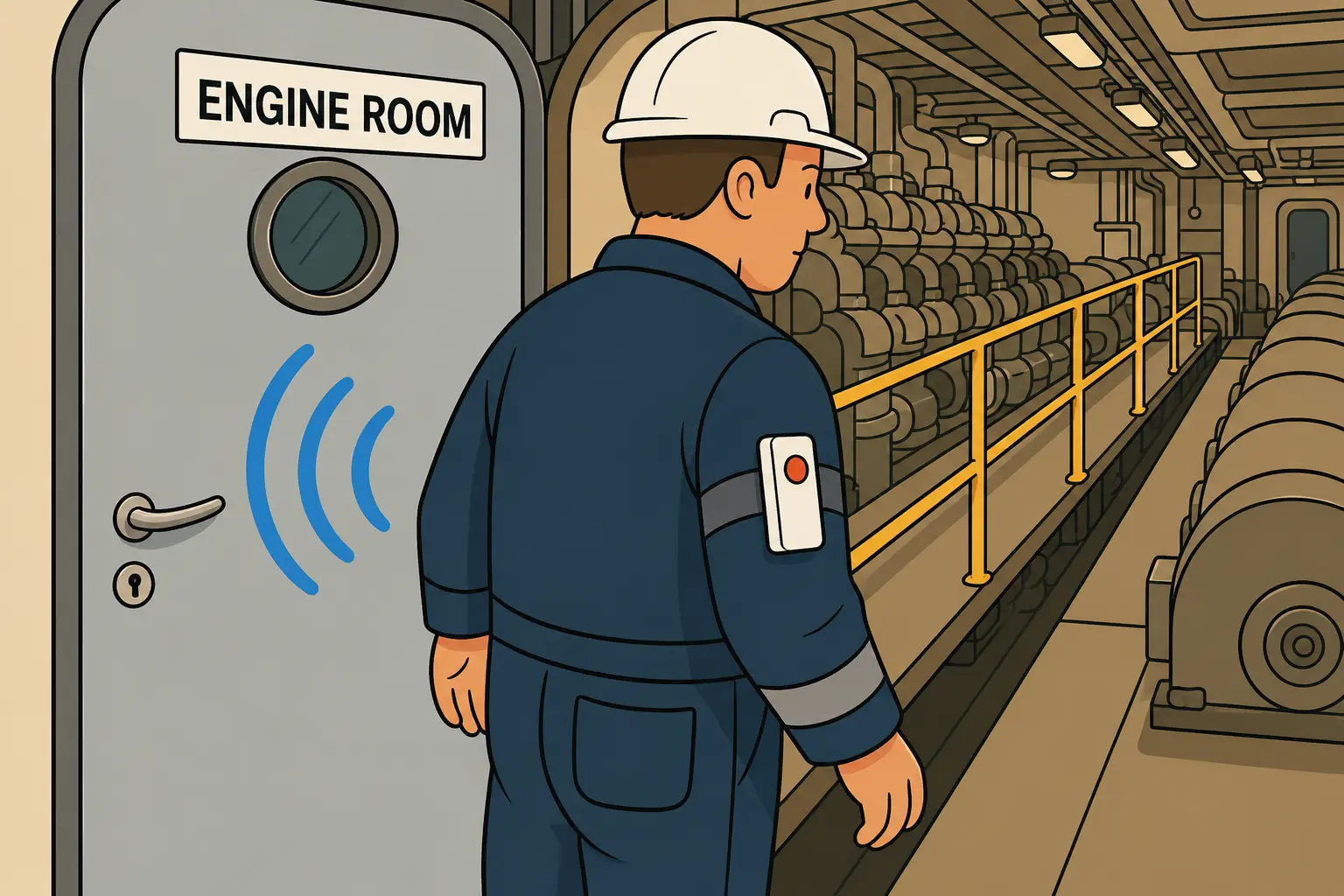
CO₂-protected zones and engine rooms are among the most critical environments onboard. Safety procedures require precise personnel location, instant headcount when an alarm is triggered, and a controlled and verified evacuation before any CO₂ system activation.

Without real-time visibility into personnel inside a CO₂-protected zone at the moment of an alarm, evacuation cannot be verified and the risk of activating the system while personnel are still present is real. Pole Star eliminates that uncertainty.
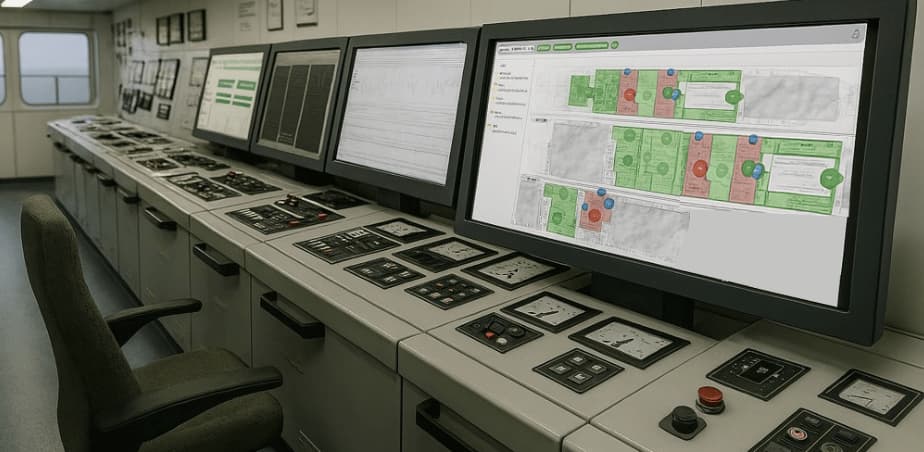
Engine room onboard a ship
Cruise ship at sea
Real-time personnel location Crew members inside CO₂-protected zones and engine rooms are continuously located using BLE badges detected by the existing onboard infrastructure.
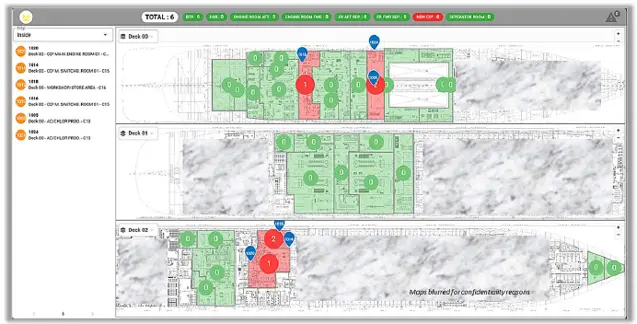
Automatic headcount during an alarm When a CO₂ alarm is triggered, the system immediately provides an accurate count of everyone inside the zone, without requiring a manual headcount.
Dedicated CO₂ Mustering dashboards Centralized dashboards display real-time exposure status, each person's location, evacuation progress, and confirmation for safety managers.
Alert triggering from badges Crew members can trigger an alert directly from their BLE badge button, immediately notifying the safety team with their confirmed location.
BLE badges Existing onboard BLE infrastructure NAO® Track · On-site engine Low latency · High availability · No shore connection
Operational outcome

By providing immediate visibility into exposed personnel, automating headcount procedures, and monitoring evacuation progress in real time, Pole Star strengthens emergency control and significantly reduces human risk in CO₂-protected zones, entirely on-site and without reliance on external connectivity.

Kids tracking

Real-time child safety across passenger areas

On large cruise ships, child safety is a critical concern due to the size of the vessels, the high number of passengers and the complexity of indoor layouts - multiple decks and dedicated activity zones where traditional supervision alone cannot guarantee continuous visibility or rapid response.

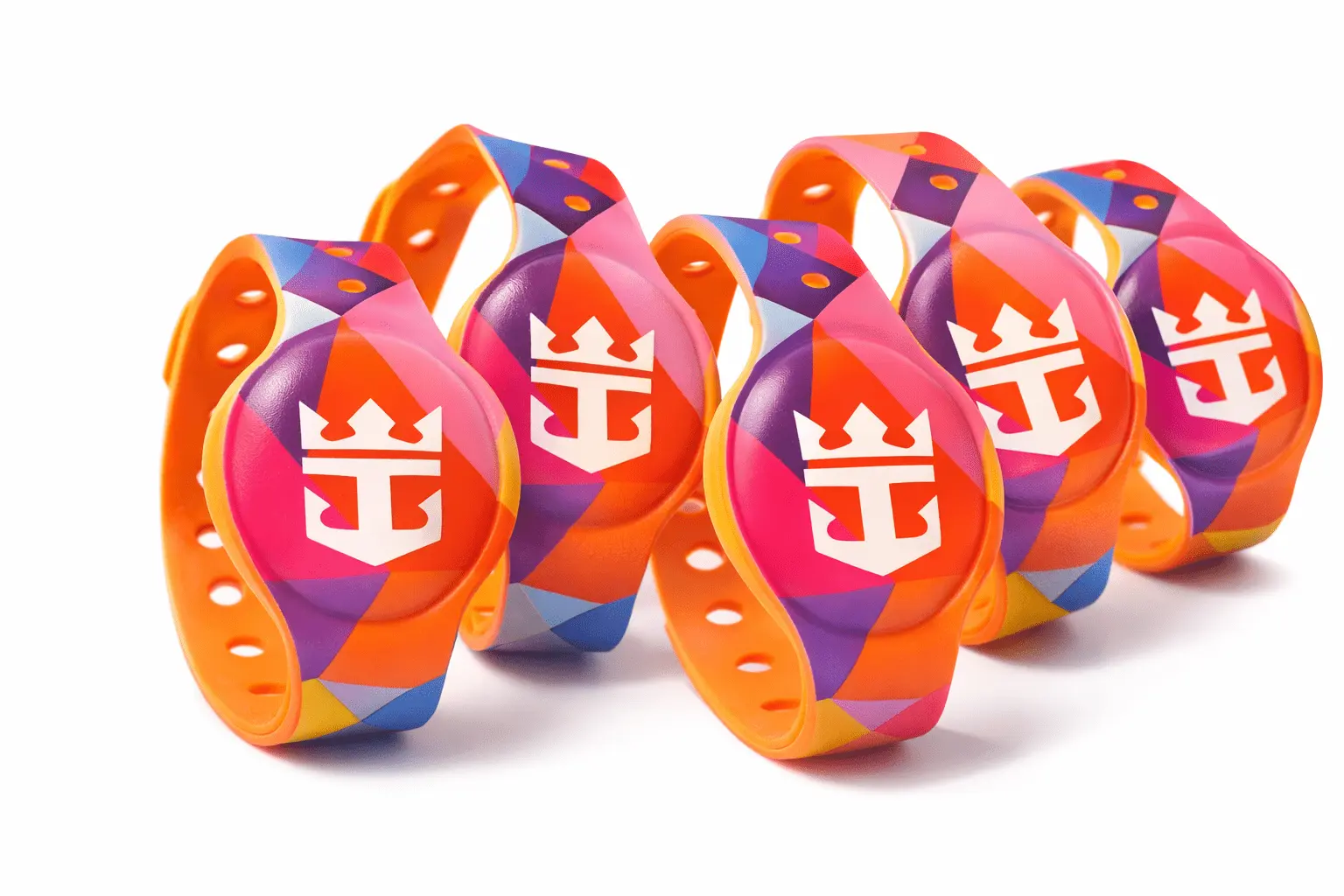
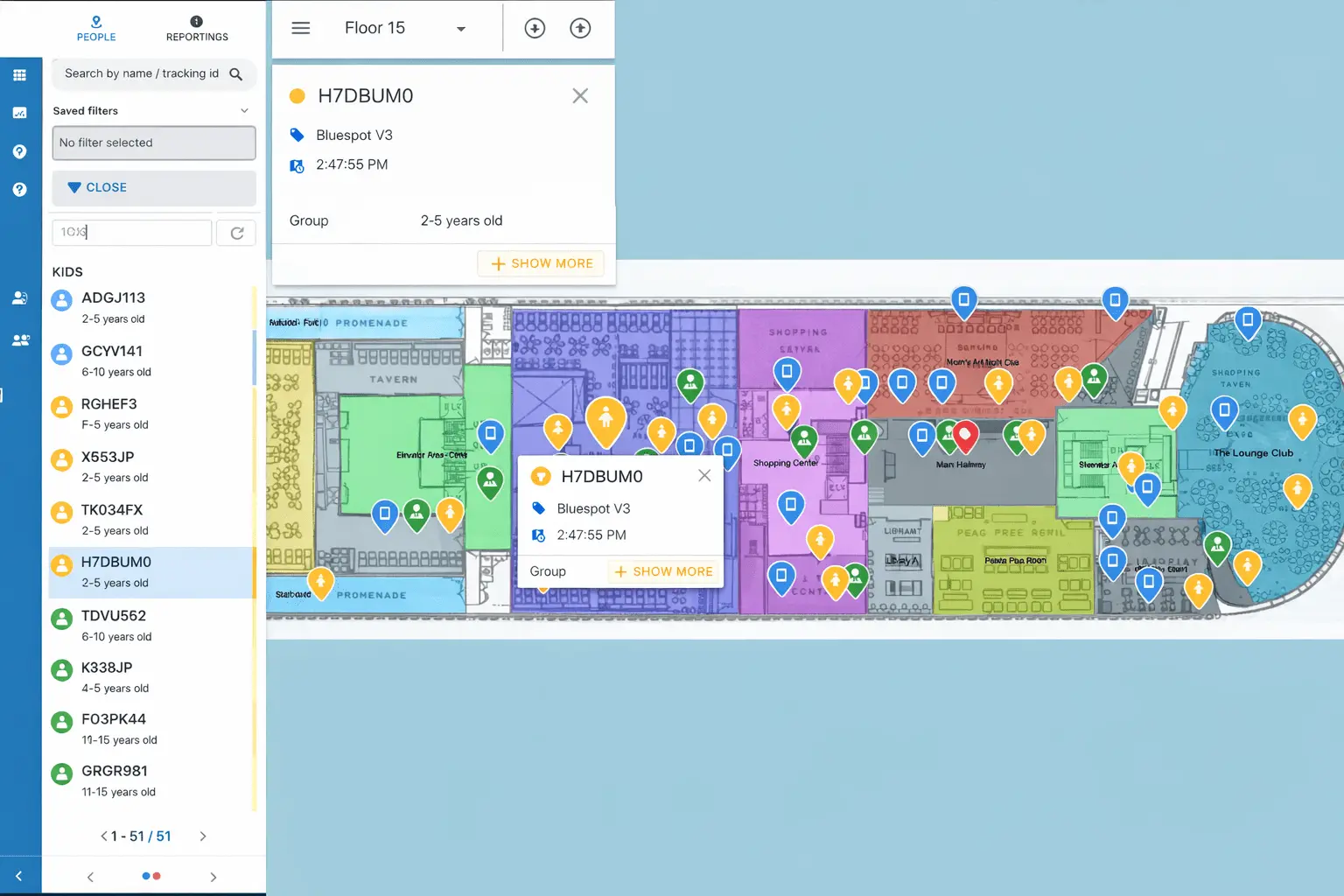
Pole Star enables real-time kids tracking through wearable BLE bracelets designed for children. Positions are visualized on multi-deck indoor maps and refreshed continuously, with access restricted to authorized users only.
Cruise ship passenger areas
Passenger experience onboard
Continuous child localizationBLE wristbands worn by children emit signals read by the ship's existing onboard infrastructure, keeping their position updated continuously across all passenger-accessible areas.
Multi-deck indoor map visualizationChild positions are displayed on accurate multi-deck maps, giving authorized staff and parents a clear view of where each child is at any moment throughout the vessel.
Parent access via passenger appParents can locate their child directly in the ship's passenger mobile application - a calm and reassuring experience that runs alongside the standard onboard services.
Dedicated supervision interfaceOnboard teams rely on a dedicated interface to monitor child locations, react quickly and coordinate the response when a child is outside an authorized zone.
BLE wristbands Existing onboard BLE infrastructure NAO® Track · On-premise engine Passenger mobile application
Operational outcome

Designed to operate at very large scale, the solution supports thousands of bracelets per voyage, delivering low-latency performance and reinforcing both child safety and parental reassurance - without impacting the onboard experience.

How workflows transform

The same emergency, before and after real-time location

Before

Roll call runs over radio, with no certainty that every crew member has left the zone before activation.

With Pole Star

A CO2 mustering dashboard shows a live headcount inside the zone and real-time evacuation progress.

Outcome

Verified evacuation and reduced human risk during a critical safety event.

Before

Supervision relies on line of sight across a floating city, and locating a child who wanders is slow.

With Pole Star

The child's wristband shows on multi-deck maps, visible to the parent in the app, with zone alerts on entry or exit.

Outcome

Continuous child safety and genuine parental reassurance.

Before

A call for help gives no precise location, so the medical team searches across multiple decks.

With Pole Star

A geolocated Help button, or a defibrillator being accessed, transmits the exact position instantly to medical teams.

Outcome

Faster medical assistance and stronger passenger safety.

Before

Teams are coordinated by radio, with unclear positions across many decks and zones.

With Pole Star

A centralized view shows every emergency team's position live, with badge-triggered alerts and coordinated deployment.

Outcome

Faster, better-coordinated incident response, scalable across ships.

Solution mapping

From cruise ship challenge to Pole Star solution

Every challenge on this page maps to a specific Pole Star capability across safety, emergency response and the guest experience.

Cruise ship challengePole Star solutionLearn more

01Child safety across multiple decks

Solution

Kids tracking

Explore

02CO2 mustering and emergency response

Solution

Worker safety

Explore

03Zone breach and safety alerts

Solution

Geofencing

Explore

04Asset and baggage control

Solution

Asset tracking

Explore

05Guest orientation across the ship

Solution

Indoor navigation

Explore
Use cases

How cruise ships put real-time location to work

Concrete scenarios across safety, emergency response and the guest experience - from the engine room to the kids' club.
Cruise ship interior with multiple decks

How cruise ships track children in real time

Trigger

A child moves between activity zones across decks.

Response

A BLE wristband is located on multi-deck maps, visible to parents and staff.

Benefit

Continuous child safety and reassurance.

How ships perform CO2 mustering and headcount

Trigger

An alert is raised in a CO2-protected zone.

Response

The system counts personnel present instantly on a mustering dashboard.

Benefit

Immediate visibility of exposed personnel.

How emergency teams are coordinated across decks

Trigger

An incident requires rapid team deployment.

Response

Live positions of response teams appear on a centralized view.

Benefit

Faster, better-coordinated response.

How passengers get located medical assistance

Trigger

A guest presses a geolocated Help button.

Response

The exact indoor position is sent to onboard medical teams.

Benefit

Reduced medical intervention time.

How a defibrillator access triggers an alert

Trigger

A defibrillator (AED) is taken from its station.

Response

An automatic alert shares the AED and incident location.

Benefit

Faster response to cardiac emergencies.

How ships get alerted when a child leaves a zone

Trigger

A child enters or exits a defined area.

Response

Geofencing raises an instant pop-up alert.

Benefit

Proactive child-safety supervision.

How ships track assets and baggage on board

Trigger

Valuable equipment or guest baggage moves around the vessel.

Response

BLE tags track assets and update status by location.

Benefit

Fewer losses and smoother operations.

How ships run safety location with no shore link

Trigger

A vessel operates far from any shore connection.

Response

A fully on-premise engine computes location locally.

Benefit

Autonomous, low-latency safety at all times.

Compliance & constraints

Built for the constraints of a ship at sea

A cruise vessel is a safety-critical environment with strict connectivity, privacy and operational limits. The platform is designed to run inside those limits rather than around them - fully onboard, on the network you already have.

Autonomy

Fully on-premise, offline by design

The BLE positioning engine runs on an on-premise NAO® Track server aboard the ship. It keeps working with no external connectivity - critical for a vessel that spends days away from shore-side networks.

Infrastructure

Runs on the existing onboard network

Positioning is computed over the Wi-Fi access points already installed for onboard connectivity. No heavy new cabling or parallel network is added to certified ship systems.

Environment

Dense steel, many decks, no GNSS

Satellite positioning does not work below deck. The system is engineered for a multi-deck steel environment with safety-critical technical zones such as engine rooms and CO₂ areas.

Data & privacy

Passenger & child data stays onboard

Because computation is fully on-premise, tracking data for passengers and children on BLE wristbands never leaves the vessel - a privacy-by-design posture for sensitive onboard data.

Benefits

What real-time location changes onboard

One live operational picture across every deck - for safety officers, crew and the people they are responsible for. No new network, no dependence on shore-side connectivity.

See every deck in real time

Locate people, crew and assets across a multi-deck vessel from a single live view.

Faster, better-informed mustering

Speed up emergency response with live headcount and position across evacuation and technical zones.

Keep track of children

Locate children carrying BLE wristbands, giving parents and crew reassurance across busy decks.

Autonomous away from shore

The on-premise engine runs with no external connectivity, so it stays live for the whole voyage.

No heavy new infrastructure

Positioning rides on the Cisco access points already installed onboard - no parallel network to certify.

One operational picture

Safety officers and crew work from the same real-time dashboards instead of scattered, manual checks.

Protect crew in critical zones

Know who is present in engine rooms and CO₂ areas to support worker safety where it matters most.

Data that never leaves the ship

On-premise computation keeps passenger and child location data onboard by design.

Customer stories

Deployed on some of the largest ships afloat

Two of the world's leading cruise groups run Pole Star onboard - for child safety and for crew protection in safety-critical zones. Figures below are drawn from the published case studies.
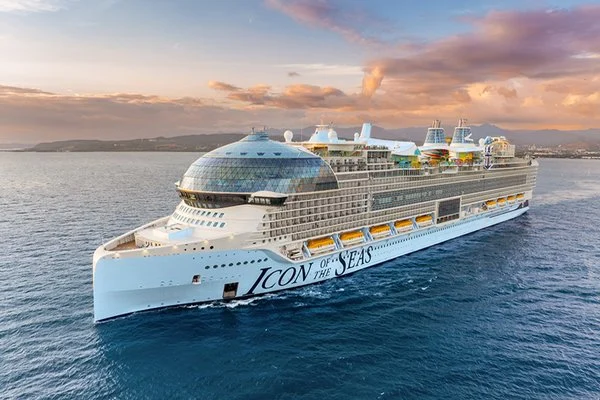
Icon of the Seas - Royal Caribbean Kids tracking
Royal Caribbean International

Tracking children across a floating city

On the Icon of the Seas and Star of the Seas class, Royal Caribbean uses BLE wristbands so crew and parents can locate children across the ship in real time. Positioning is computed by an on-premise NAO® Track engine over the vessel's existing Cisco access-point network - fully autonomous, with no external connectivity required.

  • Children located continuously across all passenger decks and activity zones
  • Parents access their child's live position via the passenger mobile app
  • Crew supervision interface for rapid response when a child leaves an authorized zone
  • Fully on-premise - no connection to shore required at sea
1,000BLE wristbands
4,000+Cisco APs
On-premNAO® Track
Read the case study
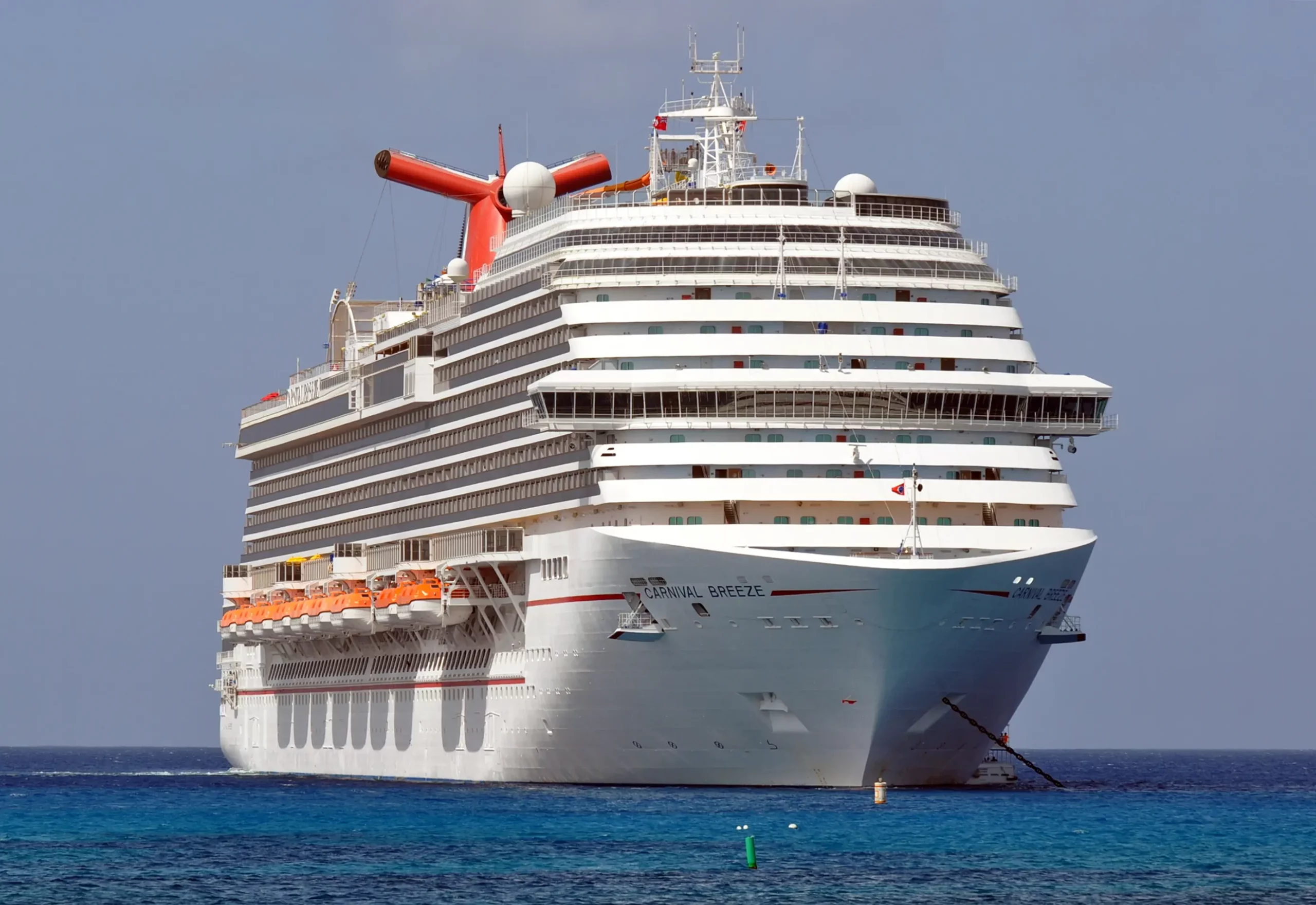
Carnival / AIDA fleet CO₂ mustering
Carnival Maritime · AIDA fleet

Protecting crew in engine & CO₂ zones

Across the Carnival fleet, emergency-team badges allow crew to be located in real time inside safety-critical technical zones - engine rooms and CO₂-protected areas. The NAO® Track on-premise engine delivers instant headcount and evacuation status, supporting mustering procedures before any CO₂ system activation.

  • Real-time crew location inside engine rooms and CO₂-protected zones
  • Instant headcount and evacuation progress on dedicated CO₂ mustering dashboards
  • Badge-triggered alerts for immediate escalation in critical situations
  • Deployed across 11 ships covering 38 engine and CO₂ zones
11ships
38engine / CO₂ zones
153emergency badges
Read the case study
Why Pole Star

Why leading cruise operators choose Pole Star for indoor location

Built for complex maritime environments, Pole Star delivers proven indoor location solutions that improve passenger safety, crew coordination, operational efficiency and real-time visibility across cruise ships.

01

Proven on the world's largest cruise ships

Pole Star powers large-scale deployments aboard leading cruise fleets, supporting thousands of connected passengers, crew members and onboard assets every day in demanding maritime environments.

Trusted by major cruise operators
02

Built on existing onboard infrastructure

Pole Star leverages existing BLE infrastructure, onboard Wi-Fi networks and passengers' or crew members' smartphones, minimizing deployment costs while avoiding additional hardware across the vessel.

BLE • Wi-Fi • Smartphone compatible
03

Designed for complex ship operations

From guest cabins and public areas to technical decks and crew-only spaces, Pole Star provides seamless indoor positioning throughout the vessel, helping operators coordinate passengers, staff and critical assets in real time.

Cabins • Public areas • Technical decks
04

One platform for multiple maritime use cases

A single location platform supports asset tracking, passenger and crew location, emergency mustering, onboard navigation and operational supervision, providing a unified real-time view of ship operations.

Passenger safety • Asset tracking • Operational visibility
Recommended solutions

Pole Star solutions for smarter cruise ship operations

Discover a complete suite of indoor location solutions designed for the maritime industry. From passenger safety and crew coordination to asset visibility and onboard navigation, Pole Star helps cruise operators optimize every aspect of ship operations.
Pole Star indoor positioning platform for cruise ships

Asset tracking

Track medical equipment, housekeeping carts, luggage trolleys, safety equipment and other critical onboard assets in real time to reduce search time and improve operational efficiency across every deck.

Explore asset tracking

Crew tracking

Improve coordination between housekeeping, maintenance, security, hospitality and technical teams with real-time location intelligence, enabling faster response and smoother onboard operations.

Explore crew tracking

Passenger navigation

Deliver intuitive indoor wayfinding that helps guests easily locate cabins, restaurants, theatres, pools, shops and onboard services, enhancing the overall cruise experience.

Explore indoor navigation

Child tracking

Enable families to enjoy their cruise with confidence by allowing parents and crew members to quickly locate children wearing BLE wristbands anywhere onboard while respecting privacy policies.

Explore child tracking

Emergency mustering

Verify passenger attendance at muster stations in real time, automate emergency procedures and provide crew members with instant visibility during evacuations and safety drills.

Explore emergency mustering

Operational supervision

Centralize the location of passengers, crew members and assets in a single operational platform featuring live deck maps, real-time dashboards and actionable insights for more efficient ship management.

Explore maritime platform
FAQ

Cruise ship indoor location, answered

Passenger & Crew Safety
How does Pole Star improve passenger safety on cruise ships?

Pole Star provides real-time indoor positioning for passengers, allowing cruise operators to respond faster during incidents, improve emergency procedures and enhance onboard safety throughout the vessel.

How does emergency mustering work?

Pole Star automatically verifies passenger attendance at muster stations using indoor location technology, helping crew members quickly identify missing passengers and accelerate emergency response.

Can children be located onboard?

Yes. Children equipped with BLE wristbands can be located in real time, allowing authorized crew members — and, depending on the deployment, parents — to quickly find them anywhere on the ship.

Can crew members be located in real time?

Yes. Crew members carrying smartphones or BLE devices can be located across all decks, improving coordination, maintenance operations, housekeeping and emergency response.

How accurate is Pole Star's indoor positioning?

Pole Star delivers room-level or operational-area accuracy depending on the vessel's infrastructure, providing reliable positioning for both passengers and crew.

Operations & Guest Experience
Which onboard assets can Pole Star track?

Pole Star tracks medical equipment, housekeeping carts, luggage trolleys, wheelchairs, safety equipment, maintenance tools and virtually any mobile asset fitted with BLE tags.

How does asset tracking improve cruise operations?

Real-time asset visibility reduces search times, improves equipment utilization and enables crew members to deliver faster, more efficient onboard services.

Can passengers use indoor navigation onboard?

Yes. Pole Star provides intuitive indoor navigation that guides passengers to cabins, restaurants, theatres, pools, shops and other onboard amenities.

Can Pole Star optimize passenger flows?

Yes. Cruise operators can analyze passenger movement patterns, identify congestion areas and optimize onboard services to improve the overall guest experience.

Can Pole Star monitor the entire ship?

Yes. Pole Star provides seamless indoor positioning across public spaces, cabins, crew areas, technical rooms and every deck of the vessel.

Technology & Deployment
What technology does Pole Star use?

Pole Star primarily uses Bluetooth Low Energy (BLE) together with existing onboard Wi-Fi infrastructure to deliver highly accurate indoor positioning.

Does Pole Star work with existing ship infrastructure?

Yes. Pole Star leverages existing BLE-enabled Wi-Fi access points and onboard wireless networks, reducing deployment costs while avoiding major infrastructure upgrades.

Can Pole Star integrate with cruise ship systems?

Yes. Open APIs allow integration with passenger applications, operational platforms, safety systems and third-party maritime software.

Can Pole Star be deployed across an entire fleet?

Yes. Pole Star is designed to scale from a single vessel to entire cruise fleets while maintaining a unified location platform across all ships.

Why do cruise operators choose Pole Star?

Cruise operators choose Pole Star because it leverages existing infrastructure, delivers enterprise-grade indoor positioning and supports multiple use cases including passenger safety, child tracking, crew coordination, asset tracking and emergency mustering.

Transform your cruise ship operations with real-time location

Improve passenger safety, streamline crew coordination, track onboard assets and deliver exceptional guest experiences with an indoor location platform built for modern cruise ships.

Trusted by Royal Caribbean and Carnival Maritime

Scroll to Top