Real-time kids tracking
on the world's largest
cruise ships.
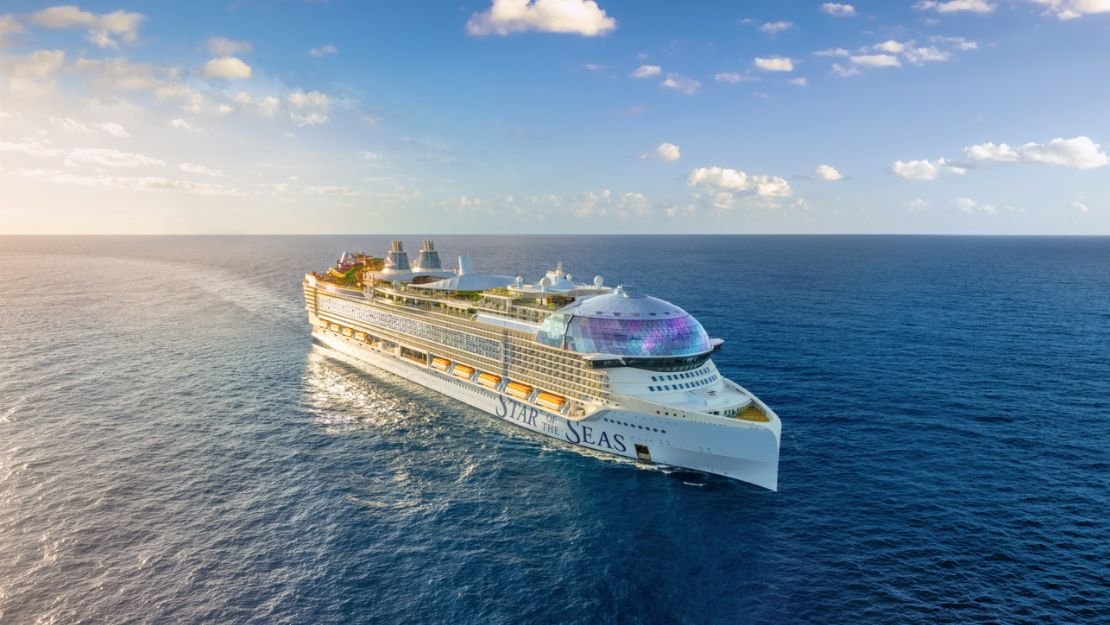
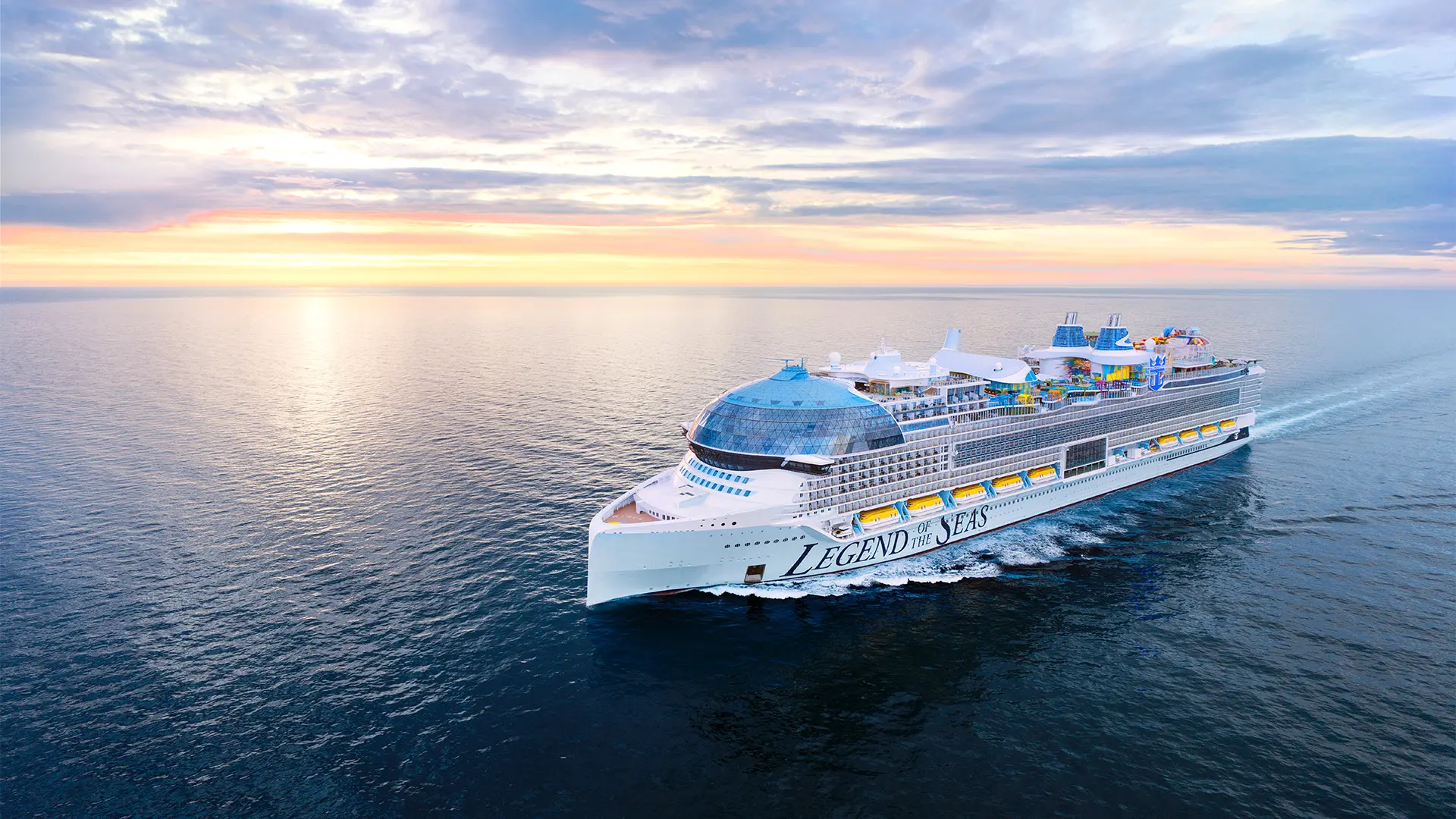
Modern cruise ships are floating cities - multiple decks, thousands of passengers, endless activity zones. Pole Star deployed BLE wristband tracking across the full passenger area of Icon of the Seas and Star of the Seas, on a fully on-premise architecture.
A deployment designed to operate at very large scale
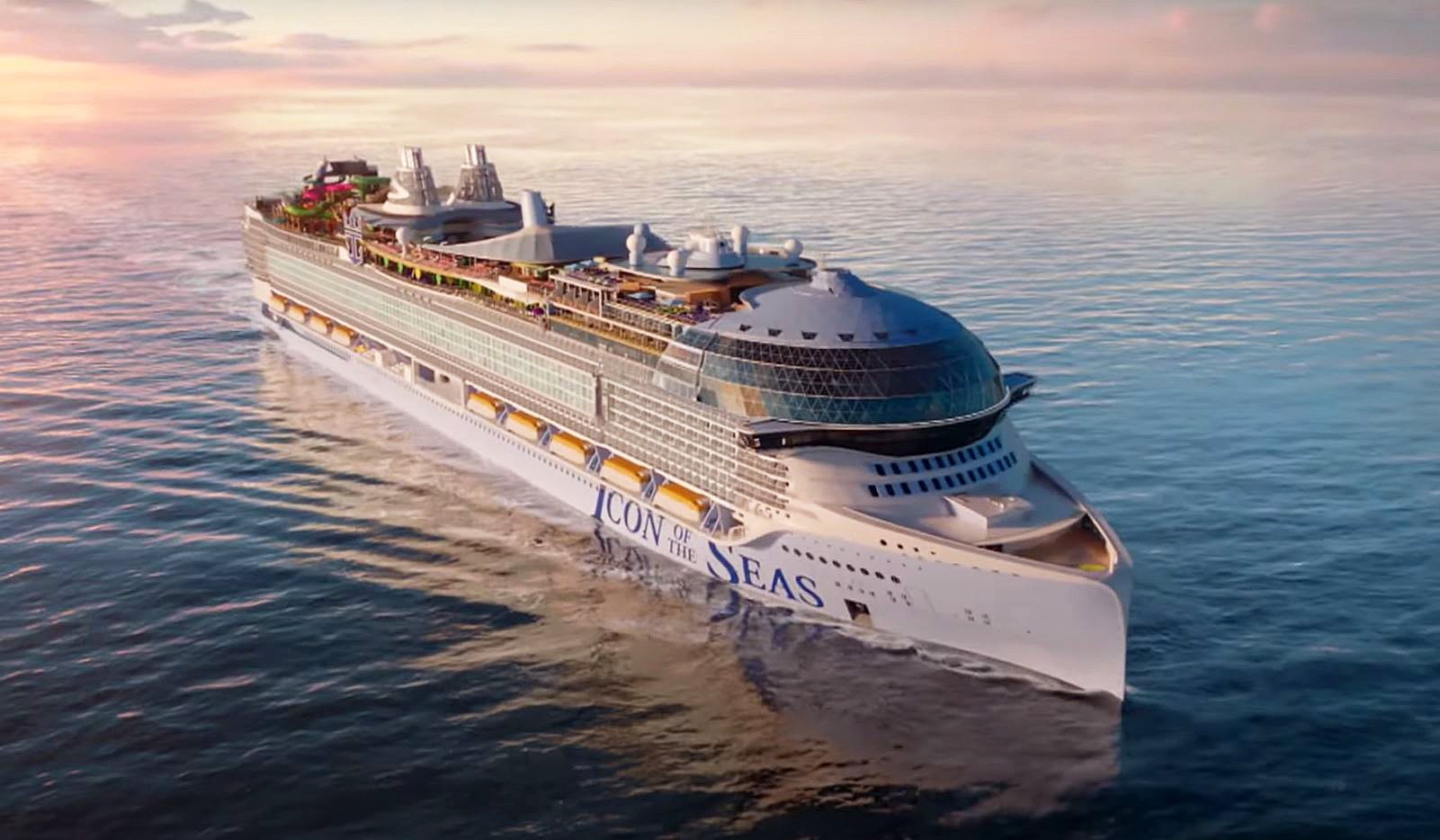
Supervising children on a ship the size of a small city
On board large cruise ships, ensuring child safety is a critical challenge - driven by the exceptional size of modern vessels, the high volume of passengers, and the complexity of indoor environments.
Ships operate as floating cities: multiple decks, public areas, activity zones and dedicated spaces for children. On next-generation vessels like Icon of the Seas - the largest cruise ship in the world - and Star of the Seas, traditional supervision methods are not sufficient to guarantee continuous visibility or rapid response if assistance is required.
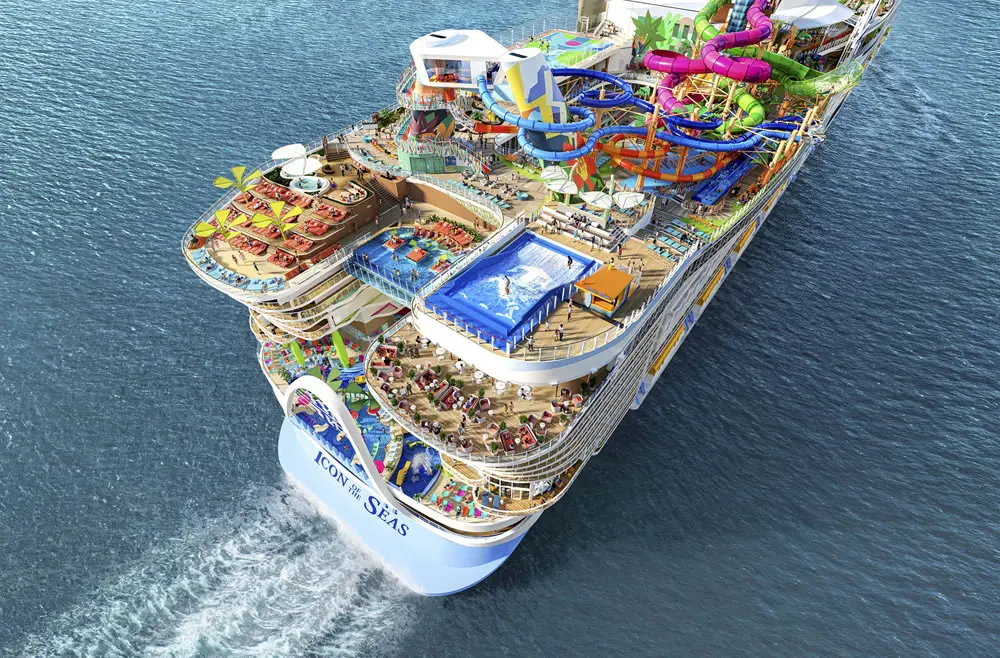
Deploy a real-time, scalable and highly reliable kids tracking solution, capable of operating across the entire passenger area of the ship.
BLE wristbands, on the network the ship already runs
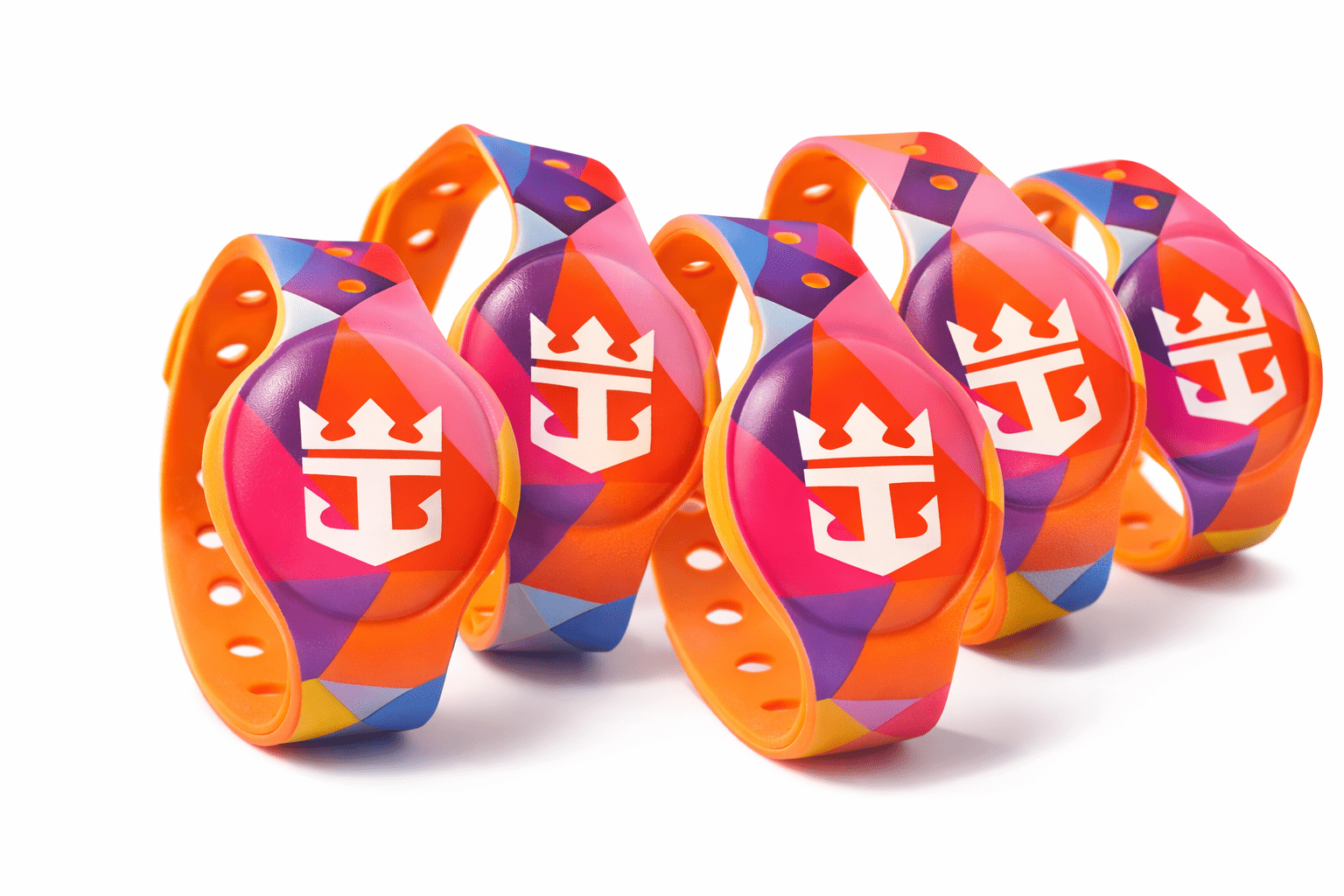
Pole Star implemented a kids tracking solution based on BLE wearable bracelets designed specifically for children. Each bracelet emits Bluetooth Low Energy signals captured by the ship's existing BLE-enabled network infrastructure - ensuring seamless integration with the onboard connectivity environment.
A bracelet per child
2,000 BLE bracelets per cruise, designed specifically for children.
Captured by existing infrastructure
Signals are picked up by the ship's 4,000+ BLE-enabled Cisco access points - no parallel hardware estate.
Positioned on multi-deck maps
Pole Star computes real-time indoor location and displays positions on custom multi-deck maps, refreshed continuously.
Restricted to authorized users
Location data is made available only to authorized users, ensuring both operational efficiency and data privacy.
Location in the passenger app
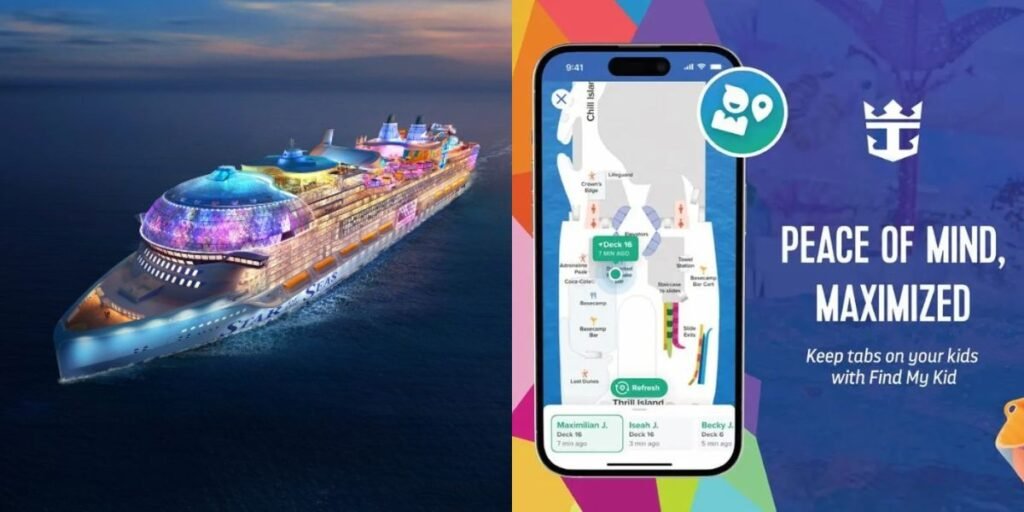
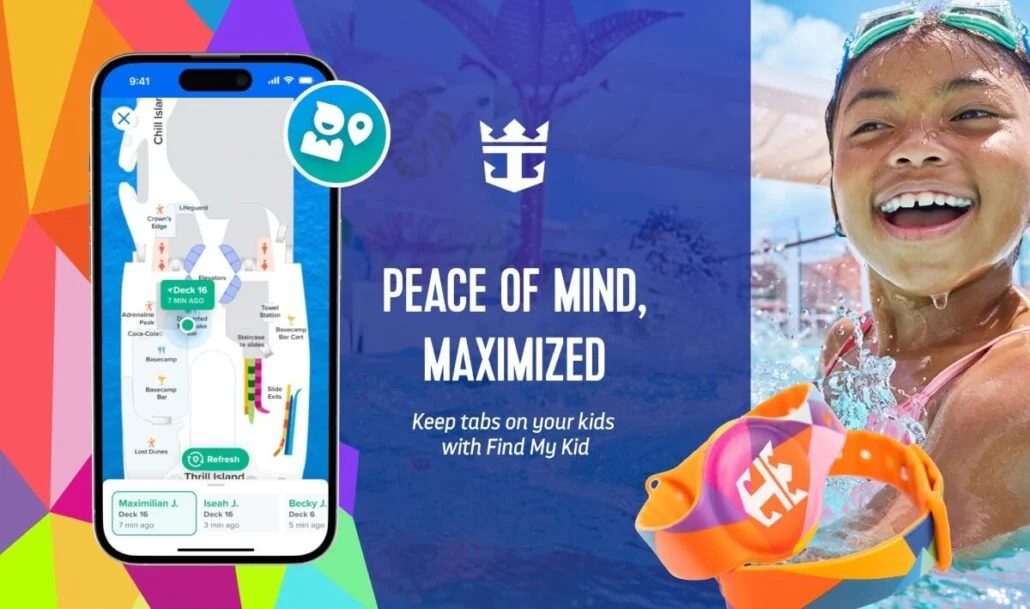
Parents can access their child's location directly through the passenger mobile application, providing reassurance throughout the cruise.
Dedicated supervision interfaces
Crew rely on dedicated supervision interfaces to monitor situations and respond quickly whenever assistance is needed.
A maritime-ready architecture that keeps working at sea
The solution relies on a robust, hybrid maritime-ready location architecture combining onboard processing and cloud monitoring. It can operate fully on-premises - ensuring low latency, high availability and independence from external connectivity - with optional cloud monitoring.
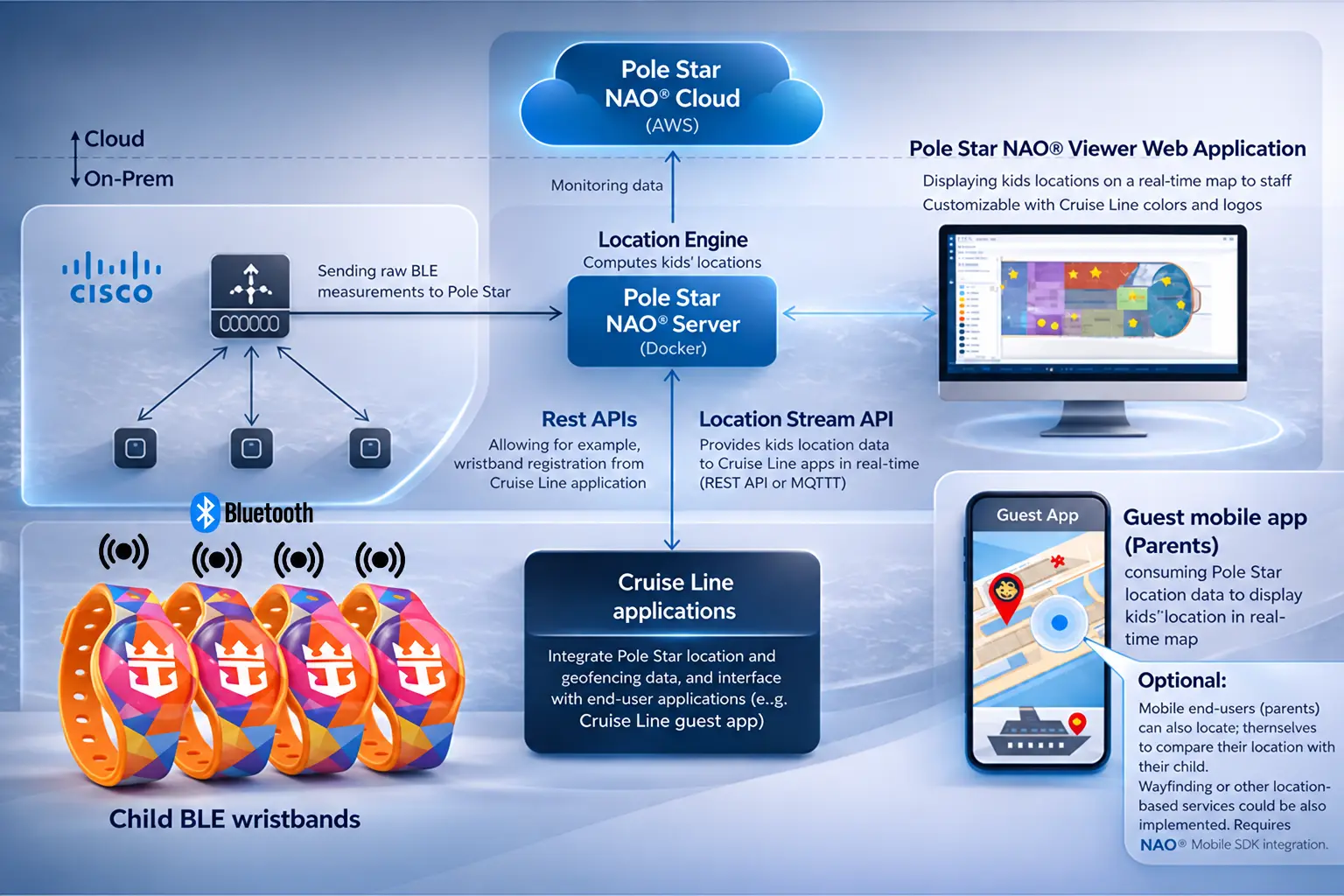
NAO® Server (Docker)
The onboard location engine, computing in real time the positions of child BLE wristbands from raw BLE measurements collected via Cisco / HPE Aruba infrastructure.
Cisco Spaces (Local Firehose)
Transmits raw BLE data to the NAO® Server for precise multi-deck indoor positioning.
NAO® Viewer web application
Live visualization on customizable, branded multi-deck maps.
REST APIs
Supporting wristband registration and integration with cruise line systems.
Location Stream API
REST or MQTT, delivering real-time location data to guest and crew mobile applications.
NAO® Cloud (AWS)
Enabling system monitoring and supervision.
The tracking web app used by onboard teams
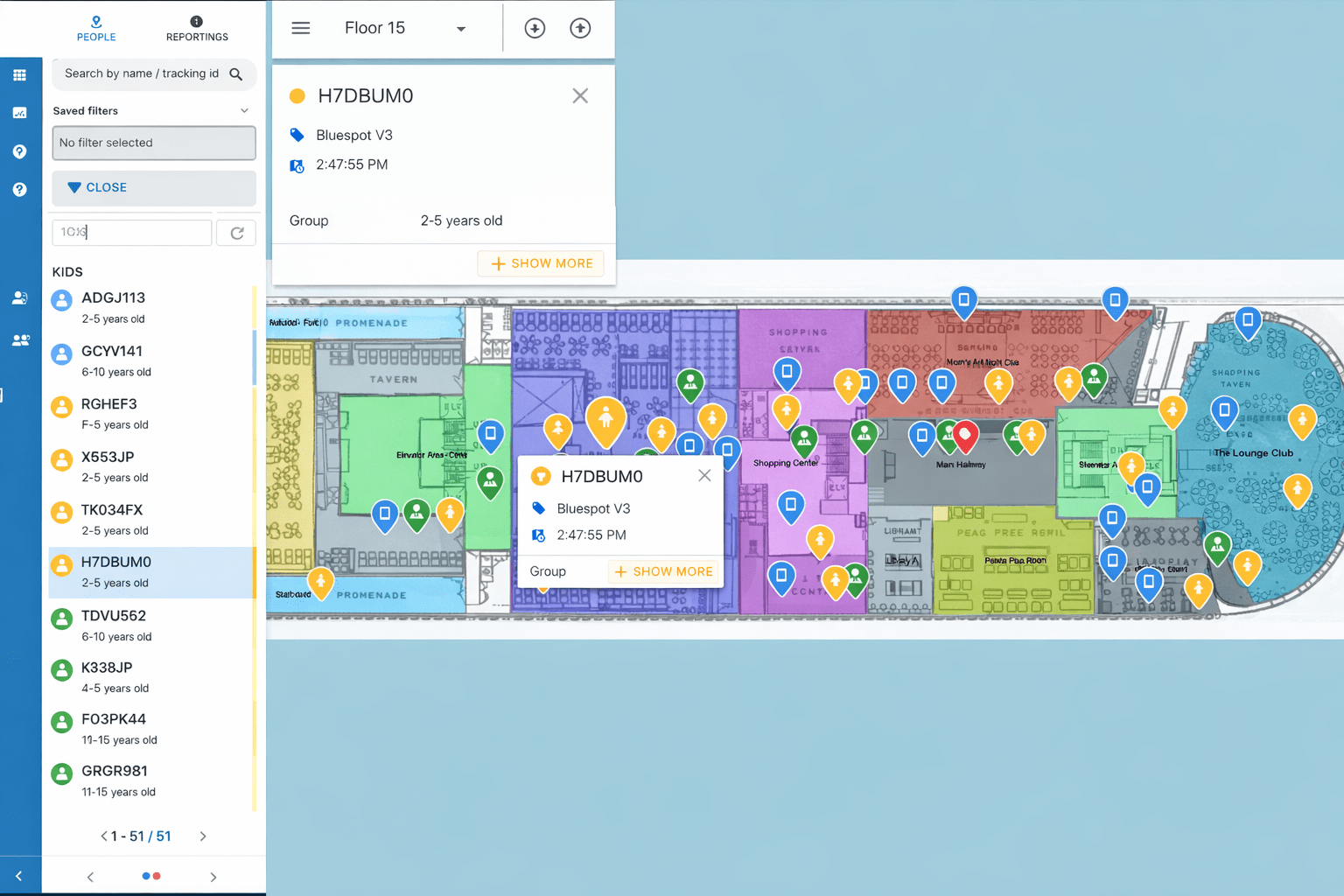
Customizable
- Any attributes can be added to kids - group age, guest class, childcare staff - for categorization and search filtering
- Colors can be customized with cruise line branding
- Cruise line logo can be added to the top left-hand corner
Interoperable
- Highly interoperable - connects with cruise line or any third-party platform via API
- Tag attributes update in real time, such as the childcare staff supervising a child
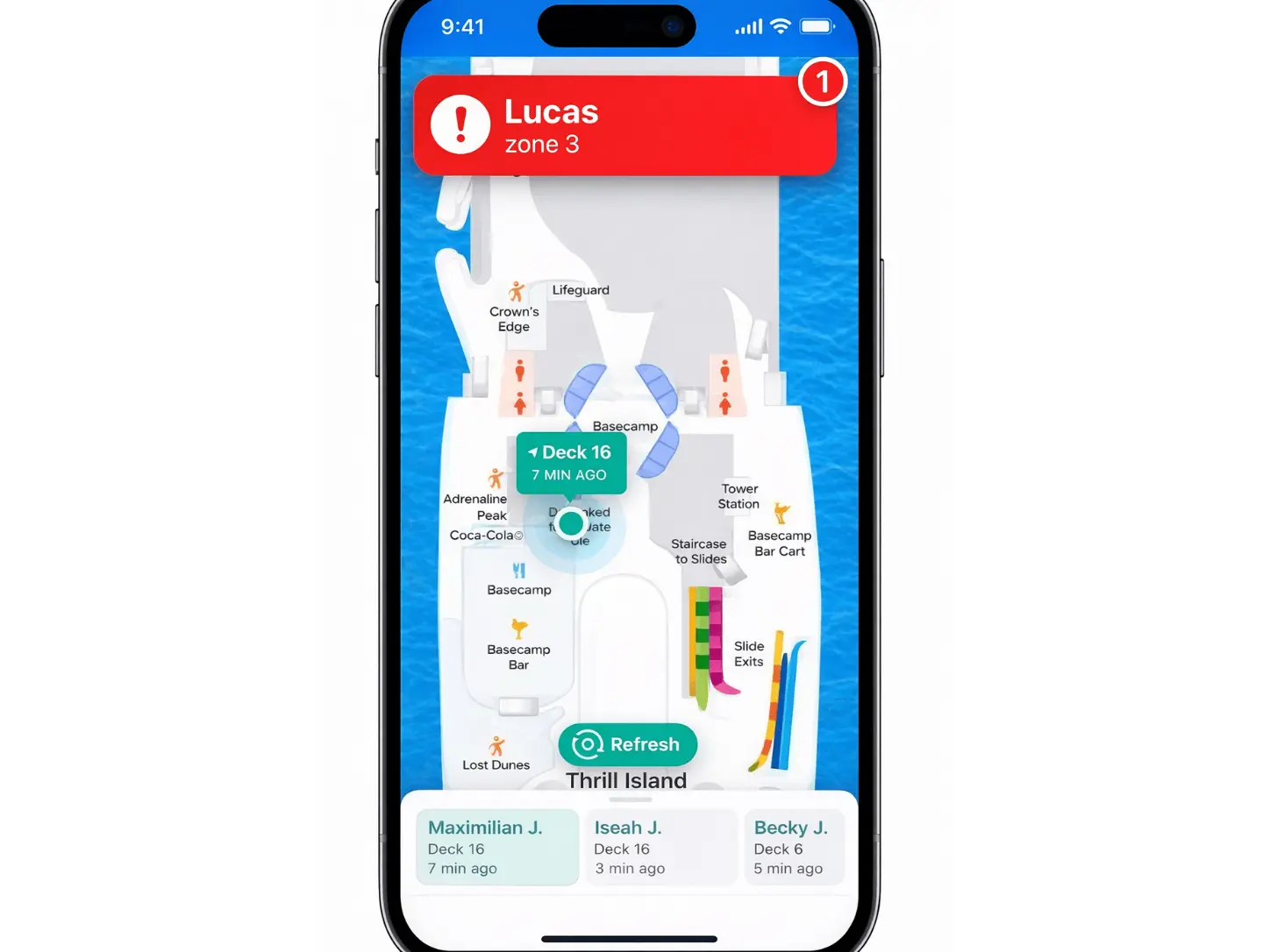
Alerting
- Pop-up alerting message can be configured when a child enters or exits a specific zone, via geofencing
Continuous situational awareness, without touching the guest experience
Operational capabilities
Operational benefits
Enhanced child safety
Across large and complex vessels.
Parental reassurance
Through direct access to location information.
Faster staff response
Improved responsiveness in case of assistance or incident.
Highly scalable
Capable of supporting thousands of wearables per voyage.
These capabilities allow onboard teams to maintain continuous situational awareness without impacting the passenger experience.
17 questions about the Royal Caribbean kids tracking deployment
01Technology & positioning
How does BLE wristband tracking work on a cruise ship?
Each child wears a lightweight BLE wristband that continuously emits a radio signal. The ship's existing Cisco access points capture those signals across passenger areas. The NAO® Positioning Engine processes the raw measurements and computes each child's real-time position on the ship's multi-deck maps - refreshed continuously, without any action required from the child or parent.
How accurate is indoor positioning on a cruise ship?
The system achieves room-level accuracy across passenger areas and decks - sufficient to precisely identify which zone a child is in at any moment: pool area, kids club, dining area, activity deck. Accuracy depends on access point density, which on Icon of the Seas and Star of the Seas is exceptionally high at 4,000+ BLE-enabled Cisco APs.
How many Cisco access points does the deployment use?
More than 4,000 BLE-enabled Cisco access points across the passenger areas of Icon of the Seas and Star of the Seas. These are the same access points that run the ship's Wi-Fi network - no parallel hardware estate was required.
Does the system work at sea without internet connectivity?
Yes. The architecture is designed to operate fully on-premise, with all location processing handled by the NAO® Server running directly on board. This ensures low latency, high availability and complete independence from satellite or internet connectivity - critical for maritime operations where external connectivity is limited.
What is the NAO® Server and where does it run?
The NAO® Server is the onboard location engine that computes child positions in real time from raw BLE measurements. It runs as a Docker container on the ship's own servers - no data needs to leave the vessel for location processing to function.
How does Cisco Spaces fit into the architecture?
Cisco Spaces (Local Firehose) bridges the ship's Cisco access points and the NAO® Server. It transmits raw BLE measurement data from the access points to the positioning engine for processing into precise multi-deck indoor location.
02Deployment & infrastructure
Can the system be deployed across a whole fleet?
Yes. The deployment model - BLE wristbands, existing Cisco infrastructure, on-premise NAO® Server - is fully replicable across multiple vessels. Each ship runs its own independent instance, with fleet-level monitoring available via NAO® Cloud where appropriate.
How does the system integrate with Royal Caribbean's other platforms?
The system exposes both REST APIs and a Location Stream API (REST or MQTT) delivering real-time location data to connected platforms - including the guest-facing passenger app and crew operational systems. Wristband registration and attribute management are also handled via API.
03Guest & crew experience
How do parents access their child's location?
Parents view their child's real-time position directly within the Royal Caribbean passenger mobile application - the same app they already use for onboard services. No separate download is needed. The location is displayed on the ship's multi-deck map and updated continuously.
How do onboard staff monitor children?
Crew members use dedicated supervision interfaces - including NAO® Viewer - which display all tracked children on customizable, branded multi-deck maps. Staff can filter by group, age, assigned childcare staff or any other configurable attribute, and search for a specific child instantly.
Can zone-based alerts be configured?
Yes. Via geofencing, the system can be configured to trigger automatic pop-up alerts when a child enters or exits a specific zone. This allows staff to be immediately notified if a child moves into an unauthorized area or leaves a supervised space.
Can the NAO® Viewer interface be customized with cruise line branding?
Yes. NAO® Viewer is fully customizable: the cruise line's colors, logo and visual identity can be applied to the supervision interface. Child attributes - group, age, assigned childcare staff - can also be configured and displayed as filters within the interface.
Does the system impact the passenger experience or daily operations?
The system operates transparently in the background, with no impact on the passenger experience. BLE wristbands are lightweight and designed specifically for children. Crew supervision interfaces run separately from guest-facing services. Position tracking is passive - requiring no action from children or parents once the wristband is activated.
04Scale, privacy & data
How many children can the system track simultaneously?
The system is designed to operate at scale across a full cruise - up to 2,000 BLE wristbands per voyage. The architecture sustains thousands of simultaneous tracking sessions across multiple decks without degrading update frequency or accuracy.
Is location data shared with third parties or stored in the cloud?
Location data is processed and stored on the ship's own on-premise infrastructure. The optional NAO® Cloud connection (AWS) is used for system monitoring only - not for storing guest or child location data. Access is restricted to authorized users at all times.
What happens if a wristband signal is lost?
If a wristband stops emitting a signal, the system flags the last known position and alerts supervisors. The dense access point coverage (4,000+ APs) minimises dead zones and maximises signal continuity across all passenger areas.
Create a smarter onboard guest experience
Discover how real-time indoor positioning can enhance family services, improve passenger safety and deliver seamless location-based experiences across your fleet.
- Real-time location for guests, children and crew members
- Works with your existing Wi-Fi and BLE infrastructure
- Software-first, hardware-agnostic, cloud or on-premise