
One positioning engine,
two ways to compute location.
At the heart of the NAO® Suite are two positioning engines that turn raw signals into a precise, real-time indoor position - NAO® Mobile SDK, which computes location on the device, and NAO® Track, which computes it in the infrastructure.
A positioning engine is the software that turns signals - BLE, Wi-Fi, GNSS and motion sensors - into a real-time indoor position. In the NAO® Suite it exists in two forms: NAO® Mobile SDK (computed on the smartphone) and NAO® Track (computed in the infrastructure, RTLS).
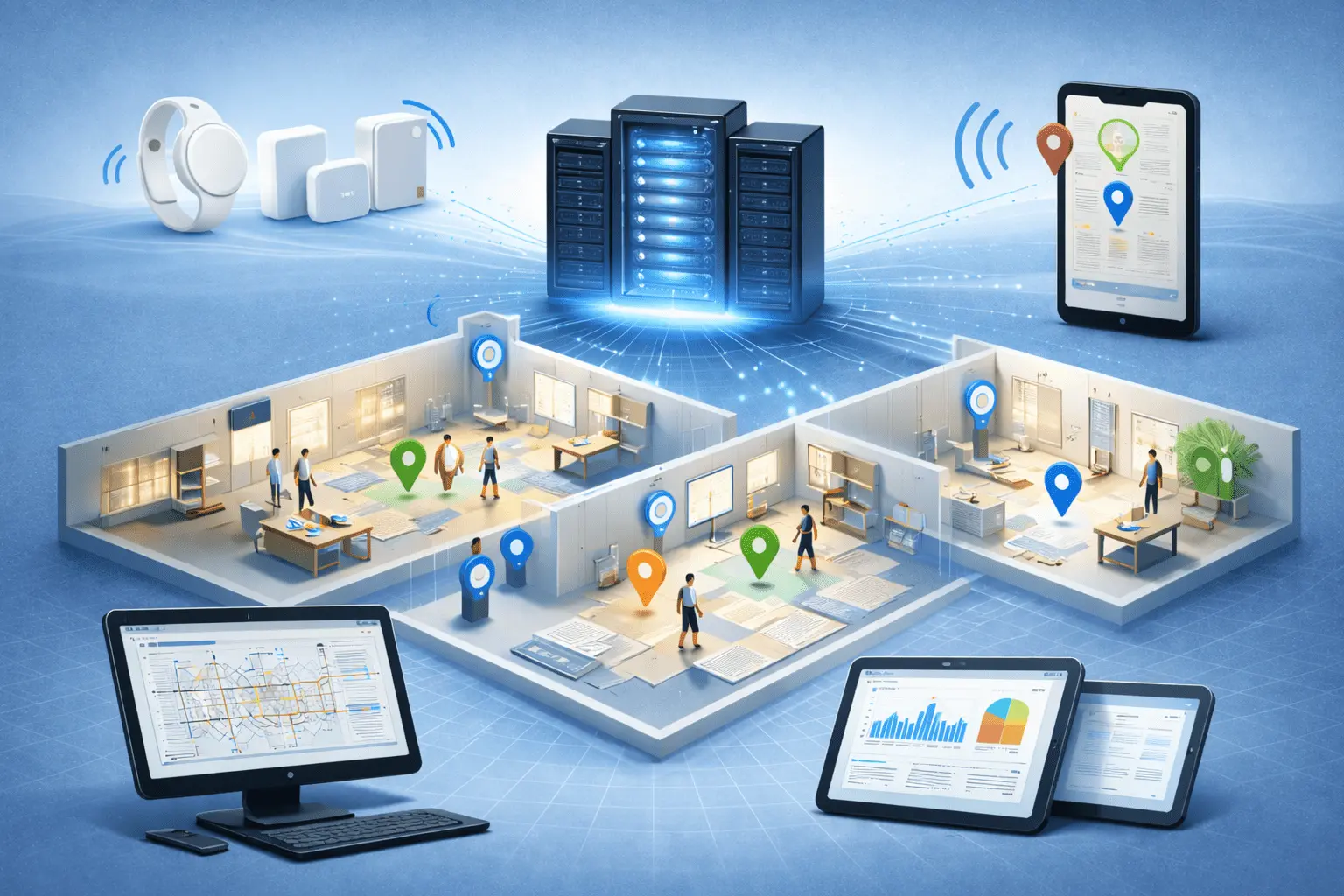
Same job, computed in two different places
Both engines take signals and produce a real-time indoor position. The difference is where the calculation happens - and that single choice shapes everything from privacy to the kind of use case each one is best at.
NAO® Mobile SDK
Indoor location engine for smartphones & smartwatches
Embeds precise, continuous indoor positioning directly inside Android and iOS apps. The position is computed on the phone itself, using hybrid multi-sensor fusion.
- Position computed on-device - works even if the network drops
- Hybrid BLE + Wi-Fi + GNSS + LTE with motion & pressure sensors
- Seamless indoor / outdoor continuity, 3D (X, Y, floor)
- Best for in-app navigation, wayfinding & contextual services
NAO® Track
Real-time location engine (RTLS) of the NAO® Suite
Transforms BLE signals collected by the infrastructure - beacons, tags or smartphones - into accurate, exploitable location data, exposed to your applications.
- Position computed server-side (NAO® Cloud or NAO® Server)
- From NAO® BlueSpot beacons, BLE tags or smartphones
- Room-level or zone-level precision in controlled environments
- Best for RTLS asset/people tracking, flow analytics & safety at scale
They aren't mutually exclusive. Smartphones running NAO® Mobile SDK can also feed NAO® Track, so app users and tagged assets share one unified location layer. See which to choose ›
NAO® Mobile SDK
Pole Star's indoor location engine for smartphones and smartwatches. It embeds precise, continuous indoor positioning directly into mobile applications, and computes the position on the device itself using hybrid multi-sensor fusion.
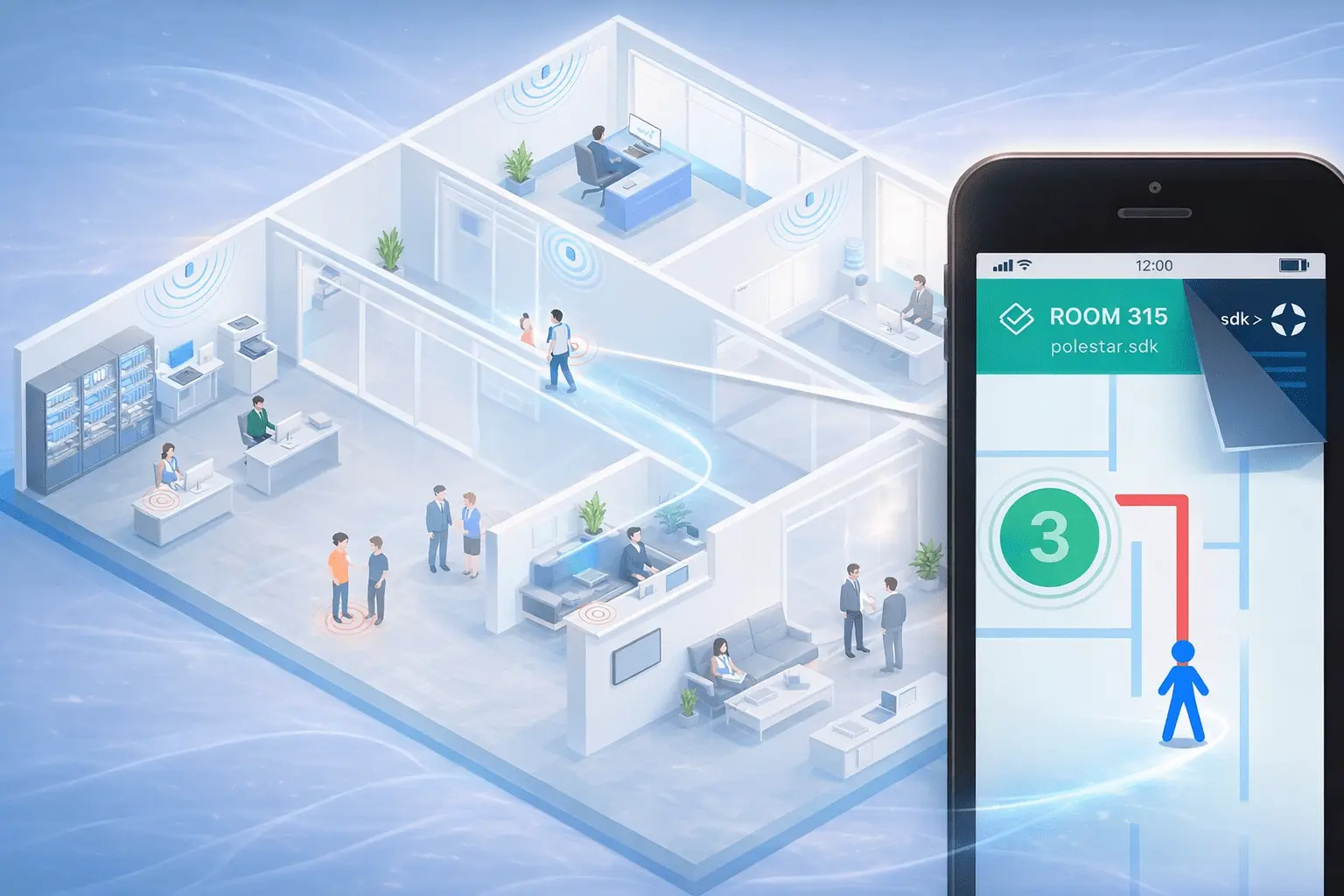
Hybrid positioning
Fuses BLE, Wi-Fi, GNSS and LTE with inertial (IMU/MEMS) and barometric sensors for a stable, real-time 3D position (X, Y, floor) - even underground or across multiple levels.
Indoor / outdoor continuity
Maintains location across indoor, outdoor and transition areas without interruption - smooth updates and reliable floor detection in complex buildings.
Computed on-device
Positions are calculated directly on the phone - limiting data exposure and keeping the service running even if the network is disrupted. GDPR-compliant, validated for sensitive environments.
Context & geofencing
Enables in-app wayfinding, transition zones and geofencing - triggering contextual notifications, alerts or assistance based on the user's location and route.
Workforce & asset tracking
Real-time tracking of staff, mobile teams and assets using standard smartphones - connectable to CMMS, supervision platforms and IoT to optimize workflows and coordination.
Fast, scalable deployment
Proven Android & iOS SDKs, streamlined calibration (with NAO® Logger), and compatibility with existing networks - from a pilot to large-scale, multi-site rollouts.
Works with existing Wi-Fi & BLE infrastructure - no dedicated hardware required
NAO® Track
The real-time location engine (RTLS) of the NAO® Suite. It transforms BLE signals collected from existing network infrastructure, beacons, tags or smartphones into accurate, reliable, exploitable location data - the calculation layer that feeds supervision and analytics.
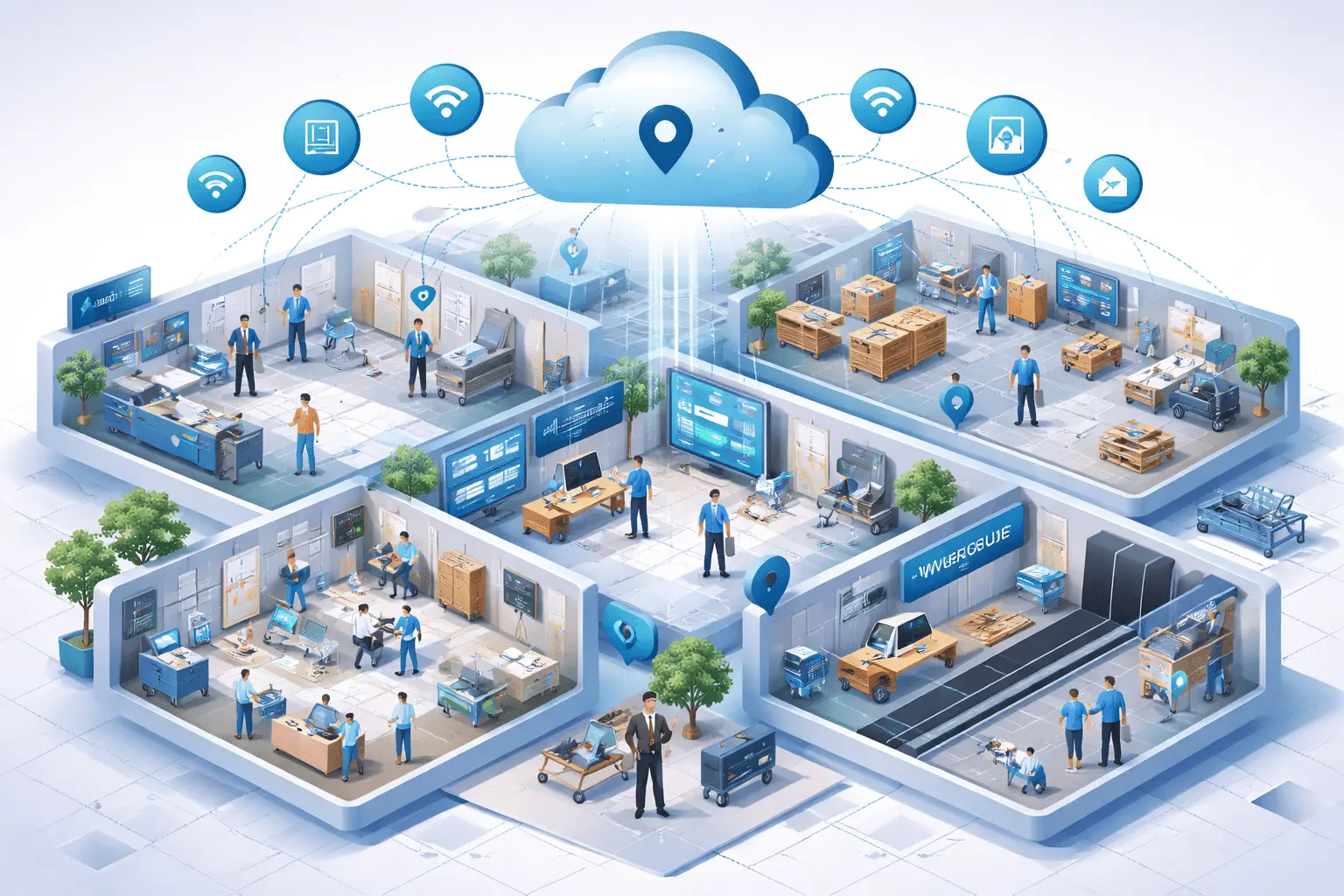
Real-time computation
Processes BLE signals from NAO® BlueSpot beacons, BLE tags or smartphones using proprietary algorithms - signal-strength analysis, temporal filtering and infrastructure-aware calibration.
Room-level precision
Delivers accuracy adapted to operational needs, including room-level or zone-level precision in controlled environments, updated continuously in real time.
Open integration
Exposes positions through REST APIs and real-time MQTT, so business systems consume location without duplicating logic - natively feeding NAO® Viewer and NAO® Flow.
Scales to thousands
Built for large deployments - hospitals, industrial sites, airports, ports and ships - tracking thousands of objects, devices or users across multiple buildings and sites.
Flow analysis
Turns continuous movement data into a factual view of circulation - spotting congestion, underused resources and real usage patterns to replace estimates with data.
Safety & geofenced alerting
Define restricted zones and trigger automatic alerts on critical events - medical emergencies, duress, incidents - locating people or assets to coordinate faster response.
NAO® Mobile SDK vs NAO® Track - which engine do you need?
The right choice comes down to where you need the position and what you're locating. Here's how the two engines compare, point by point.
| Criterion | NAO® Mobile SDK | NAO® Track |
|---|---|---|
| Where position is computed | On the device (smartphone / smartwatch) | In the infrastructure (server-side, RTLS) |
| Primary inputs | BLE, Wi-Fi, GNSS, LTE + motion & pressure sensors | BLE signals from beacons, tags or smartphones |
| Runs on | The mobile app (Android & iOS) | NAO® Cloud or NAO® Server |
| Output & accuracy | Real-time 3D position (X, Y, floor), indoor/outdoor continuity | Real-time position, room-level to zone-level in controlled environments |
| What it locates | The app user's own device | Many people & assets (tags, phones) centrally |
| Consumed via | In-app location, streamed to NAO® Cloud / Server | REST API & MQTT, NAO® Viewer, NAO® Flow |
| Best for | Navigation, wayfinding, geofencing, contextual services | RTLS tracking, flow analytics, safety & geofenced alerting at scale |
| Shared foundations | Both: BLE-based · work on existing Cisco Spaces / HPE Aruba / Fortinet infrastructure · GDPR-compliant · cloud or on-premise · part of the NAO® Suite | |
NAO® Mobile SDK when…
- You need the position inside your own app
- The use case is navigation or wayfinding for end users
- You want on-device privacy and offline resilience
- You track people via their own smartphones
- You need seamless indoor/outdoor continuity
NAO® Track when…
- You track many assets or people centrally (RTLS)
- You use BLE tags or beacons, not only phones
- You need flow analytics & supervision
- You need geofenced safety alerting at scale
- You consume location via REST / MQTT
Together when…
- You want one location layer for app users and tagged assets
- Smartphones running the SDK also feed NAO® Track
- You mix navigation with central tracking & analytics
- You're scaling from a pilot to full RTLS coverage
Two engines, one NAO® Suite
Whichever engine computes the position, it flows into the same platform - NAO® Cloud or NAO® Server - and on to supervision and analytics. That's what makes app users and tagged assets part of one coherent location layer.
Explore the NAO® Suite
What the engine powers
From an app that guides a visitor to a control room that tracks thousands of assets - the same positioning foundation supports a wide range of location-based operations.
Navigation & wayfinding
Smooth indoor / outdoor guidance across complex, multi-floor buildings - with contextual notifications and assistance triggered by the user's location and route.
Workforce & asset tracking
Locate staff, mobile teams and assets - via smartphones or tags - to coordinate interventions, optimize workflows and connect to CMMS, supervision and IoT systems.
Flow analysis & optimization
A factual view of circulation - identifying congestion, underused resources and real usage patterns to support optimization, maintenance and logistics with objective data.
Safety & critical events
Real-time visibility with geofenced alerting - locating people or assets during medical emergencies, duress alerts or incidents to reduce reaction times.
Deployed across these markets
Positioning engine, in plain answers
What is a positioning engine in the NAO® Suite?
What's the difference between NAO® Mobile SDK and NAO® Track?
Does it require dedicated infrastructure?
What accuracy can it achieve?
Is the position computed on the device or on a server?
Is it suitable for healthcare and other regulated environments?
Which platforms does the SDK support?
How is NAO® Track's location data consumed?
Can NAO® Mobile SDK and NAO® Track work together?
Can it be deployed in the cloud or on-premise?
What scale can it handle?
Put location at the core of your operations.
Whether you need position inside your app or across your whole site, our team will help you choose the right engine - and deploy it on the infrastructure you already have.