
Tracking up to 10,000 baggage carts
at Paris Charles de Gaulle.

Thousands of carts, multiple terminals, and no reliable way to know where they were. Pole Star deployed real-time location on the airport's existing network infrastructure - turning cart management from a manual, reactive process into a data-driven operational function.
One of the largest deployments of its kind
ClientAtalian
SiteParis Charles de Gaulle
Use caseBaggage cart tracking
TechnologyBLE on existing Wi-Fi
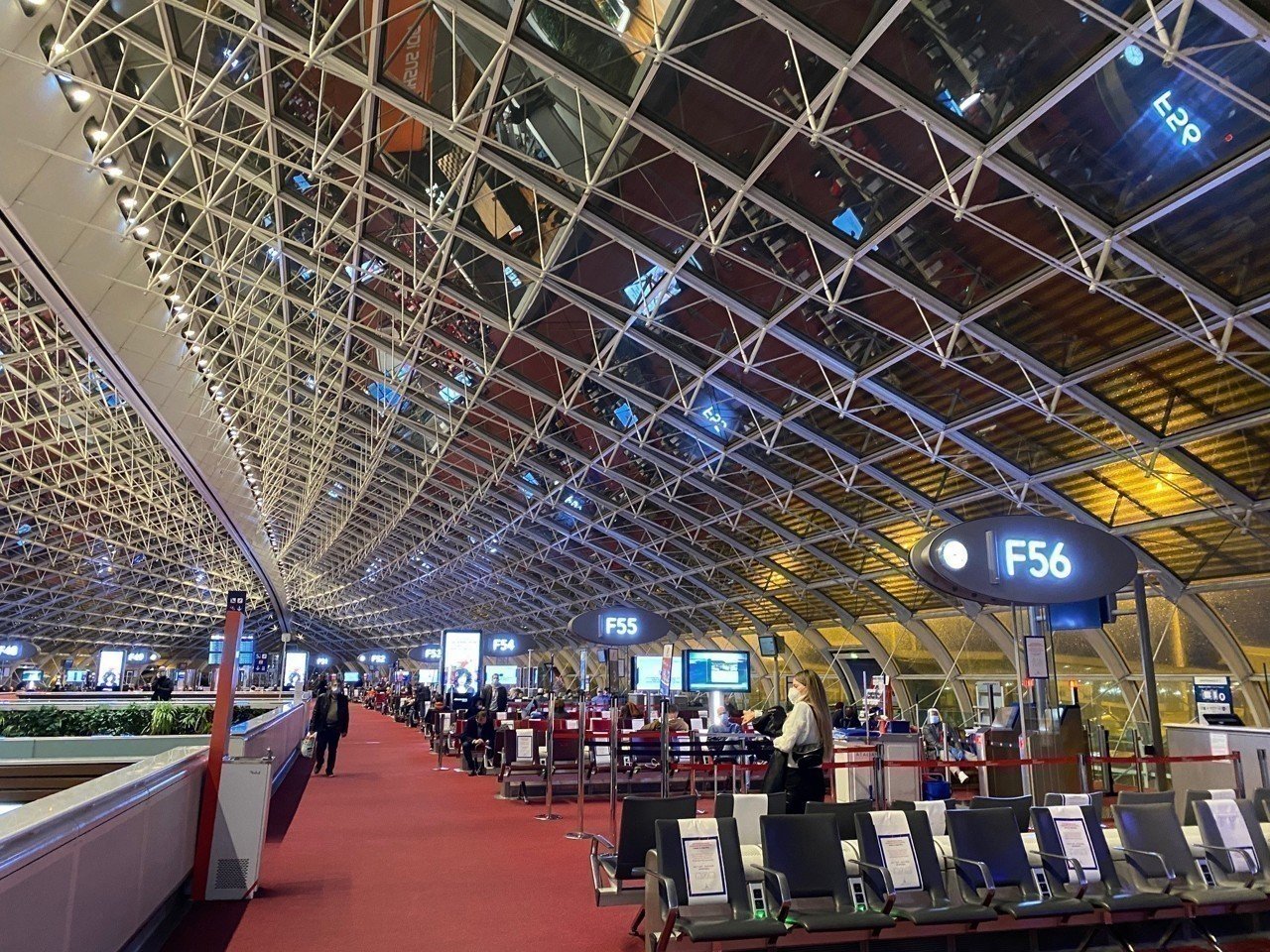
Paris Charles de Gaulle Airport terminal, one of the largest airports in Europe
At a glance

Scale, and the infrastructure that made it possible

The project covers the full operational perimeter of baggage cart usage within the airport terminals - deployed without requiring heavy modifications to existing airport infrastructure.

6,000-10,000
baggage carts trackedacross the terminals
2,000+
BLE-enabled Cisco APsalready installed on site
4
operational zone typescontinuously monitored
Real-time
zone-based countingreplacing manual checks

Operational coverage

A dense existing network of BLE-enabled Cisco Wi-Fi access points ensures continuous coverage across critical operational zones, so cart movements are monitored consistently throughout the passenger journey - from arrival to departure.

Cart storage areas Drop-off & return zones Check-in halls Passenger terminals
Operational context

Managing baggage carts at airport scale

As one of the largest airports in Europe, Paris Charles de Gaulle manages thousands of baggage carts every day, distributed across multiple terminals and high-traffic passenger areas. These carts are essential to passenger experience and operational fluidity - yet managing them represents a significant logistical challenge at that scale.

Before the deployment
Cart shortages in critical passenger zones
Excess carts accumulating in low-demand areas
Losses and theft across the operational perimeter
No real-time visibility - management based on manual checks and estimations
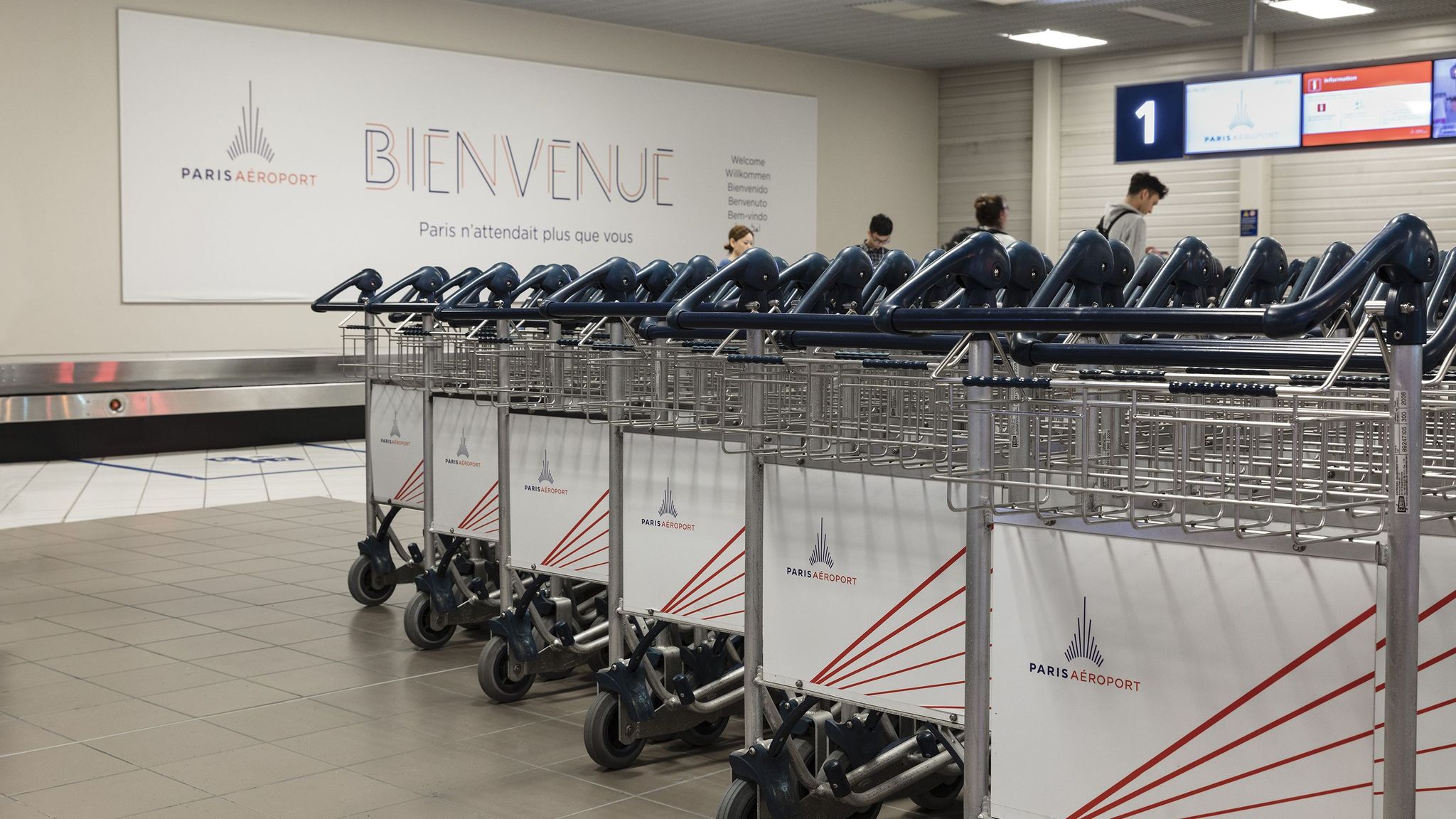
Baggage carts lined up in an airport terminal
The objective

Deploy an industrial-grade, real-time and interoperable solution, capable of operating at large scale - without requiring heavy modifications to the existing airport infrastructure.

How it works

From BLE tags to operational insight

Each baggage cart carries a Bluetooth Low Energy tag. Those tags emit signals captured by the airport's existing BLE-enabled Wi-Fi infrastructure - and Pole Star computes the real-time indoor location of every cart within the terminal environment.

1

A BLE tag per cart

Each cart continuously emits a signal - no manual scanning, no operator action required.

2

Captured by existing infrastructure

The airport's 2,000+ BLE-enabled Cisco access points pick up the signals. No parallel hardware estate to build.

3

Automatic zone-based counting

Beyond localization, the system continuously calculates how many carts are available in each operational area - removing the need for manual inventory checks.

4

Intelligent alerts on abnormal situations

Teams can anticipate issues rather than react once passenger impact is already visible.
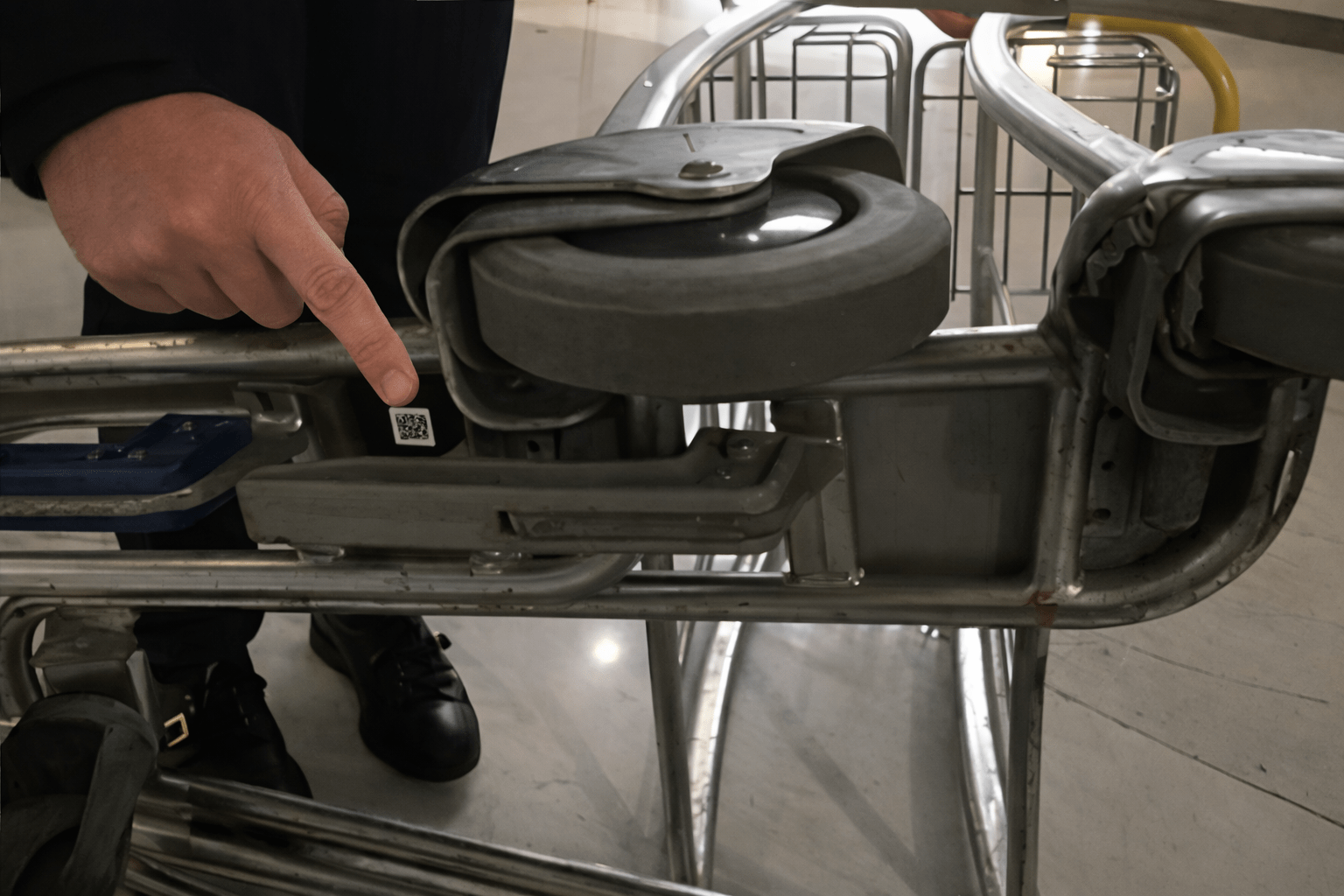
BLE tag fitted to a baggage cart for real-time tracking

What triggers an alert

Alerts fire when abnormal situations occur - so operational teams intervene before passengers feel the impact.

Cart shortages Surpluses Prolonged inactivity Unusual movement patterns
Live supervision

NAO® Viewer - the real-time operations dashboard

At CDG, Atalian teams use NAO® Viewer as their central operations interface - a live map showing every tagged trolley and agent across all terminals, updated in real time, with full utilization analytics.

Live cart locationEvery tagged trolley on the map - terminal, zone, gate - in real time.
Agent visibilitySupervisors see which agents are active, where they are and how many carts are in their zone.
Utilization analyticsDwell time, flow patterns and zone occupancy - the data behind the +10% service delivery gain.
Multi-terminal viewAll terminals in one dashboard - filter by area, asset category or time window.
Decision support

The operational questions the platform answers

The value isn't the map - it's that questions which previously required a walk around the terminal now have an instant, objective answer.

Q1

How many carts are currently available in each zone?

Q2

Where are shortages or over-concentrations occurring?

Q3

How long do alert situations last before being resolved?

Q4

What is the availability rate per terminal or area?

Q5

How many alerts are generated daily, and in which zones?
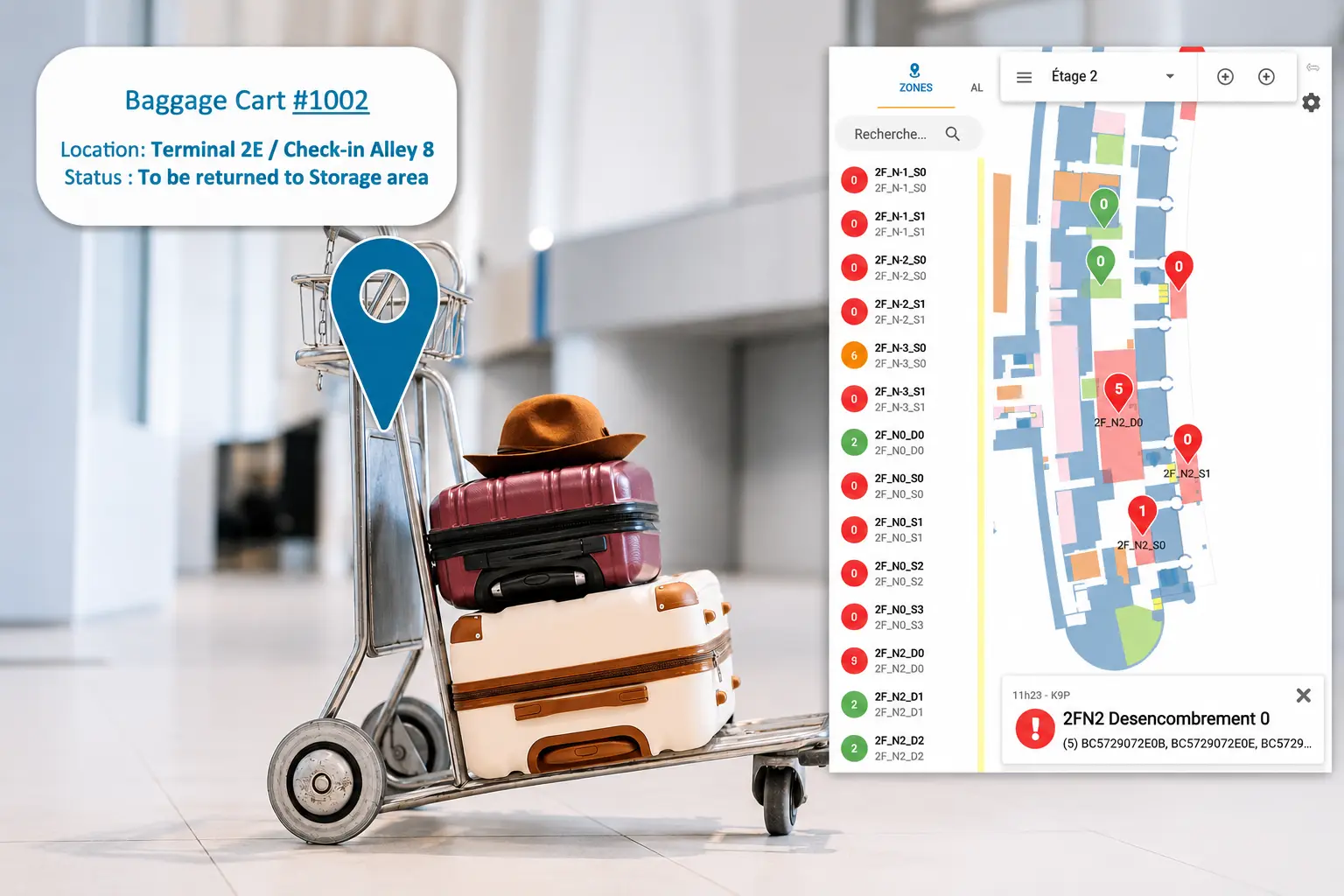
Operational team monitoring baggage cart distribution across airport zones
Operational benefits

What cart tracking changed at CDG

Beyond knowing where trolleys are, real-time cart tracking gave Atalian the operational visibility to act faster, deploy more efficiently and demonstrate results to the airport authority.

+10%

Overall service delivery performance

Measured across all terminals at CDG. The gain came from saving time on baggage cart retrieval, optimizing agent deployment and the ability to identify and resolve operational bottlenecks in real time using NAO® Viewer insights.

What drove that gain

Cart search time eliminated

Agents locate the nearest available trolley in seconds on NAO® Viewer - no radio calls, no walking the terminal.

Smarter agent deployment

Supervisors see which zones are undersupplied in real time and redeploy agents before passengers notice the shortage.

Utilization data as evidence

Flow analytics and dwell time reports gave Atalian objective performance data to share with CDG airport management.

Fewer lost or idle carts

Geofence alerts flag trolleys that drift out of assigned zones - reducing loss and keeping fleets where they generate revenue.

Multi-terminal oversight

All terminals in a single NAO® Viewer dashboard - no switching between systems, no blind spots across the site.

Repeatable, scalable model

The deployment at CDG established a template - same infrastructure, same platform - ready to extend to other Atalian airport contracts.

FAQ

Questions about this deployment

The deployment
How many carts are tracked at CDG, and across how many terminals?

Pole Star tracks between 8,000 and 10,000 baggage trolleys across the main terminals at Paris-Charles de Gaulle. The system uses over 2,000 BLE access points - part of the airport's existing Cisco Wi-Fi infrastructure - to compute the real-time indoor position of every tagged cart.

Was new infrastructure installed for this project?

No. The BLE positioning layer runs entirely on the Cisco Wi-Fi access points already deployed across CDG terminals. Pole Star activated the BLE scanning capability on existing APs, which means Atalian benefits from full indoor coverage without any new network hardware or cabling.

What does the BLE tag on each trolley look like?

Each trolley carries a compact NAO® Asset Tag - a lightweight BLE device that broadcasts continuously, enabling the positioning engine to compute its location in real time. Tags are designed for long battery autonomy and minimal maintenance in a high-volume airport environment.

How is Atalian's performance measured at CDG?

Performance is tracked through NAO® Viewer utilization dashboards - covering cart availability per zone, agent response time and trolley flow across terminals. This data is shared with CDG airport management and is what underpins the +10% overall service delivery gain validated on the contract.

The technology
What is NAO® Viewer and how does Atalian use it?

NAO® Viewer is the real-time indoor mapping and supervision interface of the NAO® Suite. It displays the live position of every tagged cart and agent on a floor plan, filterable by terminal, zone and status. Atalian supervisors use it throughout their shifts to monitor fleet distribution, identify coverage gaps and redeploy agents before passengers notice a shortage.

Can the system trigger alerts when carts leave authorized zones?

Yes. NAO® Track includes indoor geofencing - virtual perimeters drawn on the map that fire an alert the moment a tagged cart crosses a defined boundary. This is used at CDG to flag carts drifting outside terminal zones or remaining idle in restricted areas.

Is location data stored and can it be exported for reporting?

Yes. NAO® Track logs every position, movement and event - providing historical analytics on utilization, dwell time, flow patterns and zone occupancy. Reports can be exported for operational reviews and for the performance reporting required under Atalian's airport contract.

Scalability
Can this model be replicated at other airports?

Yes. The CDG deployment is designed as a repeatable model - the same BLE tagging approach, the same NAO® Track platform and the same NAO® Viewer interface work wherever Cisco, Aruba or Fortinet BLE-capable infrastructure is already installed. Atalian can extend the same architecture to new airport contracts without reinventing the deployment from scratch.

Can the platform also track agents, not just carts?

Yes. NAO® Track handles both asset tracking and staff location on the same platform. Agents can carry BLE badges or use the NAO® Mobile SDK on their smartphones - their position is then visible in NAO® Viewer alongside carts, giving supervisors a unified operational picture.

Real-time tracking for your operations fleet

Discover how Pole Star deploys cart and asset tracking on existing BLE infrastructure - with zero new hardware and measurable performance gains from day one.

Deployed at Paris CDG

Scroll to Top