
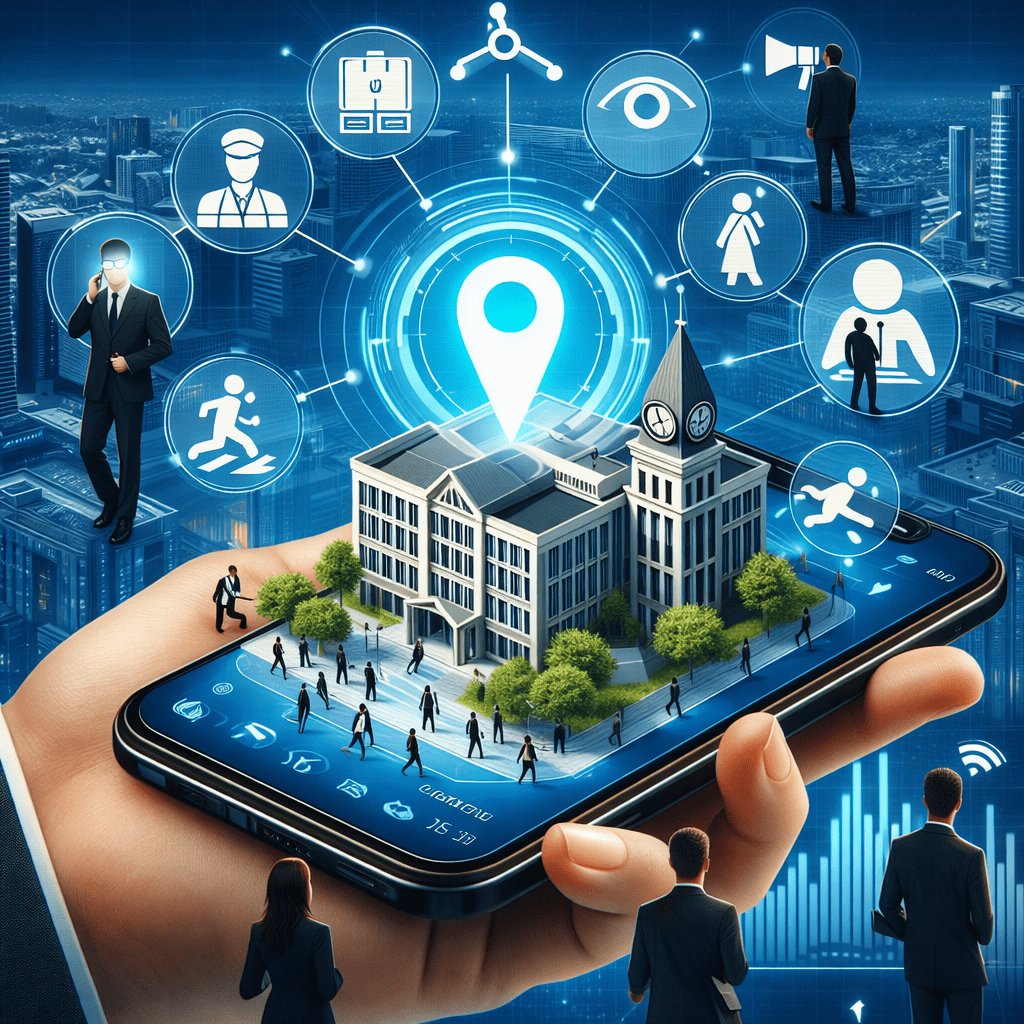
Indoor location technology is becoming essential. In hospitals, airports, industrial facilities, railway stations and other complex environments, knowing where people and critical assets are located can make a significant difference when an incident occurs.
Yet traditional GPS technology cannot provide reliable positioning inside most buildings. Walls, floors and structural obstacles weaken satellite signals, making it difficult to locate people and equipment accurately.
Indoor location technology addresses this challenge. By combining real-time positioning, wireless infrastructure and location intelligence, organizations can improve situational awareness, coordinate emergency responses and strengthen the protection of both people and assets.
For security teams and facility operators, indoor positioning is becoming an important part of a more connected and responsive safety strategy.
What is indoor location technology?
Indoor location technology determines the position of people, equipment and other assets inside buildings where conventional GPS positioning is unreliable.
Depending on the environment and application, indoor positioning systems can rely on technologies such as Bluetooth Low Energy (BLE), Wi-Fi and other wireless signals. These signals are processed by a positioning engine to calculate the location of devices, tags or mobile equipment in real time.
A Real-Time Location System (RTLS) goes further by continuously collecting and sharing location information. This enables organizations to monitor movements, identify specific zones, trigger alerts and provide operational teams with a clearer view of what is happening inside their facilities.
To understand the different technologies behind these solutions, explore our guide to how indoor positioning works.
Unlike isolated tracking tools, an integrated indoor location intelligence platform can support several use cases through a shared infrastructure.
The indoor localization and tracking technologies studied by NIST demonstrate the growing importance of real-time positioning for emergency response, personnel safety and asset tracking.
How indoor positioning improves safety and security
1. Faster emergency response
During a fire, medical incident, security threat or evacuation, locating people inside a large building can be difficult.
Indoor location systems provide security and emergency teams with real-time positioning information, helping them identify where assistance is needed and coordinate their response more effectively.
Depending on the deployment, location data can help teams:
- Identify the last known or current location of a person in distress.
- Locate personnel across different floors and building zones.
- Coordinate intervention teams during an emergency.
- Improve situational awareness during evacuation procedures.
- Support emergency management through more accurate location information.
By reducing the time spent searching for people, indoor positioning can help organizations make emergency operations more coordinated and responsive.
2. Protecting lone workers and frontline staff
Employees working alone or in isolated areas can face significant risks, particularly in industrial facilities, technical buildings, hospitals and large infrastructures.
When an incident occurs, every minute matters. A worker may be unable to call for help, or emergency teams may not know their exact location.
Indoor location technology can support lone worker protection through geolocated alerts and real-time staff positioning.
When integrated with compatible safety applications or devices, the system can support:
- Manual emergency or panic alerts.
- Geolocated duress calls.
- Man-down and immobility detection, where supported by the device and application.
- Faster identification of the worker’s location.
- More efficient coordination between employees and response teams.
These capabilities form part of a broader worker safety strategy, particularly in environments where employees operate across large buildings or restricted areas.
In healthcare environments, this approach can also help protect frontline staff who may face aggression or emergency situations while working across large facilities.
3. Protecting children and vulnerable individuals
Large and busy environments such as hospitals, cruise ships, transport hubs and public venues can make it difficult to supervise children or vulnerable individuals.
Indoor tracking can help authorized teams and caregivers locate tagged individuals within defined areas.
Combined with geofencing, the system can generate alerts when a person enters or leaves a designated zone, depending on the configured rules.
Potential applications include:
- Monitoring children in large public or leisure environments.
- Supporting the prevention of unauthorized exits.
- Helping care teams monitor residents who may be at risk of wandering.
- Improving coordination when a person needs assistance.
These applications must be designed around appropriate access permissions, privacy requirements and the specific needs of each environment.
4. Tracking and protecting critical assets
The safety and continuity of an organization also depend on the availability of its equipment.
In hospitals, for example, medical devices and mobile equipment must be accessible when healthcare professionals need them. In industrial facilities and warehouses, misplaced or stolen assets can disrupt operations and create additional costs.
Indoor asset tracking provides visibility into the location of equipment throughout a facility.
Organizations can use RTLS to:
- Locate medical equipment and other valuable assets.
- Identify the last known location of missing items.
- Monitor equipment movements between zones.
- Reduce time spent searching for essential resources.
- Support inventory management and operational continuity.
By combining people tracking and asset tracking on a shared location platform, organizations can improve both security and day-to-day operational efficiency.
Where can indoor location technology be deployed?
Indoor positioning can support safety and security requirements across a wide range of environments.
Hospitals and healthcare facilities
Hospitals combine complex layouts, sensitive equipment, patients and large teams of healthcare professionals.
Indoor location solutions can support staff safety, patient monitoring and medical equipment tracking. They can also help coordinate interventions and improve visibility across different departments.
Cruise ships and hospitality
Cruise ships bring together thousands of passengers and crew members in a complex, multi-level environment.
Indoor location can support passenger and child safety, crew coordination and emergency response. It can also contribute to digital mustering and the monitoring of people in designated areas.
Industrial facilities
Industrial sites often include restricted zones, technical rooms and isolated working areas.
RTLS solutions can help locate workers and equipment, support lone worker protection and improve the coordination of safety teams during incidents.
Airports and railway stations
Transport hubs welcome large numbers of passengers while requiring continuous coordination between operational and security teams.
Indoor positioning can support staff location, incident management and passenger services, helping teams respond more efficiently in complex, multi-level environments.
Public venues and corporate buildings
Universities, stadiums, shopping centres and corporate campuses also face challenges related to crowd management, emergency preparedness and the protection of people and property.
Indoor location technology can provide additional visibility and support more coordinated security operations.
What makes an indoor location system reliable?
Knowing where someone or something is located is only useful if the information can be trusted and accessed when needed.
For safety-critical applications, organizations should evaluate more than positioning accuracy alone.
Positioning accuracy and floor detection
The system must provide location information suited to the environment and the intended use case. In multi-storey buildings, distinguishing between floors is particularly important.
Service availability and reliability
A safety application must remain operational when an incident occurs. Organizations should assess infrastructure coverage, system availability, resilience and the supplier’s service commitments.
Cybersecurity and data protection
Location information can be sensitive, particularly when it relates to employees, patients or visitors.
Access controls, secure data processing, appropriate retention policies and integration with existing security practices are essential considerations. These principles are also explored in our article on cybersecurity in indoor geolocation services.
Integration with existing infrastructure
A reliable deployment should fit into the organization’s existing IT and security environment.
The ability to reuse compatible Wi-Fi or BLE infrastructure and integrate with existing applications can simplify deployment and reduce the need for separate systems.
Scalability and flexibility
The solution should be able to support different use cases and adapt as operational needs evolve, from staff safety to asset tracking and indoor navigation.
Why choose Pole Star for indoor location and safety applications?
Pole Star develops indoor positioning and Real-Time Location System solutions designed to help organizations locate people and assets in complex indoor environments.
Through the NAO Suite, Pole Star provides a location platform that can support multiple applications, including staff safety, asset tracking, indoor navigation and location-based services.
Its architecture can leverage compatible existing Wi-Fi and BLE infrastructure, helping organizations build location capabilities without necessarily deploying an entirely separate network.
Depending on the deployment, NAO Suite can support:
- Real-time indoor positioning of people and equipment.
- Integration with mobile applications and compatible devices.
- Location-based alerts and geofencing.
- Indoor navigation and multi-floor positioning.
- Integration with existing operational and security applications.
Pole Star works with integrators and organizations across sectors such as healthcare, transportation, maritime and industry to address specific indoor location challenges.
Indoor location in real-world environments
Pole Star’s deployments illustrate how indoor positioning can support operational and safety requirements in different environments.
SNCF Gares & Connexions
Pole Star’s indoor positioning technology supports passenger navigation and security operations in major railway stations, through integration into the SNCF mobile application.
CEA and Eiffage Energy Systems
A smartphone-based lone worker protection solution combines indoor positioning and alerting in sensitive industrial environments. The deployment operates on a closed, on-premise network.
These examples demonstrate how indoor location can be adapted to different operational constraints and security requirements. Discover more about these projects through our SNCF case study and CEA case study.
Conclusion: making indoor environments safer through real-time location
Protecting people and assets in complex buildings requires more than traditional security measures. Organizations need reliable information, effective coordination and the ability to respond quickly when incidents occur.
Indoor location technology and RTLS provide an additional layer of visibility by helping teams locate people and equipment, manage alerts and improve emergency response.
From lone worker protection and patient safety to asset tracking and emergency management, indoor positioning can support a wide range of safety applications through a shared location infrastructure.
With the NAO Suite, Pole Star helps integrators and organizations turn existing wireless infrastructure into actionable indoor location intelligence.
Want to explore how indoor location can improve safety in your facilities?
Contact Pole Star to discuss your indoor positioning and RTLS requirements.