Worker safety and wayfinding across metro, tunnels and railway stations
For metro and rail operators and major infrastructure projects that need reliable worker location, lone worker protection and passenger wayfinding across stations, tunnels and technical areas - including underground zones where GNSS is unavailable.
Trusted by transport operators and infrastructure partners

What is rail and metro RTLS?
Rail and metro RTLS (Real-Time Location System) is the use of indoor and underground positioning to locate workers, security staff and passengers across metro stations, tunnels and railway stations - including confined areas where GNSS is unavailable. It runs on professional and passenger smartphones, reinforced by rugged beacons and multi-technology positioning, to support worker safety, alert management and passenger wayfinding.
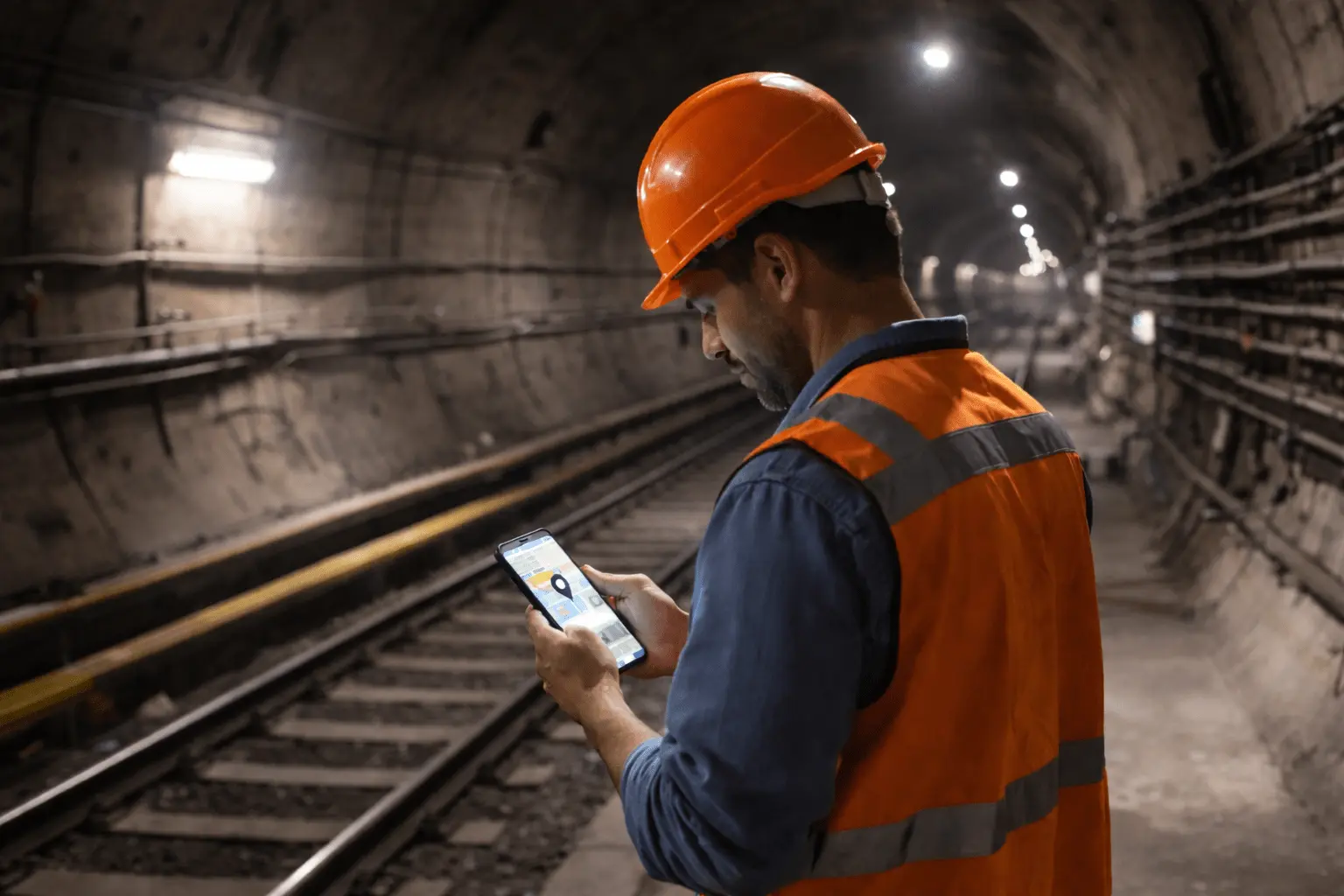
Location built for underground
Pole Star delivers worker safety, lone worker protection, alert management and passenger wayfinding on mobile devices across metro and rail infrastructures.
Operators and major projects
Metro and rail operators and large infrastructure programs, plus the field teams, security staff and passengers who move through their networks.
New lines, confined and GNSS-denied
Large new metro programs create stations, tunnels and technical areas where traditional positioning fails and isolated workers face safety-critical conditions.
Mobile, beacons and multi-tech
NAO® Mobile SDK on professional and passenger apps, reinforced by NAO® BlueSpot V4 Rugged beacons and multi-technology positioning combining LTE and BLE.
Why location is critical in metro and rail environments
Metro networks and underground transport infrastructures operate in constrained environments where safety and location reliability are critical.
Large-scale projects such as new metro lines involve stations, tunnels and technical areas that are often inaccessible to traditional positioning systems. GNSS simply does not reach underground, so operators lose visibility over personnel exactly where conditions are most demanding - in confined spaces, in restricted zones, and around isolated workers.
In these environments, operators must ensure reliable worker location, continuous safety monitoring and effective alert management. When something goes wrong, response time depends on knowing precisely where a worker is - and in a tunnel, that is exactly what conventional tools cannot provide.
The same complexity shapes the passenger experience. Large, multi-level railway stations are stressful to navigate under time pressure, which is why reliable indoor location now underpins both operational safety and passenger wayfinding across the network.
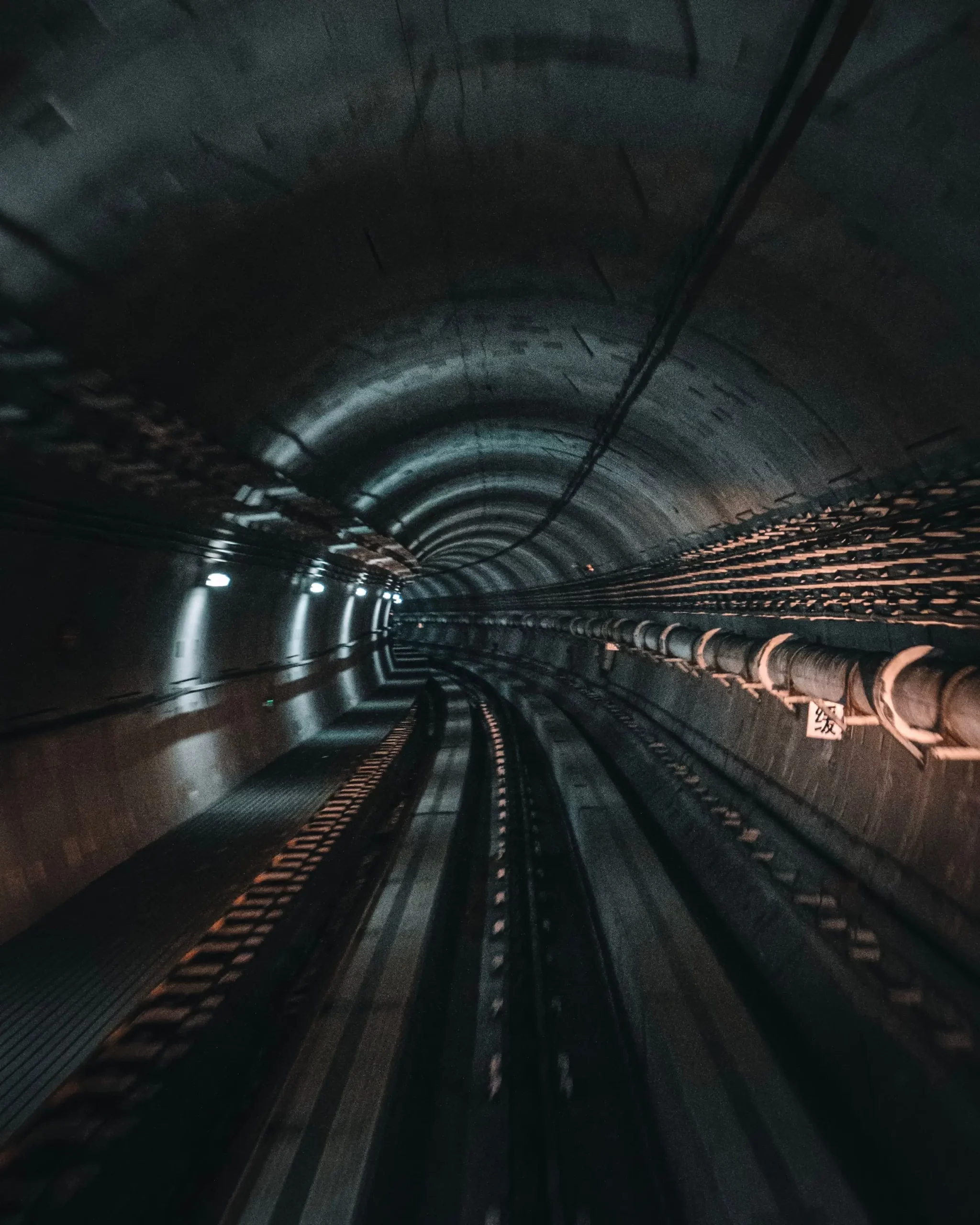
The operational realities of underground transport
Metro and rail environments concentrate some of the hardest location problems - confined, GNSS-denied and safety-critical.
Underground environments where GNSS fails
Stations, tunnels and technical areas are inaccessible to traditional positioning systems.
GNSS does not reach underground, and confined structures disrupt conventional signals.
Operators lose location exactly where reliability matters most.
Limited visibility on personnel movements
Teams cannot see where field workers are across stations, tunnels and restricted zones.
Confined, evolving construction environments have no continuous location layer.
Coordination and safety monitoring stay partial and reactive.
Isolated and lone workers in safety-critical zones
Workers operate alone in confined, high-risk underground areas.
Large sites have restricted zones where incidents can go unnoticed.
Slow incident detection and delayed emergency response.
Passenger orientation in complex, multi-level stations
Travelers struggle to navigate large, multi-level railway stations under time pressure.
Dense layouts across several levels overwhelm static signage.
Stress, delays and added load on station teams.
Who Pole Star locates, and where
Underground continuity
Location that follows workers below ground
GNSS stops at the surface. Pole Star keeps location continuous from station level down into tunnels, delivered on mobile devices and reinforced by rugged beacons and multi-technology positioning.
People located
On professional and passenger mobile devicesField workers
Located continuously across stations, tunnels and technical areas for safety monitoring.
Security staff
Real-time location within station environments to support incident management and response.
Passengers
Guided through multi-level stations with precise indoor wayfinding.
Environments covered
Including zones beyond GNSSStations
Multi-level passenger and operational areas, above and below ground.
Tunnels
Confined underground stretches where traditional positioning is unavailable.
Technical & restricted areas
Access-controlled zones where isolated workers need reliable, resilient location.
The same situation, before and after real-time location
Once underground, the worker drops off the map - GNSS fails and operators lose visibility across the technical zone.
Location stays continuous on the worker's mobile device, reinforced by rugged beacons, giving operators real-time visibility at every depth.
Continuous personnel visibility across stations, tunnels and technical zones.
The incident can go unnoticed for a long time, and even once raised, responders do not know exactly where to go.
Immobility detection and lone worker protection trigger a geolocated alert, escalated centrally and to emergency services.
Faster incident detection and reduced emergency response time.
They rely on static signage across several levels, lose time and add pressure on station staff for directions.
Indoor wayfinding in the passenger app guides them level by level, while security staff stay locatable for incidents.
A calmer passenger experience and reinforced station security.
From metro challenge to Pole Star solution
Each challenge on this page maps to a specific Pole Star capability across worker safety and passenger wayfinding.
How metro and rail teams use real-time location
Concrete scenarios across worker safety and passenger wayfinding - from tunnels under construction to busy railway stations.
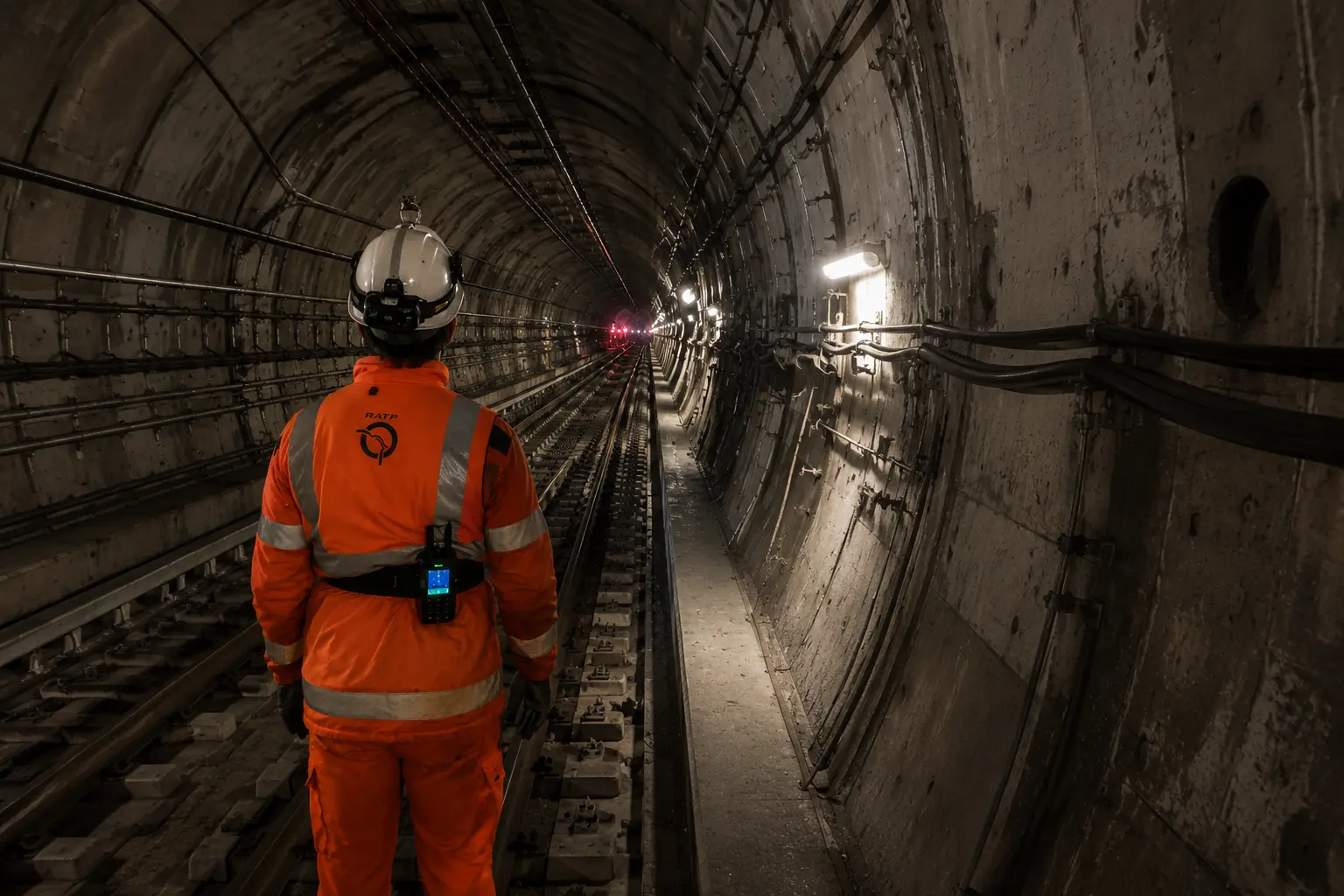
How to locate workers in metro tunnels without GNSS
A worker moves into a tunnel where GNSS does not reach.
Mobile positioning and rugged beacons keep location continuous.
Real-time visibility at every depth.
How to protect lone workers in underground sites
A worker operates alone in a restricted technical area.
Immobility detection and lone worker protection raise geolocated alerts.
Abnormal situations identified quickly.
How to speed up incident response underground
An incident occurs in a confined underground zone.
Alerts are managed centrally and escalated to emergency services with location.
Reduced reaction time and better coordination.
How passengers navigate large multi-level stations
A traveler cannot find their platform across several levels.
Indoor wayfinding in the passenger app gives precise routes.
Less confusion, stress and delay.
How to locate security staff during a station incident
An incident unfolds in a busy railway station.
Security personnel are localized in real time within the station.
Faster, better-coordinated response.
How to keep location working across construction phases
A metro line evolves through successive construction phases.
A mobile-based deployment adapts without heavy infrastructure changes.
Reliable coverage as the site changes.
Built for safety-critical underground operations
Metro and rail deployments demand reliability, resilience and rapid response in harsh underground conditions. Pole Star is designed to operate within these constraints.
Safety monitoring and lone worker protection
Continuous safety monitoring and rapid identification of abnormal situations for isolated workers.
Continuous location, immobility detection and lone worker protection, with alerts that can be managed centrally and escalated.
Resilience in harsh underground conditions
Reliable, resilient performance where GNSS and traditional positioning are unavailable.
Rugged BlueSpot V5 beacons and multi-technology positioning combining LTE and BLE, delivered on mobile devices.
Coordination with emergency services
Alert management that reaches the right teams and connects to emergency response.
Geolocated alerts with central management, escalation and interfaces with emergency services.
What metro and rail teams gain
Reliable location turns constrained underground environments into monitored, responsive operations. The outcomes below are qualitative and drawn from live deployments.
Continuous worker location underground
Visibility across stations, tunnels and technical zones, even without GNSS.
Faster incident detection and response
Geolocated alerts cut the time to identify and reach an incident.
Lone worker protection
Immobility detection safeguards isolated workers in restricted zones.
Reliable where GNSS fails
Rugged beacons and multi-technology positioning hold up in harsh conditions.
Better passenger wayfinding
Precise indoor navigation across multi-level stations.
Reinforced station security
Real-time location of security staff supports effective incident management.
Proven on major French rail and metro projects
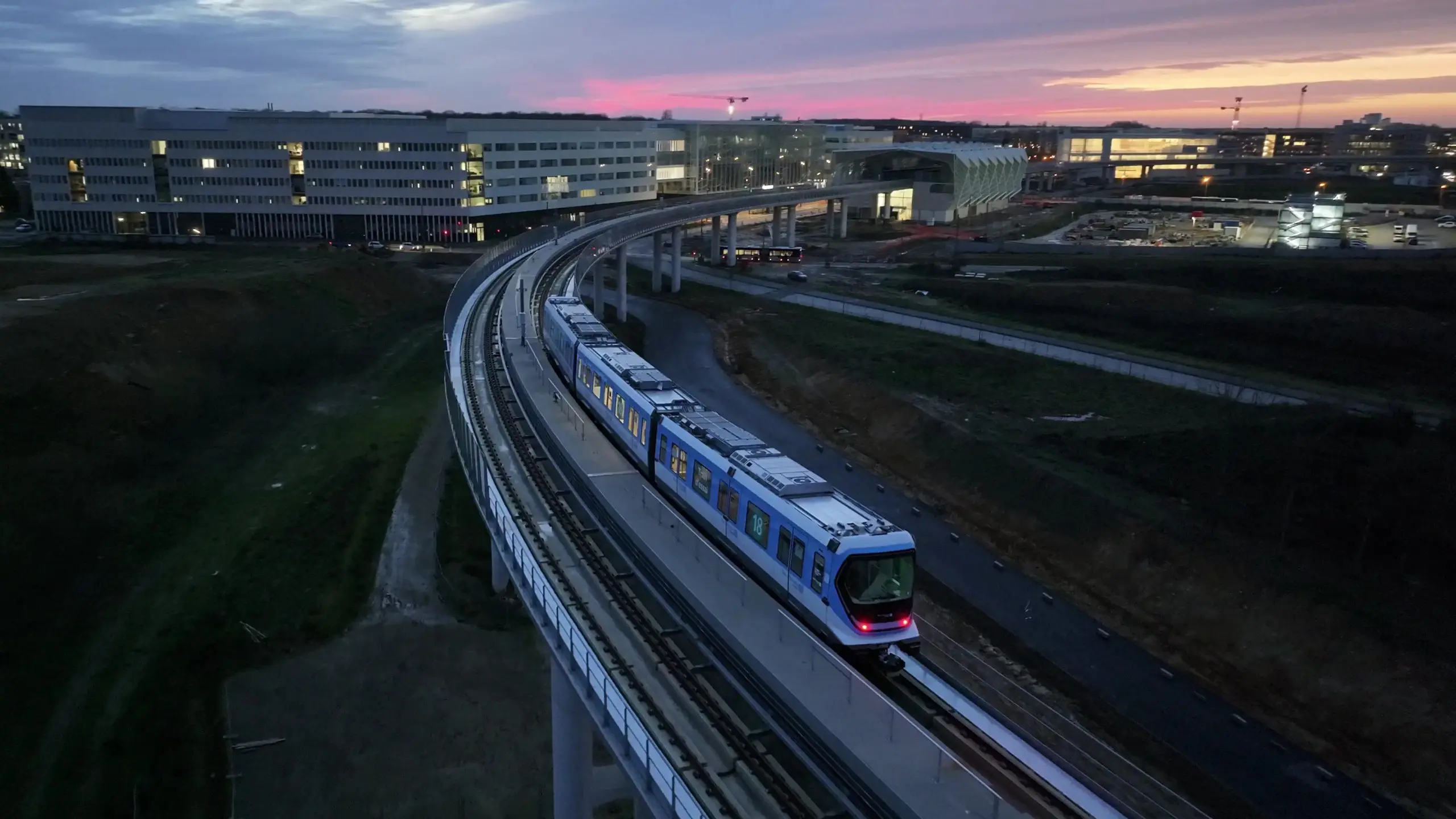
Grand Paris Express
Worker safety & location · underground
Ensure reliable worker localization, worker safety and alert management across stations, tunnels and technical areas where traditional positioning is unavailable.
A multi-technology worker location service on professional mobile devices, using NAO® Mobile SDK, NAO® BlueSpot V5 Rugged beacons and LTE plus BLE positioning, adapting to evolving construction phases. Partner: Kontron.
- Improved protection of field teams in confined underground environments
- Real-time visibility across stations, tunnels and technical zones
- Reduced reaction time through geolocated alerts and emergency coordination
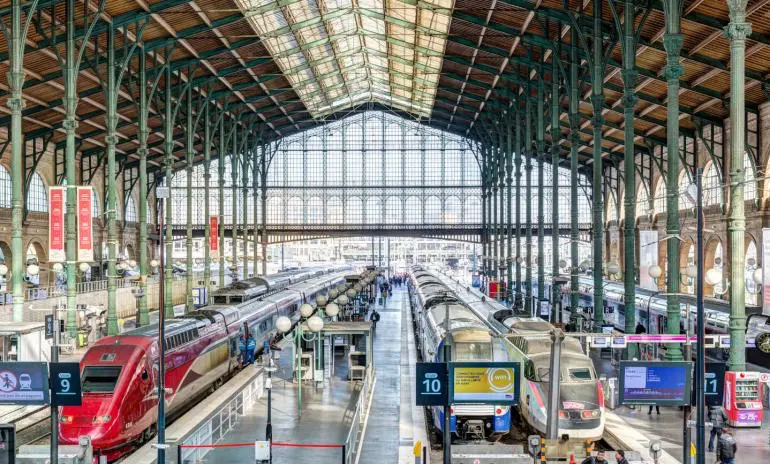
SNCF - Gares & Connexions
Wayfinding & security · major railway stations
Improve passenger orientation while reinforcing security operations and incident management across complex, high-traffic multi-level stations.
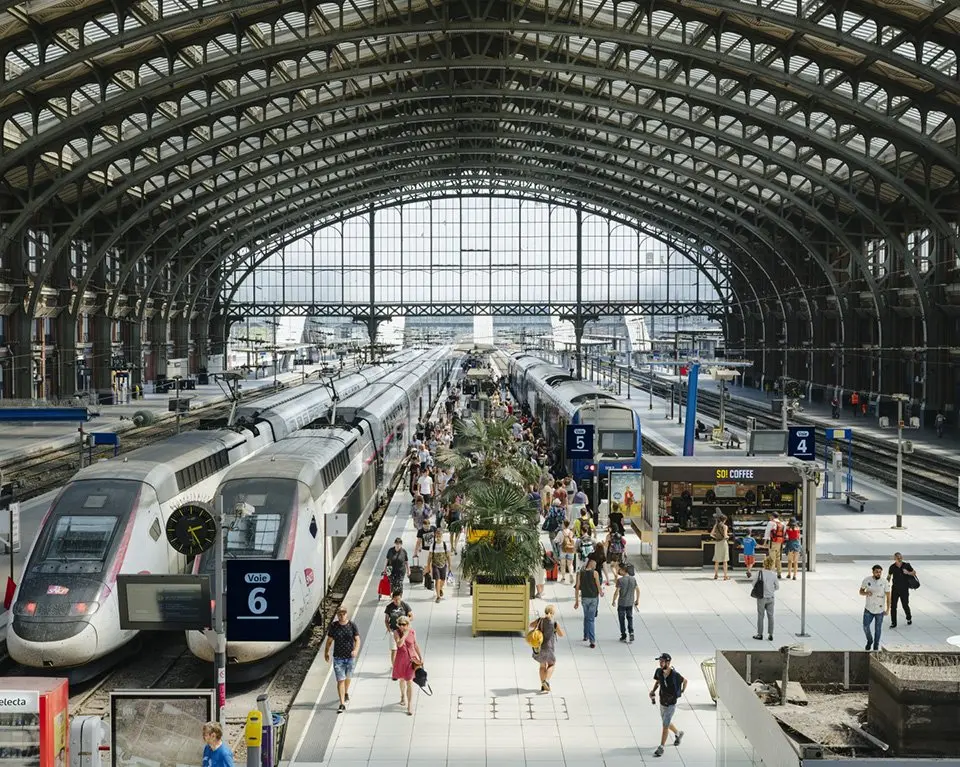
Indoor location and wayfinding embedded in the official "Ma Gare" passenger app, with real-time localization of security personnel, on NAO® Mobile SDK and NAO® BlueSpot V5 Rugged.
- Improved passenger experience through accurate indoor wayfinding
- Reduced stress and delays in large station environments
- Enhanced security and incident management via real-time staff location
Why metro and rail operators choose Pole Star
Concrete reasons rooted in how underground transport actually works, backed by live deployments.
Proven on major rail and metro projects
Worker safety across the Grand Paris Express and passenger wayfinding with SNCF show Pole Star running in real, demanding rail environments. Review the full rail case studies.
Grand Paris Express · SNCFLocation that works where GNSS does not
Rugged BlueSpot V5 beacons and multi-technology positioning combining LTE and BLE, delivered on mobile devices, keep location continuous through stations and tunnels.
BlueSpot V5 · LTE + BLEMobile-based, adapted to evolving sites
A mobile-first deployment on professional and passenger devices adapts to successive construction phases and operational constraints, without heavy infrastructure changes.
Mobile-based · no heavy infrastructureThe Pole Star solutions built for rail and metro
The capabilities most relevant to metro operators, rail networks and major infrastructure projects - across worker safety and passenger wayfinding.
Worker safety
Continuous underground worker location, immobility and fall detection and lone worker protection with geolocated alerts.
Explore worker safetyIndoor navigation
Precise, multi-level passenger wayfinding embedded directly in the station's passenger app.
Explore indoor navigationSecurity & incident support
Real-time location of security staff within stations to support coordination and incident management.
Explore security locationRail and metro location, answered
How does Pole Star locate workers underground?
Location is delivered on professional mobile devices and reinforced by rugged beacons and multi-technology positioning, keeping tracking continuous across stations, tunnels and technical areas. See worker safety.
Does it work in tunnels where GNSS is unavailable?
Yes. Pole Star is designed for underground and confined environments where GNSS and traditional positioning do not reach, maintaining location throughout.
How does Pole Star protect lone workers?
The solution supports immobility detection and lone worker protection, raising geolocated alerts that can be managed centrally and escalated when required.
Can alerts reach emergency services?
Yes. Alerts are managed centrally, can be escalated, and interface with emergency services to reduce reaction time during incidents.
How does Pole Star support passenger wayfinding?
Indoor location enables precise, multi-level wayfinding for travelers, embedded directly in the station's passenger mobile application. See indoor navigation.
Can security staff be located inside stations?
Yes. Pole Star enables real-time localization of security personnel within station environments, supporting coordination and incident management.
What technology powers rail and metro location?
The NAO® Mobile SDK for smartphone-based location, NAO® BlueSpot V5 Rugged beacons for harsh underground environments, and multi-technology positioning combining LTE and BLE.
Does it require heavy infrastructure?
No. The mobile-based deployment adapts to evolving construction phases and operational constraints without heavy infrastructure changes.
What are NAO® BlueSpot V5 beacons?
Rugged beacons designed for harsh, underground and industrial environments, deployed to reinforce location precision where conditions are demanding.
Is location delivered on smartphones?
Yes. Location services run directly on professional and passenger mobile devices through the NAO® Mobile SDK, ensuring continuity across underground environments.
Can it scale across large metro programs?
Yes. The modular architecture delivers reliable location across complex rail and metro infrastructures, including new metro lines on the Grand Paris Express.
Can it integrate into an existing passenger app?
Yes. The solution can be integrated directly into official passenger mobile applications, as with the "Ma Gare" app for SNCF railway stations.
Bring reliable location to your stations and tunnels
From protecting workers underground to guiding passengers through complex stations, Pole Star delivers location where GNSS stops. Book a demo to see it in your environment.
Deployed on the Grand Paris Express and with SNCF