
Real-time location intelligence for hospitals and healthcare campuses

Hospitals & healthcare campuses need real-time visibility over medical equipment, staff and patients across large, complex buildings. Pole Star delivers indoor positioning and RTLS that improve operational efficiency while supporting patient care - from equipment tracking to staff safety.

Deployed in leading healthcare organizations

AP-HP logo
Northwestern Medicine logo
Definition

What is RTLS for healthcare?

Canonical definition

RTLS (Real-Time Location System) for healthcare is the use of indoor positioning technology to locate staff, patients and medical equipment in real time across hospitals and care facilities. Running on existing BLE and Wi-Fi infrastructure, healthcare RTLS enables medical asset tracking, staff duress and patient wayfinding - improving response times, reducing equipment search time and supporting safer, more efficient clinical operations.
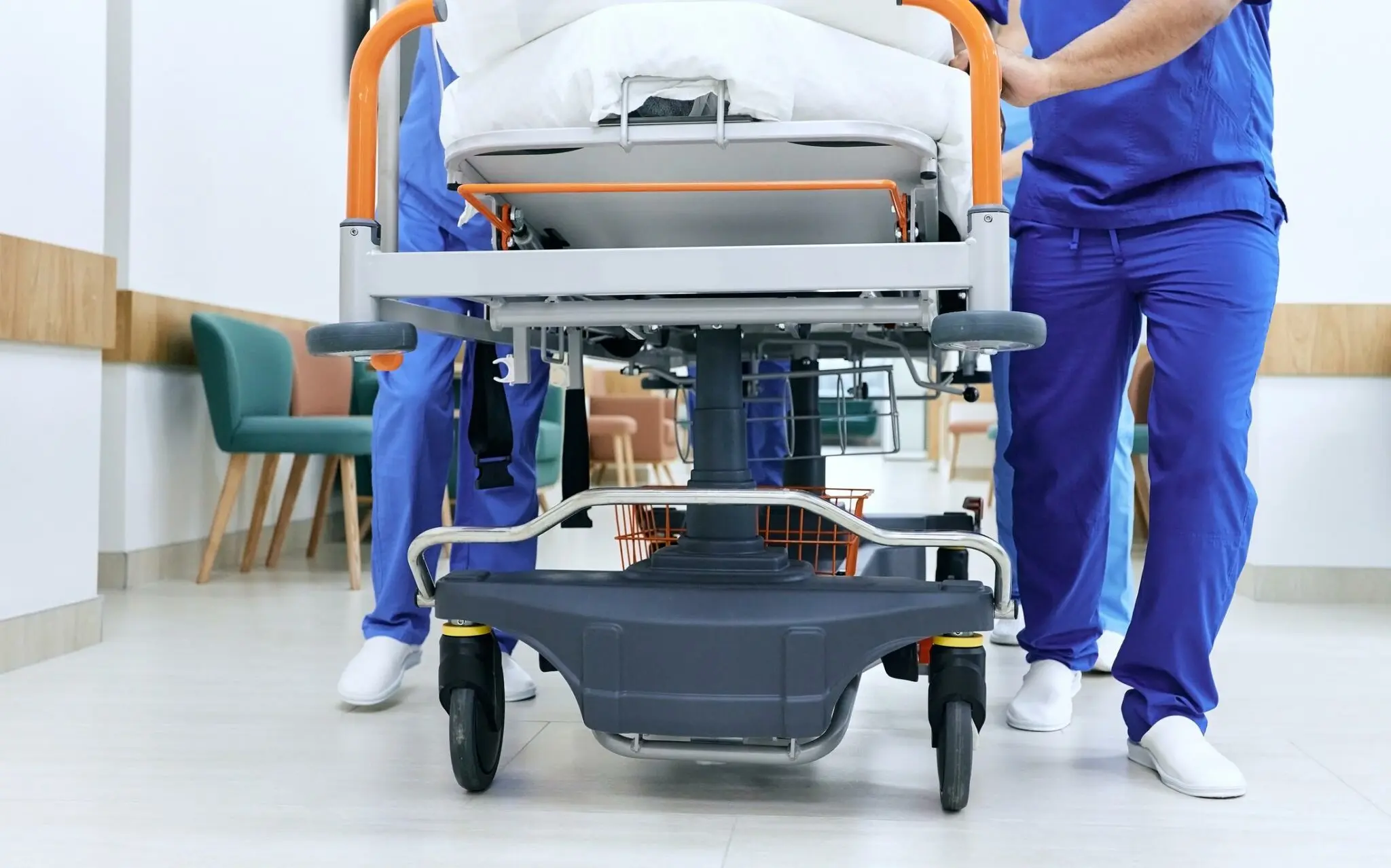
Hospital RTLS deployment
What

Indoor location for hospitals & care facilities

Pole Star delivers medical asset tracking, mobile and badge staff duress, patient wayfinding and real-time operational supervision on a single location platform.

Who

Hospitals, clinics & health networks

Designed for acute hospitals, multi-site health networks, specialist clinics and large care campuses - supporting clinical staff, operations teams, security and patients across every department.

Why now

Efficiency and safety under pressure

Growing patient volumes, complex multi-floor campuses and increasing staff safety requirements make real-time indoor visibility a clinical and operational necessity - not a nice-to-have.

How

BLE on your existing network

NAO® Track, NAO® Mobile and NAO® Viewer run on existing Cisco, Aruba or Fortinet BLE-enabled access points - no new cabling, no dedicated infrastructure, no network replacement.

Industry context

Why hospitals need real-time indoor location

Hospitals are among the most operationally complex indoor environments - staff, patients, visitors and critical equipment move continuously across multi-floor campuses where every minute and every location matters.

Clinical teams lose significant time each shift searching for shared equipment - infusion pumps, wheelchairs, defibrillators - that have been moved and not returned. Without real-time asset visibility, staff resort to manual searches, radio calls and reactive processes that consume time that should be spent with patients.

At the same time, patient safety and staff protection demand faster response. Staff duress incidents - aggression, falls, emergencies in isolated areas - require immediate location data. Patients navigating complex buildings often arrive late, stressed or at the wrong department. These are not marginal problems: they affect daily operations across every ward, every shift.

By running on the BLE and Wi-Fi infrastructure already deployed for hospital connectivity, Pole Star delivers asset tracking, staff safety and patient wayfinding on a single platform - without replacing your network or adding dedicated hardware.
Hospital indoor environment
Main challenges

The operational realities healthcare teams work around every day

These are the recurring friction points inside hospitals, healthcare campuses and senior living facilities - the ones that erode efficiency, safety and patient experience long before anyone calls them a location problem.

01

Medical equipment that vanishes between departments

Problem

Shared devices such as infusion pumps, ultrasound and ECG systems circulate constantly across care areas and are hard to find when urgently needed.

Why it happens

In settings under constant time pressure, equipment follows the patient, with no central record of where each device currently sits.

Consequence

Clinical staff lose time searching, diagnosis and treatment are delayed, and expensive assets stay under-used.

02

Emergency alerts that don't say where

Problem

When a staff member triggers a duress alert, response teams often know that something happened but not exactly where.

Why it happens

Traditional alert systems carry no precise indoor location, especially across large multi-floor campuses.

Consequence

Slower intervention during high-risk situations and weaker staff protection.

03

Staff working alone in high-risk areas

Problem

Healthcare workers can face aggression, stress or isolation, particularly night staff and mobile teams.

Why it happens

Large campuses have zones where staff operate alone or out of sight, and incidents can escalate before help arrives.

Consequence

Genuine risk to staff wellbeing and difficulty coordinating a fast, targeted response.

04

Patients and visitors lost inside the building

Problem

Large hospitals and healthcare campuses are stressful and confusing to navigate for patients and visitors.

Why it happens

Dense, multi-building layouts overwhelm static signage and generic maps.

Consequence

Stress, missed appointments and care staff pulled away to give directions.

05

Safety and location tools that don't talk to each other

Problem

Location, safety and clinical systems often run in silos with limited interoperability.

Why it happens

Tools are procured separately over years, each with its own data model and interface.

Consequence

No single real-time picture - teams reconcile data by hand and lose operational visibility.

06

No real view of how equipment is actually used

Problem

Hospitals rarely know the true utilization or movement patterns of their mobile fleet.

Why it happens

Manual inventories and sign-out sheets record where an asset was, not where it is or how often it runs.

Consequence

Over-purchasing, weaker maintenance planning and imbalanced equipment distribution.

Assets & environments

What Pole Star locates inside healthcare facilities

Assets tracked

Located in real time with BLE tags

Infusion pumps

BLE

Shared, moved constantly and needed urgently at the bedside — the classic device a nurse loses time hunting for.

Wheelchairs

BLE

Rotate across departments and entrances, frequently out of place when a patient needs one.

Stretchers

BLE

Continuously repositioned between care areas, hard to account for during peak activity.

Hospital beds

BLE

High-value, shared across wards — visibility supports flow, turnover and capacity planning.

Diagnostic devices

BLE

Ultrasound, ECG systems, bladder scanners and monitors — expensive, mobile and shared between teams.

Critical response devices

BLE

Life-critical equipment such as defibrillators must be located instantly in an emergency, never searched for.

Staff

BLE / mobile

Located via badges or smartphones to trigger duress alerts and enable fast, targeted response.

Patients & visitors

Mobile

Guided through complex sites with real-time wayfinding, including accessible routes for reduced mobility.

Deployment environments

Zones with distinct operational constraints

Emergency department

High patient throughput and constant equipment movement under severe time pressure.

Intensive care

Dense concentration of critical devices where instant availability directly affects care.

Operating theatres

Strict access control and asset readiness needs around scheduled and emergency procedures.

Patient wards

Shared beds, pumps and monitors circulating across rooms and floors throughout the day.

Biomedical storage

Central pools of equipment that must be tracked as devices leave for and return from wards.

Corridors & transit

Long, repetitive layouts where assets and people move constantly and disappear from view.

Entrances & reception

First navigation point for patients and visitors, and a hotspot for wheelchair demand.

Waiting & public areas

Large, open zones where visitor guidance and people flow shape the patient experience.

Medical asset tracking

Know where every piece of equipment is - in real time

Hospitals and care facilities lose significant staff time every day searching for shared medical equipment - infusion pumps, ventilators, wheelchairs, ECG monitors. Every minute a nurse spends looking for a device is a minute away from patients. Pole Star delivers continuous, room-level location for all tracked assets on a single live map, without replacing your existing network.

How it works
1
BLE tag attached to every asset

A compact, long-life BLE tag is attached to each piece of equipment. Tags broadcast continuously and require no maintenance for several years - no charging, no docking.

2
Existing Wi-Fi / BLE infrastructure reads signals

The hospital's existing Cisco, Aruba or Fortinet access points capture tag signals and transmit them to the location engine. No dedicated readers, no new cabling.

3
NAO® Track computes and displays live positions

The NAO® Track engine processes signals and publishes each asset's position on an accurate multi-floor indoor map, continuously updated and accessible from any authorized device.

Tracked equipment categories
Infusion pumpsHigh-value, high-demand devices located room by room across every ward.
Ventilators & respiratory devicesCritical equipment found in seconds during urgent clinical needs.
Defibrillators (AED)Instant location in a cardiac emergency - every second saved changes outcomes.
Wheelchairs & stretchersAlways available to reception and transport teams without searching the building.
ECG monitors & diagnosticsPortable diagnostic equipment tracked across cardiology, ICU and general wards.
Hospital beds & transport equipmentWard-level location for all mobile beds, trolleys and patient transport devices.
Operational benefits
Find any asset in secondsStaff locate the nearest available device instantly - no more walking the floors, no more radio calls.
Real-time utilization analyticsIdentify which assets sit idle, where demand concentrates and when to redeploy equipment between departments.
Automated digital inventoryReplace periodic manual counts with a live, continuous inventory - always accurate, zero effort from staff.
Reduced equipment lossesGeofence alerts flag assets leaving authorized zones - reducing loss, theft and misplacement across the facility.
Better maintenance schedulingLocation history shows usage patterns and supports preventive maintenance workflows based on actual device activity.
Scales on existing infrastructureThousands of assets tracked across multiple floors and buildings - no new access points, no dedicated network.
NAO® Viewer

Live asset supervision dashboard

See how the NAO® Viewer dashboard gives clinical and operations teams a real-time map of every tracked asset across the hospital - with department-level filtering, utilization heatmaps, low-stock zone alerts and a complete audit trail.

Want to learn more about how Pole Star tracks medical equipment across your facility?

Explore medical equipment tracking
Staff duress

Geolocated emergency alerts for clinical staff - on smartphone

Hospital staff face safety incidents every day - patient aggression, medical emergencies, accidents in isolated areas. When a nurse or clinician needs help, the response time depends entirely on how fast colleagues can locate them. Pole Star delivers instant, room-level geolocated alerts from the smartphone every caregiver already carries.

Fixed panic buttons cover only where they're installed. Staff moving between wards, storerooms, corridors and patient rooms are unprotected the moment they step away from a fixed station. Mobile duress closes that gap - everywhere, all the time.

How it works
1
Staff member triggers a duress alert

A single tap on the smartphone or badge button sends an immediate alert. The system captures the staff member's precise indoor position - room, floor and zone - at the moment of trigger.

2
Alert dispatched with room-level location

The alert reaches the supervision desk and designated responders instantly on NAO® Viewer, showing the staff member's name, location on the indoor map and alert type - no radio calls, no searching.

3
Nearest responder deployed

The closest available colleague or security officer is identified by their live indoor position and dispatched. Response time is tracked automatically from alert to arrival.

4
Alert resolved and logged automatically

Every incident - time, location, responder, resolution - is stored automatically for HR review, regulatory compliance and post-incident analysis.
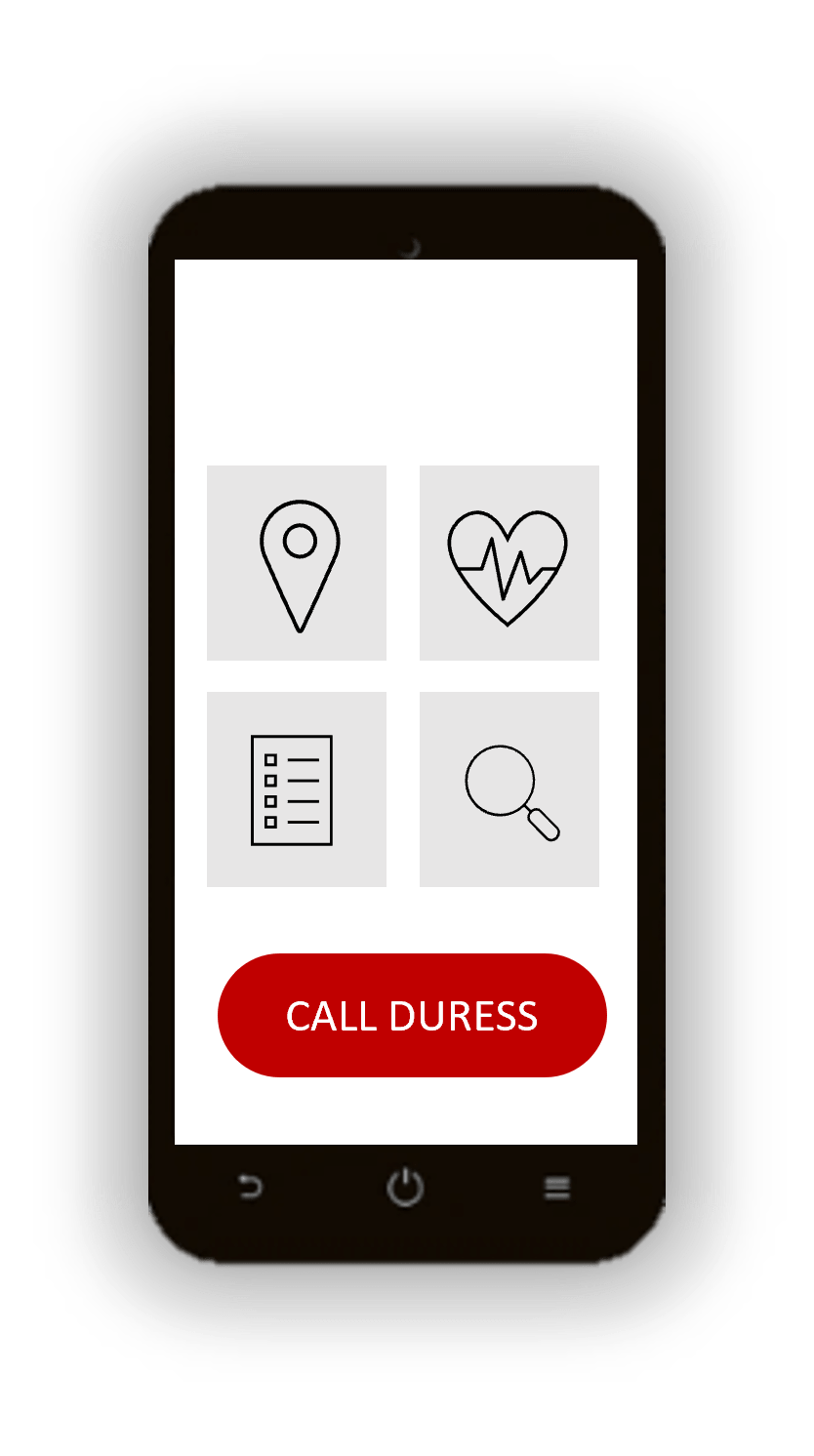
Clinical staff with mobile duress in a hospital
Key capabilities
Room-level alert locationEvery alert is tagged with the staff member's indoor position at the exact moment of trigger - no ambiguity for responders.
Nearest responder identificationNAO® Viewer shows live positions of all staff, automatically identifying the closest available person to dispatch.
Man-down and immobility detectionAutomatic alert if a staff member stops moving unexpectedly - critical protection in isolated areas even when they cannot press a button.
Centralized supervision dashboardAll active alerts, staff positions and response status visible in real time on NAO® Viewer - across every floor and department.
Automatic incident logFull audit trail of every alert: who, where, when, which responder, resolution time - ready for HR, compliance and regulatory reporting.
Existing BLE/Wi-Fi infrastructureBoth smartphone and badge modes run on your existing Cisco, Aruba or Fortinet access points - no dedicated readers or parallel network.
Operational outcome

Whether a nurse, clinician or support worker triggers an alert from their smartphone, Pole Star delivers an immediate, room-level geolocated alert routed to the nearest available responder - with every incident automatically documented for compliance, without a single additional piece of infrastructure.

Indoor wayfinding

Guide every visitor, patient and staff member - across every floor

Hospitals are among the most complex indoor environments to navigate. Multi-building campuses, identical-looking corridors, multi-level car parks and dozens of departments make wayfinding a daily source of stress for patients, visitors and new staff alike - and a daily operational burden for reception and clinical teams who are interrupted to give directions.

Pole Star delivers accurate, step-by-step indoor navigation in the hospital's existing patient and visitor mobile application - using the BLE and Wi-Fi infrastructure already installed. No QR codes, no manual map updates, no dedicated kiosks required.

Who it serves
Patients & visitorsNavigate from the car park entrance to the exact consultation room, across multiple buildings and floors, with turn-by-turn directions in the hospital app.
New staff & agency workersLocate any department, service or colleague quickly during the first weeks - without asking colleagues for directions repeatedly.
Reduced-mobility patientsAccessible routes automatically prioritized - lifts, ramps and obstacle-free paths selected based on individual mobility needs.
Outpatients & appointment holdersArrival-linked navigation triggered automatically when a patient enters the building - no searching for the right wing.
How it works
1
User opens the hospital app and selects a destination

The patient or visitor enters their destination - a department name, a doctor's name, a room number or a service - directly in the hospital's existing mobile application powered by NAO® Mobile SDK.

2
Precise indoor positioning via BLE

The app uses BLE signals from existing access points to compute the user's indoor position with room-level accuracy - across all floors, corridors and buildings, including underground areas where GPS fails.

3
Step-by-step navigation on multi-floor maps

The app displays turn-by-turn instructions overlaid on an accurate indoor map, with automatic floor transitions at lifts and staircases. Routes adapt in real time if the user takes a wrong turn.

4
Arrival confirmed - staff can track patient location

When enabled, the hospital can track patient arrival status per appointment - reducing missed slots and allowing reception to know who has arrived and where they are in the building.
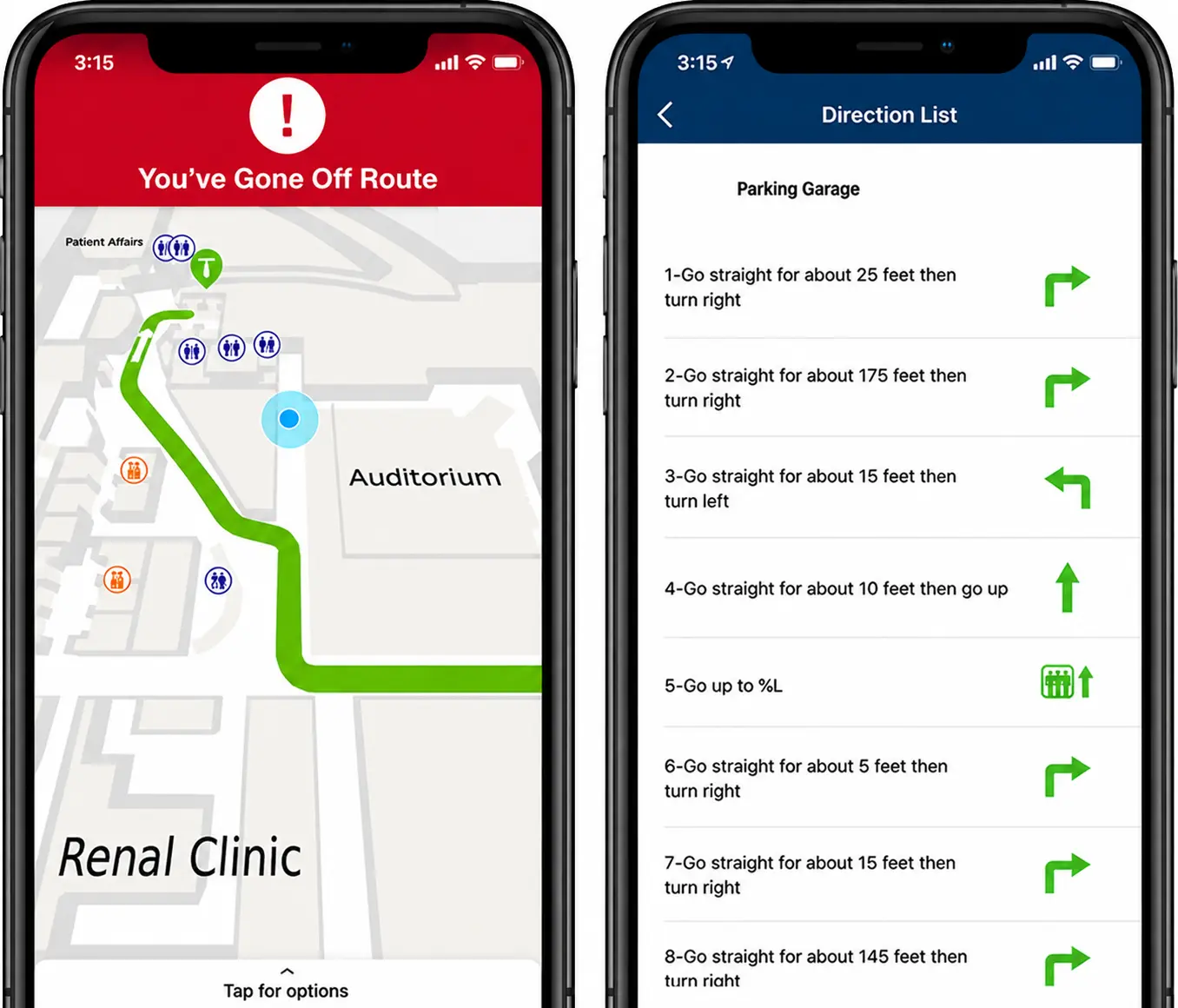
Hospital indoor wayfinding on smartphone
Key capabilities
Room-level positioningBLE-based indoor location places the user accurately at room or zone level, across every floor of the hospital - no GPS, no manual check-in.
Multi-building & multi-floor coverageSeamless navigation across separate buildings, basements, connecting corridors and all floor levels - including outdoor to indoor transitions.
Accessible routingAutomatically select lift-friendly, ramp-accessible, obstacle-free routes based on user mobility profile - no configuration required by the patient.
Integrated in the hospital appNAO® Mobile SDK integrates directly into the hospital's existing patient and visitor application - no standalone app, no new download for users.
Appointment-linked navigationNavigation can be triggered automatically from the hospital's appointment system when a patient enters the building, routing them directly to the correct department.
No new infrastructureWayfinding runs on the hospital's existing BLE-enabled Wi-Fi access points - the same infrastructure used for asset tracking and staff duress.
Operational outcome

Patients arrive at their appointment on time and less stressed. Visitors find their way without stopping staff for directions. New colleagues become autonomous in days rather than weeks. And the hospital gains arrival data and patient flow analytics - all from the infrastructure already deployed for asset tracking and staff safety, without a single additional access point.

Patient wandering detection

Know when a patient leaves a safe area - before an incident occurs

In psychiatric units, memory care wards and post-operative recovery areas, patients at risk of wandering must be monitored continuously without restricting their freedom of movement. Pole Star delivers real-time patient geolocation and automatic zone-crossing alerts - so clinical staff intervene calmly, before the situation becomes critical.

Safe zonePatient moves freely - ward, room, day area. No alert.
Alert perimeterPatient approaching a boundary. Staff notified in advance to intervene discreetly.
Restricted zone / exitBoundary crossed. Immediate geolocated alert sent to the responsible clinician.
Continuous patient geolocationEvery tagged patient located in real time - room level, across all floors.
Pre-crossing alert on approachStaff alerted before the patient exits - enabling calm, discreet intervention.
Per-patient zone configurationSafe zones and alert perimeters set individually per patient care plan.
Automatic incident logEvery event recorded for clinical review, compliance and family reporting.
Wireless nurse call

Respond faster with wireless nurse call and real-time location

Traditional nurse call systems often rely on fixed cabling and bedside call points, limiting flexibility and making it difficult to locate patients once they leave their room. Pole Star enables a wireless nurse call solution where residents or patients simply press the button on their wearable badge to request assistance. Every alert is instantly geolocated, allowing caregivers to respond faster and prioritize interventions.

Pole Star delivers wireless nurse call with real-time indoor positioning. When a resident presses the button on their BLE badge, caregivers immediately receive a geolocated alert showing the exact location of the call. The solution runs on the facility's existing BLE and Wi-Fi infrastructure, eliminating the need for dedicated nurse call cabling.

Who it serves
Residents & patients Request assistance instantly by pressing the button on their wireless badge, wherever they are inside the facility.
Caregivers & nurses Receive geolocated alerts showing the exact location of every assistance request, helping them respond faster and prioritize emergencies.
Care facility managers Monitor response times, improve operational efficiency and access detailed call history for continuous quality improvement.
Hospitals & senior living facilities Modernize nurse call services without deploying dedicated wiring, while improving resident safety and caregiver efficiency.
How it works
1
Resident presses the wireless badge

When assistance is needed, the resident or patient simply presses the button on their wearable BLE badge from anywhere in the facility.

2
BLE infrastructure locates the badge

The existing BLE-enabled Wi-Fi infrastructure instantly determines the badge's indoor position with room-level accuracy.

3
Caregivers receive a geolocated alert

The assistance request is immediately sent to caregivers together with the caller's precise indoor location, enabling rapid intervention.

4
Every event is tracked

Calls, acknowledgements and response times are automatically logged, providing valuable operational insights and quality-of-care metrics.
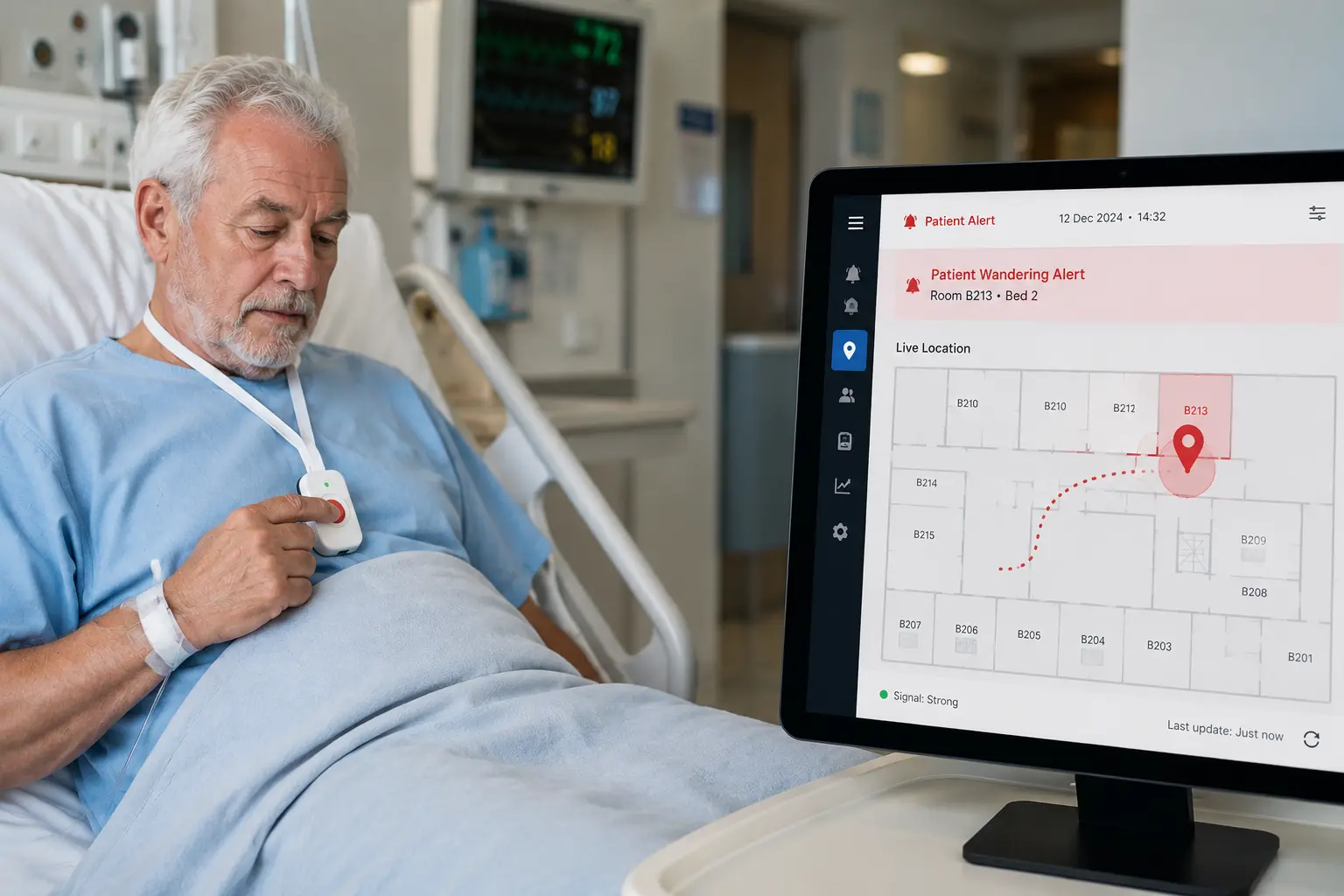
Wireless nurse call badge
Key capabilities
Real-time caller location Every assistance request includes the precise indoor location of the resident or patient, allowing caregivers to respond without searching.
Wireless badge A lightweight wearable badge with an integrated call button enables residents to request assistance anywhere in the building.
Response time analytics Measure response performance through detailed logs of every call, acknowledgement and intervention.
Priority-based alerts Geolocated notifications help caregivers quickly identify where assistance is needed and prioritize interventions.
Easy integration Integrates seamlessly with existing nurse call platforms, RTLS deployments and healthcare workflows.
No new infrastructure Leverages the existing BLE-enabled Wi-Fi infrastructure, avoiding dedicated cabling and reducing deployment costs.
Operational outcome

Residents receive assistance more quickly because caregivers immediately know where the call originated. Healthcare facilities improve safety, reduce response times and modernize nurse call services while leveraging the BLE infrastructure already deployed for indoor positioning.

Hand hygiene compliance

Verify hand hygiene compliance - with the badges staff already wear

Hand hygiene is the single most effective measure to reduce healthcare-associated infections. Yet compliance is notoriously difficult to monitor at scale without intrusive auditing. Pole Star turns the BLE infrastructure and existing staff badges into a passive, continuous compliance monitoring system - no new wearables, no behavioral change required from staff.

Staff wear their existing BLE badge

No new hardware - the BLE badge already used for staff duress or access control doubles as the hygiene compliance sensor.

A BLE beacon is placed near each soap dispenser

A small NAO® BlueSpot beacon installed next to the dispenser creates a proximity detection zone of configurable radius - typically 30 to 50 cm.

Proximity and dwell time are measured automatically

NAO® Track detects when a staff badge is within range of the dispenser beacon and records the duration - confirming whether the interaction was long enough to constitute a valid hand wash.

Compliance dashboards updated in real time

Hygiene compliance rates per ward, per shift and per individual are displayed on NAO® Viewer - with configurable alerts when rates fall below threshold.

No new wearable for staffThe BLE badge already worn for duress or access doubles as the hygiene compliance sensor - zero extra hardware, zero behavioral friction.
One beacon per dispenserA single NAO® BlueSpot placed next to each soap dispenser is all that's needed to monitor compliance at that point of care.
Dwell time validationOnly interactions of sufficient duration count as compliant - filtering out incidental proximity and ensuring meaningful data.
Compliance rates by ward, shift & individualGranular reporting on NAO® Viewer lets infection control teams identify low-compliance units and target interventions precisely.
Non-intrusive monitoringPassive BLE detection - no cameras, no manual audits, no disruption to care workflows. Staff are monitored without being observed.
How workflows transform

The same task, before and after real-time location

Four concrete scenarios showing how Pole Star changes daily operations - from equipment search to staff safety and patient navigation.
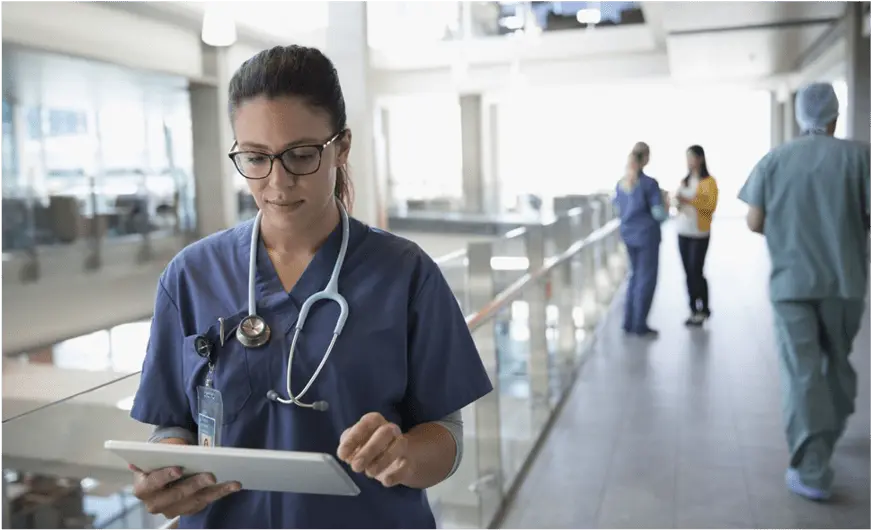
Hospital staff using indoor location on a tablet
Trigger

An emergency department nurse needs an infusion pump immediately for an incoming patient.

Before

She walks the department, checks storage and calls colleagues, searching care area by care area while a patient waits.

With Pole Star

She opens the supervision map, sees the nearest available pump on an interactive floor plan and collects it directly, without disrupting the clinical workflow.

Outcome

Faster access to essential equipment and reduced delay before treatment.

Trigger

A biomedical engineer needs to find every device of a given type for maintenance and availability checks.

Before

He physically tours storage rooms and wards, relying on sign-out sheets that rarely reflect where equipment actually is.

With Pole Star

He filters the fleet by type and location, sees each device on the map with its movement history, and plans maintenance around real utilization data.

Outcome

Better maintenance planning, higher equipment utilization and fewer unnecessary purchases.

Trigger

A night-shift care worker faces an aggressive situation in an isolated part of the hospital.

Before

She raises an alarm, but responders don't know her exact location and lose time searching across a multi-floor site.

With Pole Star

She presses her badge or phone; BLE signals captured by the existing Wi-Fi access points pinpoint her room-level location and send it instantly to response teams.

Outcome

Faster intervention, stronger staff protection and coverage that scales across every site.

Trigger

An outpatient arrives for an appointment in a large, unfamiliar hospital campus.

Before

He struggles with signage across several buildings, stops staff for directions and risks arriving late or missing the appointment.

With Pole Star

He follows turn-by-turn indoor navigation on his phone, including accessible routes, straight to the right department.

Outcome

Fewer missed appointments, a calmer patient experience and less demand on care staff.

Solution mapping

From healthcare challenge to Pole Star solution

Every operational challenge on this page maps to a specific Pole Star capability. This is the routing layer between the problems teams face and the solution pages that address them.

Healthcare challenge Pole Star solution Learn more

01Medical equipment hard to locate

Solution

Equipment tracking

Explore

02Patients and visitors lost in the building

Solution

Indoor navigation

Explore

03Staff at risk in isolated areas

Solution

Worker safety

Explore

04No visibility on equipment utilization

Solution

Flow analytics

Explore

05Resident wandering and zone security

Solution

Geofencing

Explore
Use cases

How hospitals put real-time location to work

Concrete, day-to-day scenarios where indoor positioning changes the outcome - from the emergency department to senior living sites.
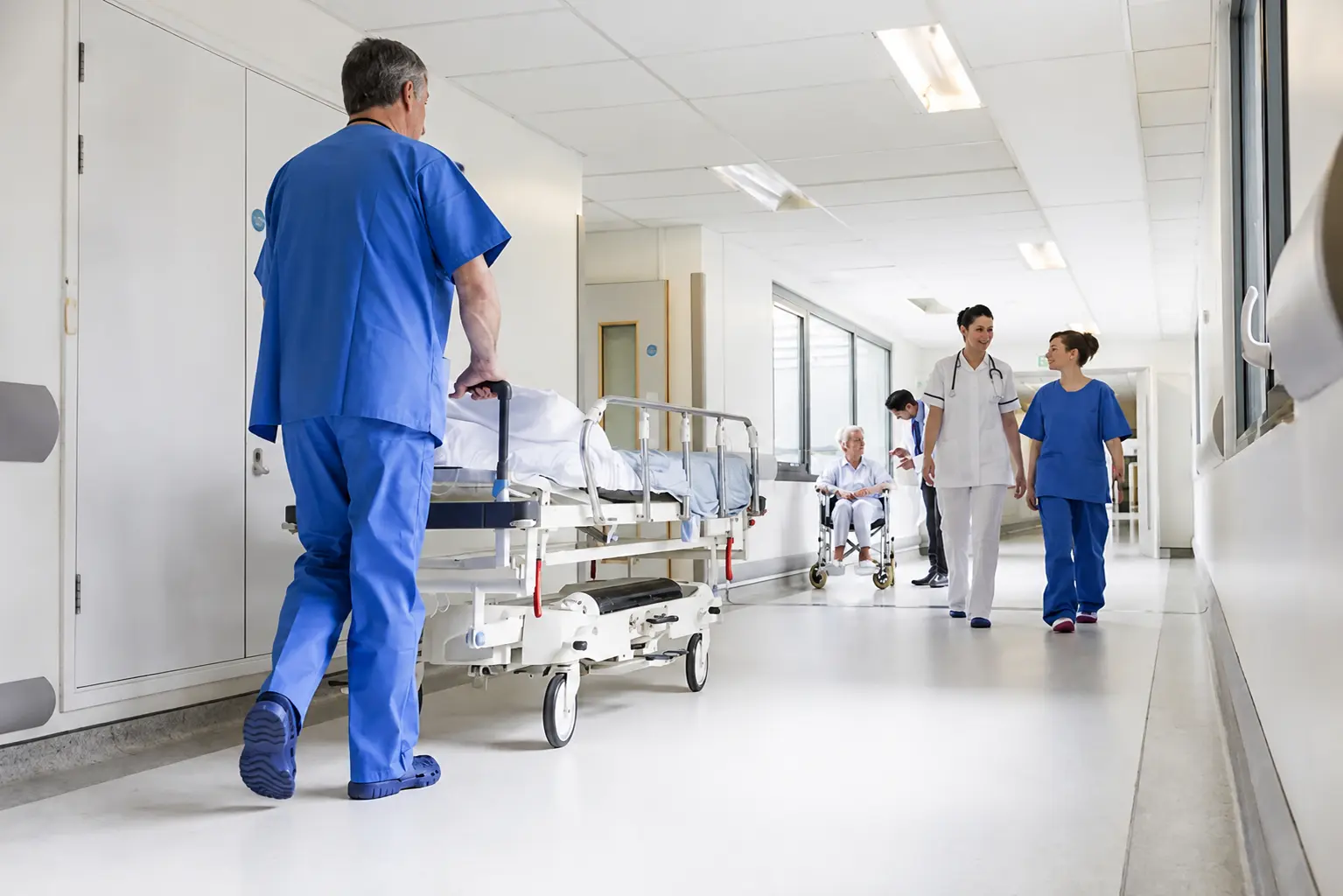
Wireless nurse call with real-time indoor location

How hospitals locate stretchers in real time

Trigger

A ward runs short of stretchers during a busy shift.

Response

BLE tags surface every stretcher and its location on a live map.

Benefit

Staff retrieve the nearest available device without searching.

How care teams track wheelchairs across departments

Trigger

A patient needs a wheelchair that has drifted to another wing.

Response

The fleet is visible in real time across every zone and entrance.

Benefit

Faster access and fewer wheelchairs sitting idle out of place.

How staff trigger duress alerts with room-level location

Trigger

A worker faces an aggressive incident in an isolated area.

Response

A badge or phone alert is located indoors and sent to responders.

Benefit

Response teams reach the exact room without hunting floor by floor.

How patients find their way inside large hospitals

Trigger

An outpatient can't locate the right department across buildings.

Response

Turn-by-turn indoor navigation guides them on their phone.

Benefit

Fewer missed appointments and less strain on care staff.

How biomedical teams monitor equipment utilization

Trigger

Leadership questions whether the fleet size is right.

Response

Movement history reveals real usage and idle patterns per device.

Benefit

Data-backed purchasing and smarter maintenance planning.

How senior living sites detect resident wandering

Trigger

A resident at risk moves toward an unsafe area.

Response

Indoor location and geofencing flag the movement to caregivers.

Benefit

Safety preserved without restricting freedom of movement.

How hospitals manage shared bed availability

Trigger

Bed turnover slows down during peak admissions.

Response

Real-time bed location supports flow and capacity decisions.

Benefit

Smoother patient flow and better use of ward capacity.

How hospitals guide visitors from the entrance

Trigger

Visitors crowd reception asking for directions.

Response

Accessible indoor routes are pushed to visitor smartphones.

Benefit

Calmer public areas and staff freed from giving directions.

Benefits

What healthcare teams gain

Real-time location intelligence turns constant movement into operational clarity. The outcomes below are qualitative and observed across live healthcare deployments.

01

Immediate equipment visibility

See where every tagged asset is, the moment it is needed.

02

Faster equipment retrieval

Cut the time clinical staff spend searching across care areas.

04

Improved workflow efficiency

Remove the manual steps that slow down day-to-day operations.

05

Stronger staff protection

Locate duress alerts to the room and speed up response.

06

Better patient experience

Guide patients and visitors smoothly through complex sites.

07

Sharper operational decisions

Base planning on real location and usage data, not guesswork.

08

Scalable across sites

Extend the same visibility from one building to a full network.

Customer stories

Proven in real hospital environments

Paris, France AP-HP Hopital Saint-Antoine emergency department

AP-HP - Hopital Saint-Antoine

62,000Patients / year
~170Patients / day
100+Assets tracked
Challenge

Critical medical equipment constantly moving across the emergency department was hard to locate under constant time pressure.

Deployment

More than 100 mobile assets - stretchers, wheelchairs, bladder scanners, ultrasound, ECG and monitors - tagged with BLE, with real-time supervision on NAO Track, NAO Viewer and NAO Flow for nurses, physicians and operational teams.

  • Immediate real-time visibility of equipment across the 3,000 m² department
  • Significant reduction in time spent searching for shared assets
  • Faster access to essential tools, supporting quicker diagnosis and treatment

Read case study
USA Northwestern Medicine hospital campus

Northwestern Medicine

8Hospitals
35,000Staff badges
1000sBLE Wi-Fi APs
Challenge

Deploy reliable, real-time staff duress across 8 hospitals with different layouts, leveraging the Wi-Fi infrastructure already in place.

Deployment

35,000 staff badges with an emergency button and thousands of BLE-enabled Wi-Fi access points (Cisco Catalyst 9130), running NAO Mobile and NAO Track NG, integrated with Cisco Spaces and CriticalArc for staff safety.

  • Faster response times through real-time alerting and indoor localization
  • Improved protection for healthcare staff across all hospital sites
  • Large-scale coverage without major infrastructure changes
Read case study
Why Pole Star

Why hospitals choose Pole Star for indoor location

Not generic RTLS claims - concrete reasons rooted in how healthcare environments actually work, backed by live deployments.

01

Proven in live hospital environments

From the emergency department at AP-HP Hopital Saint-Antoine to an 8-hospital deployment at Northwestern Medicine and pediatric hospital systems, Pole Star runs in demanding, real healthcare settings rather than isolated pilots. You can review the full healthcare case studies.

AP-HP · Northwestern Medicine
02

Built on the infrastructure hospitals already have

Pole Star leverages existing Wi-Fi and BLE networks from vendors such as Cisco and HPE Aruba, so hospitals gain real-time location without a costly rip-and-replace of their network.

Cisco · HPE Aruba compatible
03

Designed for complex, multi-floor campuses

Room-level indoor location across large, multi-building sites, scaling from a single hospital to an entire network with varying infrastructure densities - the exact conditions that make healthcare location hard.

Single building → multi-site network
04

Interoperable with clinical and safety systems

Real-time APIs integrate with third-party staff safety platforms such as CriticalArc, and support cloud, on-premise or hybrid architectures that meet healthcare IT and data governance requirements.

CriticalArc · cloud / on-prem / hybrid
Recommended solutions

The Pole Star solutions built for healthcare

The capabilities most relevant to hospitals, healthcare campuses and senior living facilities - each addressing a challenge covered on this page.

Pole Star indoor location supervision interface in a healthcare setting

Equipment tracking

Locate infusion pumps, wheelchairs, beds and diagnostic devices in real time so staff stop searching and start using.

Explore asset tracking

Worker safety

Give staff badge or smartphone duress alerts with room-level location, sent instantly to response teams.

Explore worker safety

Indoor navigation

Guide patients and visitors through complex campuses with real-time wayfinding, including accessible routes.

Explore indoor navigation

Flow analytics

Turn movement history into insight on equipment utilization, patterns and operational decisions.

Explore flow analytics

Geofencing

Combine indoor location and zone rules to detect resident wandering and secure restricted areas.

Explore geofencing

Wireless nurse call

Enable geolocated assistance requests without fixed cabling, so caregivers respond faster and prioritize.

Explore nurse call
FAQ

Healthcare RTLS, answered

Operations
How do hospitals track medical equipment with Pole Star?

Medical equipment such as beds, wheelchairs and pumps is fitted with BLE tags. Pole Star locates each tag in real time and displays it on an interactive supervision map, so staff can instantly find available equipment. See asset tracking.

How does Pole Star reduce time spent searching for equipment?

With real-time visibility of every tagged device, staff no longer walk the floor or call colleagues to find equipment - they see the nearest available asset directly on the map.

Can care teams see where equipment is in real time?

Yes. Nurses, physicians and operational teams use a supervision platform to visualize assets on an interactive map and search for specific devices and their availability.

Can Pole Star track wheelchairs?

Yes. Wheelchairs are among the mobile assets tracked with BLE tags, alongside beds, infusion pumps and diagnostic devices such as ultrasound and ECG systems.

How does Pole Star improve staff safety in hospitals?

Staff trigger emergency alerts using badges or smartphones. Each alert carries room-level indoor location and is transmitted in real time to security or response teams, speeding up intervention. See worker safety.

How are patients and visitors guided inside hospitals?

Pole Star's indoor wayfinding provides real-time navigation inside complex healthcare buildings, including accessible routes for people with reduced mobility. See indoor navigation.

Does deploying Pole Star disrupt clinical workflows?

No. At AP-HP Hopital Saint-Antoine, the solution integrated into existing hospital workflows and supported clinical teams without disrupting operations.

Infrastructure & deployment
What technology does Pole Star use for indoor location in healthcare?

Primarily BLE. Location is computed from BLE signals captured by BLE-enabled Wi-Fi access points and beacons, and can also use smartphone-based location through the mobile SDK.

Can Pole Star integrate with existing hospital infrastructure?

Yes. The platform integrates with existing BLE, Wi-Fi and third-party healthcare systems, and works with Wi-Fi infrastructure from vendors such as Cisco and HPE Aruba.

Do hospitals need to install new cabling?

Generally no. Pole Star leverages existing Wi-Fi and beacon deployments. At Northwestern Medicine, staff duress ran on existing BLE-enabled Wi-Fi access points, and wireless nurse call works without fixed cabling.

Which Wi-Fi vendors does Pole Star work with?

Deployments have used Cisco, including Cisco Catalyst 9130 access points and Cisco Spaces, as well as Wi-Fi infrastructure from vendors such as HPE Aruba.

Can Pole Star scale across multiple hospital sites?

Yes. Solutions scale from a single building to large networks. Northwestern Medicine deployed across 8 hospitals with different layouts and varying infrastructure densities.

What products make up the Pole Star healthcare platform?

The platform combines NAO Track for real-time location, NAO Mobile SDK for smartphone-based location and safety, and NAO Viewer for supervision, alerts and analytics, running on BLE infrastructure.

Does Pole Star support cloud and on-premise deployments?

Yes. Pole Star supports cloud, on-premise or hybrid architectures to meet healthcare IT and data governance requirements.

Compliance & data
How is healthcare data handled?

Pole Star supports cloud, on-premise or hybrid architectures designed to meet healthcare IT and data governance requirements, so each organization can align deployment with its own policies.

Can Pole Star integrate with existing staff safety systems?

Yes. Real-time APIs provide interoperability with third-party staff safety platforms such as CriticalArc, alongside integration with Cisco Spaces.

How accurate is the indoor location?

Staff duress alerts are resolved to room level, giving responders precise indoor location. Assets are shown in real time on an interactive supervision map.

Is the system reliable enough for mission-critical use?

Yes. Pole Star supports mission-critical indoor location and real-time emergency response, with an architecture designed at Northwestern Medicine to support tens of thousands of users.

Which types of healthcare organizations use Pole Star?

Hospitals, healthcare campuses and senior living or aged care facilities, from single emergency departments to multi-site networks - including AP-HP and Northwestern Medicine.

See how Pole Star transforms healthcare operations

From locating critical equipment to protecting staff and guiding patients, Pole Star brings real-time location intelligence to your entire facility. Book a demo to see it in your environment.

Scroll to Top