
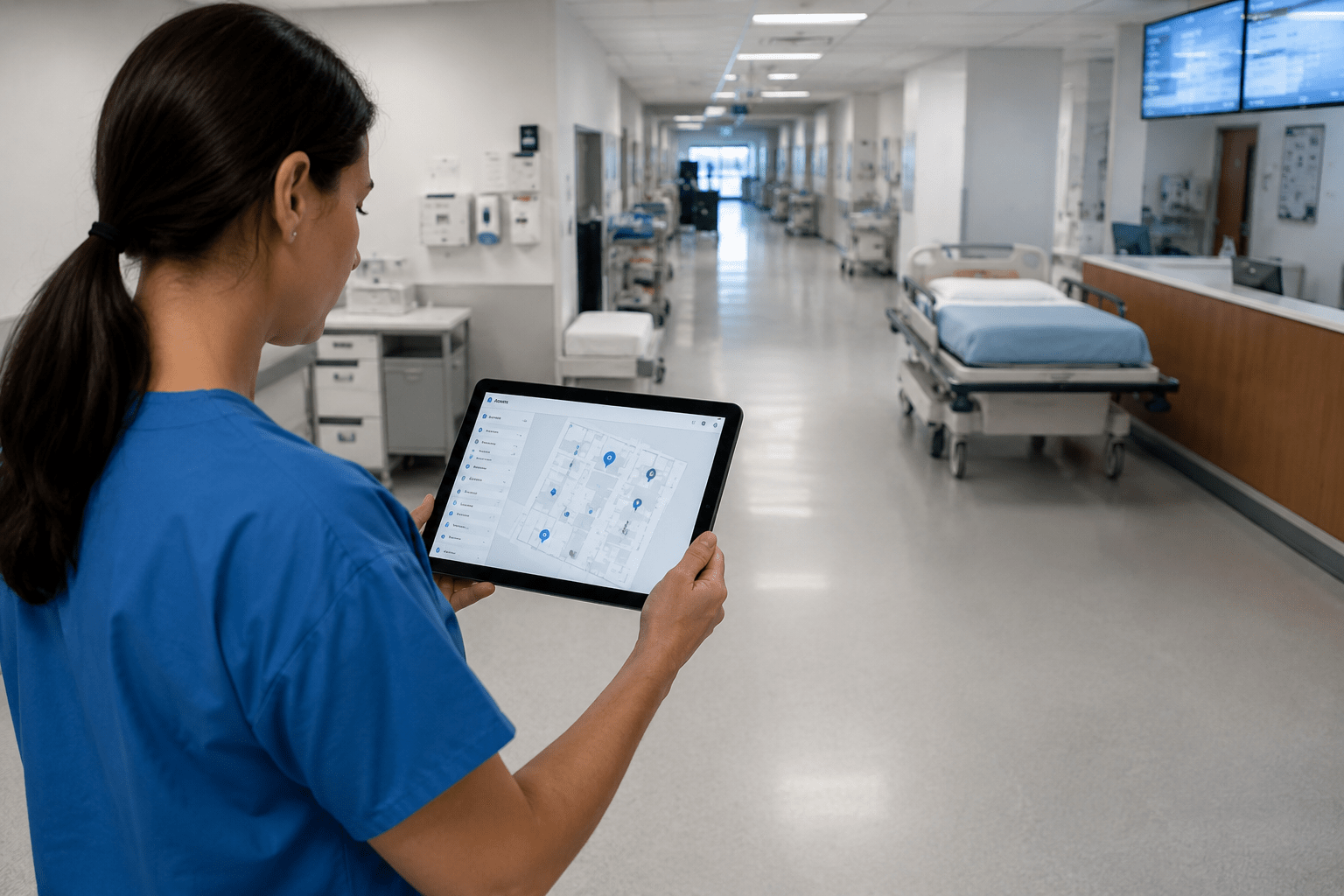
In many hospitals, caregivers spend valuable time searching for infusion pumps, wheelchairs, portable monitors, beds, ventilators or mobile medical devices instead of focusing on patient care.
This problem is far more common than many healthcare organizations realize. Studies show that nurses and clinicians can spend between 20 minutes and one hour per shift looking for equipment across hospital departments.
In large healthcare facilities, poor asset visibility creates operational inefficiencies, delays patient care, increases staff stress and drives unnecessary equipment purchases. This is why hospital asset tracking RTLS solutions are becoming increasingly important. As hospitals continue investing in digital transformation and smart hospital technologies, real-time location systems (RTLS) and indoor positioning solutions are becoming essential tools to improve operational efficiency and reduce time wasted searching for medical equipment.
Why medical equipment is difficult to track in hospitals?
Modern hospitals are highly dynamic environments. Medical devices constantly move between departments, patient rooms, emergency units, storage areas and operating theaters. Equipment may be borrowed by another ward, relocated during emergencies or left in temporary locations without being recorded.
In many healthcare facilities, asset management processes still rely on manual checks, spreadsheets or fragmented inventory systems that provide little or no real-time visibility. This lack of visibility creates several operational problems:
- staff waste time locating equipment
- devices remain unused because they cannot be found
- hospitals purchase duplicate equipment unnecessarily
- maintenance teams struggle to track device availability
- patient workflows become less efficient
According to a peer-reviewed study referenced by NHS healthcare specialists, doctors spend approximately 13% of their time searching for equipment and paperwork. Another healthcare industry report estimates that nurses may spend up to 60 minutes per shift searching for medical equipment, representing billions in lost productivity annually.
As hospitals face staffing shortages, financial pressure and increasing patient demand, reducing these inefficiencies has become a strategic priority.
The hidden operational cost of lost equipment
The cost of misplaced medical equipment goes far beyond inconvenience. Every minute spent searching for devices is time that healthcare professionals cannot dedicate to patients. In high-pressure hospital environments, these inefficiencies accumulate rapidly across hundreds or thousands of employees.
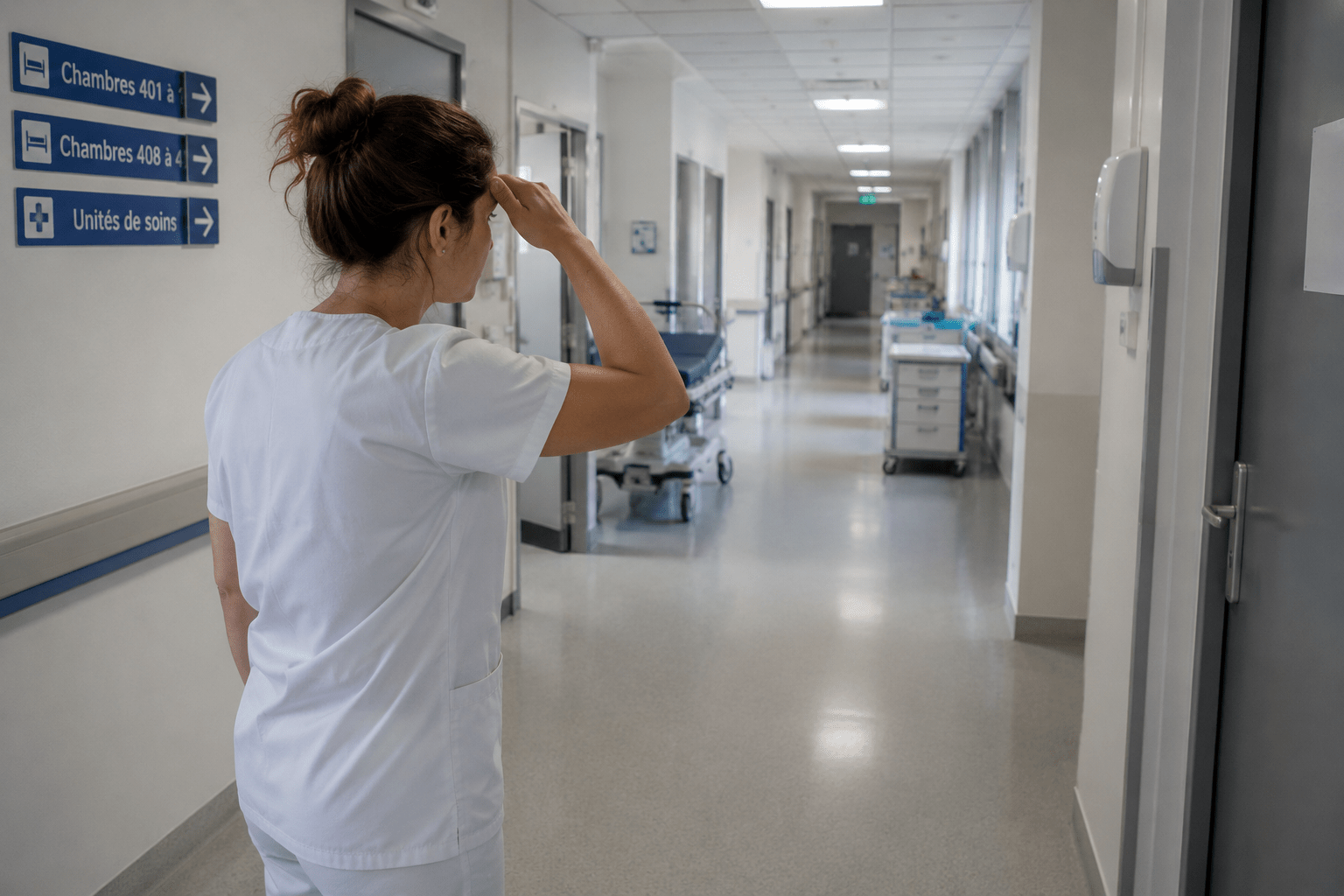
Staff productivity loss
A study published in the Future Hospital Journal highlighted that clinicians lose significant portions of their shifts due to organizational inefficiencies and equipment searches.
Industry research also suggests that one in three nurses spends at least one hour per shift searching for devices or supplies. For a large hospital, this can represent tens of thousands of lost working hours every year.
According to healthcare operational estimates, a 1000-bed hospital may lose millions annually because caregivers spend time locating mobile assets instead of delivering care.
Unnecessary equipment purchases
When hospitals cannot accurately locate available devices, departments often compensate by purchasing additional equipment. This leads to overstocking, underutilized assets, increased capital expenditure and inefficient equipment allocation.
In many cases, hospitals already own enough devices, but lack the visibility needed to optimize usage across departments.
Impact on patient care
Poor equipment visibility can also affect patient experience and care delivery. When caregivers cannot quickly access infusion pumps, wheelchairs or monitoring devices, treatment delays may occur.
Healthcare systems worldwide are increasingly recognizing that operational inefficiency directly impacts patient outcomes, staff burnout and hospital performance.
How RTLS and indoor positioning solve the problem?
Real-time location systems (RTLS) and indoor positioning technologies allow hospitals to track medical equipment in real time inside complex healthcare facilities.
Unlike GPS, which performs poorly indoors, indoor positioning systems use technologies such as:
- Bluetooth Low Energy (BLE)
- Wi-Fi positioning
- RFID
- hybrid indoor location technologies
These systems provide room-level or zone-level visibility of mobile assets across hospitals. When equipment is tagged, hospital staff can instantly locate devices through mobile applications, dashboards, digital hospital maps, search interfaces and operational analytics platforms.
Research on real-time medical device tracking shows that modern indoor tracking approaches can significantly improve visibility and reduce search times in healthcare environments.
A study on RTLS implementation in hospital emergency departments showed that median search time for equipment was reduced by more than half after deployment.
This type of healthcare asset tracking enables hospitals to improve equipment utilization, reduce operational waste, increase staff efficiency, improve maintenance workflows and support smart hospital initiatives.
Key benefits of indoor equipment tracking in healthcare
Faster equipment retrieval
Healthcare staff can instantly identify where equipment is located instead of manually searching across departments. This reduces delays and improves response times during critical situations.
Improved operational efficiency
Indoor asset tracking helps hospitals optimize device allocation and reduce idle inventory. Operational teams gain real-time visibility into equipment usage, movement patterns and availability.
Lower equipment loss
Hospitals can reduce misplaced or lost devices by monitoring asset movement continuously across the facility. This improves inventory accuracy and reduces replacement costs.
Better staff experience
Reducing time wasted searching for equipment decreases frustration and administrative burden for caregivers. Healthcare organizations increasingly recognize that operational efficiency also contributes to staff wellbeing and burnout reduction.
Enhanced patient experience
Faster access to critical equipment improves patient flow and reduces delays in treatment. In modern healthcare environments, operational performance and patient satisfaction are closely connected.
What hospitals should look for in an equipment tracking solution
Not all hospital asset tracking systems provide the same level of performance or scalability. Healthcare organizations evaluating RTLS solutions should consider several factors.
Indoor positioning accuracy
Room-level accuracy is often critical in healthcare environments where devices move constantly between nearby rooms and departments.
Scalability
Hospitals require solutions capable of supporting thousands of tracked assets across multiple buildings and facilities.
Infrastructure requirements
Some systems require extensive hardware deployment, while newer indoor positioning technologies can leverage existing infrastructure and mobile devices.
Ease of deployment
Healthcare environments are complex and sensitive. Solutions that minimize operational disruption during deployment offer significant advantages.
Analytics and operational insights
Beyond simple location tracking, advanced systems provide analytics that help hospitals optimize workflows, equipment utilization and resource allocation.
Why smart hospitals are investing in indoor positioning?
The global healthcare industry is rapidly moving toward smart hospital models driven by real-time data, connected infrastructure and operational intelligence.
Hospital asset tracking and inventory management systems represent a fast-growing market as healthcare providers seek to improve efficiency while reducing costs.
According to recent market research, hospitals remain the largest adopters of asset tracking systems, with mobile equipment tracking representing a major share of the market.
Leading healthcare institutions are increasingly deploying RTLS, RFID and indoor positioning technologies to improve operational visibility and support digital transformation initiatives.
As healthcare systems continue facing staffing shortages, growing patient volumes and financial constraints, real-time visibility inside hospitals is becoming a critical operational capability rather than a future innovation.
Conclusion
Hospitals can no longer afford to lose valuable clinical time searching for medical equipment. Poor asset visibility creates hidden operational costs, reduces staff productivity and impacts patient care across healthcare facilities worldwide.
Real-time location systems and indoor positioning technologies provide hospitals with the visibility needed to optimize equipment usage, reduce inefficiencies and improve operational performance.
As healthcare organizations continue building smarter and more connected facilities, indoor positioning is becoming a key component of modern hospital operations.
To learn how indoor positioning solutions can improve healthcare asset tracking and hospital efficiency, discover the healthcare solutions developed by Pole Star.