Protect every worker.
Locate every alert.
Respond in seconds.
For hospitals, industrial sites and transport networks - staff duress, lone-worker protection and CO2 mustering, all on your existing BLE and Wi-Fi infrastructure. When someone needs help, you know who and exactly where.

What is staff & worker safety location?
Staff and worker safety location is the real-time monitoring of people and their safety alerts within a facility using wireless infrastructure. It enables security and operations teams to locate a worker instantly when they raise a duress alarm, fall, or fail to check in - and to account for everyone during an evacuation. Pole Star delivers it on your existing BLE and Wi-Fi network.
It locates people and their alerts in real time - duress, man-down and mustering - on a live map.
It protects nurses, lone workers and site teams in hospitals, industrial plants, transport and maritime environments.
Violence against staff and lone-worker risk are rising, and response time is the difference between a scare and a serious incident.
Pole Star reads BLE badges and phones on existing infrastructure and turns an alert into a name, a location and an instant dispatch.
Staff duress
A nurse or worker presses their badge or phone - you get their identity and exact location, and dispatch help in seconds.
Lone worker protection
Badges and phones detect workers in isolated or restricted areas, with automatic man-down and fall detection.
CO₂ mustering
Counts workers in machinery and engine rooms and confirms everyone is out before CO₂ fire suppression is released.
The business challenge: when help is too slow, or in the wrong place
Violence against staff and risk to lone workers are rising - and when an incident happens, the alarm alone is not enough. Without real-time location, responders know something is wrong but not who, or exactly where, wasting the minutes that matter most.
Nurses face assaults in wards and corridors; technicians work alone in plant rooms, tunnels and restricted areas where a fall can go unnoticed; and in machinery spaces, you cannot release CO2 fire suppression until every worker is confirmed out. Each of these is a location problem before it is a response problem.
The consequences are serious: injured staff, failed duty-of-care, regulatory exposure, and teams who no longer feel safe at work. Response time is the metric that decides the outcome.
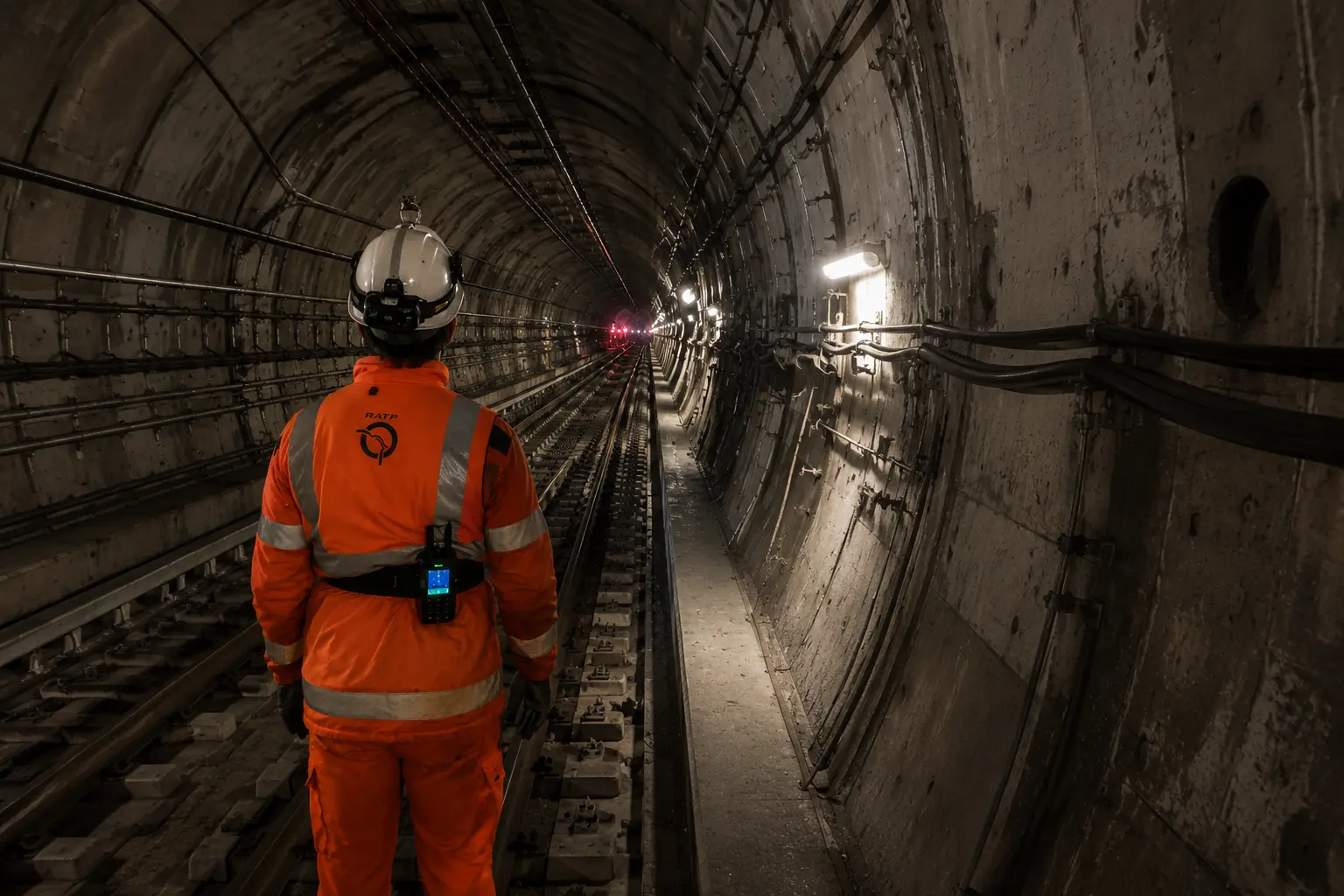
The scale of the problem - healthcare, the most-documented case
What changes when every alert has a location
Concrete outcomes safety and operations teams see with real-time worker-safety location.
Faster emergency response
An alert arrives with a name and an exact location, so help reaches the right place immediately.
Staff who feel protected
Confidence rises when teams know a single press brings located, verified help.
Lone workers never invisible
Man-down and no-check-in alerts catch incidents even when no one is around to see them.
Safe, confident mustering
Confirm every worker is clear of a machinery space before CO2 suppression is released.
Cleaner escalation
Alerts route to the right team with context, cutting confusion and false-alarm fatigue.
Auditable duty-of-care
Every alert, location and response is logged - evidence for compliance and continuous improvement.
Sound familiar?
What teams say before they put real-time location behind their safety alerts.
By the time security arrives, they don't know which room I'm in.
A raised alarm without a location wastes the minutes that decide how an incident ends.
Our panic buttons are fixed to the wall - useless if I'm attacked in a corridor.
Fixed alarms don't cover the places where staff are actually at risk.
Technicians work alone in plant rooms with no way to call for help if they fall.
A lone-worker injury can go unnoticed for far too long.
We can't release CO2 until we're sure everyone's out - and we're never sure.
Uncertainty over headcount delays fire suppression and puts lives at risk.
Every alert is a blind alarm - we know something happened, not where.
Responders run the wrong way while the clock keeps ticking.
We'd need a whole parallel network to add safety - we can't justify that.
Cost and complexity stall protection projects before they start.
From a single press to a located, verified response
Wireless infrastructure
BLE / Wi-FiBadges and phones are read by the network you already run - no dedicated parallel system.
Badges & mobile
Duress · man-downA worker presses for help, or a fall is detected automatically - the alert carries their identity.
Positioning engine
Real-time locationPole Star computes exactly where the alert came from, including floor and zone.
Alert & escalation
Rules & routingThe right team is notified with context, and escalation follows if no one acknowledges.
Response & dashboards
Live mapResponders see the exact location on a live map and move straight to the worker.
Auditable outcome
LoggedEvery alert, location and response time is recorded for duty-of-care and compliance.
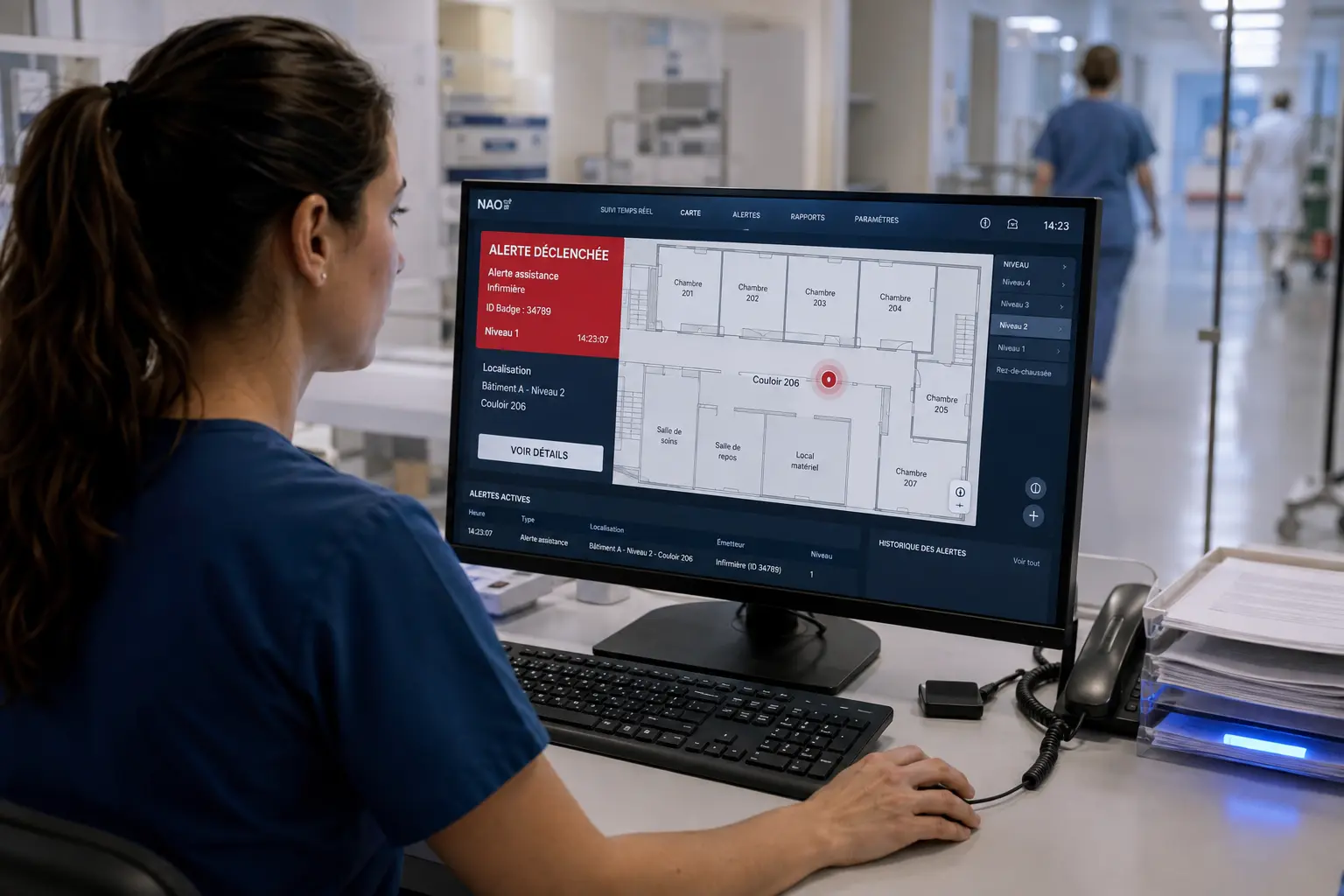
When a nurse is threatened in a ward, she presses the button on her badge. Within seconds, the security team sees her name and her exact room on a live map, and moves directly to her - no calling out, no guessing which floor. The whole event is logged, from the press to the response.
A badge or a phone, located by the beacons around it
Workers carry a BLE badge or the NAO Mobile app. Beacons and access points around them pick up the signal, Pole Star computes the exact position, and the location appears live on your dashboard - all on existing infrastructure.
Badge or phone
The worker carries a BLE badge or the mobile app.
Beacons triangulate
Surrounding beacons and APs read the signal.
Pole Star computes
The positioning engine calculates the exact location.
Live on dashboard
The position appears in real time for responders.
The devices workers carry
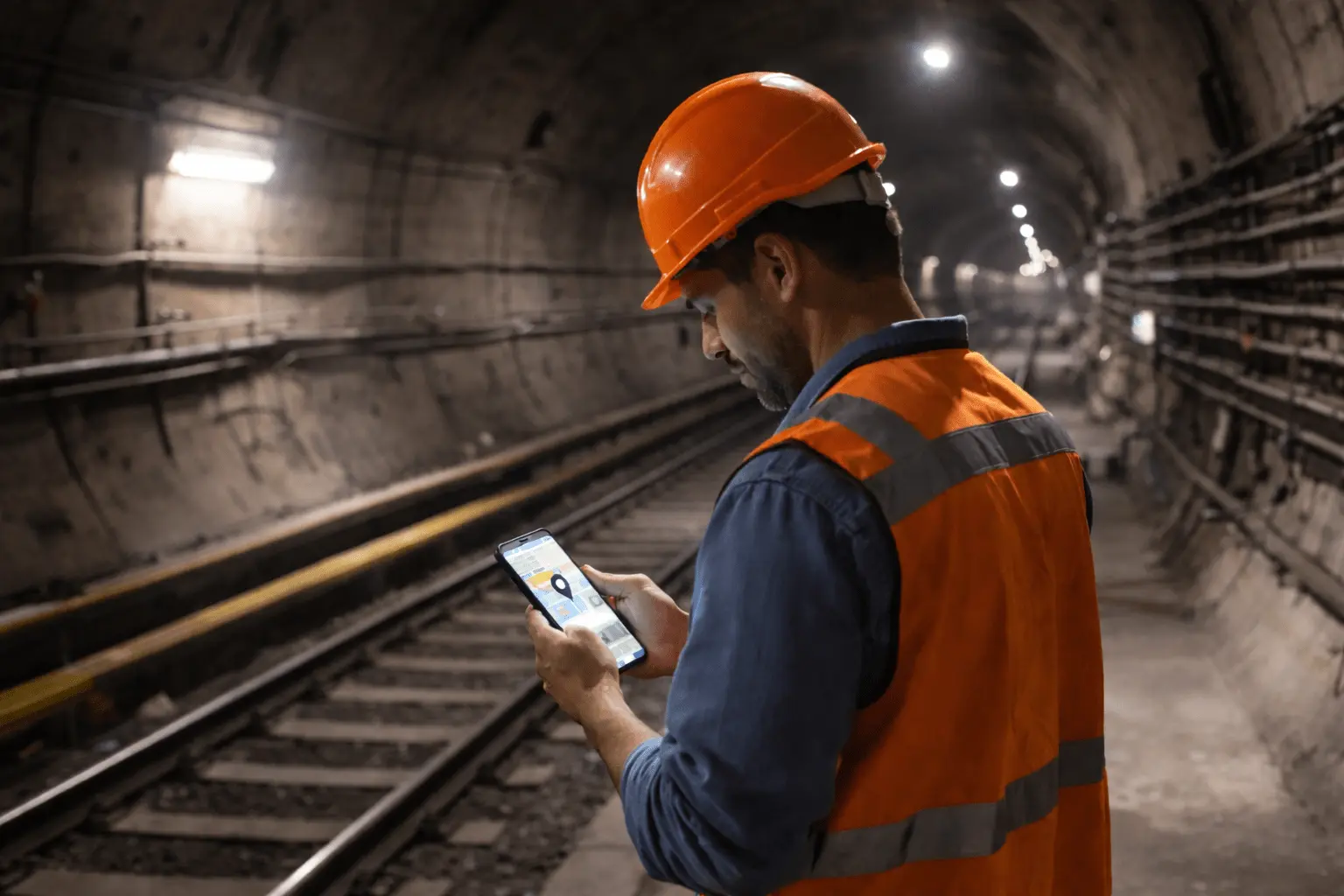
Smartphone
Staff duress and man-down from the phone workers already carry, through the NAO Mobile app.
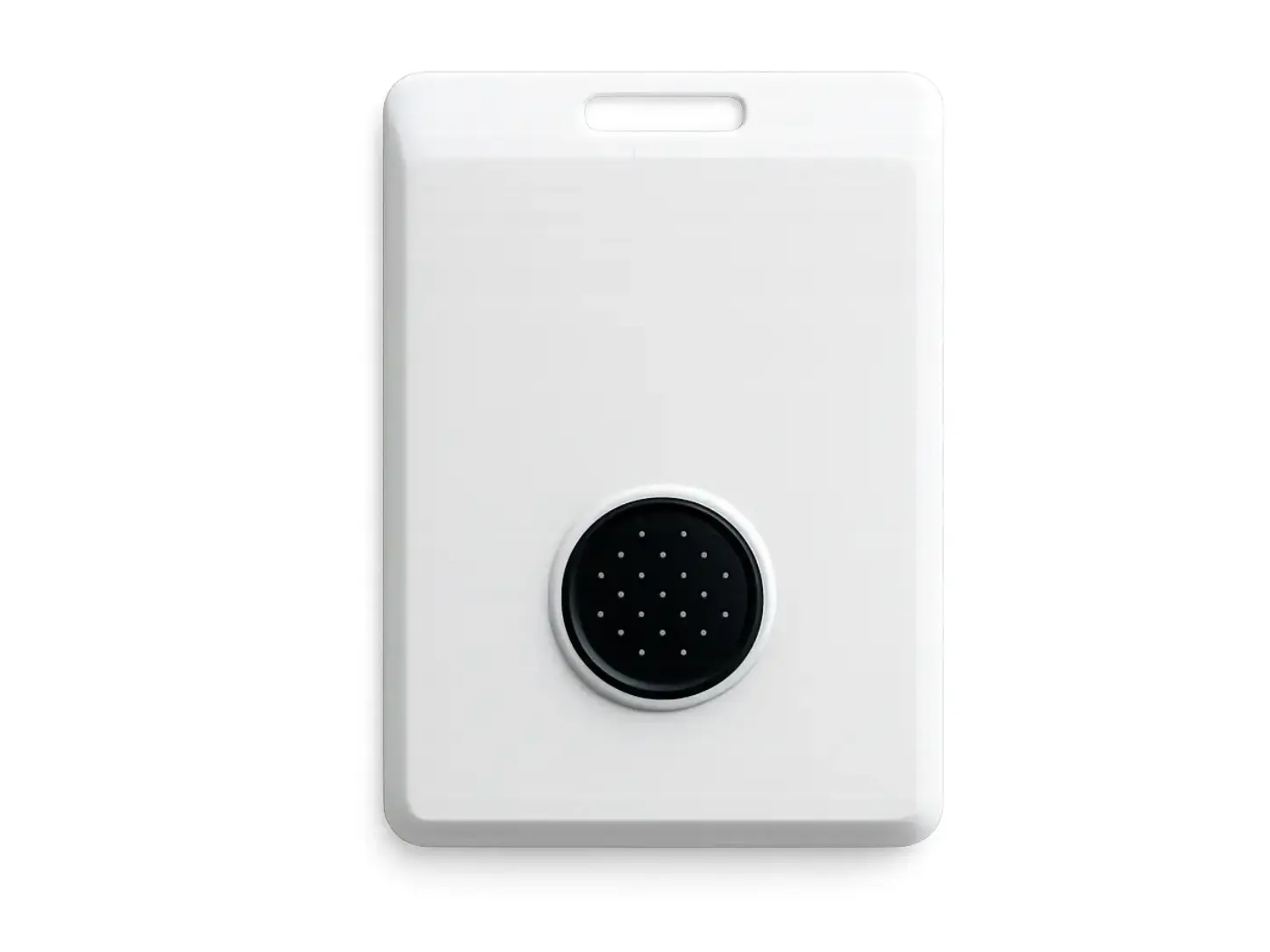
Safety badge
A dedicated button and fall sensor for hands-busy, phone-free or rugged environments.
Confirm every worker is out before CO₂ is released
CO₂ fire suppression systems in engine rooms and machinery spaces are lethal if anyone remains inside. Pole Star verifies that every worker has evacuated - in real time, automatically - before the suppression system can be released, and alerts responders to the exact location of anyone still inside.
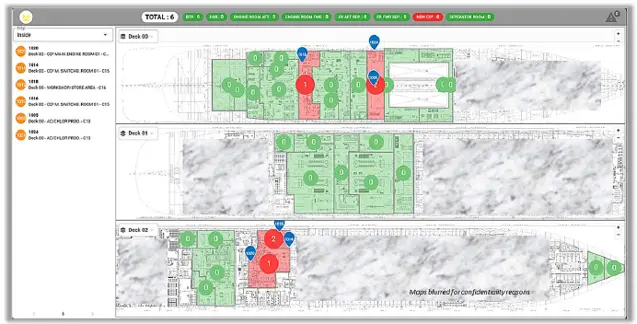
The CO₂ suppression system is armed and a mandatory evacuation is declared. The mustering countdown begins automatically in NAO® Track.
BLE badges worn by all workers continuously report their indoor position. NAO® Track monitors who is still inside each CO₂ zone and who has exited.
If anyone remains inside after the evacuation deadline, their exact location is displayed on the dashboard - enabling a targeted rescue before suppression is activated.
Only when every worker in every zone is confirmed outside does the system display an all-clear - giving the safety officer the certainty needed to authorize CO₂ release.
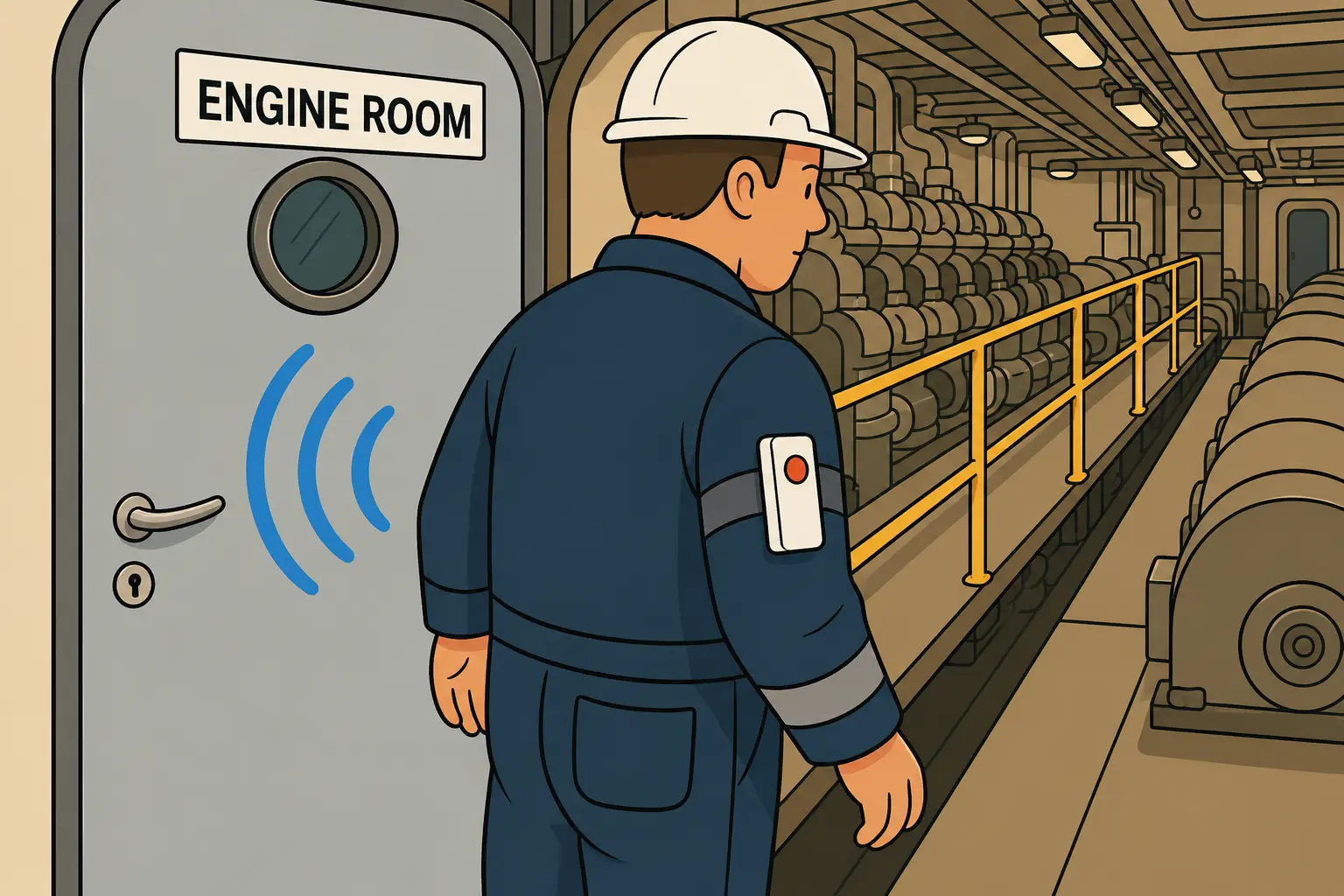
Discover the full CO₂ mustering solution - zone configuration, integration with suppression systems and deployment on existing BLE infrastructure.
Full CO₂ mustering pageDetect a fall, locate the worker, dispatch help - automatically
Workers in isolated areas - tunnels, plant rooms, rooftops, night shifts - face real risk with no one nearby to help if something goes wrong. Pole Star detects falls, immobility and distress automatically, locates the worker at room level and alerts the nearest responder before a situation becomes critical.
The worker's BLE badge or smartphone continuously tracks their indoor position via NAO® Mobile. Their zone, floor and status are visible on the NAO® Track dashboard in real time.
The badge or smartphone's accelerometer detects a sudden fall or unexpected loss of movement. An alert is triggered without any action from the worker - critical when they are unable to press a button.
The alert reaches the supervision desk and the nearest available responder with the worker's identity and precise indoor location - no radio calls, no guesswork.
NAO® Track shows the worker's last confirmed position on the indoor map. If the worker moves or is moved, their position updates continuously until the alert is closed and logged.
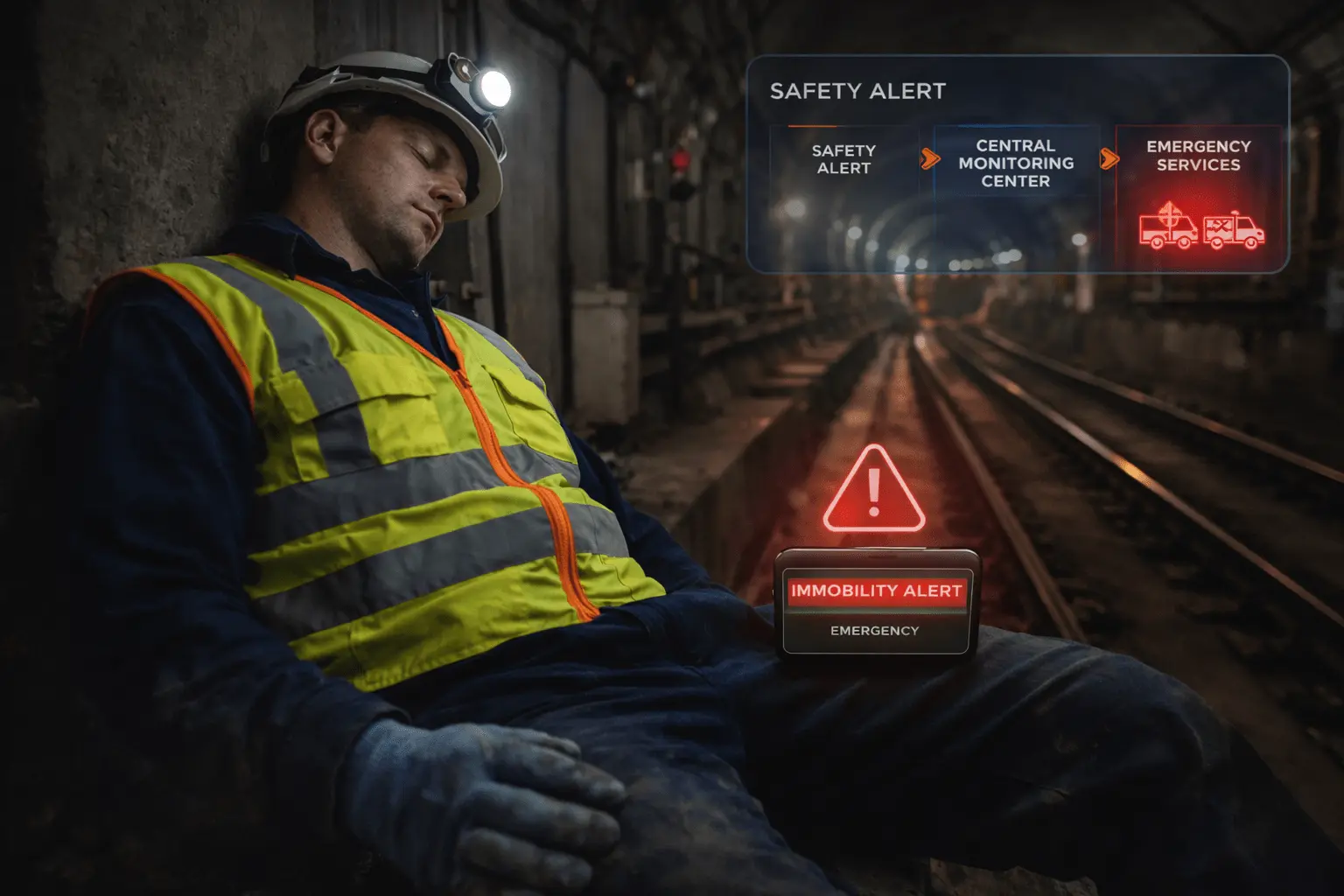
Discover the full lone worker protection solution - deployment options, integration with existing safety systems and use cases across industries.
Full lone worker pageOne tap - instant alert with room-level location
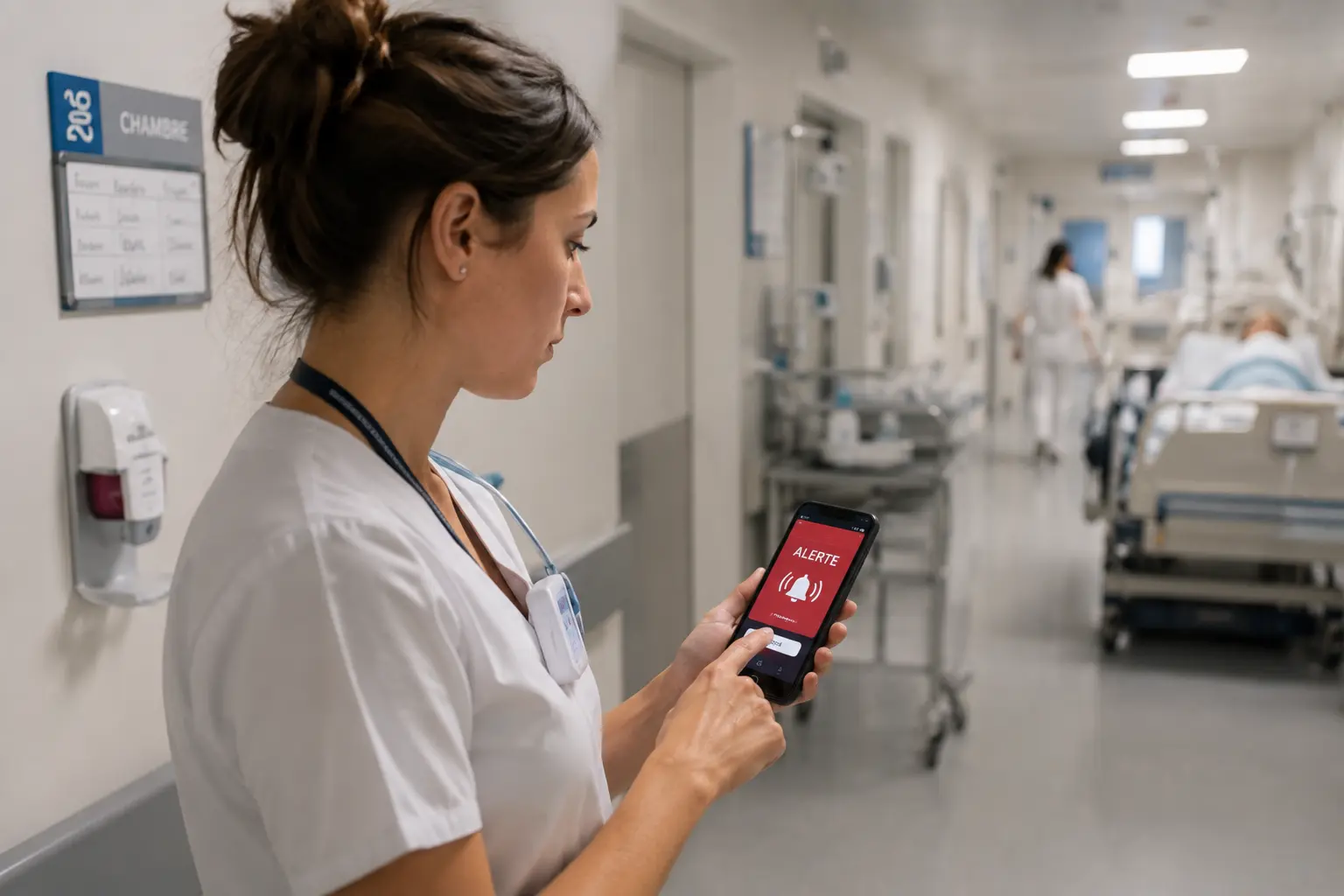
When a staff member faces aggression, a medical emergency or any life-threatening situation, the response time depends on how quickly help can reach them. Pole Star delivers a geolocated panic alert to the nearest responder the moment a button is pressed - from the smartphone or badge the worker already carries.
A single tap on the smartphone app or a press of the badge button fires an immediate alert. No unlock, no navigation - one action is all it takes.
NAO® Track captures the staff member's precise indoor position at the moment of the alert - room, floor and zone - using the BLE infrastructure already installed in the building.
The supervision desk and the closest available colleague receive the alert simultaneously - with the staff member's name, location on the indoor map and time elapsed since trigger.
Responder arrival and resolution are confirmed on NAO® Track. The entire incident - trigger time, location, responder, resolution - is stored automatically for HR, compliance and post-incident review.
Everything you need to protect and respond
Built around the questions safety and security teams actually ask.
Staff duress alerts
A single press on a badge or phone raises an alarm carrying identity and location.
Help reaches the exact spot, fast.
Man-down & fall detection
Automatic detection of falls and no-movement events for lone or isolated workers.
Incidents are caught even when no one sees them.
Geofenced restricted zones
Know when a worker enters an isolated or restricted area and apply the right rules.
Extra protection where risk is highest.
Mustering & headcount
Live count of who is inside a machinery space, and confirmation when it is clear.
Release CO2 only when everyone is out.
Works on Cisco & HPE Aruba
Runs on existing BLE-enabled Wi-Fi and Cisco Spaces - no dedicated parallel network.
Add safety without new infrastructure.
Escalation & audit trail
Route alerts to the right team, escalate if unacknowledged, and log every event.
Defensible duty-of-care records.
What teams solve with worker-safety location
Nurse duress in a ward
A nurse is threatened and presses her badge.
Her name and exact room appear on the live map.
Security reaches the right place in seconds.
Lone worker falls in a plant room
A technician working alone collapses.
Man-down detection raises an automatic alert.
Help is dispatched without anyone witnessing it.
CO2 release in an engine room
A fire starts in a machinery space.
The system confirms every worker has exited.
CO2 suppression is released safely.
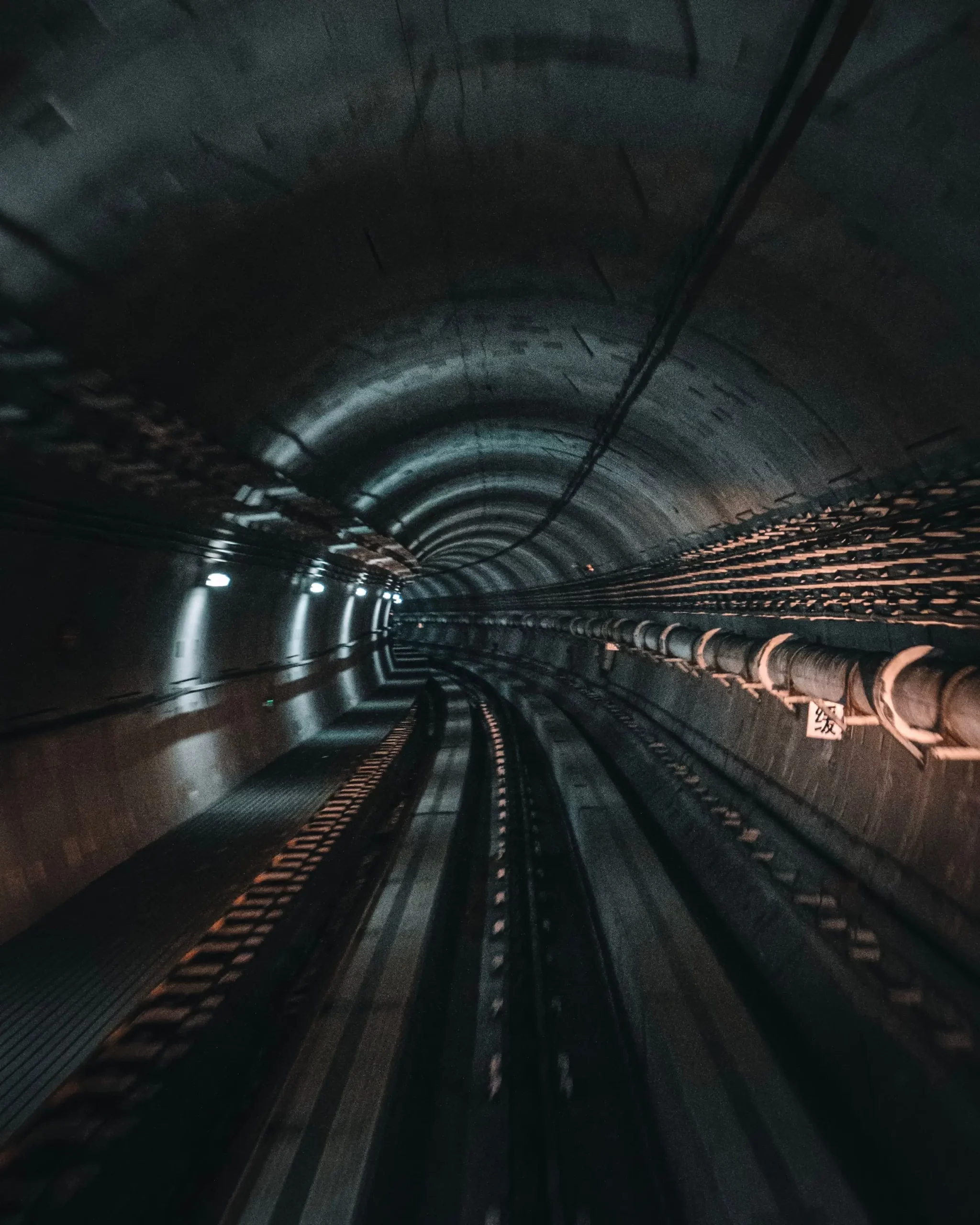
Worker safety in underground tunnels
A team works where GNSS is unavailable.
LTE and BLE positioning locate them underground.
Responders keep eyes on isolated crews.
Wireless nurse call across floors
A patient or nurse needs assistance.
The call is located and routed to nearby staff.
Faster acknowledgement across the whole site.
Evacuation headcount
An evacuation is ordered.
Live location shows who is still inside and where.
Everyone is accounted for, fast.
Where worker safety is deployed most
The environments where real-time safety location protects people best.
Healthcare
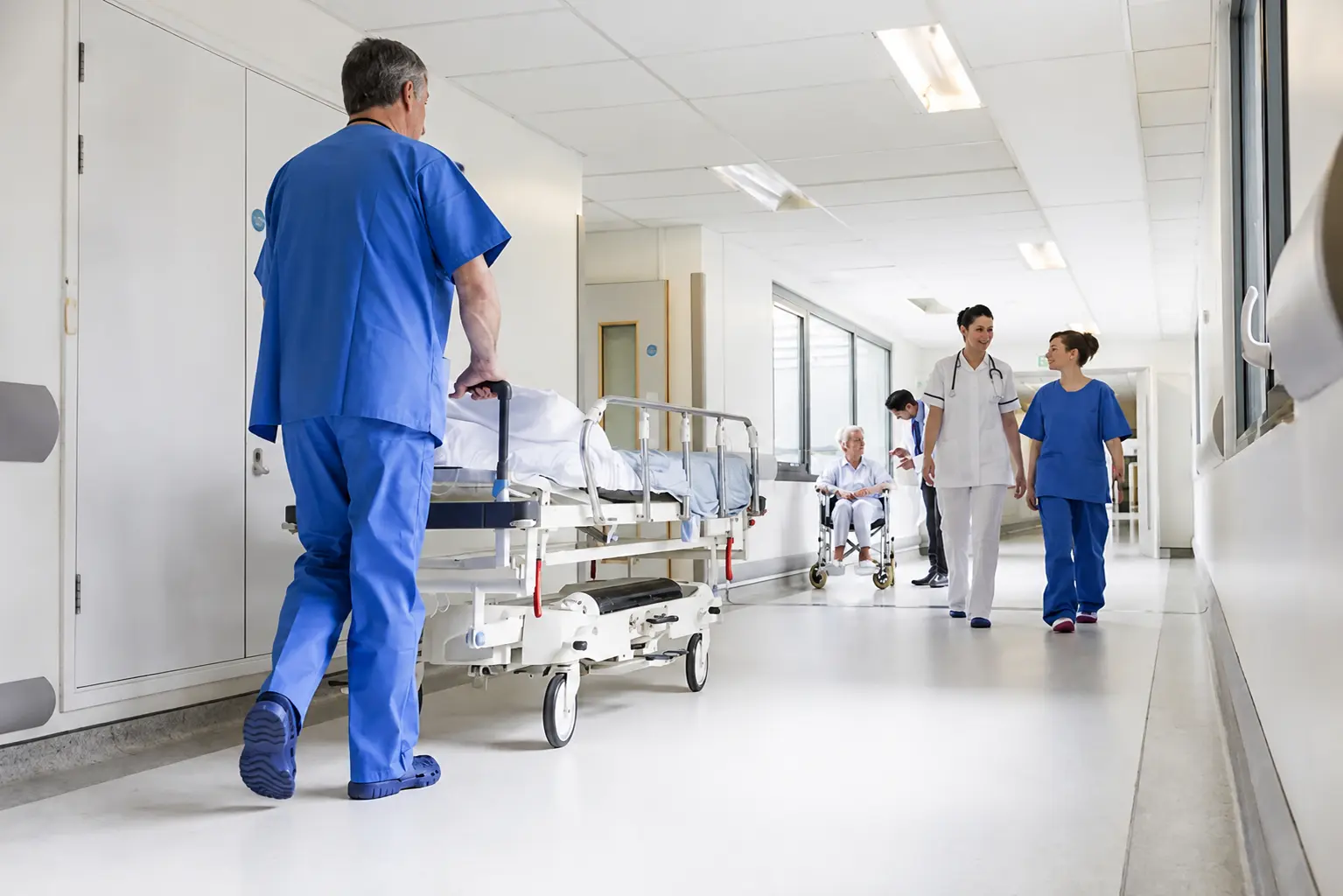
Nurses and staff carry duress on a badge or phone, with wireless nurse call across floors - protecting the sector most exposed to workplace violence.
Manufacturing & industry
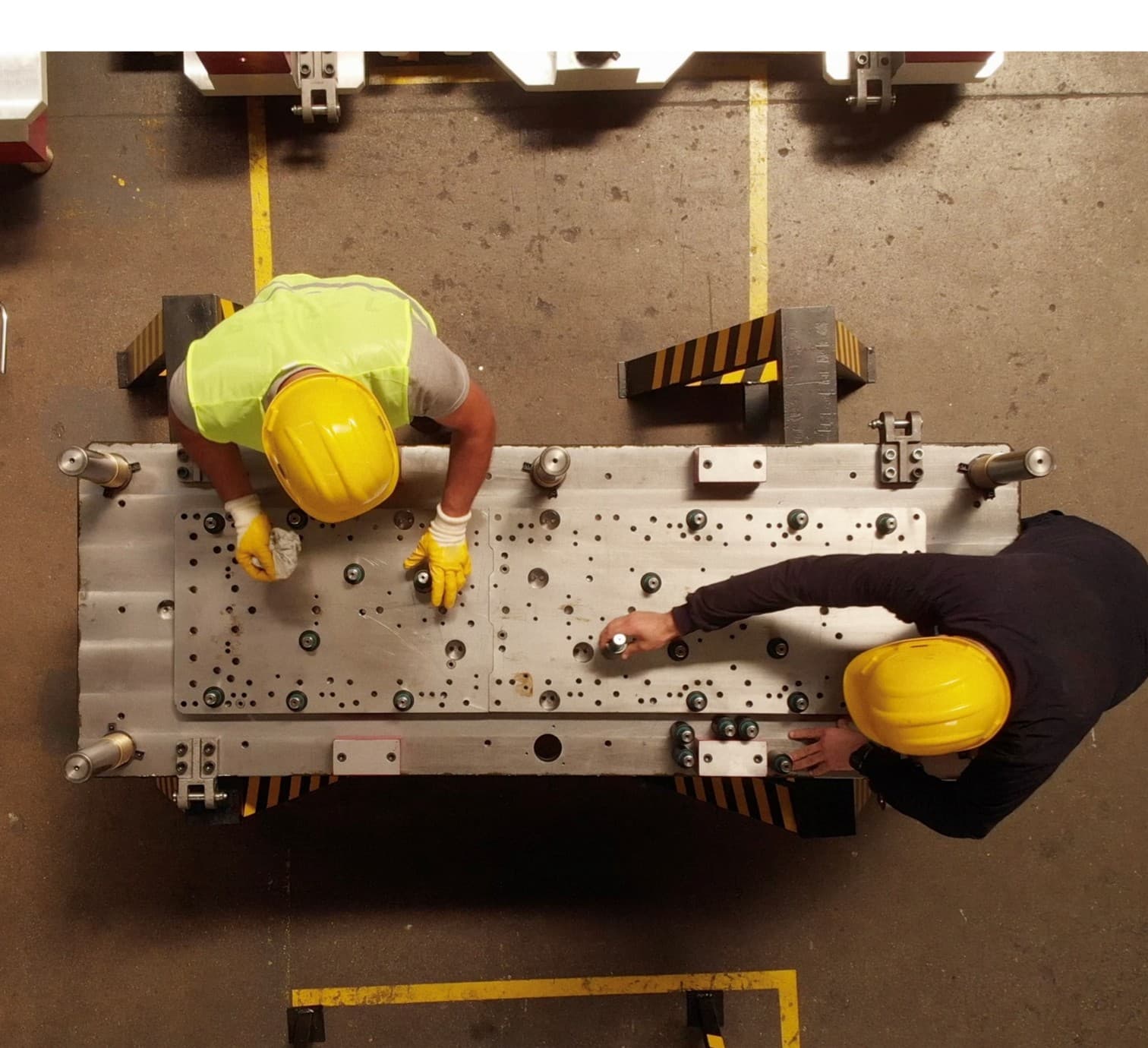
Lone workers in plant rooms and restricted zones are protected with man-down detection and located instantly when an alarm is raised.

Cruise ships
Deliver seamless indoor positioning for guests, crew and onboard assets across every deck, enabling family tracking, operational efficiency and faster emergency response.
Worker safety, proven where response time matters
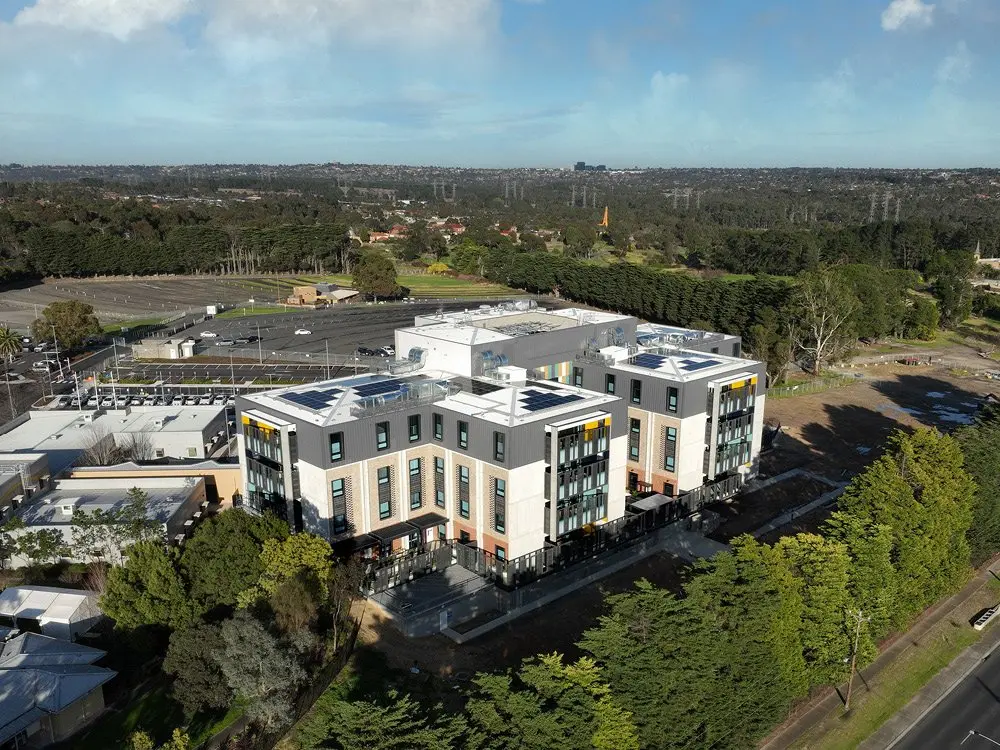
Deliver mobile staff duress and wireless nurse call across a four-floor aged-care facility - without building a dedicated parallel network.
Smartphone-based staff duress built on Cisco Spaces and BLE positioning, with NAO Mobile and NAO Track NG.
- Full duress & nurse call across a 14,000 m², four-floor facility
- Built on 240 Cisco Catalyst 9120 APs and 150 BlueSpot beacons - no parallel network
- Improved response time, nurse-call acknowledgement and multi-floor coverage reliability

Replace manual CO₂ mustering roll-calls in engine rooms and machinery spaces across an entire cruise fleet - with automatic evacuation confirmation that works with no internet or satellite dependency.
BLE emergency badges and NAO® Track CO₂ mustering deployed on the fleet's existing Cisco BLE infrastructure - fully on-premise, closed network.
- Digital CO₂ mustering across 11 ships and 38 engine rooms & protected zones
- 153 emergency badges - zone-confirmed-clear status in real time, no radio call
- Full timestamped audit trail for SOLAS & IMO inspections - 100% on-premise
Pole Star vs traditional duress vs manual process
Location, not just an alarm
Every alert carries who raised it and exactly where they are - so response goes straight to the worker.
Whole-site coverage on existing infra
Isolated zones, tunnels and multi-floor sites are covered on your current network - no parallel system.
Proven underground and multi-floor
From GNSS-denied metro tunnels to a four-floor aged-care facility, it works where it is hardest.
Worker safety, answered
How does staff duress work?
A worker presses a button on their badge or phone. Pole Star reads the signal on your existing network, computes the exact location, and sends an alert carrying the person's identity and position to responders - so help goes straight to the right place.
How does man-down and fall detection work?
Badges and phones carry motion sensors that detect a fall or a prolonged lack of movement. When triggered, the device raises an automatic alert with location - protecting lone workers even when no one is around to call for help.
How accurate is worker-safety location with BLE?
BLE delivers zone or room-level accuracy, on the order of 1-5 meters, including the correct floor - enough for a responder to go straight to the worker. Underground, Pole Star combines LTE and BLE to keep coverage where GNSS is unavailable.
Can staff raise an alert from both a phone and a badge?
Yes. Duress and man-down work from the NAO Mobile app on the phone workers already carry, or from a dedicated BlueSpot safety badge for hands-busy, phone-free or rugged environments. You can mix both across a site.
How does CO2 mustering headcount work?
Pole Star counts the workers inside a machinery or engine space in real time and confirms when it is clear. That confirmation is what allows CO2 fire suppression to be released safely, without risking anyone still inside.
Does it work underground where GPS is unavailable?
Yes. In tunnels, stations and technical areas where GNSS does not reach, Pole Star combines LTE and BLE positioning - the approach deployed across the Grand Paris Express metro lines.
Does it require a dedicated safety network?
No. Pole Star runs on your existing BLE-enabled Wi-Fi and Cisco Spaces, so you add worker safety without building a parallel network - the model used at Wantirna across a four-floor facility.
Does it work with our Cisco or HPE Aruba access points?
Yes. Pole Star integrates with Cisco (including Cisco Spaces) and HPE Aruba to read BLE from your existing access points, which keeps deployment fast and avoids new cabling.
How long does deployment take?
Because it uses existing infrastructure, deployments are typically measured in weeks rather than months. Timelines depend on site size, the number of floors and how the network is configured.
What happens if the Wi-Fi goes down?
Live location depends on the network reading the devices, so an outage pauses updates. For environments that demand continuous availability, Pole Star offers on-premise deployment so the engine keeps running locally.
Can it cover multiple floors and buildings?
Yes. Location includes the correct floor, and coverage extends across multi-floor facilities and multi-site estates - proven across a four-floor aged-care facility and four metro lines.
What is the ROI of a worker-safety system?
The return is faster, better-targeted response, fewer serious incidents, and defensible duty-of-care. Because it reuses existing infrastructure and can also power asset tracking, the same investment covers more than safety alone.
How does it reduce response time?
An alert arrives with identity and exact location, so responders skip the search and go straight to the worker. Removing the "where are they?" step is where most of the time is saved.
Does it help with duty-of-care and compliance?
Yes. Every alert, location and response is logged, giving you an audit trail that demonstrates duty-of-care and supports workplace-violence and lone-worker compliance obligations.
Can we reuse the same system for asset tracking?
Yes. The same BLE infrastructure and platform power asset tracking, so worker safety and equipment location share one deployment.
Who benefits most from worker-safety location?
Hospitals and aged care exposed to violence, industrial sites with lone workers, transport networks working underground, and maritime operations that need mustering all see the clearest benefit.
Is worker location tracked all the time, or only during alerts?
This is configurable. Many deployments surface a worker's location only when they raise a duress alarm or a man-down event fires, rather than tracking continuously - protecting privacy while still enabling fast response.
Is worker location data private and secure?
Yes. Data is access-controlled and role-based, follows enterprise security practices, and can be kept on-premise. Worker safety is configured with privacy in mind and separately from any asset data.
Can location data stay on-premise?
Yes. Pole Star supports fully on-premise deployment, so the location engine and data remain inside your own infrastructure - important for sites with strict data or connectivity constraints.
Does it create an audit trail?
Yes. Every alert, location and response time is recorded, which supports incident review, duty-of-care evidence and continuous improvement of response procedures.
Who can see worker location data?
Access is role-based. Administrators control which teams - typically security and safety responders - can view alerts and locations, so visibility matches each role's responsibilities.
Protect your teams in your facility
Book a demo and we'll show you staff duress, man-down detection and mustering, live on your own floor plan.
- Runs on your existing Cisco / Aruba infrastructure
- Duress, lone-worker and CO2 mustering on one platform
- Proven underground and across multi-floor sites
Ready to see it on your own site? Get in touch and we'll set up a demo.
Book a demo