
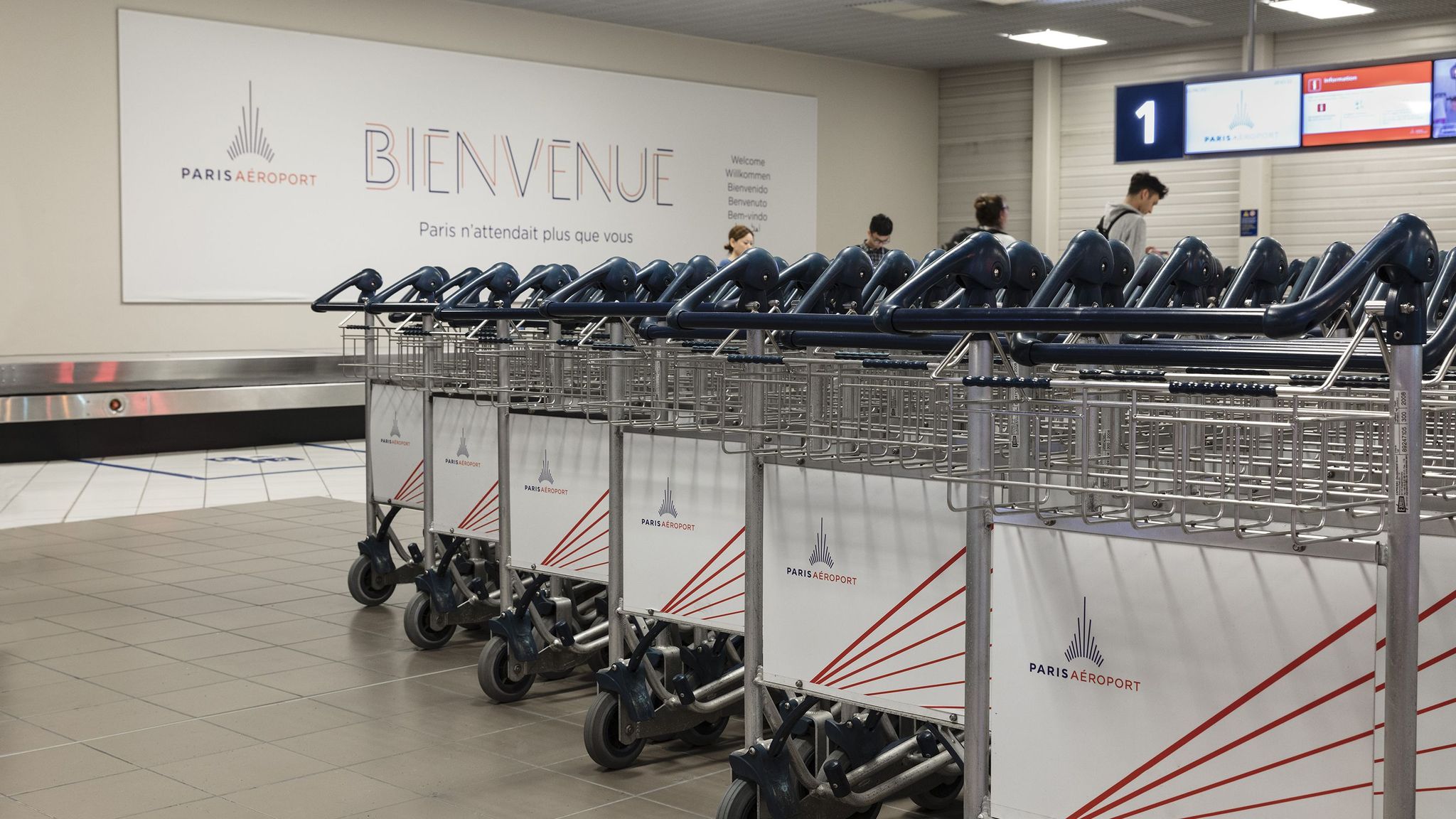
Managing baggage carts efficiently is a critical operational challenge for large international airports. With thousands of carts circulating across terminals, ensuring passengers can easily access them requires constant monitoring and coordination.
At Paris Charles de Gaulle Airport (CDG), one of the largest airports in Europe, this challenge has been addressed through the deployment of a real-time baggage cart tracking solution based on Pole Star’s NAO® Suite indoor location platform.
The project was implemented in collaboration with Atalian, Hub One, and Cisco, enabling the real-time monitoring and counting of thousands of carts across airport terminals.
By providing continuous operational visibility, the solution helps ensure that the right number of carts is available in the right place at the right time, while improving operational efficiency for on-site teams.
Operational context: managing baggage carts at airport scale
Paris Charles de Gaulle Airport handles millions of passengers each year and manages thousands of baggage carts distributed across multiple terminals and passenger areas.
These carts play an essential role in the passenger journey, supporting mobility between arrival areas, check-in halls and terminals.
However, managing carts at this scale creates several operational challenges.
Before the deployment of an indoor location solution, airport teams faced recurring issues:
- cart shortages in high-traffic passenger zones
- excess carts accumulating in low-demand areas
- losses and theft of carts
- limited real-time visibility on cart distribution
- reliance on manual checks and estimations
Cart availability was therefore managed reactively, with operational teams regularly performing field inspections to verify cart levels and redistribute them when necessary.
The objective of the project was to implement a real-time and large-scale tracking solution capable of operating across airport terminals without requiring additional dedicated infrastructure.
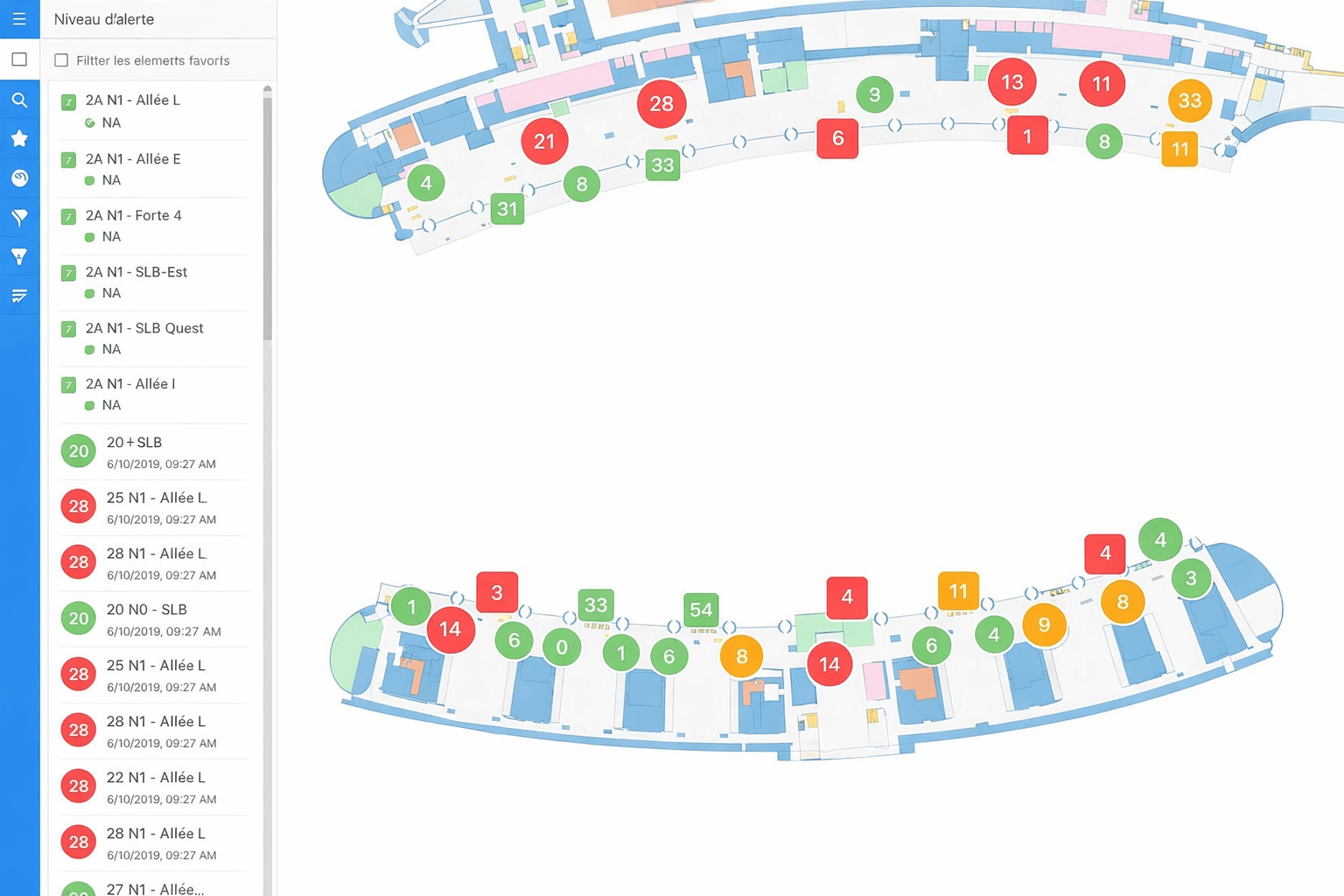
Project scope: large-scale baggage cart tracking across airport terminals
The project covers the full operational perimeter of baggage cart usage within the airport terminals.
Today, the system tracks more than 6,000 baggage carts, making it one of the largest baggage cart tracking deployments in an airport environment.
The solution leverages an existing infrastructure composed of more than 2,000 BLE-enabled Cisco Wi-Fi access points already deployed throughout the terminals.
This infrastructure provides continuous coverage across key operational areas such as:
- passenger terminals
- check-in halls
- baggage cart storage areas
- drop-off and return zones
By using the airport’s existing WLAN infrastructure, the deployment avoids the need for installing additional hardware while ensuring broad operational coverage.
How airport baggage cart tracking works
Each baggage cart is equipped with a Bluetooth Low Energy (BLE) tag.
These tags emit signals that are captured by the airport’s BLE-enabled Wi-Fi infrastructure. Based on these signals, Pole Star computes the real-time indoor location of each cart within the terminals.
Beyond simple location tracking, the system continuously performs zone-based counting. This means operational teams can instantly know how many carts are available in each operational area.
This functionality eliminates the need for manual inventory checks and provides immediate operational visibility.
The system also generates automated alerts when abnormal situations occur, such as:
- cart shortages in passenger zones
- cart surpluses in specific areas
- prolonged inactivity
- unusual movement patterns
These alerts enable teams to anticipate operational issues and intervene only when necessary.
Real-time supervision and operational analytics
All cart locations and operational alerts are accessible through real-time supervision dashboards and analytics tools.
Operational teams can monitor:
- the number of carts available in each zone
- areas experiencing shortages or over-concentration
- the duration of alert situations
- cart availability rates per terminal
- the number and distribution of alerts
Historical data is also recorded and analyzed to produce operational reports and KPI dashboards.
This allows teams to better understand cart usage patterns and continuously improve redistribution strategies.
Through integration with existing airport systems, the solution becomes part of a broader data-driven operational environment.
User interface designed for operational teams
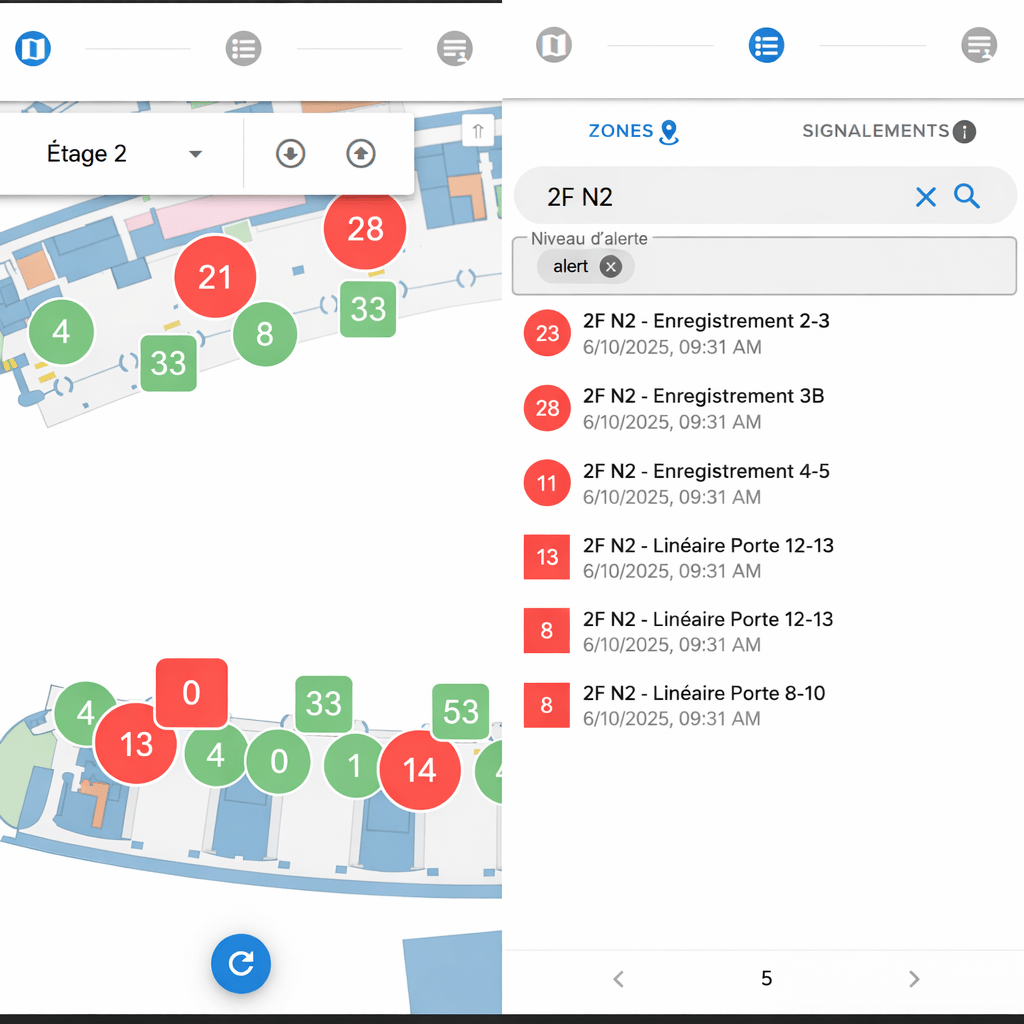
To support day-to-day operations, the solution includes a user interface specifically designed for operational supervision and field teams. Through NAO® Viewer, supervisors and operational managers can monitor baggage cart distribution in real time from a desktop environment. The interface provides a clear visualization of cart positions, zone-based asset counts and active alerts, allowing teams to quickly identify operational imbalances across terminals.
The platform is also accessible on tablets and smartphones, enabling field teams to access the same operational information while moving across the airport. This multi-device approach ensures that both control room operators and on-site teams share a common operational view. Supervisors can analyze cart distribution and trigger interventions when necessary, while field teams can directly verify situations on the ground.
By adapting the interface to the realities of airport operations, the system supports faster decision-making, improved coordination between teams and more efficient operational supervision.
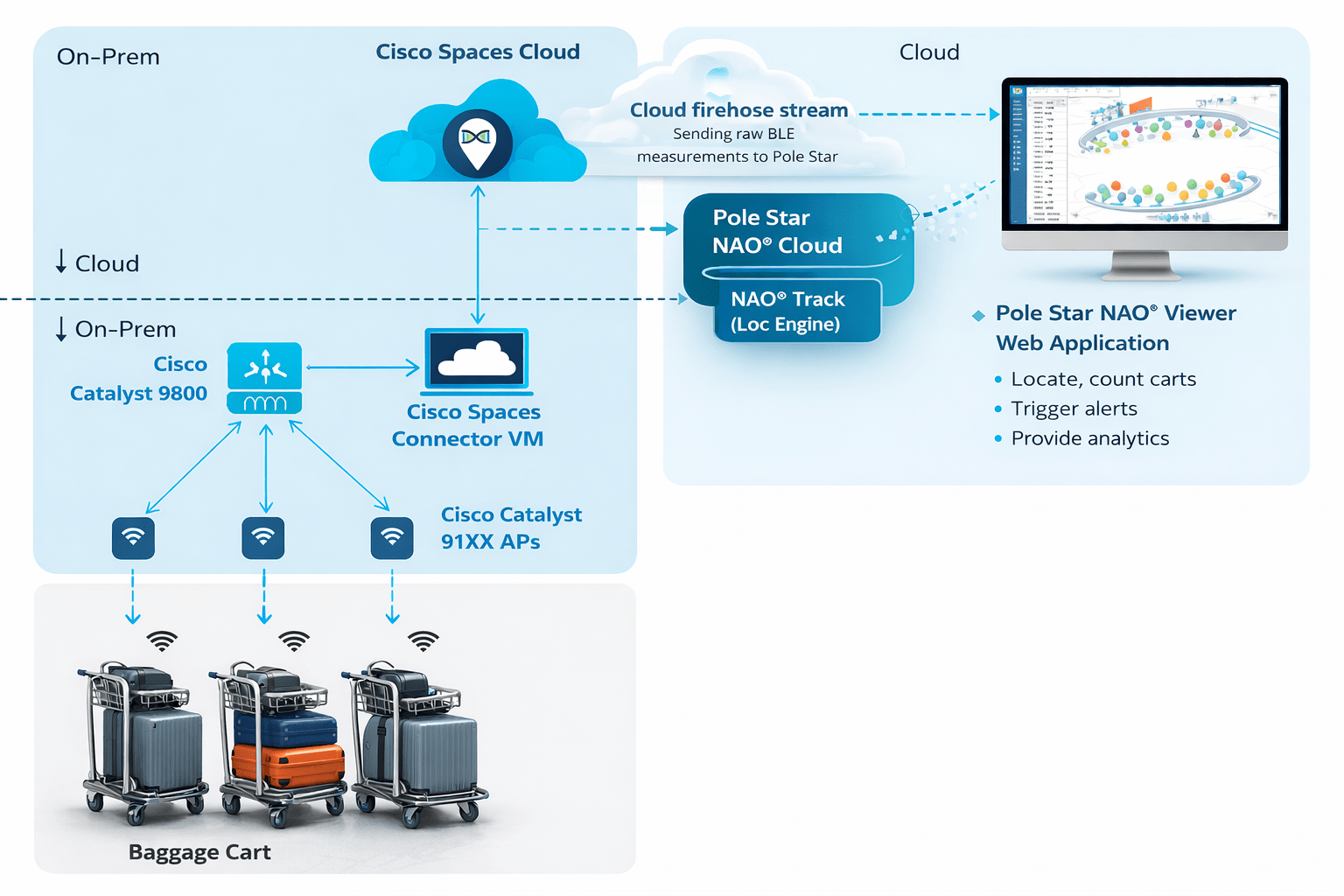
Pole Star technology architecture
The deployment relies on Pole Star’s indoor location platform architecture:
- NAO® Track – real-time indoor location engine
- NAO® Viewer – interface for locating assets, counting carts and managing alerts
- NAO Cloud – configuration and monitoring of location services
- Cisco Spaces Cloud Firehose integration
- Hybrid Cloud / On-Premise architecture
This architecture enables the system to operate at large airport scale while maintaining reliability and performance.
Ecosystem and partners
The project was implemented within a collaborative airport ecosystem involving several partners:
- Pole Star – indoor location platform provider
- Cisco – Wi-Fi and BLE infrastructure
- Hub One – infrastructure operation and technical support
- Atalian – operational services provider
- Paris Aéroports (Groupe ADP) – airport operator
The solution was designed to integrate seamlessly into the airport’s existing infrastructure and operational systems while respecting technical and security constraints.
This interoperability allows the airport to extend location-based services to other operational use cases in the future.
Operational benefits of baggage cart tracking
The deployment delivers several measurable operational improvements:
- improved baggage cart availability in passenger areas
- reduction of cart losses and theft
- optimized cart redistribution workflows
- improved operational decision-making through data
- time savings for operational teams
According to Corinne Monot, Director of Operations at Atalian:
“Guaranteeing that the correct number of carts was at the right place at the right time used to require regularly sending teams to check and restock the carts. Today, teams only intervene when it’s truly necessary. This represents a huge productivity gain.”
By restoring visibility over baggage cart distribution, the solution contributes both to operational efficiency and passenger experience improvement.
Supporting data-driven airport operations
The baggage cart tracking deployment at Paris Charles de Gaulle Airport illustrates how indoor location technologies can support operational transformation in complex environments.
Through real-time asset visibility, automated alerts and operational analytics, airport teams gain the tools needed to manage equipment more efficiently and respond faster to operational needs.
The solution also lays the foundation for expanding location-based services across airport operations, supporting future digitalization initiatives.
About Pole Star
Pole Star is a global leader in indoor geolocation solutions. Through its NAO® Suite, Pole Star provides innovative tools for asset management, safety, and operational optimization across various sectors, including airports, healthcare facilities, cruise ships, industrial sites, office environments, and university campuses. The NAO® Suite uniquely enables accurate and reliable tracking of tags and smartphones through a single platform, addressing a wide range of use cases.
Contact
Contact our team to explore your airport use case.
Email: sales@polestar.eu
Phone Number: +33 5 34 60 95 20