
Introduction
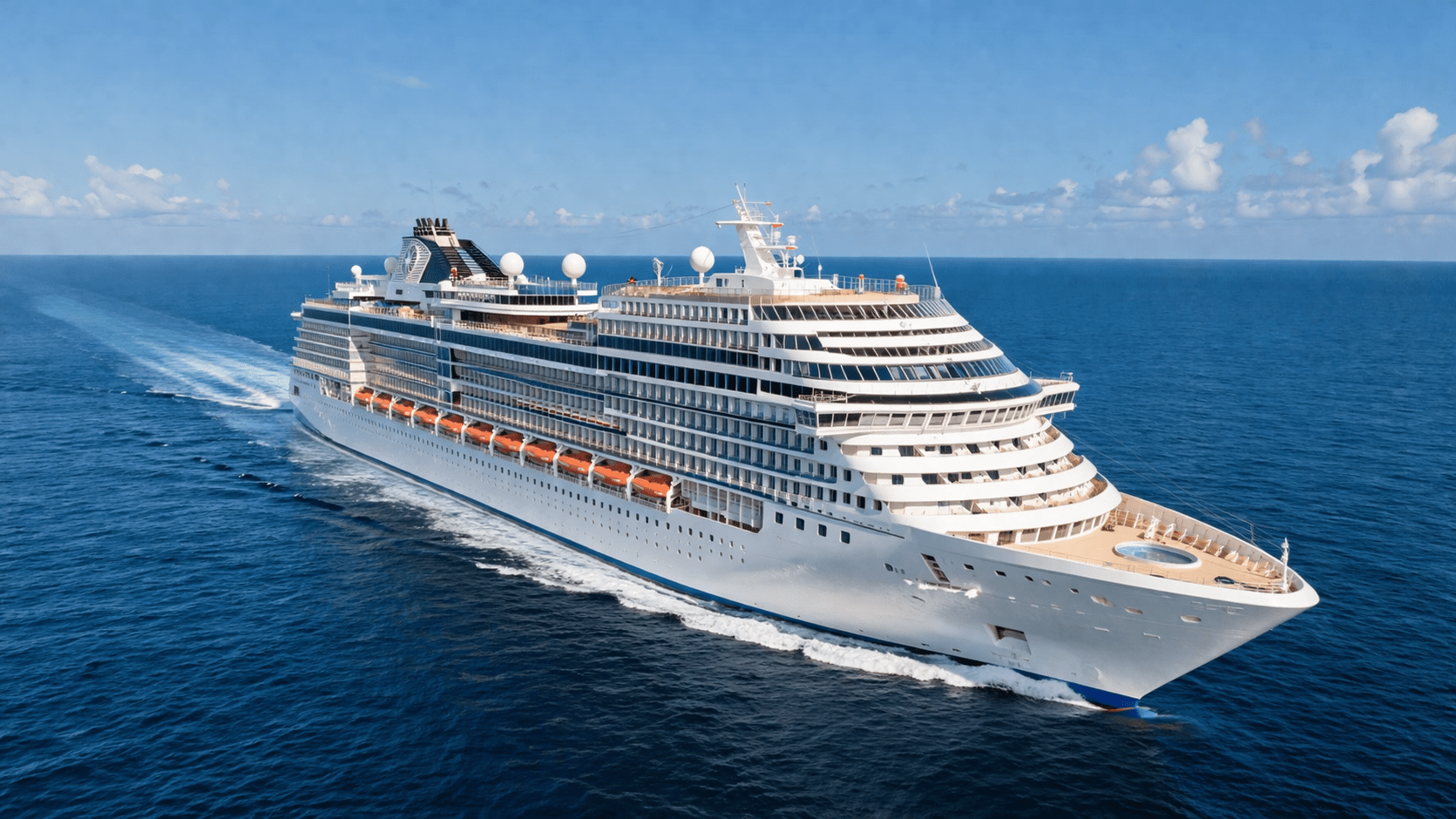
Cruise ships are among the most complex indoor environments in the world. With multiple decks, thousands of passengers and crew members, and highly dynamic operations, maintaining real-time visibility is essential.
However, GPS does not work inside ships. This is why indoor location technologies, powered by RTLS (real-time location systems) and indoor tracking, are becoming critical for modern cruise ship operations.
From maritime safety and crew tracking to passenger experience and asset management, indoor location is transforming the cruise industry.
What is indoor location on cruise ships
Indoor location refers to technologies that enable real-time positioning of people and assets inside environments where GPS signals are unavailable, such as a cruise ship. These systems rely on Bluetooth Low Energy (BLE), Wi-Fi positioning, and advanced sensor-based indoor tracking to calculate positions continuously and accurately.
On cruise ships, indoor location enables real-time tracking across multiple decks, continuous visibility of passengers, crew, and assets, and improved operational awareness in complex and high-density environments. Indoor location is the technological foundation of RTLS in maritime environments, allowing cruise operators to monitor movements, optimize workflows, and ensure safety at scale.
Why indoor location is critical for maritime safety
Maritime safety is a top priority for cruise operators, especially in complex environments where risks are amplified by confined spaces, technical areas, and high passenger density.
According to the International Maritime Organization, safety procedures on ships rely heavily on accurate personnel tracking and rapid emergency response coordination. Delays in locating individuals can significantly increase the severity of incidents.
Indoor location and RTLS improve safety by enabling:
- Real-time indoor tracking of crew in technical areas
- Instant identification of personnel during emergencies
- Faster response times in critical situations
- Improved evacuation coordination across multiple decks
Studies in industrial and maritime environments show that real-time location systems can reduce emergency response times by up to 30%, while significantly improving evacuation efficiency and personnel accountability.
In complex environments like engine rooms or restricted zones, indoor tracking provides continuous visibility of human presence, helping operators reduce risk, ensure compliance, and enhance overall maritime safety procedures.
Key use cases of indoor location and RTLS on cruise ships
Kids tracking on cruise ships: real-time indoor location for child safety
Child safety is a major challenge on large cruise ships, where complex layouts and crowded areas make supervision difficult.
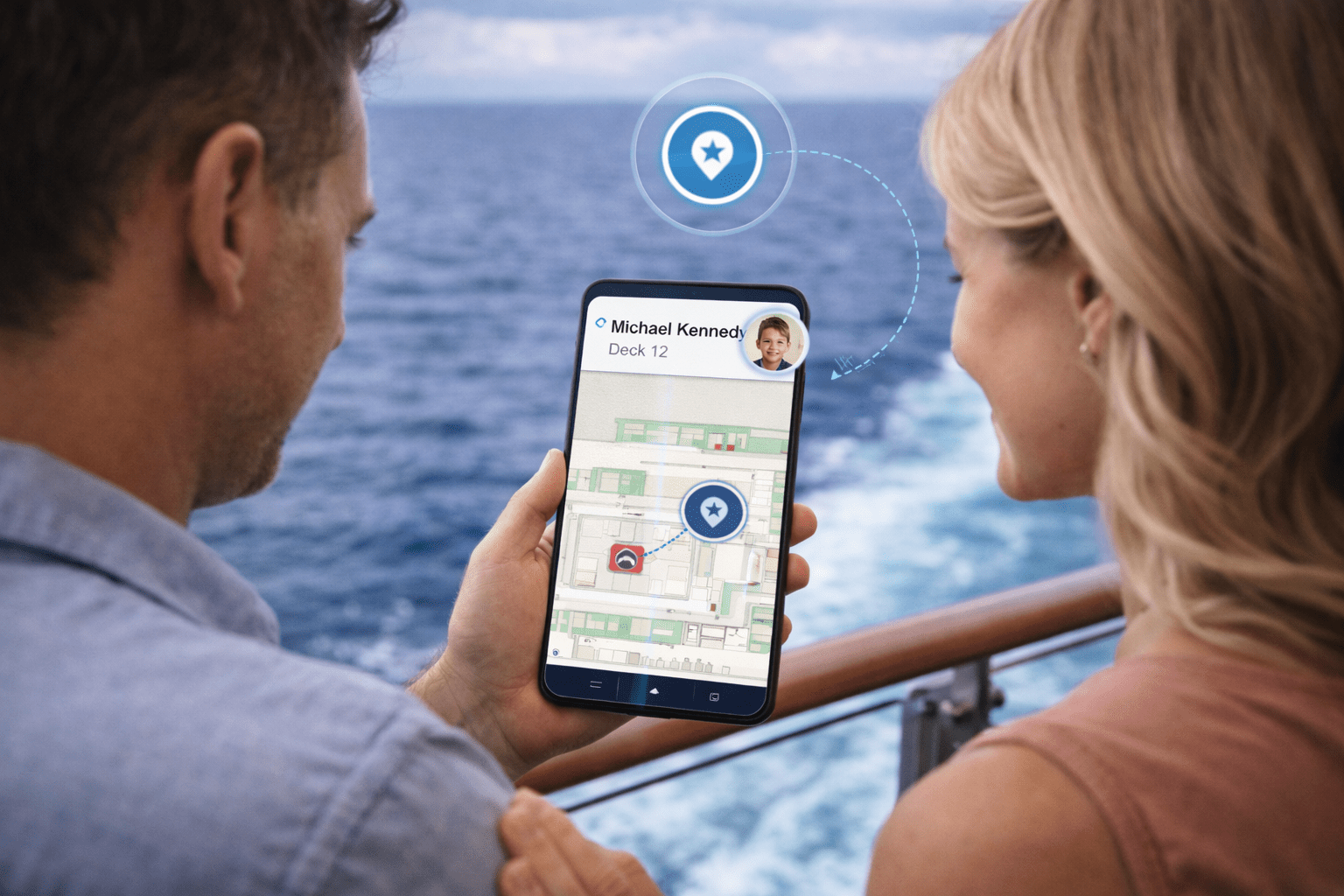
Indoor location and RTLS technologies enable real-time kids tracking across all passenger areas.
Pole Star provides indoor tracking using BLE wearable bracelets designed for children.
Key capabilities:
- Real-time indoor location of children across all decks
- Continuous indoor tracking using BLE RTLS infrastructure
- Secure access to location data for parents and crew
- Visualization on multi-deck indoor maps
Parents can track their children directly via mobile applications, while onboard teams monitor activity through supervision dashboards.
This use case combines indoor positioning, RTLS, and maritime safety, providing peace of mind to families while maintaining a seamless passenger experience.
CO₂ mustering and maritime safety in engine rooms
CO₂-protected zones and engine rooms are among the most critical environments in maritime safety operations.
In these high-risk areas, indoor location and RTLS systems are essential to:
- Track personnel in real time
- Perform instant headcounts
- Ensure safe evacuation before CO₂ system activation

Pole Star enables indoor tracking in technical areas of cruise ships using BLE badges.
Key capabilities:
- Real-time indoor location of crew in restricted zones
- Automated mustering and headcount during alerts
- Live dashboards showing evacuation progress
- Emergency alert triggering via wearable devices
The solution operates with an on-premise RTLS architecture, ensuring:
- Ultra-low latency
- High reliability
- Independence from external networks
This use case is a cornerstone of maritime safety, reducing risk and improving emergency control in critical ship environments.
Emergency team tracking and incident response on cruise ships
During emergencies, rapid coordination of intervention teams is critical.
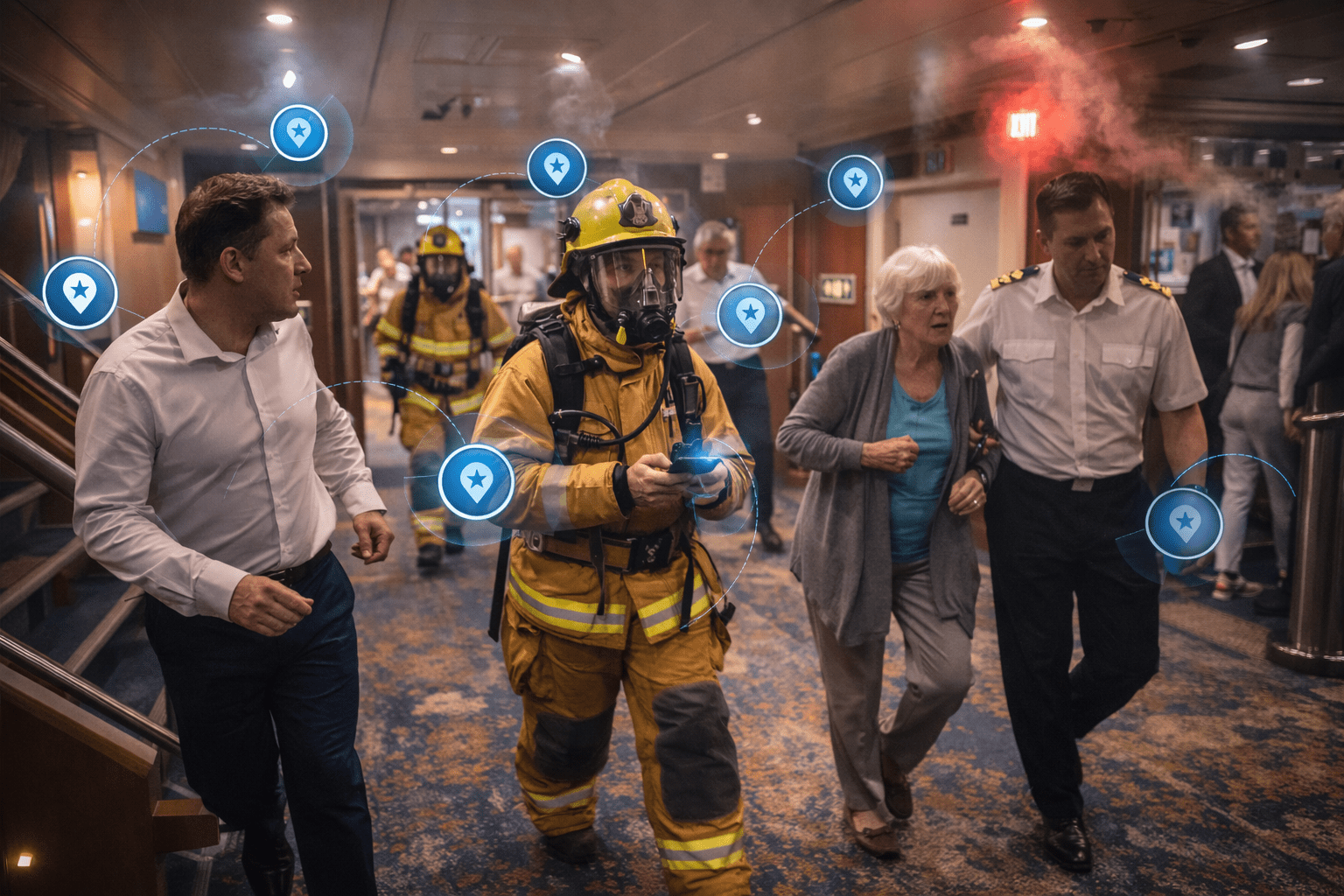
Indoor location and RTLS technologies provide real-time visibility of emergency teams across all areas of a cruise ship.
Pole Star enables indoor tracking of emergency response teams, delivering a live operational view of personnel movements.
Key capabilities:
- Real-time tracking of response teams across multiple decks
- Centralized command dashboards
- Live coordination of interventions
- Improved resource allocation and deployment
By leveraging indoor positioning and RTLS, cruise operators can significantly improve incident response time, coordination efficiency, and maritime safety outcomes.
Indoor location for medical alerts and special needs assistance
Providing fast and efficient medical assistance is essential on cruise ships.
Indoor location systems enable precise geolocation of passengers requiring immediate care.
Pole Star supports:
- Geolocated emergency call buttons
- Automatic alerts triggered by medical equipment (e.g. defibrillators)
- Real-time indoor tracking of incidents
Key capabilities:
- Instant transmission of exact location
- Faster response from onboard medical teams
- Improved assistance in high-traffic areas
This use case strengthens passenger safety, indoor tracking capabilities, and overall maritime safety compliance.
Yard mustering management and workforce tracking
During dry dock operations, managing personnel safety is critical.
Indoor location and RTLS systems provide real-time visibility of workers and contractors.
Key capabilities:
- Real-time tracking of personnel on and off the vessel
- Automated mustering status verification
- Identification of missing individuals
- Access to worker profiles (role, company, assignment)
- Generation of safety reports and attendance logs
Indoor tracking ensures full control of workforce safety and compliance during shipyard operations, reinforcing maritime safety standards.
Asset tracking on cruise ships: indoor tracking for equipment and luggage
Cruise ships handle thousands of assets daily, making indoor tracking essential for operational efficiency.
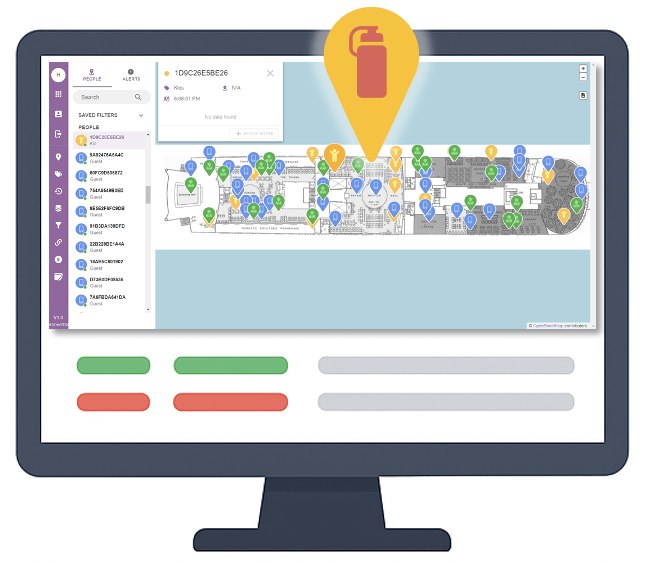
Pole Star enables real-time asset tracking using RTLS and indoor location technologies.
Use cases:
Gas bottles and equipment:
- Prevent loss of critical equipment
- Ensure safe storage and usage
Baggage tracking:
- Track luggage in real time
- Reduce losses and delays
- Improve passenger experience
Indoor tracking and RTLS help optimize logistics while enhancing both safety and operational performance.
Mobile-based indoor location services for cruise ships
Indoor location also enables advanced passenger-facing services.
Live crowd monitoring:
- Real-time attendance tracking
- Wait time estimation
- Flow optimization
Bring-me service:
- Share guest location with onboard services
- Improve service delivery
- Enhance dining and hospitality experience
Digital wayfinding:
- Turn-by-turn indoor navigation
- Easy access to ship services
- Improved passenger experience
Geotargeted advertising:
- Location-based notifications
- Personalized offers
- Increased onboard revenue
Indoor location enables new revenue streams while improving operational efficiency and passenger satisfaction.
Benefits of indoor location and RTLS in cruise ships
Enhanced maritime safety:
- Real-time visibility of crew and passengers
- Faster emergency response
- Improved safety compliance
Operational efficiency:
- Optimized workflows
- Better crew coordination
- Real-time decision making
Cost optimization:
- Reduced asset loss
- Improved resource allocation
Passenger experience:
- Seamless navigation
- Personalized services
- Reduced friction onboard
How indoor location works on cruise ships
A typical indoor location system includes:
Infrastructure:
- BLE beacons
- Wi-Fi access points
Devices:
- Smartphones
- Wearables
Location engine:
- Processes signals
- Calculates real-time positions
Applications:
- Mobile apps
- Dashboards
- APIs
Indoor tracking relies on signal processing, trilateration, and hybrid positioning technologies to ensure accurate positioning across all ship areas.
How Pole Star enables indoor location in maritime environments
Pole Star provides a high-performance indoor location platform designed for cruise ships.
Key capabilities:
- Real-time indoor tracking across multi-deck environments
- BLE-based RTLS with minimal infrastructure
- On-premise location engine for low latency
- Scalable architecture supporting thousands of devices
- Integration with onboard systems and applications
Pole Star enables reliable, scalable, and high-accuracy indoor location tailored to maritime environments.
Conclusion
Indoor location is transforming cruise ships into safer, smarter, and more efficient environments.
By combining RTLS, indoor tracking, and advanced positioning technologies, cruise operators can improve maritime safety, optimize operations, and enhance passenger experience.
Indoor location is no longer optional. It is a critical foundation for the next generation of cruise ships.