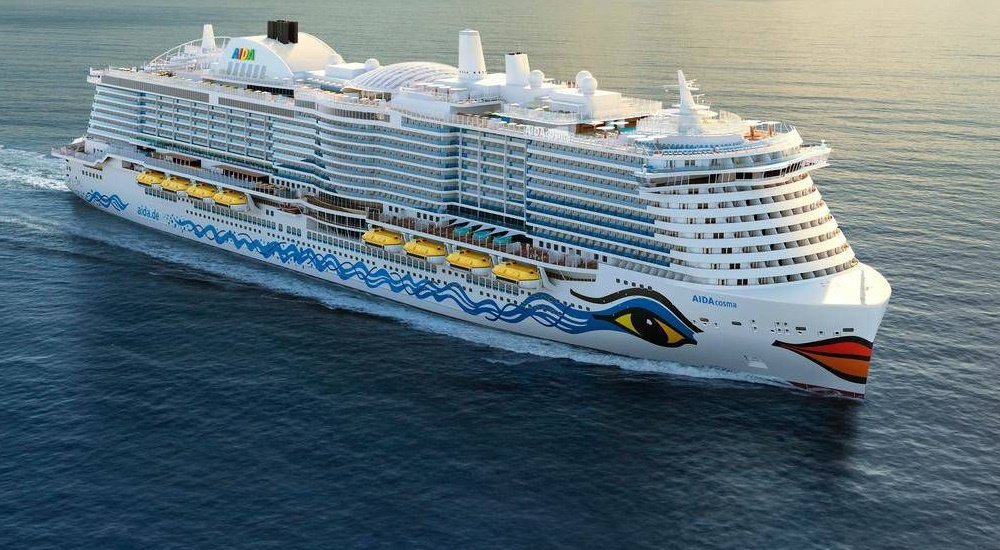
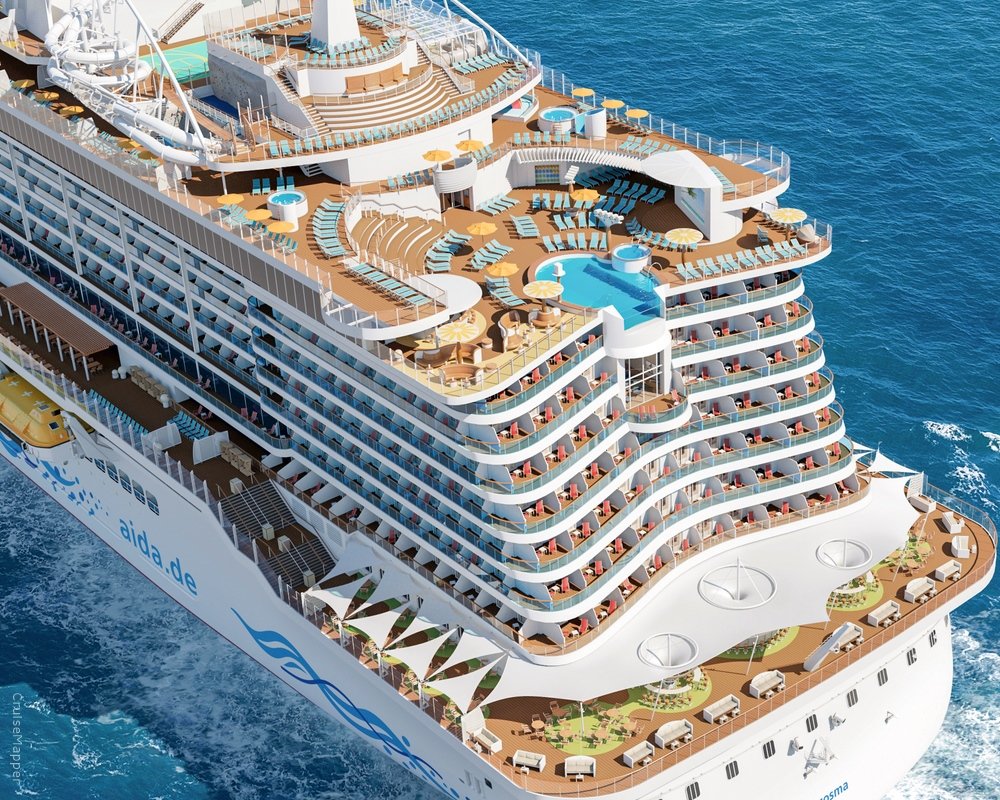
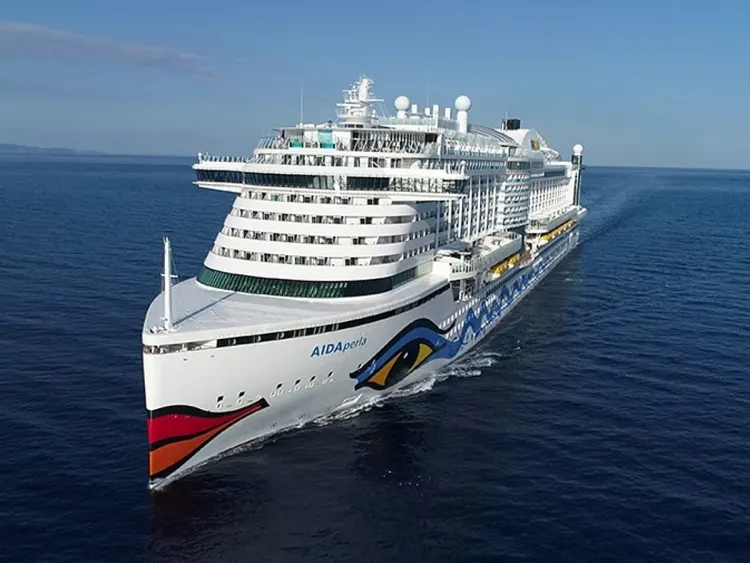
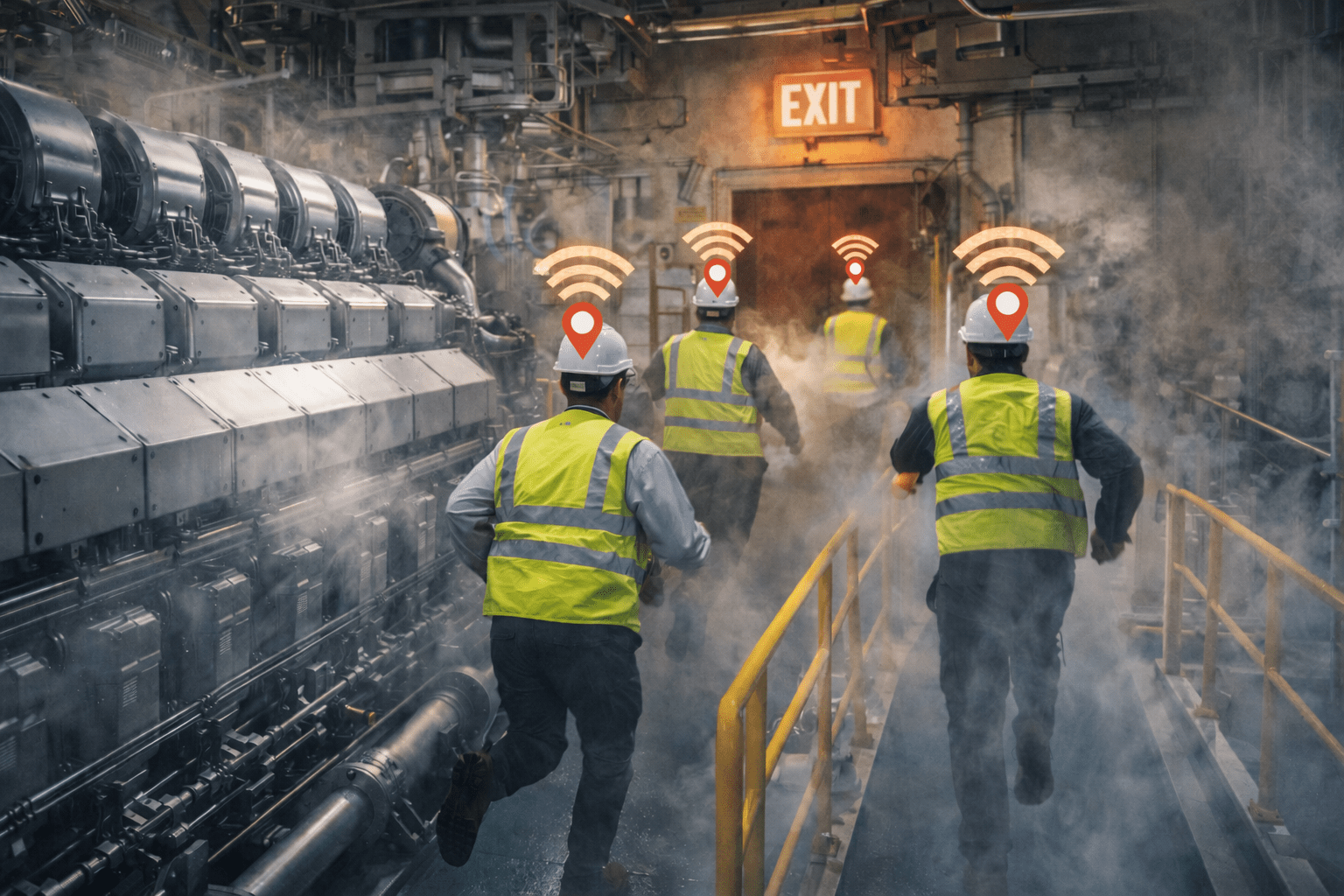
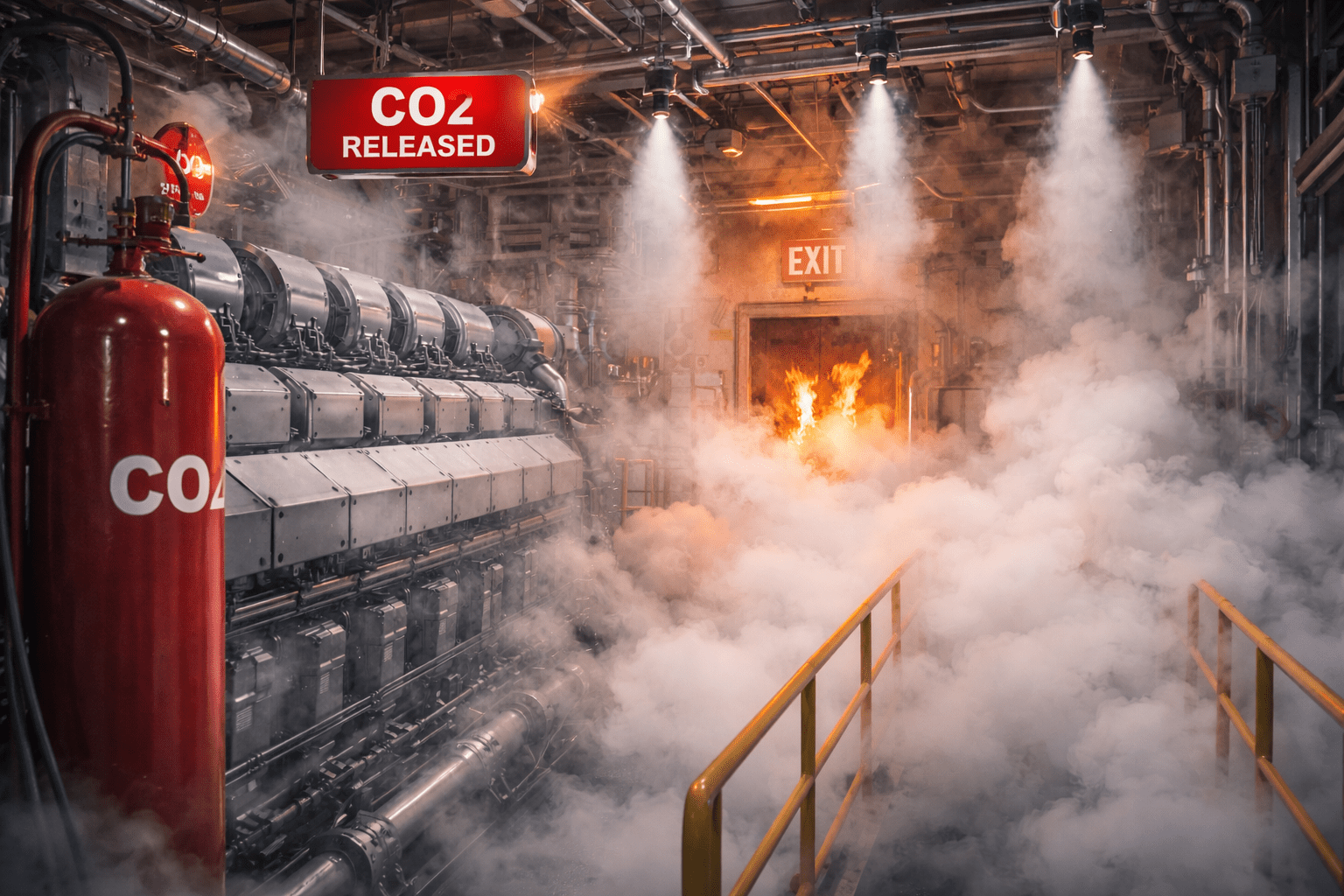
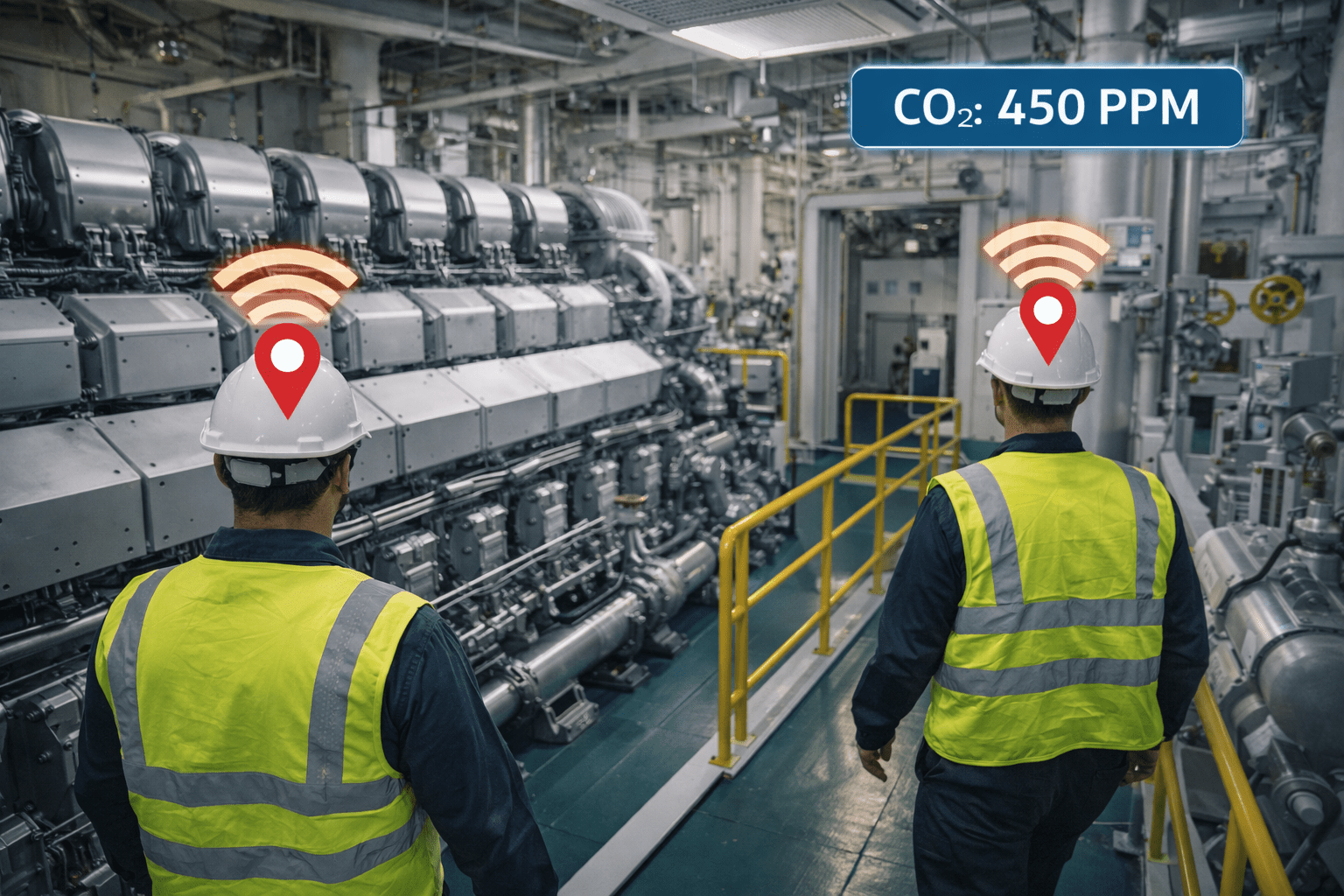
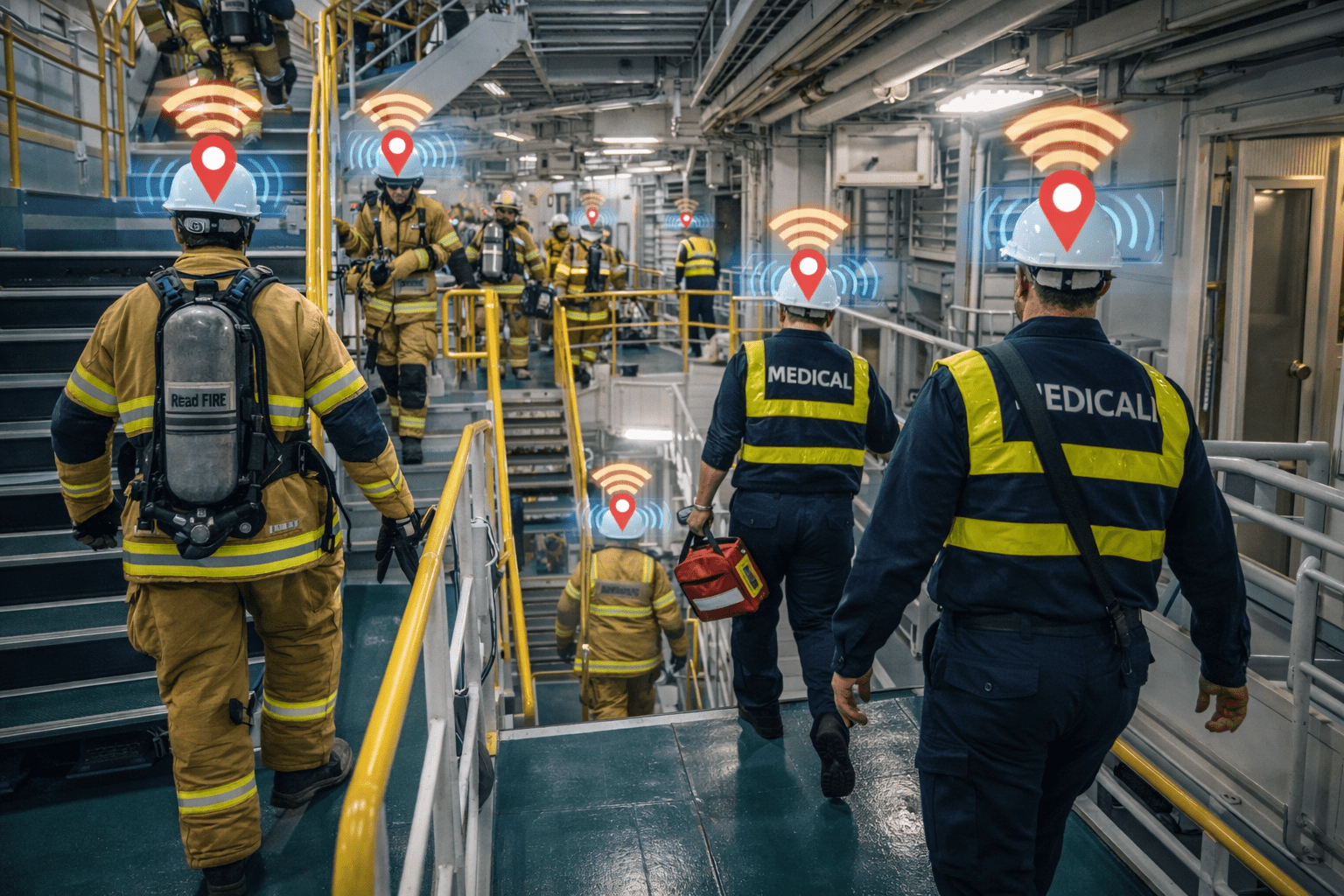
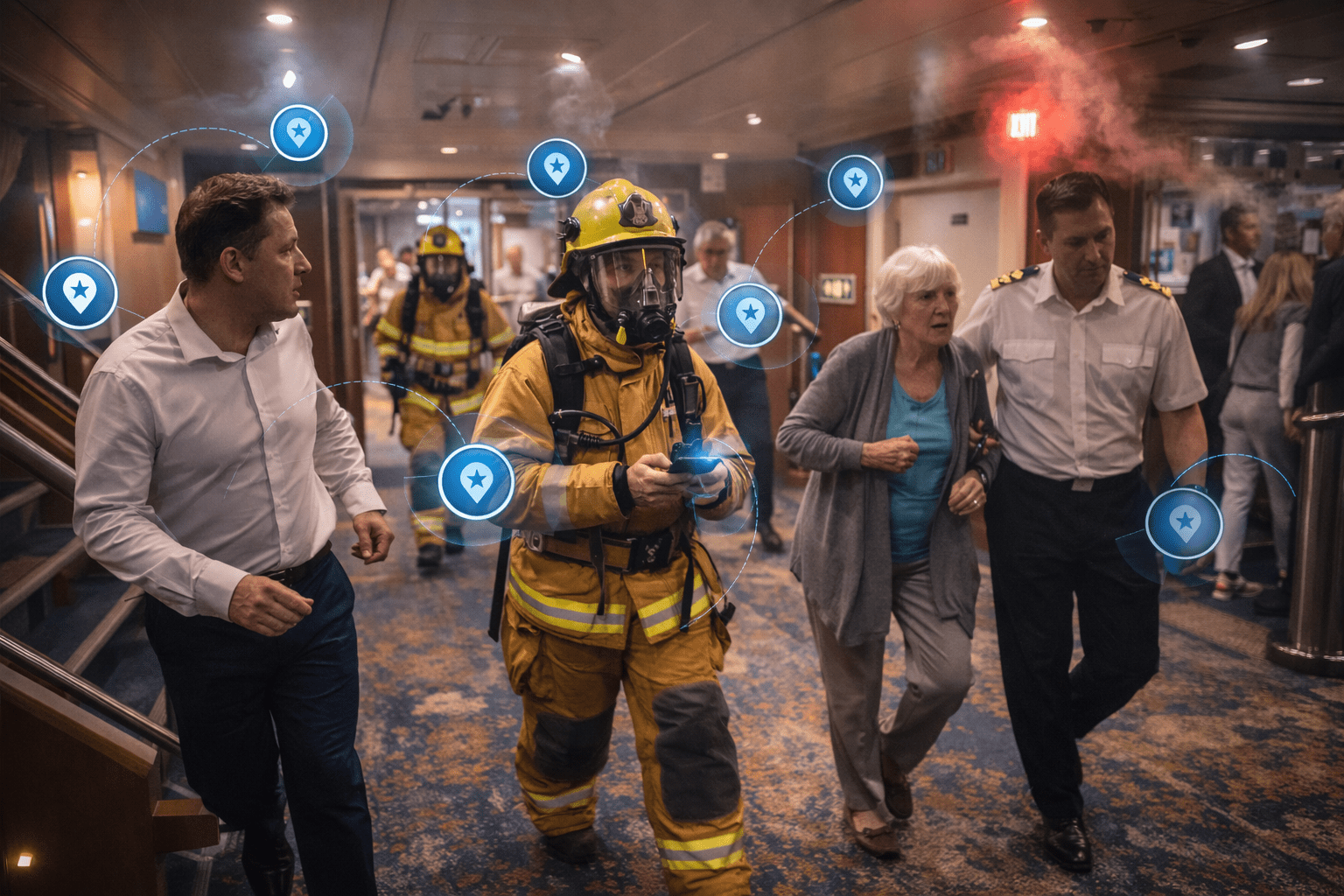
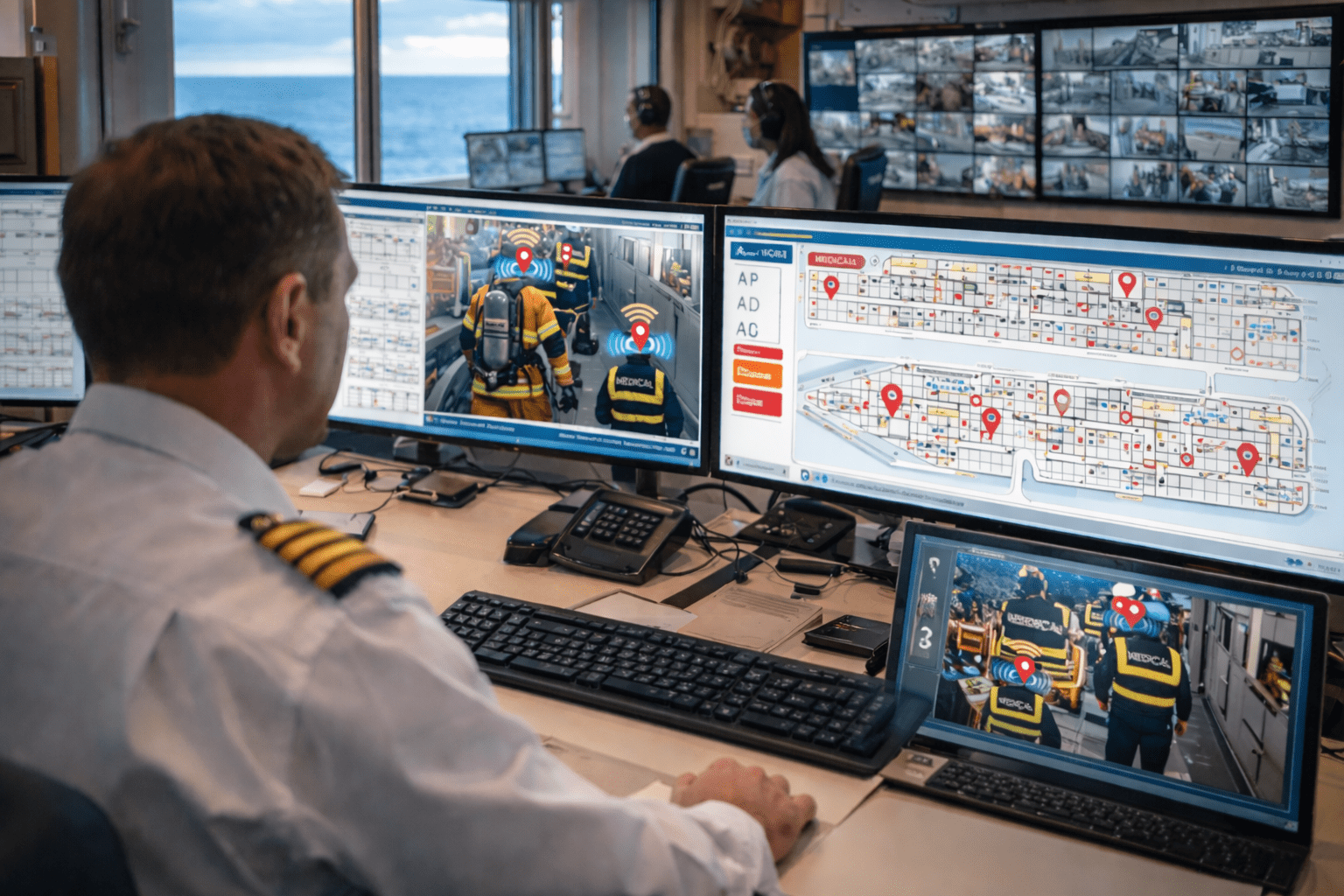
On board cruise ships, safety management spans both high-risk technical environments and passenger-facing public areas, where rapid response and precise localization are critical. More specifically, these environments include engine rooms, CO₂ protected zones and technical compartments, as well as public spaces where passengers may require immediate medical assistance.
In the event of a CO₂ system activation, crews must be able to instantly identify who is present, where they are located and whether evacuation has been completed. At the same time, passenger safety scenarios — such as assistance requests from guests with special needs or the use of a defibrillator — require immediate alerting and precise indoor positioning to enable fast and coordinated intervention. Therefore, responsiveness and accuracy are essential across all onboard areas.
Against this backdrop, the objective of this project was to deploy a real-time mustering and emergency management solution capable of operating reliably across both technical crew-only areas and passenger zones, providing immediate situational awareness during critical safety events.
Global project scope
The project covers safety-critical areas and emergency operations across the entire vessel and includes:
6 equipped decks
38 engine rooms and CO₂-protected zones
50 active staff badges, with scalability to 200+ badges
153 badges dedicated to emergency response teams
Geolocated passenger emergency call points in public areas
Defibrillators equipped with alert triggers
A dense BLE infrastructure leveraging up to 2,000 Cisco access points
This scope ensures comprehensive coverage of crew safety, emergency team coordination and passenger assistance, supporting real-time mustering, medical response and safety management across the entire ship.
CO₂ Mustering Management
Specific context and objectives
CO₂-protected zones and engine rooms represent some of the highest-risk environments on board. In these areas, safety procedures require:
Precise localization of personnel
Instant headcount when an alert is triggered
Controlled and verified evacuation before CO₂ system activation
The goal was to provide safety teams with a real-time, reliable and actionable view of personnel presence in these zones.
Project scope
The CO₂ mustering solution is deployed across the most sensitive onboard environments and includes:
11 ships deployed by July 2026
6 fully equipped decks
38 engine rooms and CO₂ zones monitored in real time
50 active staff badges, with a planned scale-up to 200+ badges
This scope enables precise monitoring of personnel presence across all CO₂-protected areas.
Solution deployed
Pole Star implemented a CO₂ mustering solution based on real-time indoor localization. Crew members operating in technical zones are equipped with BLE-enabled badges. These badges continuously emit signals that are captured by the ship’s local infrastructure.
Using this data, the system provides:
Real-time localization of staff inside engine rooms and CO₂ zones
Automatic counting of personnel present during an alert
Dedicated CO₂ mustering dashboards displaying exposure status and evacuation progress
Alert triggering via badge button, enabling immediate escalation
All data is processed locally through a fully on-premise architecture, ensuring low latency and operational independence.
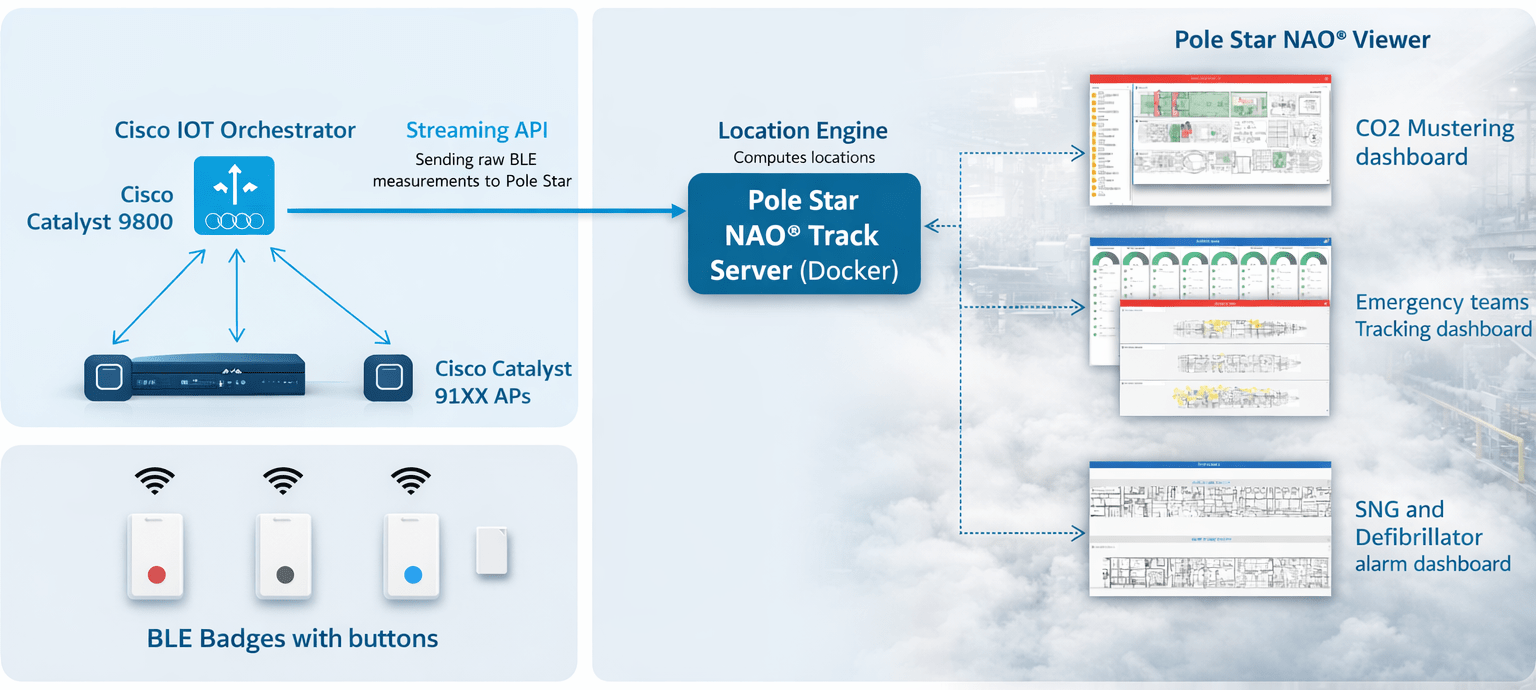
Pole Star NAO® Track Server (Docker) acting as the real-time Location Engine, computing positions from BLE badge signals.
Cisco IoT Orchestrator (Cisco Catalyst 9800) collecting BLE measurements from Cisco Catalyst 91XX access points and transmitting raw data via Streaming API to the NAO® Track Server.
BLE badges with buttons enabling real-time personnel localization and emergency interaction.
Pole Star NAO® Viewer delivering dedicated operational dashboards, including CO₂ mustering visualization, emergency teams tracking, and SNG/defibrillator alarm monitoring.
Pole Star architecture & solutions
The CO₂ mustering solution relies on a fully onboard, safety-critical location architecture. The fully on-premise deployment ensures low latency, high availability, and reliable performance in critical maritime safety scenarios.
Operational benefits
The solution delivers immediate and measurable safety benefits:
Instant visibility of exposed personnel in CO₂-protected zones
Reduced human risk through precise localization and automated headcount
Improved evacuation procedures, supported by real-time supervision
Increased confidence and control during high-risk emergency scenarios
Emergency Team Tracking
Specific context and objectives
During emergencies, intervention teams must be:
Continuously located
Deployed rapidly
Coordinated efficiently across complex, multi-deck environments
The objective was to provide real-time visibility of emergency teams to improve coordination and response effectiveness.
Project scope
The emergency team tracking deployment includes:
153 badges assigned to emergency response personnel
Coverage across all operational and technical zones
Solution deployed
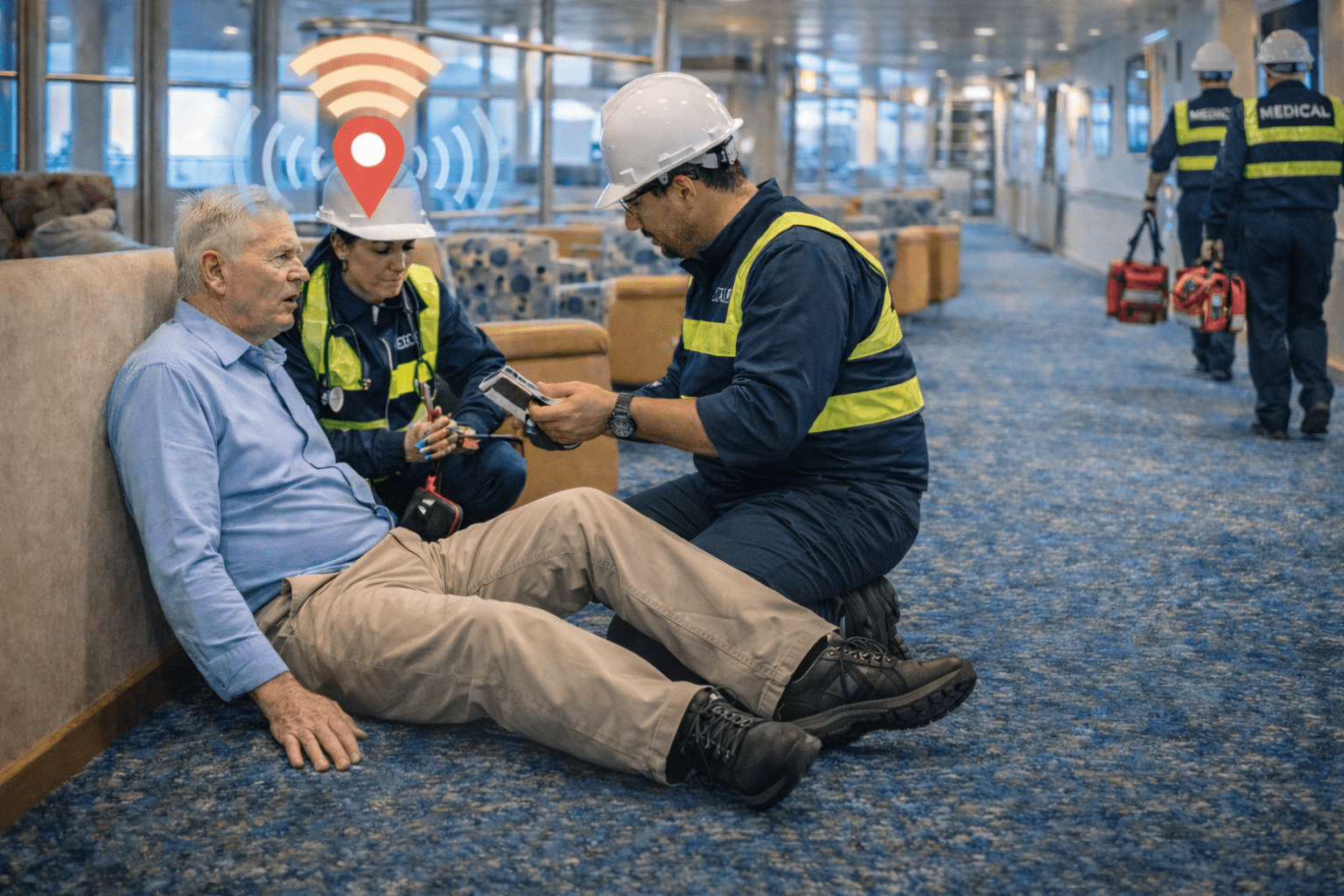
Pole Star enables real-time tracking of emergency response teams using BLE-enabled badges. Team members can also trigger alerts directly from their badges, ensuring immediate escalation when assistance is required.
Supervisors benefit from centralized interfaces that provide a live overview of team positions, enabling better coordination and faster decision-making during incidents.
Operational benefits
The solution delivers clear operational improvements:
Reduced response times during emergency situations
Improved coordination of intervention teams
Centralized supervision, scalable across multiple vessels
Special Needs Guest & Defibrillator Alerts
Context & challenges
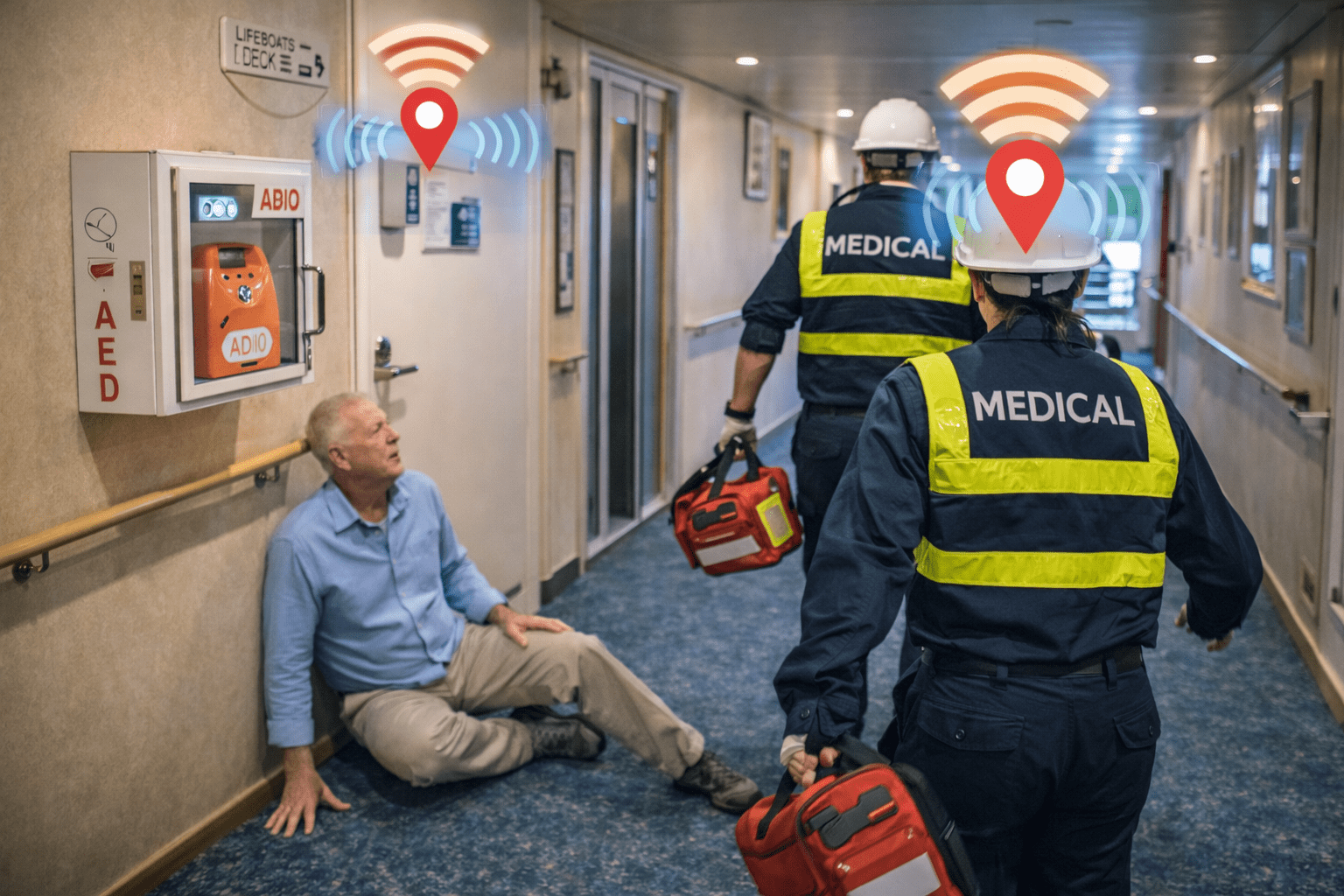
On board cruise ships, certain passengers may require immediate medical assistance, either due to specific medical conditions or unexpected emergencies. In these situations, the ability to locate the passenger precisely and dispatch medical teams without delay is critical to ensuring passenger safety.
In parallel, defibrillators (AEDs) are distributed across public areas of the ship, but rapid intervention requires instant awareness when an AED is accessed and where the incident is occurring.
Project scope
The deployment covers passenger-facing safety scenarios and includes:
Geolocated emergency call buttons in public areas
Defibrillators equipped with alert triggers
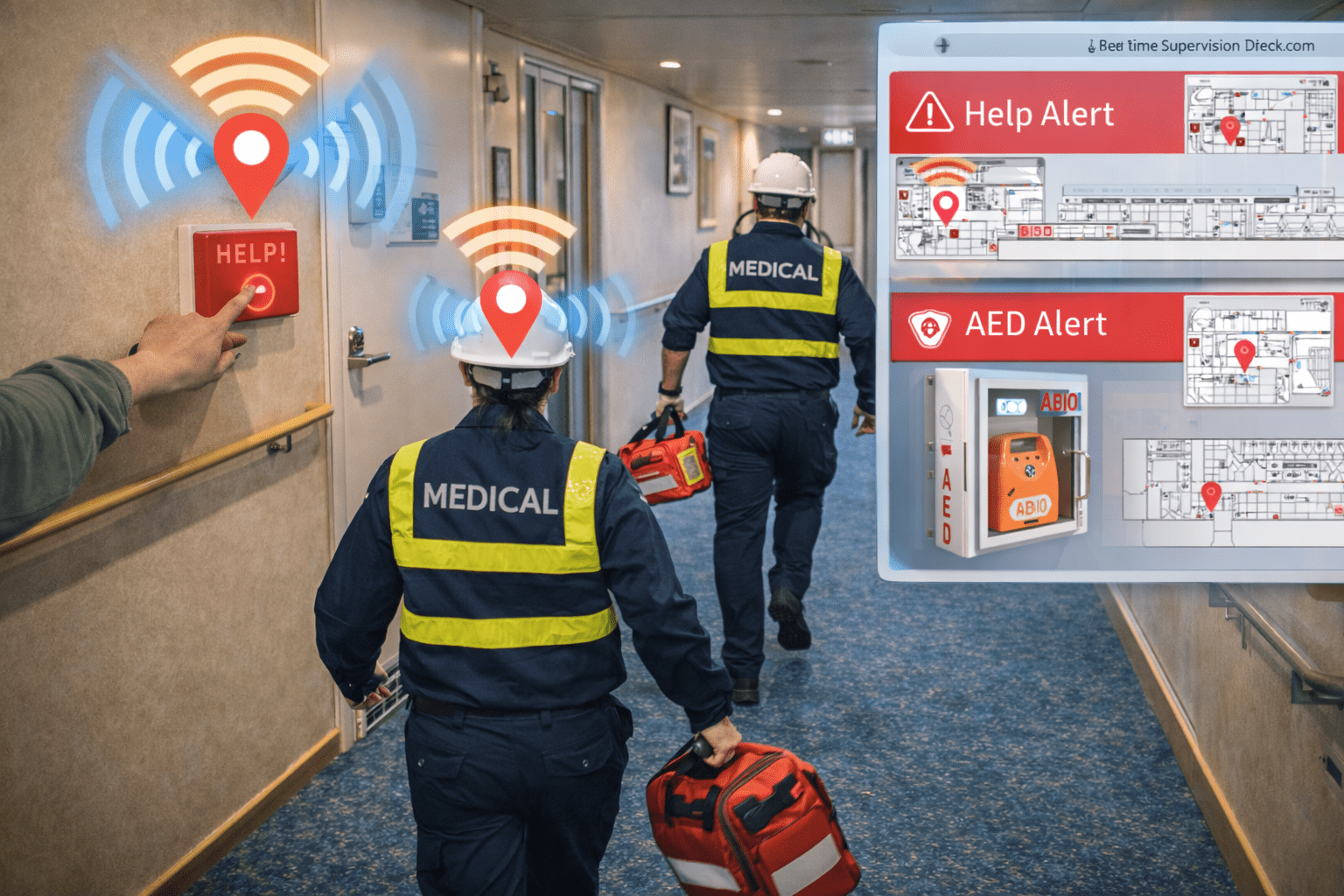
Real-time supervision of passenger alerts and medical incidents
This scope ensures that both passenger assistance requests and medical emergencies are detected and managed in real time.
Solution deployed
Pole Star enables a geolocated “Help” button for passengers with special needs, allowing them to trigger an alert and transmit their exact indoor location instantly to onboard medical and safety teams.
In parallel, the solution automatically generates an alert when a defibrillator is accessed, immediately notifying response teams and sharing the precise location of the AED and the incident. All alerts are centralized within real-time supervision interfaces, enabling fast decision-making and coordinated response.
Operational benefits
The solution delivers clear safety and operational benefits:
Faster access to medical assistance for passengers
Reduced intervention time through precise indoor localization
Improved passenger safety across public and high-traffic areas
Better coordination of medical and emergency teams