HID - Patient wayfinding

Context & challenges

Across a large healthcare network of more than 60 hospitals, patient orientation and navigation represent a major operational and experience challenge. Every day, thousands of patients and visitors must navigate complex, multi-floor hospital buildings, often under stress and time pressure.

The primary objectives of the project were to improve patient experience, increase the fluidity of patient journeys, and reduce stress and confusion in environments that are difficult to understand, especially for first-time visitors or patients with mobility constraints.


Project scope

The deployment spans a wide hospital network and includes:

  • Indoor navigation across 60+ hospital facilities

  • Coverage of large, multi-building and multi-level environments

  • Support for patients, visitors and hospital staff

  • Integration within existing hospital mobile applications

Solution deployed

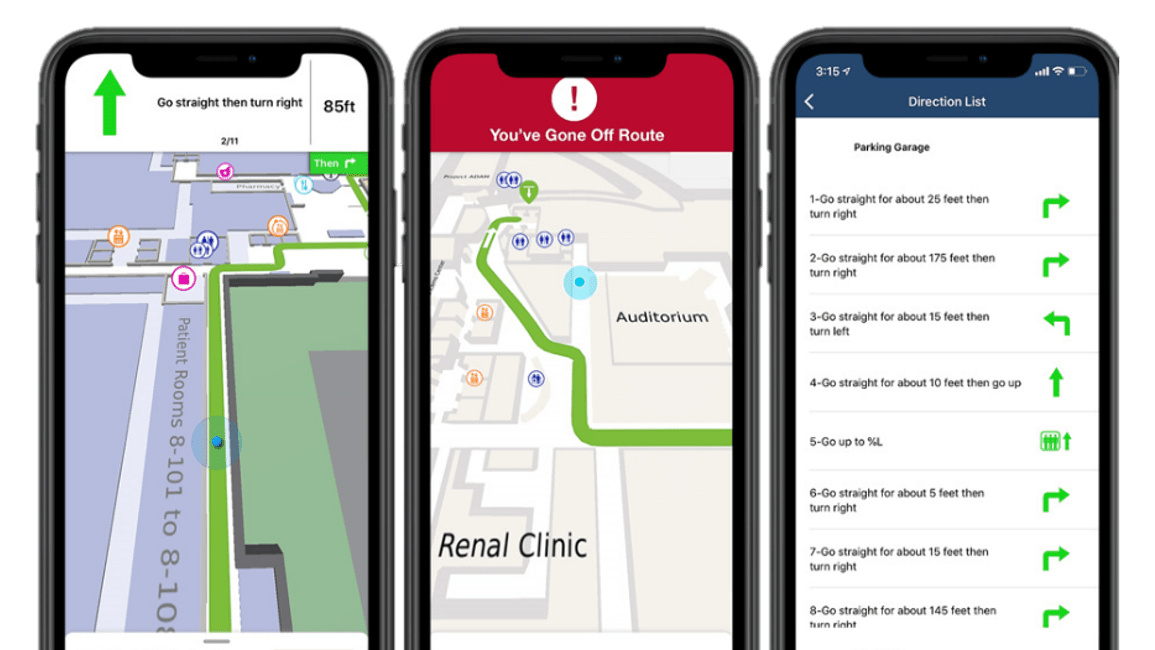
Pole Star delivered an indoor wayfinding solution integrated directly into hospital mobile applications. The solution allows patients, visitors and staff to locate themselves in real time inside hospital buildings and follow guided indoor routes to their destination.

Routes are adapted to specific needs, including accessibility for people with reduced mobility, and dynamic notifications are triggered if a user deviates from the planned path. The solution also supports automatic notifications to hospital staff upon patient arrival, helping improve coordination and punctuality for appointments.

Pole Star architecture & solutions

The solution relies on Pole Star’s indoor location platform:

  • NAO® Mobile, embedded within hospital mobile applications

  • Precise indoor positioning across multi-floor hospital buildings

  • Interfacing with existing hospital information systems

This architecture enables seamless integration without disrupting existing digital services.

Operational benefits

The deployment delivered measurable improvements across the hospital network:

  • 2% reduction in missed appointments

  • Estimated additional revenue of $300,000 to $600,000

  • Significant improvement in patient experience and satisfaction

  • Reduced stress for patients, visitors and hospital staff

Partners

Scroll to Top