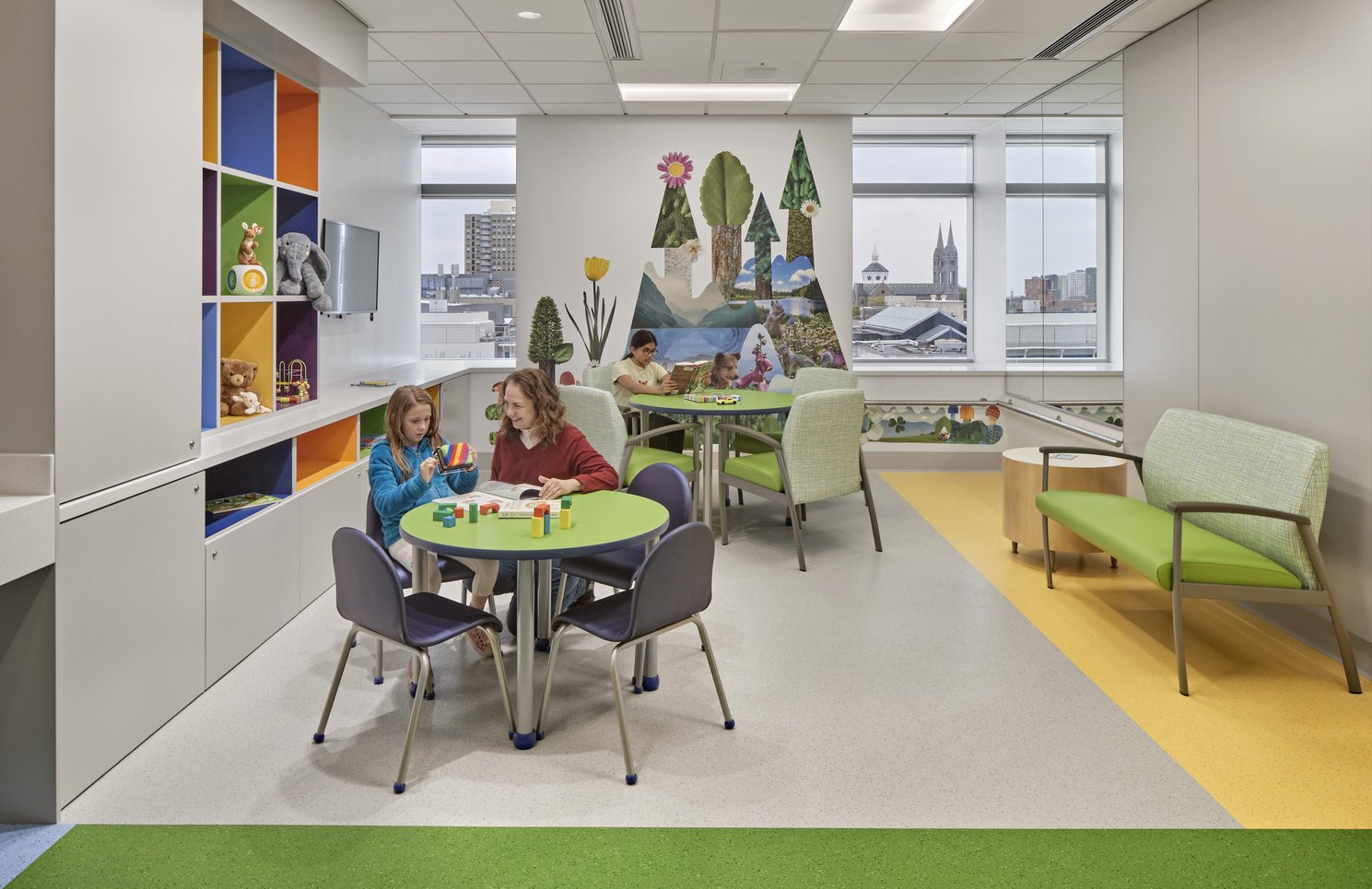
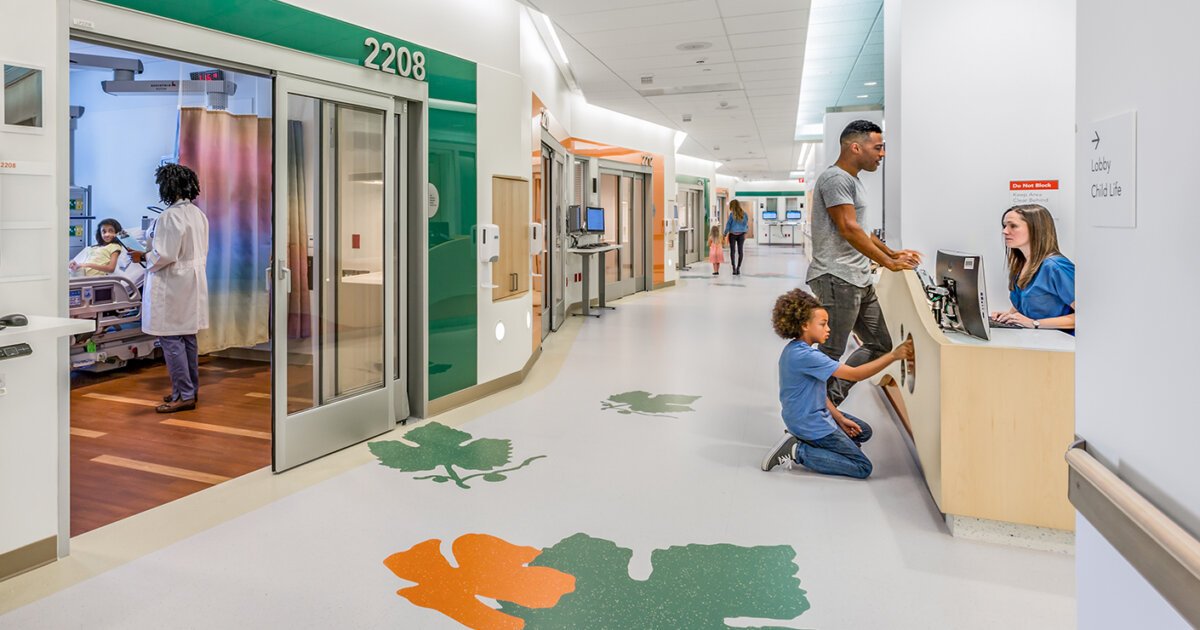
This project covers a large pediatric hospital network composed of two distinct facilities with different scales and layouts. The main hospital includes 260 beds across 130,000 m² and 6 floors, while a regional hospital adds 130 beds across 60,000 m² and 8 floors.
In these complex, multi-floor healthcare environments, staff safety is a critical concern. Medical personnel may face emergency or high-risk situations where rapid alerting and precise indoor localization are essential to ensure timely intervention.
The main challenge was to deploy a reliable, real-time staff duress solution capable of delivering room-level accuracy across large buildings, while leveraging the existing Wi-Fi infrastructure and integrating with established hospital safety systems.
Project scope
The deployment covers both hospital sites and includes:
More than 4,000 staff badges equipped with an emergency alert button
Room-level indoor localization across multi-floor buildings
Large-scale use of existing infrastructure, with 1,500+ BLE-enabled HPE Aruba Wi-Fi access points
Integration with a global staff duress system provider
Solution deployed
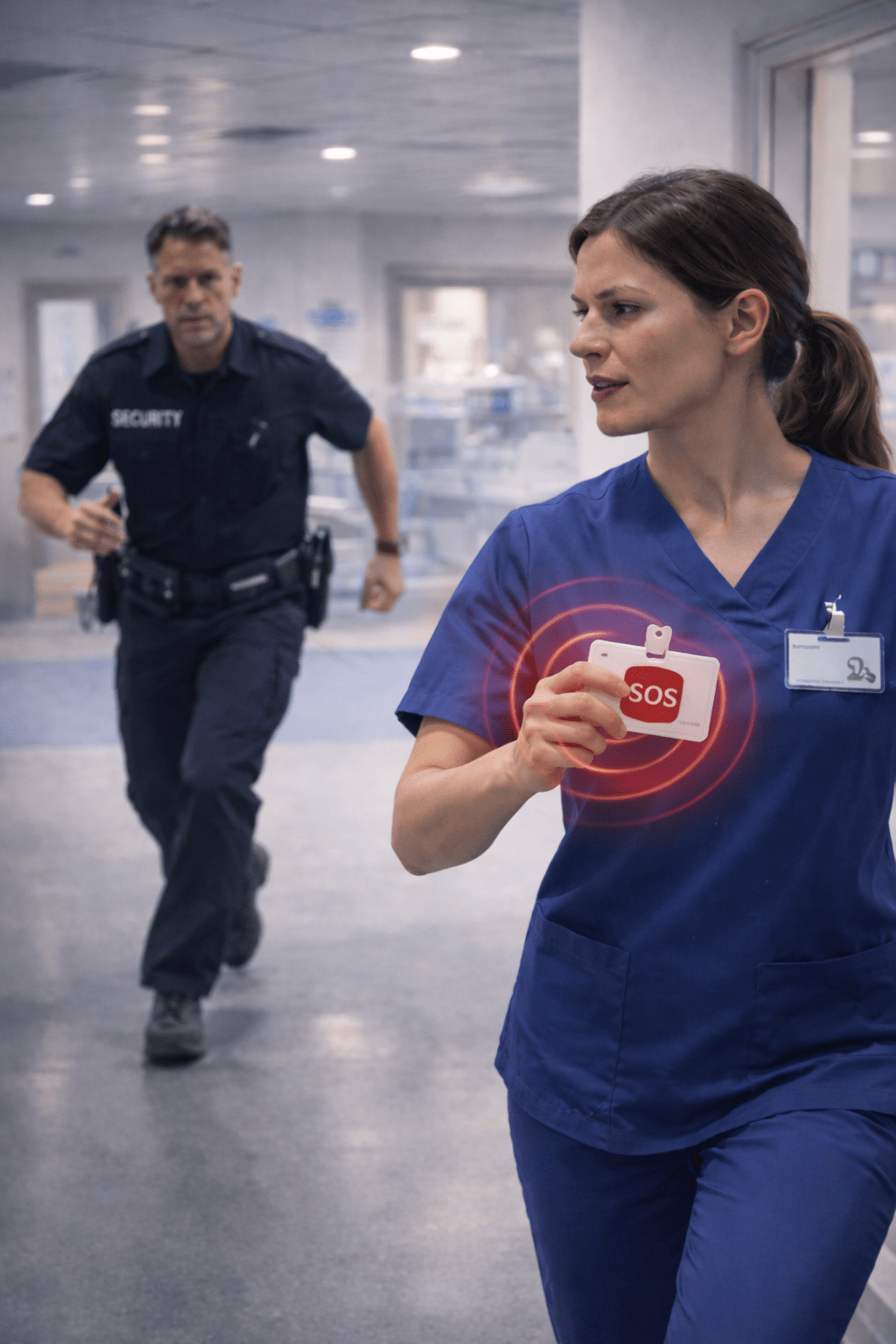
Pole Star implemented a staff duress solution based on BLE-enabled badges, allowing healthcare staff to trigger an alert instantly in case of danger. When an alert is activated, the badge’s BLE signals are used to compute the real-time indoor location of the staff member, with precision close to the room level.
Alerts and location data are transmitted in real time to security and response teams, enabling immediate situational awareness and faster intervention. By relying on the existing Wi-Fi BLE infrastructure, the solution scales across large hospital buildings without requiring heavy additional hardware deployment.
Pole Star architecture & solutions
The solution relies on Pole Star’s indoor location platform:
NAO® Track for real-time position computation
Continuous exploitation of BLE signals emitted by staff badges
Real-time APIs for transmitting alerts and location data to third-party systems
Dedicated supervision and visualization interfaces for security and response teams
This architecture ensures seamless interoperability with existing hospital safety systems.
Operational benefits
The deployment delivers measurable operational and safety improvements:
Significant reduction in intervention time through immediate and reliable localization
Improved safety for healthcare staff, including in sensitive and high-risk areas
Full coverage of complex hospital buildings without massive infrastructure changes
Interoperability with existing security and staff duress systems