Atalian - Baggage Cart Tracking at Paris Charles de Gaulle Airport
Operational context : managing baggage carts at airport scale
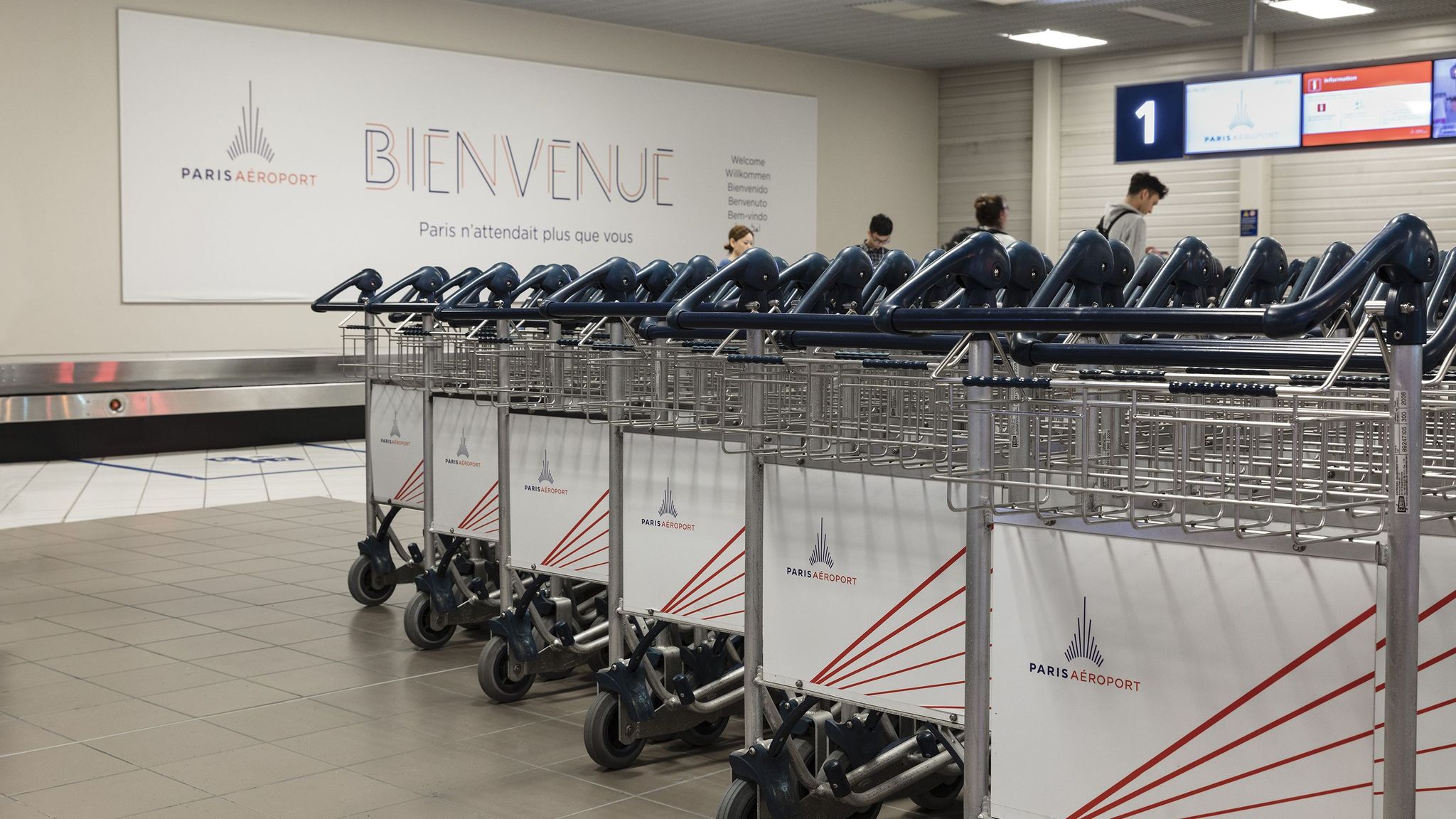
As one of the largest airports in Europe, Paris Charles de Gaulle Airport manages thousands of baggage carts every day, distributed across multiple terminals and high-traffic passenger areas. These carts are essential to passenger experience and operational fluidity, yet their management represents a significant logistical challenge at such scale.
Before the deployment of an indoor location solution, airport teams faced recurring operational issues: cart shortages in critical passenger zones, excess carts accumulating in low-demand areas, losses and theft, and a general lack of real-time visibility. Cart availability was managed reactively, based on manual checks and estimations rather than accurate data.
The objective was to deploy an industrial-grade, real-time and interoperable solution, capable of operating at large scale without requiring heavy modifications to the existing airport infrastructure.
Project scope and operational coverage
The project was designed to cover the full operational perimeter of baggage cart usage within the airport terminals. It includes the tracking of between 6,000 and 10,000 baggage carts, making it one of the largest deployments of its kind.
The solution leverages a dense existing network of more than 2,000 BLE-enabled Cisco Wi-Fi access points, ensuring continuous coverage across critical operational zones, including:
baggage cart storage areas
drop-off and return zones
check-in halls
passenger terminals
This wide coverage ensures that cart movements are monitored consistently throughout the passenger journey, from arrival to departure.
How the solution works : from BLE tags to operational insight
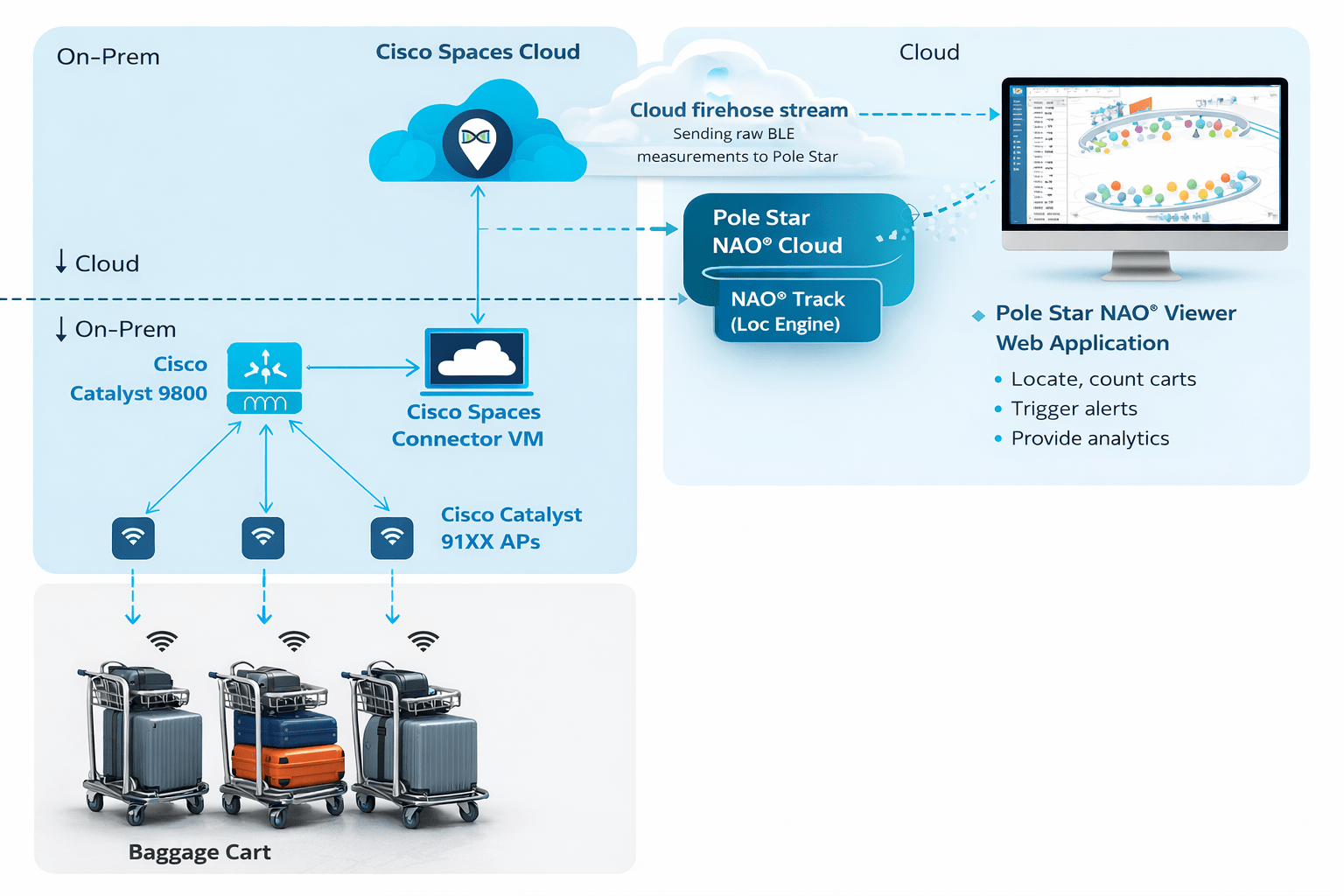
Each baggage cart is equipped with a Bluetooth Low Energy (BLE) tag. These tags continuously emit signals that are captured by the airport’s existing BLE-enabled Wi-Fi infrastructure. Using these signals, Pole Star computes the real-time indoor location of every cart within the terminal environment.
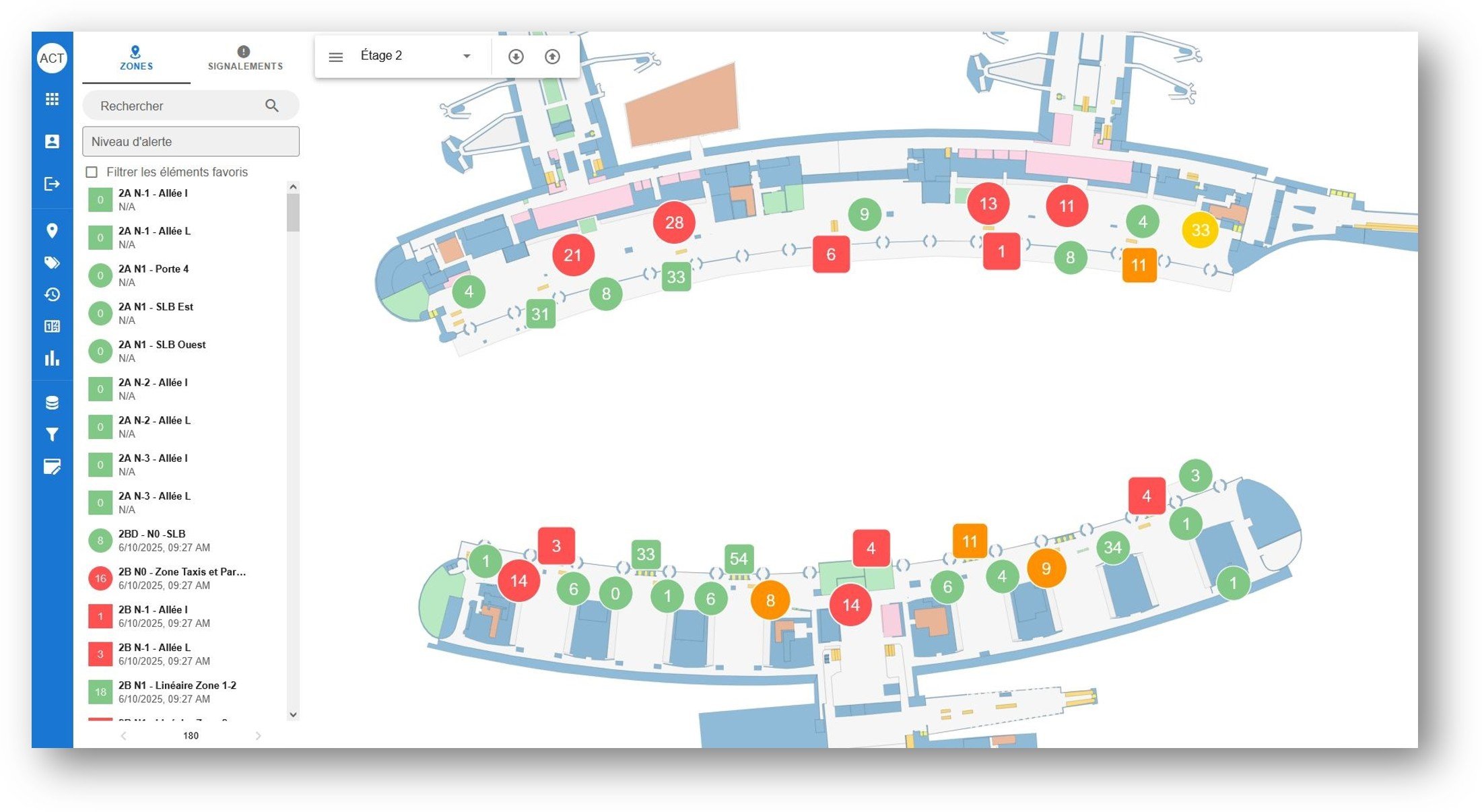
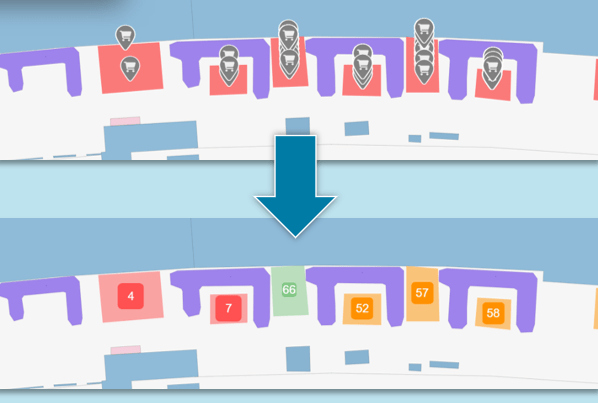
Beyond simple localization, the solution automatically performs zone-based counting, continuously calculating how many carts are available in each operational area. This removes the need for manual inventory checks and provides instant visibility into cart distribution.
On top of this real-time location layer, the system generates intelligent alerts when abnormal situations occur. Alerts can be triggered in case of cart shortages, surpluses, prolonged inactivity or unusual movement patterns. These alerts allow operational teams to anticipate issues rather than reacting once passenger impact is already visible.
The platform directly answers key operational questions such as :
How many carts are currently available in each zone ?
Where are shortages or over-concentrations occurring ?
How long do alert situations last before being resolved ?
What is the availability rate per terminal or area ?
How many alerts are generated daily and in which zones ?
Real-time supervision, analytics and decision support
All cart movements and alerts are recorded and made available through real-time supervision dashboards and historical analytics tools. Operational teams can visualize cart positions live, monitor alert resolution times and analyze cart usage patterns over time.
This historical data enables the creation of KPI dashboards and operational reports, supporting continuous optimization of cart redistribution strategies. By integrating with third-party airport systems, the solution becomes part of a broader operational ecosystem rather than a standalone tool.
As a result, baggage cart management evolves from a manual, reactive process into a data-driven operational function, supported by measurable indicators and objective performance metrics.
Pole Star architecture and deployment model
The solution relies on Pole Star’s proven indoor location platform, designed for large and complex infrastructures:
NAO® Track as the real-time location engine
NAO® Viewer for locating carts, counting assets, triggering alerts and providing analytics
NAO Cloud to configure, monitor and manage location services
Integration through Cisco Spaces Cloud Firehose
A hybrid Cloud / On-Premise architecture, ensuring scalability and operational resilience
This architecture allows the solution to scale across multiple terminals while maintaining low latency and high reliability.
Ecosystem and interoperability
The deployment was carried out within a broader airport ecosystem, involving key operational and technology partners including Cisco, Hub One, Atalian and Paris Aéroports. The solution was designed to be fully interoperable, integrating seamlessly with the airport’s existing IT and operational systems, while complying with industrial, operational and security constraints.
This interoperability ensures long-term sustainability and enables the progressive extension of location-based use cases beyond baggage carts, supporting future operational optimization initiatives across the airport.
Operational impact and measurable benefits
The deployment delivers significant and measurable operational benefits:
Substantial reduction in baggage cart losses and theft
Improved cart availability rates in passenger-critical zones
Optimized logistics and redistribution workflows
Better operational decision-making driven by data
Time savings for field teams, reducing manual checks and interventions
By restoring full visibility over baggage cart assets, the airport improves both operational efficiency and passenger experience.